

· By Annemarie
Liquor Before Wine And The Science Of Hangovers
You’ve heard it a million times, probably from a well-meaning friend at a party: "Liquor before wine, you'll feel fine; wine before liquor, never sicker."
Let's just get this out of the way right now: it’s a total myth. The order you drink your booze in has almost nothing to do with whether you'll be hugging the toilet the next morning.
Unpacking The "Liquor Before Wine" Myth
So if it's not true, where did this catchy little rhyme even come from?
Honestly, the logic seems to make sense on the surface. People often kick off a night with hard liquor like vodka or whiskey, which hit you faster because of their higher alcohol content. As the night wears on, they might switch over to something with a lower ABV, like wine or beer.
This common drinking pattern can create the illusion that the sequence is what saved you. But what's really happening is that the total amount of alcohol you're putting into your body is the only thing that truly matters.
Starting with liquor might make you feel the buzz quicker, which could naturally lead you to pump the brakes and slow down. On the flip side, if you start with wine, you might drink more of it over a longer time without realizing just how much alcohol you’ve consumed until it’s too late.
The truth is, a hangover is just your body’s frantic response to being overloaded with alcohol. A few key culprits are really to blame, and none of them care about the order of your drinks.
- Dehydration: Alcohol is a diuretic. It makes you pee more, which can quickly lead to dehydration, one of the main drivers of that pounding headache and dry mouth.
- Congeners: These are chemical byproducts from the fermentation process found in many alcoholic drinks (especially dark ones). They're known to make hangover symptoms much, much worse.
- Metabolic Stress: Your liver has to work overtime to break down all that alcohol, producing some nasty, toxic byproducts along the way that leave you feeling awful.
Let's break it down even simpler.
Myth Vs. Reality: The Liquor Before Wine Rule
| The Common Myth | The Scientific Reality |
|---|---|
| The order of your drinks determines how bad your hangover will be. | The total amount of alcohol you consume and your blood alcohol concentration are what really matter. |
| Mixing different types of alcohol is what makes you sick. | Mixing just makes it harder to track your total intake. The real issue is the volume of alcohol, not the variety. |
| Following the "liquor before wine" rule is a reliable way to avoid a hangover. | Dehydration, congeners, and metabolic stress are the actual causes of a hangover, regardless of the drink sequence. |
At the end of the day, the rhyme is memorable, but the science is clear. What you drink and, more importantly, how much you drink are way more significant than the order you drink them in.
The biggest factor in whether you get a hangover isn't the sequence of your sips, but how high your blood alcohol concentration gets and how long it stays there.
Understanding this is the first real step toward smarter drinking habits that don't ruin your entire next day. While the rhyme is fun to say, moderation and being mindful of your intake are the real keys to a better morning. For a deeper dive into which drinks might be a bit kinder to your system, check out our guide on what alcohol causes the least hangover.
How Your Body Processes Alcohol
To really get why the whole "liquor before wine" saying is just a myth, we need to pull back the curtain and see what actually happens when you drink. Think of your liver as a super-specialized factory. The moment you take a sip, alcohol enters the factory and a dedicated assembly line of enzymes gets to work.
The main job on this assembly line is breaking down ethanol—the alcohol in your drink—into stuff your body can manage. But here's the catch: the process isn't perfectly clean. The very first thing it creates is a toxic compound called acetaldehyde. This guy is the real villain behind most of your worst hangover symptoms—the nausea, the headache, and that awful flushed feeling.
This factory analogy is perfect for understanding why how fast you drink is way more important than the order of your drinks. Your liver's assembly line has a speed limit; it can only process about one standard drink per hour. When you start drinking faster than that, you create a major bottleneck.
The Metabolic Bottleneck Effect
Imagine that factory floor suddenly getting swamped with more raw materials than the assembly line can handle. It gets completely overwhelmed, and that toxic acetaldehyde starts piling up in your system way faster than your body can clear it out. This buildup is what triggers a ton of cellular damage and inflammation, setting you up for that next-day misery. If you want a closer look at just how nasty this stuff is, you can dig into the science behind acetaldehyde toxicity symptoms.
This is why the total amount of alcohol you down in a night, not the order you drink it in, is what truly sets the stage for a hangover.
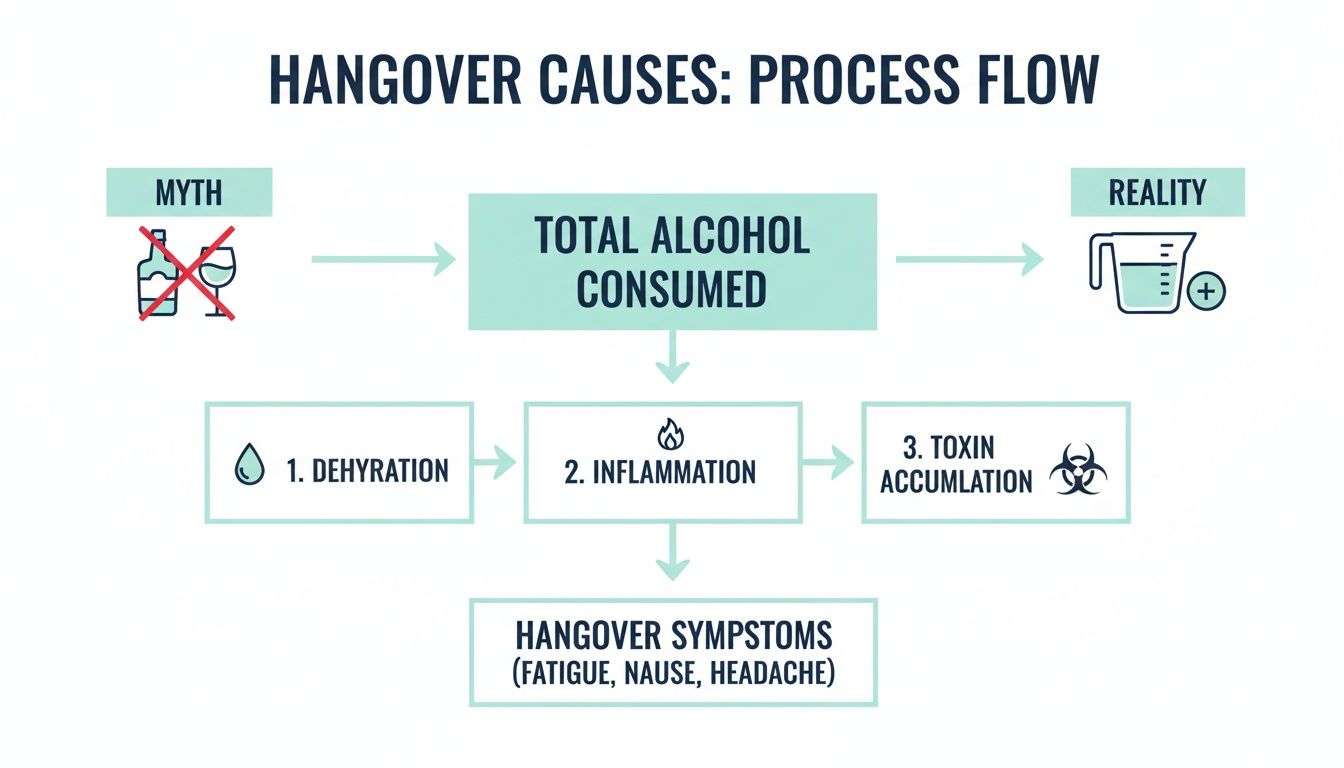
As you can see, it all comes back to how much you drink. Focusing on the total volume is the real key to avoiding that metabolic pile-up that ruins your morning.
Why Different Drinks Hit Differently
It’s also true that not all drinks are created equal when it comes to how quickly they're absorbed. This adds another layer of complexity that the old rhyme completely ignores. The speed at which alcohol hits your bloodstream has a huge impact on how fast you feel the buzz and how much strain you’re putting on your liver.
The real culprit isn't the sequence of your drinks. It's the speed and total volume of alcohol that overwhelms your body's ability to process those toxic byproducts.
A few things can mess with this absorption rate:
- Carbonation: Those bubbles in champagne, sparkling wine, or a gin and soda really do make a difference. The carbon dioxide actually increases pressure in your stomach, pushing alcohol into your bloodstream faster.
- Sugar Content: On the flip side, sugary mixers can sometimes slow down how quickly your stomach empties. This might delay the initial effects of the alcohol, which sounds good, but it also makes it way easier to drink too much before you even realize it.
At the end of the day, whether you start with a shot or a glass of wine, the biology is exactly the same. Your liver doesn't know or care about the order; it only cares about the total workload you throw at it.
Unmasking The True Hangover Culprits
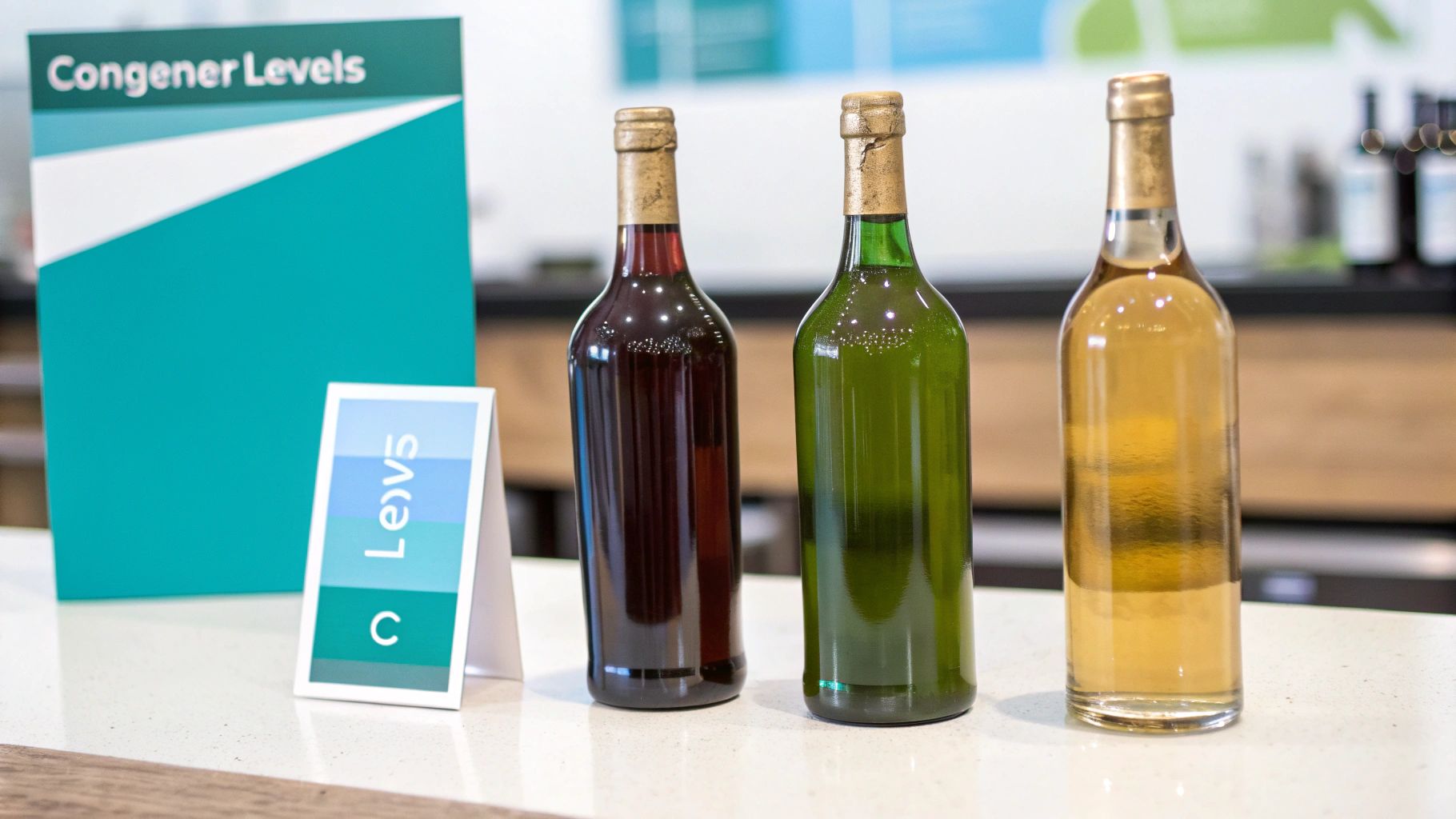
While your liver is duking it out with acetaldehyde, a whole other group of troublemakers is crashing the party and making things a lot worse. Meet congeners: the chemical compounds that are the real secret behind why some drinks leave you feeling absolutely wrecked, no matter what order you drank them in.
Congeners are just natural byproducts that show up during fermentation and aging. Think of them as the tiny flavor-and-aroma bombs that give certain drinks their signature character. That gorgeous amber hue in a glass of whiskey or the rich, complex body of a good red wine? Yep, you can thank congeners for that.
But here’s the catch—that character comes at a cost. Your body sees these compounds as foreign invaders and has to work overtime to clear them out, putting extra strain on your system. This is what really dials up the intensity of your hangover, making that whole "liquor before wine" thing pretty much useless. The real debate should be clear versus dark.
The Congener Content Hierarchy
The science here is actually pretty simple: the more congeners in your drink, the rougher your morning is likely to be. This is why the type of alcohol you're sipping on has a much bigger say in your fate than the sequence.
As a general rule, darker drinks are loaded with congeners, while their lighter, clearer cousins are much lower on the scale. An aged bourbon, for instance, has a ton more of these compounds than a super-distilled vodka. If you want to dive deeper into all the things that team up to ruin your next day, you can learn more about what causes hangovers in our complete guide.
To help you make smarter choices on your next night out, we've ranked some popular drinks by their congener levels.
Congener Levels In Popular Drinks
This quick guide ranks alcoholic beverages from lowest to highest congener content, helping you pick your poison a little more wisely.
| Drink Type | Relative Congener Level |
|---|---|
| Vodka, Gin, White Rum | Lowest |
| Light Beer, White Wine | Low |
| Clear Tequila, Sake | Moderate |
| Dark Beer, Dark Rum | High |
| Red Wine, Whiskey, Brandy | Highest |
The takeaway? If you're trying to avoid a monster hangover, sticking to drinks on the lower end of this list can make a real difference.
The next time you're at the bar, just remember this: darker drinks often lead to darker mornings. The sky-high concentration of congeners in things like red wine and whiskey is a massive reason they're famous for delivering killer hangovers.
Ultimately, picking a drink that’s lower in congeners is a far more reliable game plan than trusting an old wives' tale like "liquor before wine." Now that you know who the real culprits are, you can start making choices that will actually help you feel better tomorrow.
The Other Factors That Intensify Your Hangover
Getting hung up on congeners or old rhymes like "liquor before wine" means you're missing the forest for the trees. A hangover is a perfect storm of physiological chaos, and it has almost nothing to do with the order you had your drinks in. To actually prevent one, you have to understand what’s really going on inside your body.
Let’s start with the basics. Alcohol is a diuretic, which is just a scientific way of saying it makes you pee—a lot. This isn't just a minor inconvenience; it's your body losing fluids at an accelerated rate, which quickly leads to dehydration. That pounding headache, dizziness, and desperate thirst you feel the next morning? That’s dehydration calling.
Every single alcoholic drink you have is actively working against your body's hydration. That's why sticking to just beer or just wine won't save you if you have too many. The total amount of alcohol is what drives dehydration, and that, in turn, dictates how miserable you'll feel.
The Impact On Sleep Quality
Have you ever gotten a full eight hours of sleep after drinking and woken up feeling like you were hit by a bus? There's a reason for that. Alcohol absolutely wrecks your sleep quality, especially REM (Rapid Eye Movement) sleep. This is the deep, restorative stage your brain needs to process memories and actually feel rested.
Sure, a nightcap might make you feel drowsy and help you nod off faster, but the sleep you're getting is junk. Your body is so busy metabolizing alcohol that it can't properly rest and repair itself. This is why you wake up groggy, irritable, and mentally foggy, no matter if you had liquor before wine or wine before liquor.
A hangover isn't just one thing; it's a cascade of dehydration, poor sleep, and an immune system in overdrive. Tackling only one aspect without addressing the others is like trying to fix a leak with a paper towel.
Your Immune System Fights Back
Believe it or not, your body can interpret the byproducts of alcohol metabolism as a threat, kicking your immune system into high gear. This triggers an inflammatory response that can leave you with that general feeling of being unwell, unable to concentrate, and struggling with your memory—sound familiar? It’s a lot like being sick.
Essentially, your immune system releases inflammatory compounds called cytokines, the same ones it uses to fight off an infection. This defensive reaction is a huge part of why a bad hangover makes you feel so run down.
When you look at drinking habits globally, the patterns are fascinating. Some cultures have a much higher tolerance and consumption rate. For instance, people in Romania average 17 liters of pure alcohol a year. Compare that to countries like Afghanistan or Saudi Arabia, where the average is just 0.1 liters. That’s a 170-fold difference, showing just how much culture plays a role. You can find more of these kinds of insights on global-relocate.com.
Ultimately, it’s this trifecta of dehydration, disrupted sleep, and inflammation that creates the full-blown hangover experience. That’s proof that a smarter, more holistic approach is what you need—not some outdated saying.
Actionable Strategies For A Better Morning After
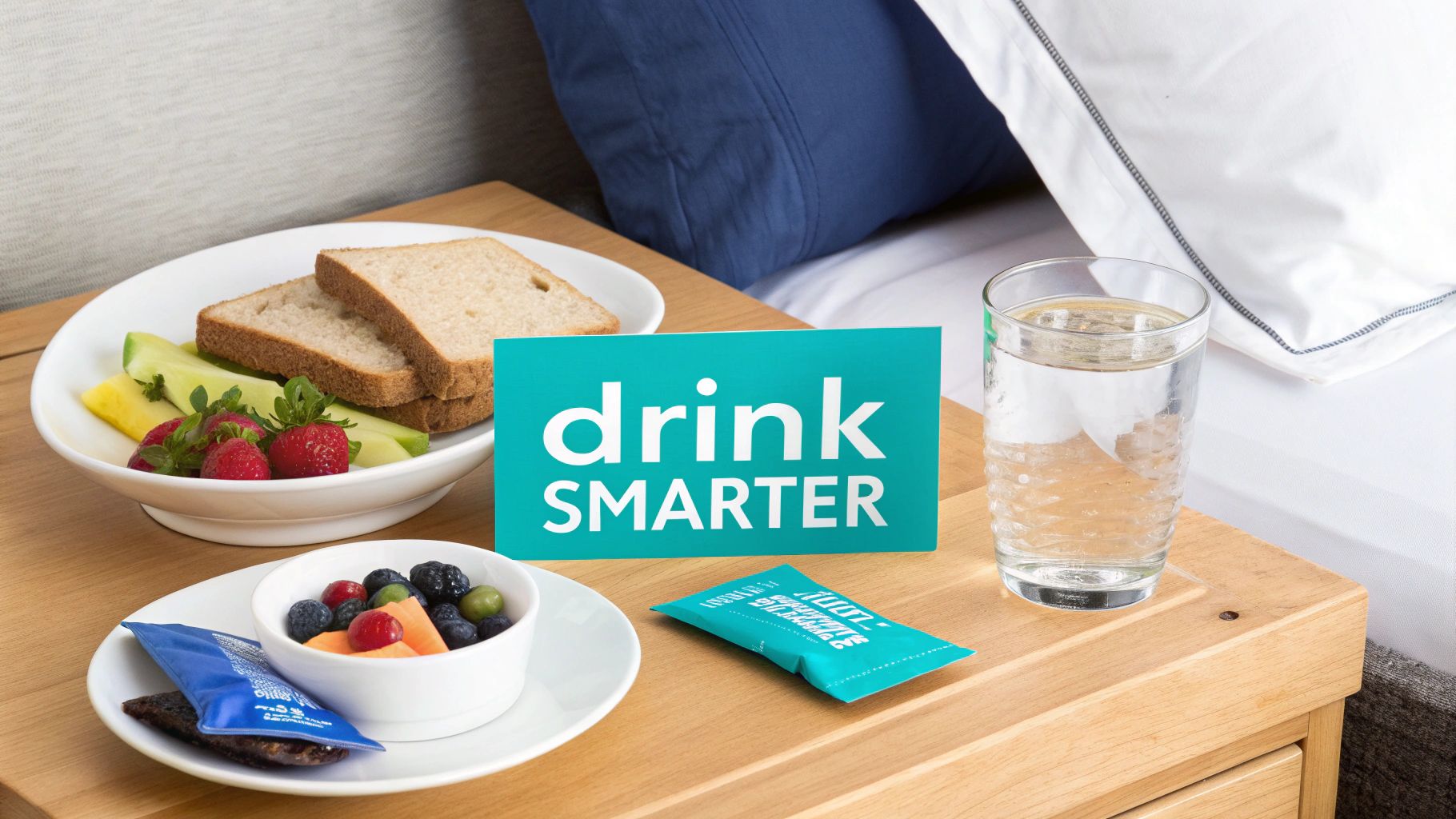
Knowing the science behind hangovers is one thing, but actually putting that knowledge to use is a whole different ball game. So, let’s toss out the old “liquor before wine” myth and focus on a real, proactive playbook for smarter drinking. A few simple, effective moves can make all the difference in how you feel the next day.
The biggest factor here is pacing. Your liver can only break down about one standard drink per hour. When you drink faster than that, you're essentially creating a metabolic traffic jam, letting all those nasty toxins build up. Slowing down gives your body a fighting chance to keep up.
Build Your Foundational Defense
Before you even think about your first sip, you need to set yourself up for success. A little prep work can dramatically lighten the load on your body.
- Fuel Up First: Seriously, never drink on an empty stomach. A solid meal with protein, fats, and carbs slows down how quickly alcohol hits your bloodstream. This prevents that rapid spike in blood alcohol that really does a number on you.
- Hydrate Early and Often: Alcohol is a diuretic, which is just a fancy way of saying it makes you pee out more water than you're taking in. Start chugging water hours before you go out, and keep it up. The "one-for-one" method is a great rule of thumb—for every alcoholic drink, have a full glass of water.
- Plan Your Support: For those nights you know are going to be a celebration, having a modern recovery tool on hand is just plain smart. This is where something like Upside Hangover Jelly comes in.
Upside isn't some magic wand for overindulgence. Think of it more as a convenient, science-backed boost for your body’s natural recovery process. Its blend of natural ingredients helps your system tackle alcohol's toxic byproducts more efficiently.
Taking Upside before you start drinking helps fortify your body, making it a proactive part of your smarter drinking routine. It’s an easy-to-carry solution for anyone who wants to enjoy a social life without writing off the entire next morning.
Smart Choices During Your Night Out
Your strategy doesn't end after that first drink. Making mindful choices all evening long is absolutely key to managing your intake and dodging that next-day regret.
Drinking habits are wildly different around the world. In Portugal, a surprising 20.7% of the population drinks alcohol every single day. That's a huge contrast to places like Lithuania or Sweden, where less than 3% do. For social drinkers who aren't consuming as often, these proactive strategies become even more crucial to avoid the pain of a hangover. You can discover more about European drinking patterns to see just how much these habits vary.
What this really means is that whether you drink daily or just on special occasions, being mindful is everything. Pick your drinks wisely, keeping in mind that darker liquors and red wines are packed with more of those hangover-inducing congeners. Most importantly, listen to your body and know when it's time to call it a night. That common-sense approach will serve you far better than any old rhyme about beer, wine, and liquor.
Still Have Questions About Hangovers? Let's Clear a Few Things Up.
Even when you know the science, a few stubborn hangover myths always seem to hang around. Let's tackle some of the most common questions head-on and put these persistent rumors to bed for good.
Does "Hair Of The Dog" Actually Work?
The short answer? Not really, no.
Sure, having another drink the next morning might give you a fleeting sense of relief, but all you’re really doing is kicking the can down the road. This so-called "cure" just postpones your hangover symptoms. Once the effects of that morning mimosa wear off, they'll be back—and often, they'll be back with a vengeance.
Think of it this way: your body is already working overtime to process last night's alcohol. Pouring more into the mix just adds to its workload. That temporary feeling of relief is just the alcohol's numbing effect at play, but it’s a short-term fix that ultimately drags out your recovery.
Why Do Hangovers Get So Much Worse With Age?
If you’ve found yourself wondering why hangovers hit you like a freight train in your thirties when they were a minor inconvenience in your twenties, you’re definitely not imagining it. There are a few real, biological reasons for this unfortunate truth.
- Your Metabolism Is Slowing Down: As we get older, our liver just doesn't produce key enzymes like alcohol dehydrogenase as efficiently. This means it takes your body longer to break down alcohol and its toxic byproducts, leaving them to wreak havoc in your system for longer.
- Your Body Composition Changes: Over time, most people tend to lose muscle and gain a bit more body fat. Because muscle holds significantly more water than fat, this shift means your overall body water content drops, making you much more prone to dehydration from the same number of drinks.
- Recovery Just Takes Longer: Let's face it, your body's ability to bounce back from any kind of stress—including inflammation, oxidative damage, and a night of bad sleep—just isn't what it used to be. The physiological mess created by drinking simply hits an older body harder.
Are Some People Just Genetically Prone to Nasty Hangovers?
Absolutely. Genetics play a massive part in how your body handles alcohol. Small variations in the genes responsible for producing the enzymes that metabolize alcohol and acetaldehyde can make a world of difference in how you feel the next day.
Some of us are just wired to have a faster buildup of toxic acetaldehyde or a much slower time clearing it out. If that’s you, you’re more likely to experience those tell-tale symptoms like facial flushing, nausea, and a pounding headache, even after just a drink or two.
It's not just in your head—some people are genuinely hardwired to experience worse hangovers. Your individual genetic blueprint is a major, unchangeable factor in your body's response to alcohol.
Interestingly, these biological factors aren't just limited to our individual DNA. Global data shows huge differences between genders when it comes to alcohol consumption, partly driven by metabolism and body composition. Men, for example, drink at least three times more alcohol than women on average across the world. This trend has serious health consequences; the World Health Organization reported that of the 2.6 million alcohol-related deaths in 2019, a staggering 2 million were among men. You can dive deeper into these trends and discover fascinating insights at Our World in Data.
At the end of the day, you can't change your age or your genes. What you can do is adopt smarter habits. Pacing yourself, staying hydrated, choosing your drinks wisely, and giving your body the support it needs to recover are all things that work for everyone, no matter their predisposition.
For those times when you want to enjoy a night out without sacrificing your next day, Upside has you covered. Our Hangover Jelly is a convenient, science-backed way to support your body's natural recovery process. Simply take it before you start drinking to help your system tackle the byproducts of alcohol more efficiently. Party smarter and live more with Upside.
#upside #enjoyupside #upsidejelly #livemore #hangovercure #hangoverprevention #fighthangovers #preventhangovers #HangoverRelief #MorningAfter #PartySmarter #HydrationStation #WellnessVibes #RecoverFaster #NoMoreHangovers #HealthyParty #HangoverHacks #FeelGoodMorning #NightlifeEssentials #HangoverFree #SupplementGoals #PostPartyPrep #GoodVibesOnly #HealthAndParty #HangoverHelper #UpsideToPartying