

· By Annemarie
Why Wine and Hangovers Go Hand in Hand
We’ve all been there. You have a wonderful evening, enjoying a glass (or two) of your favorite wine, only to wake up feeling like you’ve been hit by a truck. It’s a familiar story, and for good reason—the connection between wine and hangovers often feels much stronger than with other drinks.
The culprit isn’t just the alcohol. Wine has a unique cocktail of compounds that form during the winemaking process, like congeners, histamines, and tannins, that can make the morning after particularly punishing.
Why That Glass of Wine Can Cause a Hangover
That dreaded, head-pounding feeling you get from wine is a bit more complicated than simple dehydration. While alcohol is always the main character in any hangover story, wine brings along a few troublemaking friends that can seriously ramp up the symptoms.
These substances are just natural byproducts of fermentation and aging. The problem is, their concentration can vary wildly from one type of wine to another. Getting to know these key players is the first step to enjoying a glass of wine without dreading what’s to come.
The Main Culprits in Your Glass
A few different things are working together to create that perfect storm of a wine hangover. Each one adds its own special ingredient to the recipe for next-day misery, from splitting headaches to that can’t-get-out-of-bed fatigue.
Here’s what’s really going on in your glass:
- Congeners: These are chemical sidekicks created during fermentation and aging. They give spirits and wines their distinct flavors, aromas, and colors, but they’re also notorious for making hangovers feel way, way worse.
- Histamines: Found in grape skins, these compounds can set off allergy-like reactions for some people. Think headaches, a flushed face, or a stuffy nose—sound familiar?
- Tannins: Also coming from grape skins, seeds, and stems, tannins are what give wine that dry, slightly bitter structure. For a lot of people, they’re also a major headache trigger.
The intensity of a wine hangover often comes down to the specific combination of these compounds in your glass. A wine high in all three is much more likely to cause issues than one with lower levels.
Ultimately, the science of a hangover is a tangled web of dehydration, messed-up sleep, and your body’s own inflammatory response. To get the full picture, you can dive deeper into our guide on what causes hangovers. Once you understand how wine’s unique chemistry fits in, you can start making smarter choices for your next night out.
The Science Behind Your Wine Hangover
Ever wondered why that seemingly harmless glass of wine can lead to such a punishing morning after? The answer is a bit more complicated than just the alcohol content. When you really dig into the science, you find that wine is packed with a unique cocktail of natural compounds that can make the next day truly miserable.
Let’s pull back the curtain on the four main culprits behind that dreaded feeling. Getting to know what's actually in your glass is the first step toward outsmarting your next hangover.
The Role of Congeners
Think of congeners as the unique fingerprints of an alcoholic drink. They’re natural chemical byproducts created during fermentation and aging, and they’re responsible for the distinct aroma, flavor, and deep color of beverages like aged spirits and dark wines.
But these flavor-enhancers have a dark side. Your body has to work overtime to break them down, and studies have shown a pretty clear link between high-congener drinks and severe hangovers. The more congeners, the worse you're likely to feel.
This chart breaks down how different compounds in wine team up to cause hangover symptoms.
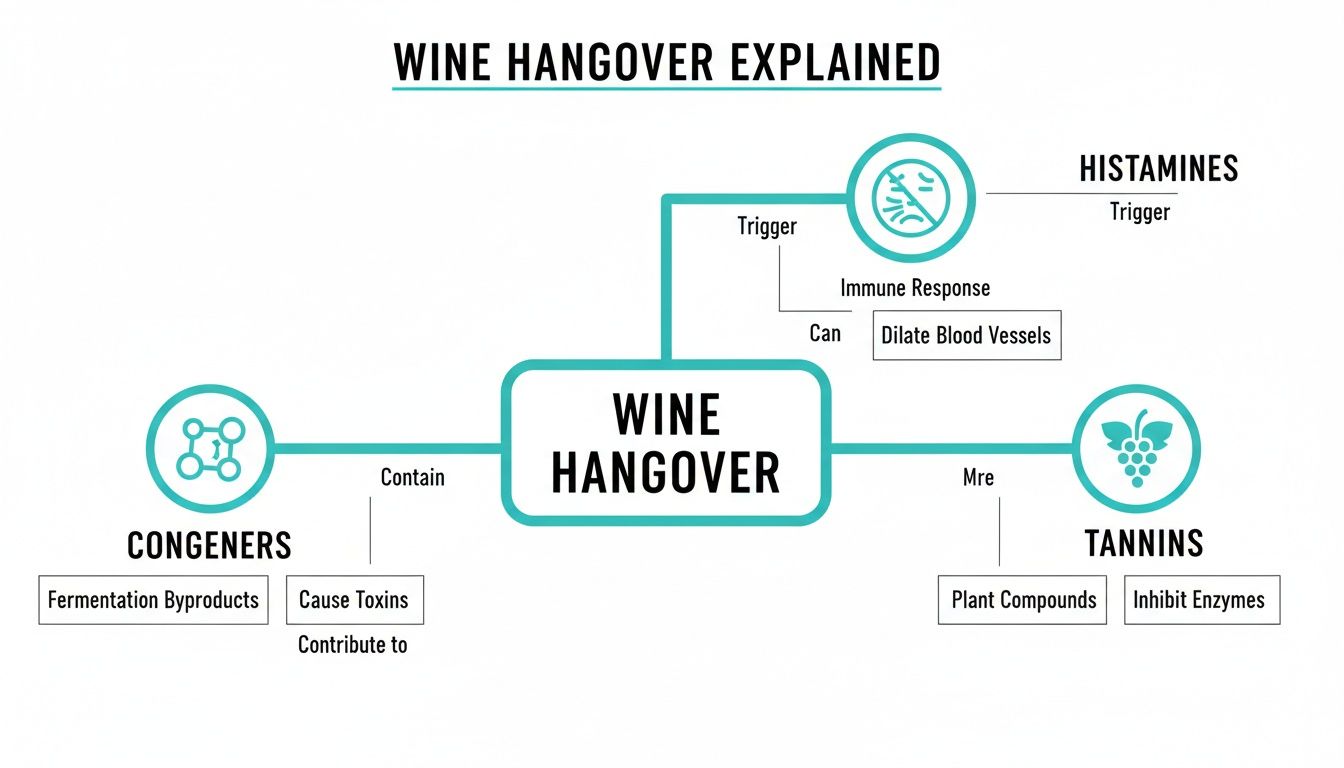
As you can see, it's a team effort. Congeners, histamines, and tannins each play a unique part in how you feel after a few glasses.
Histamines The Allergy Alarm Bell
Get a stuffy nose, flushed skin, or a pounding headache after a glass of red? You might be reacting to histamines. These are the very same compounds your body unleashes during an allergic reaction, which is why the symptoms can feel uncannily similar.
Histamines pop up naturally in all sorts of fermented foods and drinks—think aged cheeses, cured meats, and, you guessed it, wine. They’re concentrated in the skins of grapes, which means red wines (fermented with their skins on) have way higher levels than whites. If you're sensitive, even a small amount can set off an inflammatory response.
What About Sulfites?
Sulfites get a bad rap for hangovers, but for most of us, they're not the problem. They're simply preservatives used to keep wine from spoiling, and you'll find them in much higher amounts in common foods like dried fruit.
A true sulfite sensitivity is actually pretty rare, affecting only about 1% of the population. It usually triggers allergy-like symptoms like hives or breathing problems, not the classic hangover headache and nausea. If you can eat a handful of dried apricots without issue, sulfites probably aren't your enemy.
Key Takeaway: While sulfites can be an issue for a small group, the real villains behind a typical wine hangover are usually congeners, histamines, and the toxic byproduct of alcohol metabolism itself—acetaldehyde.
Let's quickly recap the main players in your wine glass that contribute to a rough morning.
The Main Culprits in Your Wine Glass
| Compound | What It Is | Commonly Found In | Primary Effect |
|---|---|---|---|
| Congeners | Chemical byproducts from fermentation and aging | Dark liquors (whiskey, brandy) and red wines | Intensify hangover severity |
| Histamines | Compounds that can trigger allergic-like reactions | Red wine, aged cheeses, cured meats | Headaches, flushing, nasal congestion |
| Sulfites | Preservatives used to prevent spoilage | Most wines, dried fruits, processed foods | Allergy-like symptoms in sensitive individuals (rare) |
| Acetaldehyde | Toxic byproduct of alcohol metabolism | Formed in the body after drinking any alcohol | Nausea, headache, facial flushing |
Understanding these compounds is the key to figuring out why some drinks hit you harder than others.
Acetaldehyde The True Villain
The second you take a sip of any alcohol, your liver springs into action. Its first job is to break down the ethanol, but in the process, it creates a highly toxic compound called acetaldehyde. This stuff is estimated to be between 10 and 30 times more toxic than alcohol itself. Ouch.
Eventually, your liver neutralizes acetaldehyde, but it can only work so fast. When you drink faster than your liver can keep up, this toxin builds up in your system, causing classic hangover symptoms like nausea, headaches, and that lovely red-faced flush. To get the full story, check out our deep dive on how your body processes drinks. This toxic buildup is exactly why pacing yourself is non-negotiable for preventing a hangover.
Why Red Wine Is Often the Biggest Offender
If you've ever had the dreaded "red wine headache," you know it’s a special kind of awful. It feels totally different from other hangovers, and it's not just in your head. There’s a good reason why that glass of Cabernet or Merlot is often the prime suspect for a miserable next day, and it all comes down to how red wine is made.
Unlike white wine, where the grapes are pressed and the juice is fermented by itself, red wine is made by fermenting the whole package—skins, seeds, and sometimes even stems. Think of it like making a really strong cup of tea; the longer everything steeps together, the more compounds get extracted into the final product.
This process is exactly what gives a bold red wine its deep color and that dry, structured feeling in your mouth. But it’s also what loads it up with the very things that can make a hangover so much worse.
The Trifecta Behind the Red Wine Hangover
It's not just one single culprit, but a powerful trio of compounds working together that makes red wine such a beast. This combination is what's behind that infamous next-day misery.
- Higher Congeners: Because they’re aged longer and fermented with the grape skins, red wines are packed with congeners. These chemical byproducts give wine its complex flavors and deep color, but they also make your body work overtime to process them, leading to more intense hangover symptoms.
- More Histamines: Grape skins are a huge source of histamines. Since red wine gets to soak with its skins for so long, it delivers a much bigger dose. For anyone sensitive to histamines, this can mean headaches, a stuffy nose, and that flushed-face feeling.
- Abundant Tannins: Those same skins, seeds, and stems release tannins—the compounds that cause that drying sensation in your mouth. While they’re key to a wine's structure and ability to age, tannins are also a well-known headache trigger for a lot of people.
This trifecta—congeners, histamines, and tannins—creates the perfect storm. Combine that with the dehydrating effects of alcohol, and you’ve got a recipe for a truly brutal morning.
Quality Over Quantity Matters
Interestingly, people are starting to drink better wine, even if it means drinking less. The global wine market was valued at USD 314.34 billion and is expected to keep growing, showing a clear trend where consumers are buying fewer bottles but splurging on more premium selections. You can dive deeper into these trends in this Coherent Market Insights report.
But this "premiumization" trend doesn't mean you're getting a free pass on hangovers. A top-shelf, aged red wine can still be full of the same compounds that will leave you feeling rough. The real takeaway here is that the type of wine you're drinking often matters more than its price tag. By understanding what makes red wine a special case, you can make smarter choices about what’s in your glass and be better prepared for how your body might react.
Practical Strategies for Preventing a Wine Hangover
Knowing the science behind wine and hangovers is one thing, but actually putting that knowledge to use is what really counts. Let's move from theory to action. The good news is, you can build some straightforward, highly effective habits to enjoy your wine without dreading the morning after.
It’s not about making drastic sacrifices. Instead, it’s about making smarter, more mindful choices before, during, and after you drink. Think of it as creating a practical toolkit—one that lets you take control and socialize with confidence.
Choose Your Wine Wisely
Honestly, one of the easiest moves you can make is to be a little pickier about what’s in your glass. As we've covered, those darker wines are usually packed with more congeners, the compounds that are notorious for making hangovers a whole lot worse.
A simple rule of thumb? Go for lighter-colored wines. A crisp Sauvignon Blanc or a clean Pinot Grigio will almost always have fewer congeners than a heavy, oak-aged Cabernet Sauvignon or Merlot. Just this one choice can seriously lighten the load on your body.
Hydration Is Not Optional
Alcohol is a diuretic—a fancy way of saying it makes you pee more, leading to fluid loss. This dehydration is a major player behind those classic hangover symptoms: the pounding headache, the fatigue, that desperate thirst. The fix is simple, but it does take some discipline: aggressive hydration.
The "one-for-one" rule is a total game-changer. For every glass of wine, drink a full glass of water. This single habit helps counteract dehydration, dilutes the alcohol in your system, and has the added benefit of slowing you down.
Sticking to this keeps your body’s fluid levels much more balanced, making it way easier for your system to process everything without getting completely parched. Water is your best friend here.
The Importance of Food and Pacing
We’ve all been there, but drinking on an empty stomach is truly a recipe for disaster. Food—especially meals with protein, fat, and complex carbs—slows down how quickly alcohol gets absorbed into your bloodstream. Eating a solid meal before you start drinking gives your body a much-needed buffer.
Pacing is just as critical. Your liver can only process about one standard drink per hour. When you drink faster than that, you’re basically overwhelming the system, which leads to a buildup of that nasty, toxic acetaldehyde.
- Eat a Substantial Meal: Seriously, never drink on an empty stomach. A meal with healthy fats and protein lays the perfect foundation.
- Set a Limit: Decide how many drinks you’re going to have before you start and actually stick to it.
- Sip, Don't Gulp: Take the time to enjoy the flavors of the wine instead of chugging it. You'll naturally slow your roll.
These choices are even more relevant when you consider what’s happening in the wine world. Global wine production recently hit a low not seen since 1961. And while it’s recovered a bit, output is still below average. This scarcity, paired with more people reaching for premium wines, means the bottle you pick might have a different alcohol and congener profile than you're used to. You can read more about these global wine production trends and their impact on consumers. Being mindful has never been more important.
A Smarter Way to Enjoy Your Wine
Knowing the science behind a wine hangover is half the battle. But what if you had a modern, convenient way to help your body’s own defenses? This is where a little smart prep work meets some seriously cool science.
Upside Hangover Sticks are designed to work with your body, not against it. We took inspiration from traditional Korean remedies that have been trusted for generations and backed them up with today's science. The result is a unique formula that supports your body's natural metabolism, getting straight to the root causes of that next-day misery.
A Formula Designed for Modern Life
We specifically chose the ingredients in Upside to tackle the challenges that come with enjoying a glass of wine. Our natural, vegan, and allergen-free formula is packed with powerful botanicals and antioxidants that give your body a hand in breaking down alcohol and nasty byproducts like acetaldehyde.
This means you’re giving your system a boost right when it needs it most. Instead of just trying to hide symptoms the next day, Upside helps you prepare your body for a night out. It's a proactive approach for anyone who loves their social life but still wants to stay on top of their game.
Unmatched Convenience and Portability
But here's the real genius of Upside: it's incredibly convenient. Forget about messy powders or bulky bottles. Upside comes in a portable, great-tasting jelly stick that’s super easy to take before you head out for the evening.
It’s a discreet, modern solution that fits perfectly into a busy lifestyle. Just slip a stick into your pocket or purse, and you’re good to go.
This simple, on-the-go format means you never have to choose between a fun night and a productive morning. It’s the smart way to prepare, ensuring you can live more without compromise.
By making it part of your pre-drinking routine, Upside gives you a reliable way to support your well-being. It’s all about finding that balance—giving you the freedom to enjoy those social moments without dreading the consequences. See what our customers are saying and discover how the Upside Hangover Jelly 30x Box Set can fit seamlessly into your health-conscious lifestyle.
The goal is simple: to help you wake up feeling refreshed and ready to conquer your day. With a focus on natural ingredients and effortless use, Upside is a reliable companion for any occasion, helping you enjoy every moment without the fear of the morning after.
Common Questions About Wine and Hangovers
Let's be honest, navigating the world of wine and hangovers can feel like you're trying to solve a puzzle with half the pieces missing. There's so much conflicting information out there that it's easy to get lost in myths and half-truths.
This section is here to clear up the confusion. We're tackling some of the most common questions head-on with direct, science-backed answers. Think of it as your quick-reference guide to making smarter choices the next time you uncork a bottle.
Do Expensive Wines Prevent Hangovers
It's a popular theory, but sadly, the price tag on a bottle isn't a magical shield against a hangover. While expensive wines might be made with top-tier grapes and more sophisticated techniques, the core compounds that cause hangovers—alcohol, congeners, and histamines—are all still in there.
In fact, a pricey, heavily-aged red wine could easily be packed with more congeners than a cheaper, younger bottle. It’s much more effective to focus on the type of wine you're drinking (like lighter-colored varieties) rather than how much it costs.
The bottom line: no wine is completely hangover-proof. A high price reflects things like rarity, production methods, and aging—not a secret formula for avoiding the morning after.
Are Sulfites Really to Blame for My Hangover
For the vast majority of people, this is a hard no. Sulfites have been the scapegoat for hangovers for years, but the science doesn't back it up. A true sulfite sensitivity is actually quite rare and usually triggers allergy-like symptoms—think hives or breathing trouble, not the classic headache and nausea of a hangover.
The real culprits are almost always the usual suspects: dehydration, the toxic buildup of acetaldehyde, and the inflammatory storm kicked off by congeners and histamines. If you can eat a handful of dried apricots (which have way more sulfites than wine) without a problem, you can safely cross sulfites off your list of suspects.
Can I Still Get a Hangover from Organic Wine
You absolutely can. Choosing an organic or "natural" wine doesn't give you a free pass from a hangover. At the end of the day, these wines still contain alcohol, which is the number one driver of hangover symptoms. They also produce congeners and histamines during fermentation, just like any other wine.
While going organic means you’re avoiding synthetic pesticides and certain additives, it doesn't change the fundamental chemistry of how your body processes alcohol. The same rules of smart drinking always apply:
- Stay hydrated with plenty of water.
- Eat a solid meal before you start sipping.
- Pace yourself to give your liver a fighting chance.
Ultimately, moderation is your best friend, no matter what kind of wine is in your glass.
With the right knowledge and a smart game plan, you can fully enjoy the social and sensory pleasures of wine without dreading the next day. By staying hydrated, choosing your wine wisely, and giving your body the right support, you can take back control of your mornings. For an extra layer of backup, Upside offers a simple, convenient way to help you feel your best.
Discover a smarter way to socialize and enjoy life to the fullest at https://enjoyupside.com. #upside #enjoyupside #upsidejelly #livemore #hangovercure #hangoverprevention #fighthangovers #preventhangovers #HangoverRelief #MorningAfter #PartySmarter #HydrationStation #WellnessVibes #RecoverFaster #NoMoreHangovers #HealthyParty #HangoverHacks #FeelGoodMorning #NightlifeEssentials #HangoverFree #SupplementGoals #PostPartyPrep #GoodVibesOnly #HealthAndParty #HangoverHelper #UpsideToPartying