

· By Annemarie
Acetaldehyde toxicity symptoms: Key signs and protection tips
That miserable feeling after a night of drinking—the pounding head, the queasy stomach, the overall sense of regret—isn't just about dehydration or a bad night's sleep. There's a specific chemical villain at play, and its name is acetaldehyde.
It's a highly reactive and toxic compound your body produces when it starts breaking down alcohol. Think of it as the nasty byproduct of a good time, the real reason even a few drinks can leave you feeling terrible the next day.
Understanding acetaldehyde is the key to smarter socializing and, frankly, better mornings. This isn't just about temporary discomfort; this compound is a known troublemaker linked to both immediate unpleasantness and serious long-term health risks.
Unpacking the Misery Behind Your Hangover
When you have a drink, your liver gets to work processing it. The very first step in this process is converting the ethanol you consumed into acetaldehyde. The problem starts when you drink too quickly or if your body just can't keep up with breaking this compound down. When acetaldehyde builds up, it triggers a cascade of nasty physical reactions.
These symptoms are often just lumped together as a "hangover," but they're actually direct signs that your body is fighting off a poison. Research has confirmed its role in causing cardiovascular and systemic strain, even at levels you'd get from a heavy drinking session.
This explains why symptoms like headaches, which pop up in 70-80% of hangovers, and nausea, hitting about 60% of people, are so common. Studies have shown that at an exposure of just 134 parts per million for 30 minutes, people started experiencing respiratory irritation. Higher concentrations led to red eyes and a sore throat. You can explore more about how even low levels trigger these symptoms to really grasp the impact it has on your body.
"Think of acetaldehyde as a wrench thrown into your body's delicate machinery. Its reactive nature allows it to disrupt essential proteins and DNA, causing inflammation and triggering the classic hangover symptoms like flushing, a racing heart, and that pounding headache."
A Quick Look at the Core Problem
To make things simple, let's just break down the key elements you need to know. The table below gives you a quick snapshot of what acetaldehyde is, where it comes from, and the main symptoms it causes. This is the foundation for everything we'll get into next.
Quick Guide to Acetaldehyde Toxicity Symptoms
| Symptom Category | Common Manifestations | Underlying Cause |
|---|---|---|
| Cardiovascular | Facial flushing, rapid heartbeat (tachycardia), palpitations. | Acetaldehyde causes blood vessels to widen, increasing blood flow and heart rate. |
| Neurological | Pounding headaches, dizziness, increased anxiety. | The compound triggers inflammation in the brain and nervous system. |
| Gastrointestinal | Nausea, vomiting, stomach discomfort. | Direct irritation of the stomach and intestinal lining by the toxic compound. |
In short, that flushed face, racing pulse, and upset stomach are your body’s alarm bells, signaling that acetaldehyde levels are too high. Now that you know the culprit, we can start talking about what to do about it.
How Your Body Creates a Toxin from Alcohol
When you take a sip of your favorite drink, your body immediately gets to work, treating the alcohol like a priority task. The main processing hub? Your liver. Think of it as a highly specialized, two-step factory assembly line designed to break down and neutralize this substance. This is where the story of your potential hangover really begins.
The first step on this assembly line involves an enzyme called alcohol dehydrogenase (ADH). Its one and only job is to grab the alcohol (ethanol) molecule and chemically change it. The catch? That "something else" it turns into is acetaldehyde—a highly reactive and toxic compound that is the main villain behind many of the worst symptoms of a rough morning.
This initial conversion happens pretty fast, which is why acetaldehyde levels in your blood can spike so quickly after drinking. But your body knows this new compound is bad news and needs to go, now. This brings us to the second, and arguably most important, step in the process.
This whole sequence is pretty straightforward: alcohol comes in, your body makes a toxin, and that toxin starts to build up.
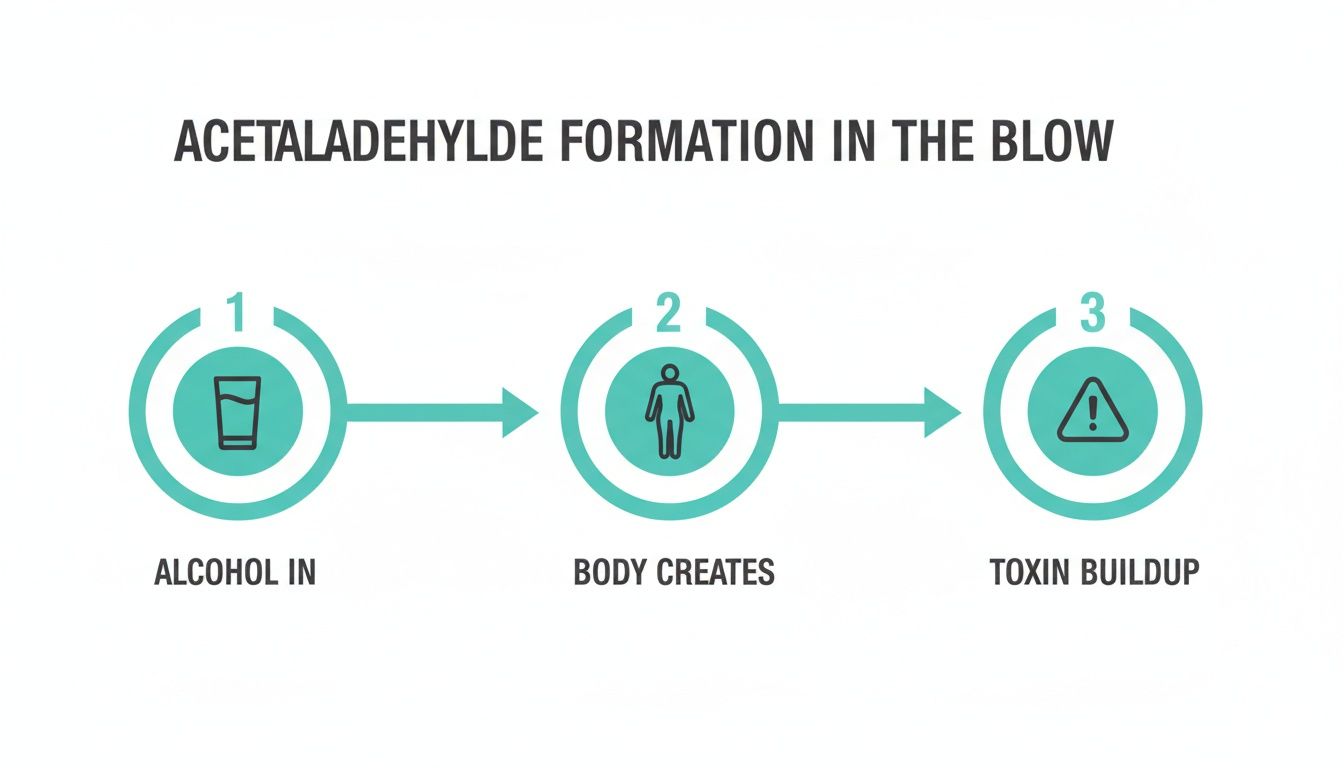
This visual really drives home how a simple drink gets transformed into a source of toxicity, setting the stage for all those unpleasant physical feelings that can follow.
The Critical Role of Your Second Enzyme
Once acetaldehyde is created, a second enzyme, acetaldehyde dehydrogenase (ALDH2), swoops in to do its thing. ALDH2 is the clean-up crew on the assembly line. Its mission is to rapidly break down that toxic acetaldehyde into a harmless substance called acetate—which is basically just vinegar. From there, your body easily converts the acetate into water and carbon dioxide, which you simply breathe out.
When this two-step system is running like a well-oiled machine, acetaldehyde gets neutralized almost as fast as it’s made, and you feel perfectly fine. But what happens when the assembly line gets jammed up and a bottleneck forms?
"The efficiency of the ALDH2 enzyme is the single most important factor determining how your body handles alcohol. A slow or impaired ALDH2 function directly leads to a buildup of toxic acetaldehyde, triggering the cascade of symptoms we associate with a hangover."
This is exactly where the trouble starts. When you drink too quickly, your liver's ADH enzyme churns out acetaldehyde faster than the ALDH2 enzyme can clear it away. The toxic stuff starts to pile up in your blood, liver, and other organs, where it begins to cause all sorts of problems. To get the full picture, you can learn more about alcohol metabolism and how your body processes drinks in our detailed guide.
When Genetics Disrupts the Assembly Line
For a huge chunk of the global population, this internal system is naturally less efficient, and it all comes down to genetics. It’s estimated that about 30-50% of people of East Asian descent have a genetic variant that makes their ALDH2 enzyme less active, or in some cases, completely inactive. This is often called "ALDH2 deficiency."
When someone with this deficiency has a drink, their body produces acetaldehyde at a normal pace but has a really hard time breaking it down. This creates a massive traffic jam on the metabolic assembly line. Acetaldehyde levels can shoot up to dangerously high concentrations after just one or two drinks, leading to some pretty intense and immediate symptoms, including:
- Severe Facial Flushing: Often called "Asian Flush," this is the classic sign of a rapid acetaldehyde buildup causing blood vessels to dilate.
- Racing Heartbeat: The body's "fight-or-flight" response gets triggered by the high toxin levels.
- Intense Headaches and Nausea: These are direct neurological and gut reactions to the poison.
This genetic factor is a powerful reminder of just how crucial the ALDH2 enzyme is for protecting your body. Whether the bottleneck is caused by drinking too much too fast or by a genetic quirk, the result is the same: an accumulation of acetaldehyde that makes you feel awful.
Recognizing the Immediate Signs of Acetaldehyde Buildup
Ever had a night out and felt absolutely terrible afterward, even chalking it up to a "bad hangover"? That collection of awful symptoms is actually your body sending out a distress signal. It’s a huge red flag that acetaldehyde, the toxic stuff your body makes when it breaks down alcohol, has overwhelmed your system.
Learning to spot these immediate signs is the key to connecting the dots between that extra drink and the next-day misery. These acetaldehyde toxicity symptoms aren’t just random aches and pains; each one is a specific physiological reaction to this nasty compound. Let's break down exactly what’s happening inside your body.

Cardiovascular Signs: The Flushing and Racing Heart
One of the most obvious signs that acetaldehyde is running rampant is the infamous red face, or "Asian Glow." This happens because acetaldehyde is a powerful vasodilator, meaning it forces your blood vessels to relax and widen. All that extra blood rushes to the surface of your skin, especially your face and neck, and voilà—you’re glowing, but not in a good way.
That same process triggers another common symptom: a racing, pounding heart (tachycardia). When your blood vessels expand, your blood pressure can take a nosedive. To keep blood moving where it needs to go, your heart has to kick into overdrive, beating faster and harder to compensate.
Basically, your cardiovascular system is working overtime to deal with the toxin. This reaction is especially intense for people with a slow ALDH2 enzyme, which is the root cause of "Asian Glow." If this sounds all too familiar, you might want to check out our guide on how to prevent Asian Glow.
Neurological Effects: The Pounding Headache and Brain Fog
That splitting headache the morning after isn't just because you're dehydrated. Acetaldehyde triggers a major inflammatory response throughout your body, and that includes your brain and the sensitive tissues around it. This inflammation is what's behind that intense, throbbing pain.
On top of that, the compound messes with your brain's normal operations, leading to dizziness, brain fog, and even anxiety. It throws your neurotransmitters out of whack, leaving you feeling mentally sluggish and emotionally on edge. Your brain is essentially under a low-grade toxic assault, and these neurological symptoms are the result.
Acetaldehyde acts as a systemic irritant. Its accumulation triggers the release of stress hormones like epinephrine, kicking your body into a "fight-or-flight" state that contributes to anxiety, sweatiness, and that feeling of being on edge long after the party has ended.
Gastrointestinal Distress: Nausea and Stomach Pain
Your digestive system is on the front lines when you drink, and it takes a direct hit from acetaldehyde. The toxin seriously irritates the lining of your stomach and intestines, which is why you feel nauseous and might even end up vomiting.
This irritation sends a clear signal to your brain’s nausea center: "Get this poison out now!" It’s your body’s defense mechanism, even if it feels awful. The effect is so potent that even small amounts can cause major stomach upset.
For social drinkers and busy professionals, blood acetaldehyde levels can spike 10 to 20 times higher than normal after just a couple of drinks, making these symptoms much worse. In fact, controlled studies found that exposing people to just 134 parts per million of acetaldehyde vapor caused mild upper respiratory irritation in only 30 minutes. That’s how fast this stuff attacks your body.
When you start recognizing these signs—the flush, a racing heart, a killer headache, and nausea—for what they are (direct acetaldehyde toxicity symptoms), you can better understand your body’s limits and make smarter choices for your health.
The Long-Term Health Risks of Repeated Acetaldehyde Exposure
Those awful feelings after a night of drinking—the flushed face, the pounding head—are more than just temporary discomfort. Think of them as your body’s warning system. While a single instance might feel like a minor inconvenience, repeatedly exposing your body to high levels of acetaldehyde is where the real trouble starts.
It's a lot like getting a sunburn. A single bad burn is painful but eventually heals. But getting sunburned over and over again? That’s what seriously elevates your risk for long-term skin damage. The same logic applies to acetaldehyde. Every time this toxin builds up, it’s putting stress on your cells and sparking inflammation, slowly chipping away at your body’s defenses over the long haul.
It's a Classified Carcinogen
Let’s get straight to the point: the most serious long-term risk of acetaldehyde is its link to cancer. This isn’t just a theory; it’s backed by solid science. The U.S. Environmental Protection Agency (EPA) has officially classified acetaldehyde as a probable human carcinogen (Group B2).
So, how does a byproduct of alcohol cause cancer? Acetaldehyde is an incredibly reactive little molecule. It can actually bind directly to your DNA, creating mutations and breaking its strands. Your body scrambles to repair this damage, but sometimes it makes mistakes, leading to genetic errors that can give cancer cells a foothold to grow and spread.
This DNA-damaging effect is most severe in the tissues that come into direct contact with alcohol, which is why chronic acetaldehyde exposure is strongly tied to a higher risk of cancers in the:
- Esophagus (the tube connecting your throat to your stomach)
- Head and Neck (mouth, throat, and voice box)
- Liver (the main organ processing alcohol)
This isn't just a human problem, either. Animal studies have confirmed the danger, linking acetaldehyde inhalation to nasal tumors in rats and laryngeal tumors in hamsters, as detailed in an official European Commission scientific review.
Damage Beyond Cancer
Acetaldehyde’s destructive habits don’t stop at cancer. It’s a key player in alcohol-related damage to some of your most important organs, contributing to chronic conditions that can seriously impact your quality of life.
The liver is ground zero. Since it’s responsible for processing almost all the alcohol you drink, it takes the biggest hit from acetaldehyde. This ongoing exposure triggers inflammation (alcoholic hepatitis), cell death, and the buildup of scar tissue. Over time, this scarring can lead to cirrhosis, a severe condition where the liver simply can't do its job anymore. If you want a deeper dive, check out our guide on how alcohol affects the liver.
"Repeated acetaldehyde exposure acts like a slow-burning fire in the body. It promotes chronic inflammation, damages cellular machinery, and accelerates the aging process, particularly in the liver and cardiovascular system."
Your heart and brain aren't safe, either. The toxin can contribute to high blood pressure, weaken the heart muscle (cardiomyopathy), and may even raise the risk of neurodegenerative diseases by fueling oxidative stress and inflammation in the brain.
Acute Symptoms vs. Chronic Risks
It's so important to understand the difference between the immediate, annoying symptoms of a hangover and the quiet, long-term damage that's happening behind the scenes. The acute symptoms are your body's alarm bell. The chronic risks are what happens when you keep hitting the snooze button.
The table below breaks down how the danger escalates from a single night of drinking to a consistent pattern of consumption.
Acute vs. Chronic Acetaldehyde Toxicity Symptoms and Risks
| Symptom/Risk Area | Acute Effects (After a single drinking session) | Chronic Risks (From repeated exposure over time) |
|---|---|---|
| Neurological | Pounding headache, dizziness, temporary anxiety, and brain fog. | Potential contribution to neurodegeneration and long-term cognitive impairment. |
| Cardiovascular | Facial flushing, rapid heartbeat (tachycardia), and palpitations. | Increased risk of high blood pressure, cardiomyopathy, and irregular heart rhythms. |
| Gastrointestinal | Nausea, vomiting, and stomach lining irritation. | Elevated risk of cancers in the esophagus, stomach, and colon. |
| Liver Function | Temporary inflammation and oxidative stress in liver cells. | Progressive liver damage, including fatty liver, alcoholic hepatitis, and irreversible cirrhosis. |
| Overall Health | General fatigue, muscle aches, and feelings of malaise. | DNA damage leading to a significantly increased risk of various cancers, particularly in the head and neck. |
The key takeaway? Recognizing that each hangover is a signal of acute toxicity is the first step. Protecting your long-term health is all about taking action to minimize that toxic load whenever you choose to drink.
Actionable Strategies to Manage Acetaldehyde Toxicity
Knowing the science behind acetaldehyde is one thing, but putting that knowledge into action is where the magic happens. While the only 100% effective way to avoid acetaldehyde buildup is to skip alcohol altogether, there are smarter habits you can adopt for those times you do want to socialize.
These aren't just tricks to feel better the next day. They're proactive strategies to protect your long-term health. A few simple adjustments can make a massive difference in how you feel, both now and in the future.

Foundational Habits for Smarter Socializing
Before you reach for any special supplements, you have to get the basics right. Think of these habits as your first line of defense. They directly control how much work you're giving your body to do at any one time.
Imagine your liver's enzymes are a small, dedicated cleanup crew. If you throw a massive party and make a huge mess all at once, they’ll get overwhelmed. Fast. But if you keep the party contained and slow things down, they can keep up without a problem.
Here are the non-negotiables:
- Pace Yourself: The golden rule is simple: no more than one standard drink per hour. This gives your ALDH2 enzyme a fighting chance to process acetaldehyde as it’s created, preventing a toxic traffic jam in your system.
- Hydrate with Water: Make it a rule to drink a full glass of water between each alcoholic beverage. This not only forces you to slow down but also fights off the dehydrating effects of alcohol that make headaches and fatigue so much worse.
- Never Drink on an Empty Stomach: Eating a real meal before you start—especially one with protein, healthy fats, and carbs—is crucial. Food slows down how quickly alcohol gets absorbed into your bloodstream, giving your liver a more manageable, steady workflow instead of a sudden flood.
Supporting Your Body's Detoxification Pathways
Beyond just slowing down your intake, you can actively give your body the tools it needs to neutralize acetaldehyde more efficiently. This means loading up on the right nutrients that support your natural detoxification systems.
Modern science, often taking cues from centuries-old wellness practices, has pinpointed key ingredients that can really help out. Some of these work by boosting your detox enzymes, while others help your body fight the oxidative stress acetaldehyde leaves in its wake.
By focusing on solutions that help your body process acetaldehyde more efficiently, you are addressing the root cause of the problem, not just masking the symptoms. This is the difference between reactive recovery and proactive prevention.
For anyone trying to balance a social life with a health-conscious lifestyle, this proactive approach is a total game-changer. It’s about making smart choices that let you enjoy the moment without paying for it later.
A Modern Solution Inspired by Tradition
For those looking for an extra layer of support, Upside Hangover Jelly was designed for this exact purpose. It’s a convenient, on-the-go sachet packed with a blend of natural, science-backed ingredients.
Inspired by Korean wellness traditions that have focused on holistic recovery for generations, Upside delivers key compounds that support your body's defenses against acetaldehyde. The formula is specifically crafted to help your liver's enzymes work more effectively, breaking down the toxin before it has a chance to ruin your night and your morning.
Upside isn't a "cure"—it's a smart tool for anyone who wants to be proactive. Just take the easy-to-use jelly before you start your evening. Its natural, vegan, and allergen-free formula is a reliable choice for maintaining your balance, so you can wake up feeling refreshed and ready to seize the day.
So, What's the Takeaway?
Navigating the world of social drinking doesn't have to be a battle between having fun and feeling good the next day. The real power move is understanding what acetaldehyde toxicity symptoms are telling you. This isn't about scaring you away from a good time; it's about shifting the conversation from just "dealing with a hangover" to actively looking out for yourself from the inside out.
We’ve covered everything from how your liver processes alcohol to the immediate red flags and serious long-term risks. Think of it this way: that flushing, headache, and nausea aren't just random annoyances. They're direct messages from your body screaming that its defense systems are overloaded. When you start seeing them as signals, you can make smarter choices that let you enjoy your social life without wrecking your health goals.
It all comes down to balance and being prepared. You absolutely have the power to hang out with friends and still wake up feeling sharp, energized, and ready to own your day.
A Smarter Way to Socialize
Simple habits like pacing yourself, chugging water between drinks, and never, ever drinking on an empty stomach make a huge difference. They’re the foundation for a better morning.
But for those nights when you know you'll need a little extra backup, a solution like Upside Hangover Jelly can be a total game-changer. It’s built to help your body break down that nasty acetaldehyde more efficiently, getting straight to the root cause of all that next-day misery.
Your health is your most valuable asset. By making informed choices, you can be present for every party and every toast while still protecting yourself for the long run. It's all about making sure you can keep 'living more' for years to come.
Ultimately, it’s about weaving these smarter strategies into your routine. It's time to end the cycle of post-party regret and start a new chapter of balanced, health-conscious fun.
Your Acetaldehyde Questions, Answered
When you're trying to have a good time and feel good the next day, it's normal to have a few questions about what's actually going on inside your body. Let's clear up some of the most common myths and facts about acetaldehyde, hangovers, and how your body handles alcohol.
Does the type of alcohol I drink affect my acetaldehyde levels?
Not as much as you might think. While it's true that some drinks like aged whiskeys or red wine have more congeners (which can include small amounts of acetaldehyde), this is just a drop in the bucket.
The real culprit is the ethanol itself. The vast majority of the acetaldehyde flooding your system is created when your liver breaks down that ethanol. It doesn't matter if it came from beer, a fancy cocktail, or a cheap bottle of wine. More alcohol means more work for your liver, which means a bigger pile-up of acetaldehyde.
Can I build an immunity to acetaldehyde symptoms?
Nope, definitely not. You can't become "immune" to a toxin. While you might develop a higher tolerance to alcohol's buzz, that doesn't mean your body is magically getting better at clearing acetaldehyde. It's actually the opposite.
Frequent, heavy drinking puts a huge strain on your liver, which can make it less efficient at its job over time.
A higher alcohol tolerance is a bit of a trap. It just masks the damage happening on a cellular level. Your liver is still getting hammered by acetaldehyde, and every exposure adds to the risk of long-term problems like inflammation and DNA damage.
So even if you don't feel as drunk, the toxic toll on your body is just as bad—if not worse.
Are "Asian Flush" and acetaldehyde toxicity the same thing?
Yes, they're directly related. "Asian Flush" is a very clear, very visible sign of severe acetaldehyde toxicity.
It all comes down to genetics. A huge number of people, especially those of East Asian descent, have a genetic trait that results in a much less effective ALDH2 enzyme. This is the specific enzyme that's supposed to break down acetaldehyde. When it can't keep up, the toxin builds up incredibly fast.
This rapid accumulation is what causes those intense symptoms, even after just a drink or two:
- A bright red face and neck
- A pounding, racing heart
- Headaches and sudden nausea
Think of it as your body's emergency alarm going off, screaming that it's been poisoned by acetaldehyde and can't handle any more. It’s one of the clearest examples of just how nasty this stuff is.
Ready to enjoy your nights out and still feel your best the next day? Upside is designed to help your body process acetaldehyde more efficiently, targeting the root cause of hangover misery.
Take control of your mornings and live more. Learn more and get your Upside Hangover Jelly at https://enjoyupside.com.
#upside #enjoyupside #upsidejelly #livemore #hangovercure #hangoverprevention #fighthangovers #preventhangovers #HangoverRelief #MorningAfter #PartySmarter #HydrationStation #WellnessVibes #RecoverFaster #NoMoreHangovers #HealthyParty #HangoverHacks #FeelGoodMorning #NightlifeEssentials #HangoverFree #SupplementGoals #PostPartyPrep #GoodVibesOnly #HealthAndParty #HangoverHelper #UpsideToPartying