

· By Annemarie
What to Eat After Drinking Alcohol for a Faster Recovery
When you’re staring down the barrel of a rough morning after, figuring out what to eat can feel like a monumental task. The key is to focus on foods that rehydrate, restock your electrolytes, and get your blood sugar back on an even keel. Think bananas for potassium, eggs for cysteine, and avocado for healthy fats—these are your best friends for helping your body recover and feel human again, fast.
Your Smart Recovery Plan Starts Now
The morning after a big night out can be brutal, but your recovery doesn't have to be a guessing game. Forget the old myths and greasy spoon "cures." A little bit of science can make all the difference. Instead of just gritting your teeth and surviving the day, you can strategically refuel your body to tackle the root causes of your misery. The goal isn’t just to find comfort food; it’s to choose ingredients that actively help you bounce back.
Think of your body like a high-performance engine that alcohol has temporarily thrown out of whack. Your mission is to restore that balance. That means focusing on a few key nutritional goals that directly fight back against what alcohol took from you.
The Pillars of Post-Drinking Nutrition
To get back on your feet faster, your food choices should target four main areas of recovery. Each one plays a critical role in helping you feel like yourself again.
- Rehydration: Alcohol is a diuretic, which is just a fancy way of saying it makes you pee out a lot of fluids. Getting water back into your system is priority number one.
- Replenish Electrolytes: Along with all that water, you lose crucial minerals like potassium and sodium. These are essential for everything from nerve function to preventing muscle cramps.
- Stabilize Blood Sugar: Alcohol can send your blood sugar on a rollercoaster, often leaving it in a nosedive. This is a big reason you feel so tired, weak, and irritable.
- Support Your Gut: Alcohol can be pretty harsh on your stomach lining. Choosing foods that are easy to digest and soothing is key to settling things down.
By focusing on these pillars, you turn your next meal from a simple craving-filler into a powerful recovery tool. It's about working with your body, not against it.
This approach gives you a clear roadmap for recovery. To make it even easier, we've put together a quick guide to the nutrients your body is begging for and the best places to find them.
Quick Guide to Hangover Recovery Nutrients
Here’s a simple breakdown of the key players you need on your team to fight off a hangover, and the best foods to source them from.
| Nutrient Your Body Needs | Why It Helps Your Recovery | Best Food Sources |
|---|---|---|
| Potassium | Replaces lost electrolytes to fight fatigue and weakness. | Bananas, avocados, sweet potatoes, spinach |
| B-Vitamins | Supports your energy levels and helps the liver process alcohol. | Whole grains, eggs, leafy greens, salmon |
| Cysteine | An amino acid that helps break down acetaldehyde, a nasty byproduct of alcohol metabolism. | Eggs, poultry, yogurt, oats |
| Complex Carbohydrates | Provides a slow, steady release of energy to stabilize those crashing blood sugar levels. | Oatmeal, whole-wheat toast, brown rice, quinoa |
Armed with this knowledge, you can build a recovery plate that not only tastes good but actually gets the job done, helping you feel better, faster.
The Science Behind Your Hangover Cravings
Ever wake up after a night out with a desperate need for a greasy bacon, egg, and cheese and a sugary soda? You’re not just being dramatic. Your body is practically sending out an SOS signal, and understanding what it’s really asking for is the first step to feeling human again.
Let's start with the obvious: that sandpaper-in-your-mouth level of thirst. Alcohol is a diuretic, which is just a scientific way of saying it makes you pee... a lot. Think of it like this: every drink you have basically opens the floodgates, flushing water out of your system way faster than normal. Before you know it, you’re seriously dehydrated.
But it’s not just water you’re losing. That constant stream also carries away vital minerals called electrolytes—think potassium and sodium. These guys are the spark plugs for your body, keeping your nerves and muscles working right. When they're low, you feel weak, dizzy, and shaky. Sound familiar?
The Blood Sugar Rollercoaster
So, dehydration covers the thirst, but what about that intense, almost primal urge for a stack of pancakes? For that, we need to look at your liver. Your liver is a multitasking machine, but when alcohol enters the picture, it drops everything else to deal with the intruder. One of its main jobs—keeping your blood sugar steady—gets put on the back burner.
This can cause your glucose levels to crash, a state known as hypoglycemia. Your brain, which runs almost entirely on glucose, panics. It sends out an emergency broadcast for a quick energy fix, which is why you suddenly need that pile of carbs. Your body is screaming for fuel, and simple carbs are the fastest way to get it. While it feels good for a minute, it often sets you up for another crash later.
Introducing Acetaldehyde: The Real Villain
Now for the real bad guy in this whole hangover drama: a nasty, toxic compound called acetaldehyde. When your liver breaks down alcohol, acetaldehyde is the leftover gunk it creates. It’s way more toxic than the alcohol you drank in the first place and is a huge reason you have that pounding headache, nausea, and general feeling of doom.
Your liver works overtime to break acetaldehyde down into something harmless, but it can only do so much. When you overdo it, this toxin builds up and makes you feel truly awful. To get the full picture, you can learn more about what causes hangovers in our complete guide.
Choosing the right foods helps your body manage this toxic load. Nutrients like the amino acid cysteine, found in eggs, directly support the breakdown of acetaldehyde, helping to clear it from your system faster.
So you’re fighting a war on three fronts: dehydration, unstable blood sugar, and a toxic invasion. This simple diagram shows how your recovery plan should tackle each of these problems head-on.
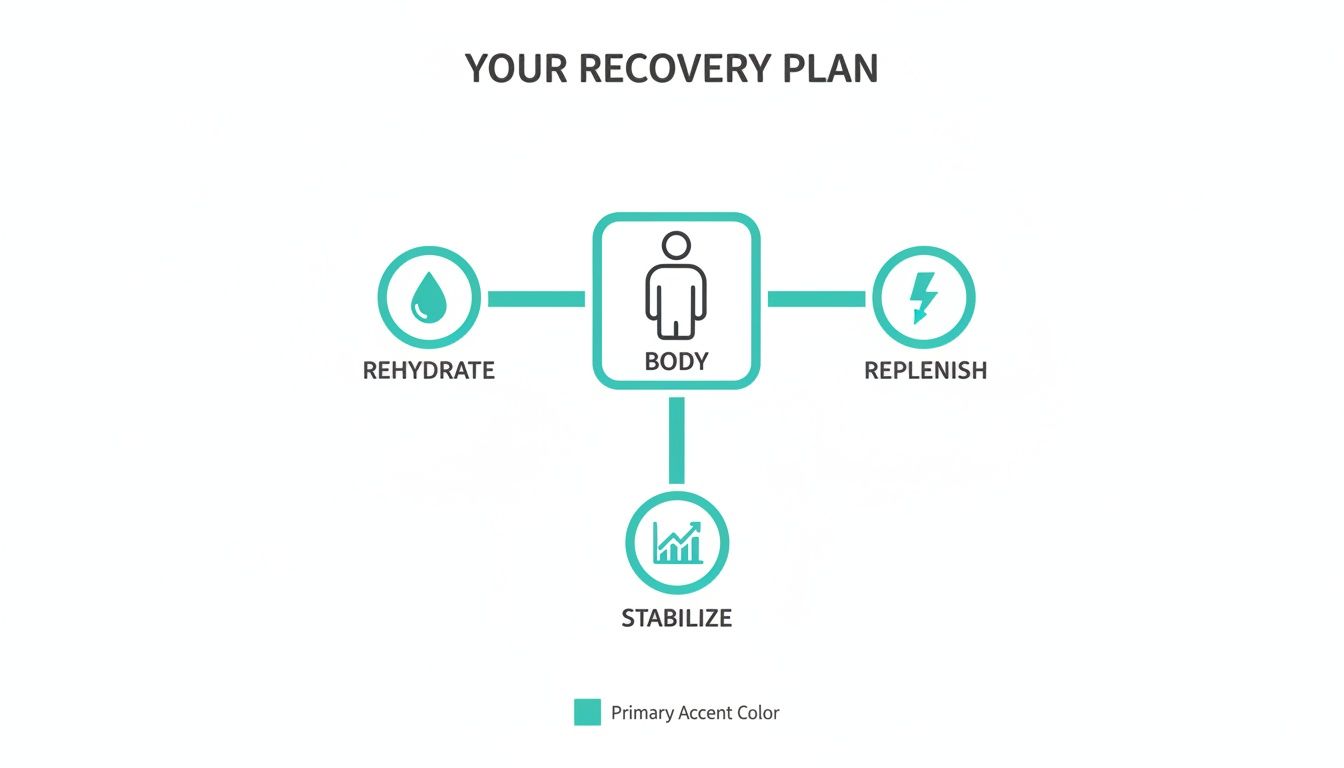
The takeaway here is simple. To bounce back, you need to systematically rehydrate, restock your electrolytes, and stabilize your energy. Once you understand the why behind your cravings, you can start making choices that actually help you recover instead of just putting a band-aid on the problem. Your body isn't just hungry; it's asking for the right tools to fix itself.
The Best Foods to Eat Right After Drinking
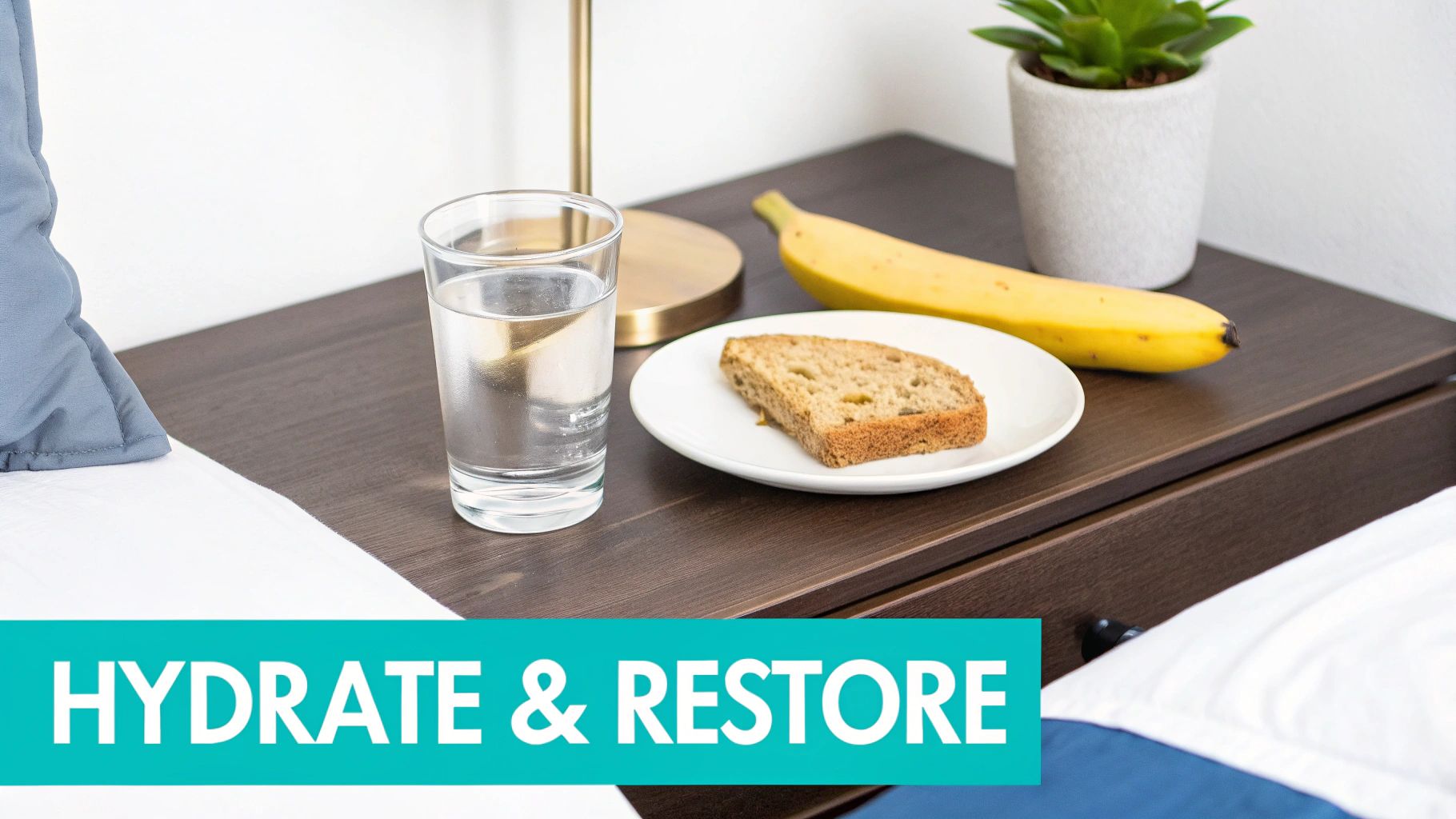
That little window of time between your last sip and your head finally hitting the pillow? That's your golden opportunity. What you do right then can seriously change the game for how you feel tomorrow.
The goal here isn't to stuff yourself with a full-blown meal—that’s just asking for trouble from your digestive system. Instead, think of it as giving your body a gentle, strategic head start on recovery before you even fall asleep.
This is all about proactive damage control. Your body's already working overtime dealing with dehydration and wild blood sugar swings. Shoving a heavy, greasy meal down at this point is like asking a totally exhausted crew to build a skyscraper overnight. It’s just too much. You need to give them simple, easy-to-use tools.
Lightweight Champions for Overnight Repair
The best snacks for this moment are light, packed with nutrients, and super easy to digest. You're looking for a triple threat: hydration, electrolytes, and a few complex carbs to keep things stable while you snooze.
Here are a few of your best bets:
-
A Banana: There's a reason this is a classic. Bananas are loaded with potassium, one of the main electrolytes that alcohol flushes out of your system. They're also gentle on the stomach and give you a bit of natural sugar to fight off that alcohol-induced blood sugar dip.
-
A Handful of Nuts: A small handful of almonds or walnuts provides healthy fats and a dose of magnesium, another mineral that takes a hit when you drink. They've got just enough substance to feel satisfying without being heavy.
-
A Slice of Whole-Grain Toast: This is your simple, steady carb source. Your body breaks it down slowly through the night, providing a steady release of glucose. This helps you avoid that awful 3 a.m. blood sugar crash that loves to ruin a good night's sleep.
-
Water-Rich Fruits: Think slices of watermelon or a few berries. You’re getting much-needed hydration plus a dose of antioxidants, which help your body fight the oxidative stress alcohol causes.
The Strategic Supplement Advantage
Let's be real, sometimes eating anything after a night out feels like a monumental task. This is where a targeted recovery supplement can be an absolute lifesaver. It delivers a concentrated punch of the exact nutrients your body is craving, no chewing required.
Think of it like a nutritional shortcut. An easy-to-take supplement like an Upside Hangover Stick gives you a direct hit of electrolytes, antioxidants, and liver-supporting ingredients in a simple, fast-acting format. It’s literally designed to be taken right before bed, so it can get to work with your body's natural repair cycle while you're fast asleep.
This approach ensures you’re getting those vital nutrients back into your system at the perfect time. It's not about replacing food, but about adding a powerful, focused tool to your recovery kit—especially for those nights when your appetite just isn't there. Giving your body this boost before you clock out for the night is the ultimate setup for a much, much better morning.
Nourishing Your Body the Morning After
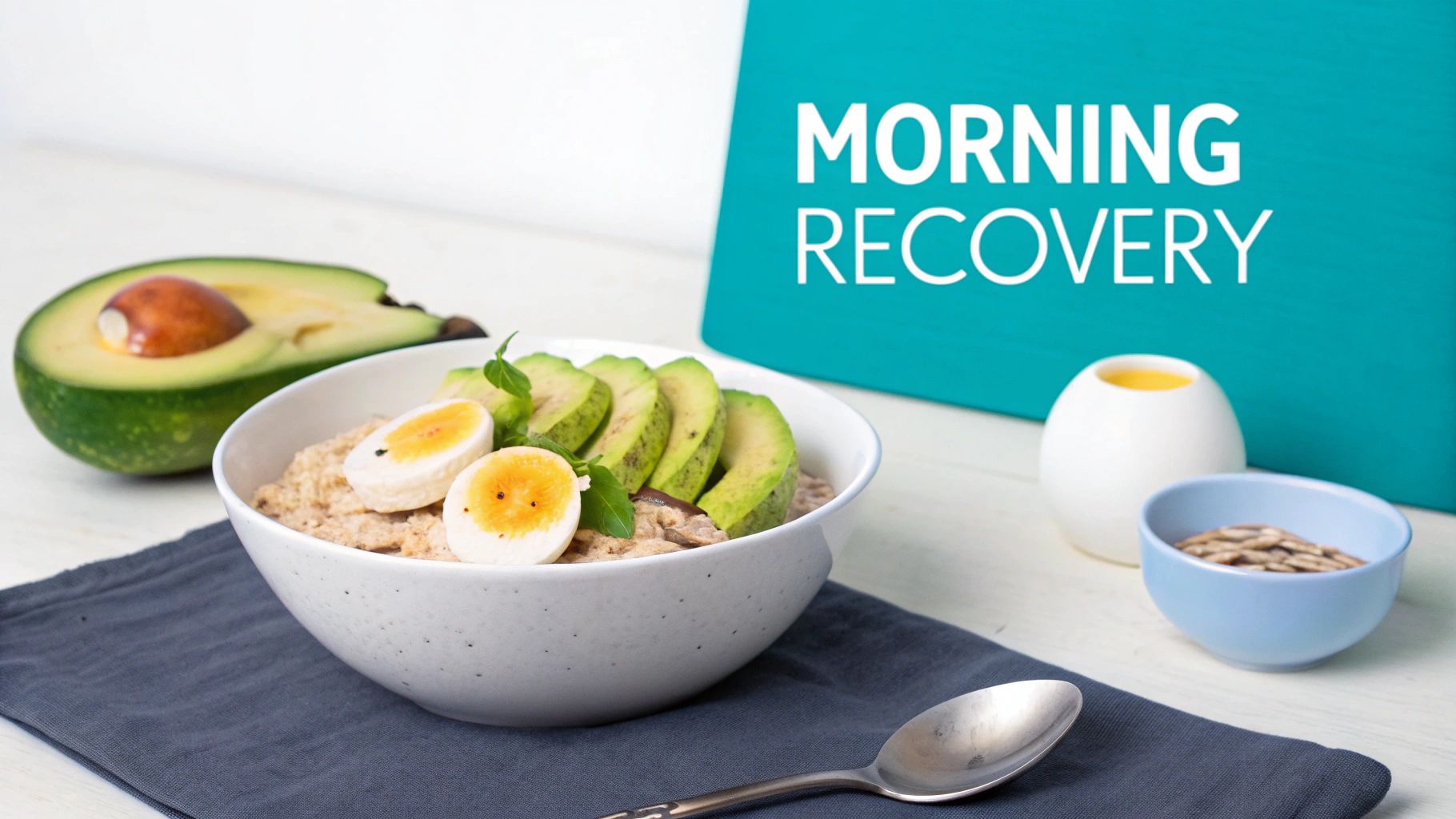
When you wake up after a night out, that greasy, heavy breakfast seems to call your name. It's tempting, right? But while a mountain of bacon and fried potatoes feels like the right move, it usually just puts more stress on your already overworked digestive system and liver.
The real secret to feeling human again isn't comfort food; it's healing food.
Your body isn't actually craving grease—it's craving repair. It needs a strategic dose of specific nutrients to counteract the damage from the night before. This means focusing on meals that rehydrate you, replenish lost minerals, and give your body the tools it needs to process those lingering toxins.
Think of your morning-after meal as a gentle reset. You want easily digestible, nutrient-dense foods that will calm inflammation and get your energy levels back on track.
Build a Better Breakfast Bowl
So, let's skip the fry-up and build a breakfast that actually helps you recover. Some of the best recovery foods are probably sitting in your kitchen right now.
Here are the champions of the morning-after meal:
- Eggs: These are a legit superfood for a hangover. Eggs are packed with an amino acid called cysteine, which gets to work breaking down acetaldehyde—that nasty byproduct of alcohol that’s making your head pound.
- Avocado: This creamy green fruit is a potassium powerhouse. Alcohol makes you lose electrolytes, and that potassium hit from an avocado helps fight off that weak, tired feeling. Plus, its healthy fats give your liver some much-needed support.
- Oatmeal: Instead of a sugary cereal that will send your blood sugar crashing all over again, go for oatmeal. Its complex carbs give you a slow, steady release of energy. It’s also loaded with B vitamins, which get seriously depleted when you drink.
These three form a true recovery trifecta. Together, they tackle the main culprits behind your hangover—toxin buildup, electrolyte loss, and wonky blood sugar—all in one simple meal.
A breakfast bowl with a couple of poached eggs, sliced avocado, and a side of plain oatmeal is one of the smartest things you can do. It's a meal literally designed for healing.
Soothing Soups and Restorative Broths
If your stomach is feeling especially delicate, even the thought of solid food can be a bit much. This is where a warm, broth-based soup becomes your best friend. It delivers hydration and nutrients in a way that's incredibly easy on your gut.
A simple chicken or vegetable broth rehydrates you while giving you a gentle dose of sodium and other electrolytes. It’s comforting, helps soothe an irritated stomach, and can take the edge off your nausea. Toss in some spinach for vitamins or shredded chicken for a little protein to up the ante.
This isn’t just a hunch; cultures around the world swear by it. In Korea, a go-to hangover cure is often a vegetable soup with rice and kimchi, which scores an impressive 300 on Lifesum's Hangover Nutrition Index. This combo is brilliant: you get magnesium and potassium from the veggies, vitamins from the greens, and gut-soothing probiotics from the kimchi. This is key, as inflammation affects up to 70% of heavy drinkers.
The rice provides gentle carbs to stabilize blood sugar, which can plummet and cause fatigue in 80% of cases after drinking.
Delicious and Evidence-Based Meal Ideas
Let's put this into practice. Here are a few simple breakfast plans that are backed by the science of recovery and are actually delicious.
The Recovery Plate:
- Scramble two eggs to get that vital cysteine.
- Add half a sliced avocado on the side for potassium and healthy fats.
- Include a slice of whole-wheat toast for steady, complex carbs.
The Hydration Bowl:
- Prepare a bowl of oatmeal made with water or milk.
- Top with a sliced banana for another potassium boost.
- Stir in a handful of berries for antioxidants and hydration.
These meals are way more effective than their greasy counterparts because they get to the root of the problem instead of just masking the symptoms. They give you sustained energy, replenish what you’ve lost, and support your body’s natural detox process.
If you want to explore more liquid-based recovery options, check out our guide on the best juice to drink for a hangover. Making these smart choices is the first step in turning a rough morning into a day you can actually use.
Global Wisdom on Hangover Cures
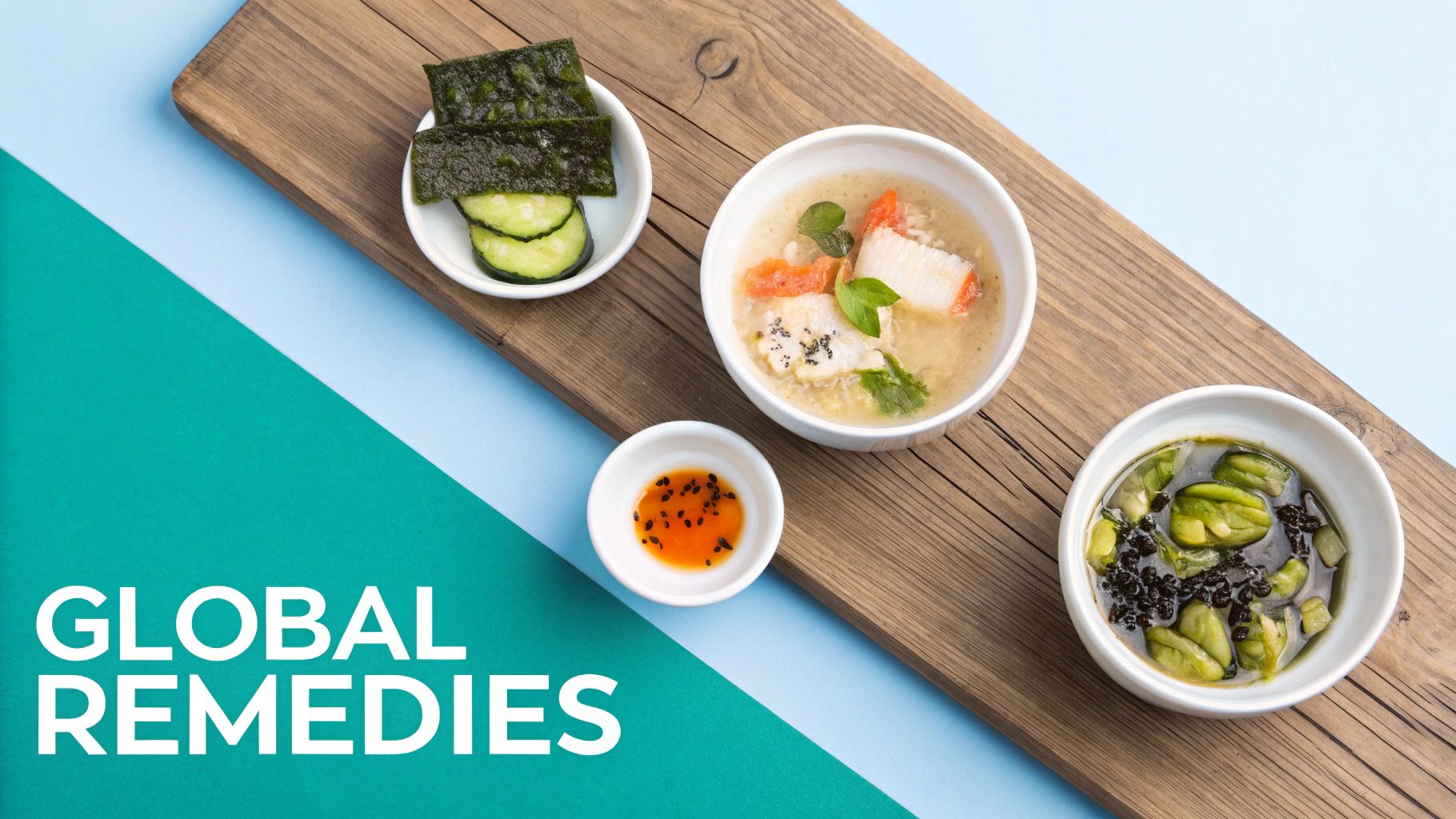
The hunt for the perfect hangover cure is a tale as old as time. While we all know the universal misery—pounding head, a stomach doing backflips, and soul-crushing fatigue—the solutions are as different as the cultures that swear by them.
It turns out that a lot of those traditional morning-after meals are loaded with exactly what your body is screaming for. These aren't just old wives' tales; many of them line up perfectly with the modern science of recovery.
By taking a quick culinary tour around the world, we can steal some brilliant, effective, and actually delicious ideas for our own post-party game plan.
Japan's Top-Ranked Recovery Meal
Picture this: you wake up after a big night out, feeling less than stellar. Where do you turn? According to Lifesum's Hangover Nutrition Index, the best remedy in the world comes from Japan.
A simple bowl of miso soup with rice and pickles scored a perfect 220 points, making it the top-ranked hangover meal across 10 different countries. Researchers didn't just guess; they analyzed these foods for electrolytes, fiber, probiotics, low fat content, and hydration. You can dive deeper into these fascinating hangover food findings.
So what's the magic behind this humble combination? It's a masterclass in targeted nutritional support.
- Miso Soup: This fermented soybean paste is packed with probiotics to help calm down your irritated gut. Plus, the warm broth is a fantastic way to rehydrate and replenish the sodium you lost.
- Rice: As a gentle, complex carb, rice gives you a steady stream of energy to fight that blood sugar crash, and it's super easy on your stomach.
- Pickles: Those fermented pickles (tsukemono) offer another dose of gut-friendly probiotics and a little extra jolt of electrolytes to get you back in balance.
This meal is light, easy to digest, and checks all the major recovery boxes. It’s a perfect example of a smart, healing approach.
Swedish Simplicity and Healing Power
Let's hop over to Scandinavia for another brilliant take on the morning-after meal. The traditional Swedish hangover cure is often a light vegetable and fish soup. It might sound a bit different, but nutritionally, it’s one of the smartest things you can eat.
The star of the show here is the fish, usually something like salmon or cod. These guys are loaded with omega-3 fatty acids, which are basically nature's anti-inflammatory agents. Alcohol causes a ton of inflammation in your body—a huge reason your head is pounding—so this is a direct, effective counterattack.
This approach highlights a crucial principle: fighting inflammation is just as important as rehydrating. A meal rich in omega-3s actively works to calm the inflammatory fire that alcohol started.
The veggies in the soup add essential vitamins and minerals, while the broth gives you the same hydrating, electrolyte-boosting benefits as Japan's miso soup. It's another fantastic example of a light, nourishing meal that works with your body, not against it.
Why Greasy Fry-Ups Fall Short
Now, let's talk about the classic American or British "greasy fry-up." A giant plate of bacon, sausage, fried eggs, and hash browns is what so many of us crave, but it's probably one of the worst things you could do to your body.
Sure, the salt and fat feel satisfying for a minute, but you're putting a massive strain on your already overworked liver and digestive system. Your liver is in overdrive trying to process alcohol's toxic leftovers; asking it to also deal with a heavy, high-fat meal is like sending in a cleanup crew and then starting a grease fire.
This can lead straight to indigestion, bloating, and that sluggish feeling that just won't quit.
The lesson from around the world is clear. When you're figuring out what to eat after drinking alcohol, choose meals that are hydrating, healing, and easy to digest. Light soups, fermented foods, and lean proteins are your best friends. Heavy, greasy stuff? Your worst enemies. Take a cue from these global traditions, and you'll be on the fast track to feeling human again.
Foods and Drinks to Avoid When You're Hungover
Knowing what to eat after a long night is only half the battle. Just as important is knowing what not to eat, because the wrong choices can easily derail your recovery and leave you feeling even worse. Some of the most popular "cures" are actually recovery traps in disguise.
Your body is already under some serious stress. Your liver is working overtime, your digestive system is probably pretty irritated, and your hydration is at an all-time low. The last thing you want to do is burden it with foods and drinks that just add more work to its already full plate.
The Problem with Greasy Food
When a hangover hits, that craving for a greasy burger and fries can feel all-consuming. While it might seem like the ultimate comfort food, it's one of the worst things you can give your taxed system. A heavy, high-fat meal is tough to digest, which can crank up your nausea and lead to some serious indigestion.
This is where smart recovery foods really shine. Take Sweden's light vegetable and fish soup, for example. It's celebrated for its lean protein and hydrating broth. The fish provides omega-3s that help cool down the inflammation linked to headaches in up to 75% of hangovers. It’s a healing, lean approach—a total contrast to a fatty fry-up that just leaves you feeling more tired and bloated. You can check out how other global hangover foods are rated for recovery on ground.news.
Why More Alcohol Is Never the Answer
The old "hair of the dog" myth—having another drink to cure your hangover—is one of the most stubborn and damaging pieces of advice out there. Sure, a morning drink might temporarily numb your symptoms, but you’re only postponing the inevitable crash and, trust me, making it much worse.
Think of it this way: you're just hitting the snooze button on your hangover. You’re not solving the problem; you're just delaying the pain and forcing your liver to process even more alcohol.
Sugary Drinks and Excess Coffee
Reaching for a sugary soda or energy drink for a quick boost might seem like a great idea, but it's a trap. These drinks will send your already shaky blood sugar on a wild spike, leading to an even worse energy crash later on. You can learn more about how much sugar is in alcohol and see why adding more to the mix is a bad call.
Coffee is a tricky one, too. A small cup can help regular drinkers dodge a caffeine withdrawal headache, but too much will only make your dehydration worse. Just like alcohol, caffeine is a diuretic, which means it pushes more of those precious fluids out of your body.
To really help your body bounce back, you'll want to steer clear of these usual suspects:
- Greasy, fried, and fatty foods that are just too hard to digest right now.
- More alcohol, which only prolongs the agony.
- Sugary sodas and juices that send you on an energy rollercoaster.
- Excessive coffee, which can make your dehydration even worse.
By skipping these, you let your body focus on what it actually needs to do: rehydrate, restock on nutrients, and get back to feeling like yourself again.
Your Hangover Food Questions Answered
When it comes to hangovers, it feels like everyone has an opinion, but not all of them are based on facts. Let's cut through the noise and answer some of the most common questions about what to eat after a night out.
Think of this as your personal hangover recovery cheat sheet. We're tackling the practical questions and busting some myths so you can feel better, faster.
Is It Better to Eat Before or After Drinking Alcohol?
Before. Always, always, always eat before you drink.
Having a solid meal in your stomach acts like a buffer, slowing down how quickly alcohol hits your bloodstream. It's a simple move that can make a huge difference in how you feel later, potentially dialing down the intensity of your hangover.
For the best defense, go for a balanced plate of healthy fats, lean protein, and complex carbs. Something like salmon with quinoa and avocado or a chicken and sweet potato bowl will give you sustained energy and keep your body on an even keel.
How Long After Drinking Should I Wait to Eat?
Don't wait! It's actually a great idea to have a small, smart snack before you hit the hay.
A banana or a slice of whole-grain toast can do wonders. This little snack helps replenish potassium and keeps your blood sugar from crashing while you sleep, giving your body a head start on recovery.
The next morning, just listen to your body. Eat when you feel ready. If your stomach is a bit sensitive, start with something easy to digest like a smoothie or a bowl of oatmeal to get your blood sugar back on track and start restocking those much-needed nutrients.
Does Coffee Actually Help a Hangover?
This one is a mixed bag. The caffeine in coffee is a stimulant, so it can definitely help you shake off that sluggish, foggy feeling. On the flip side, caffeine is also a diuretic (just like alcohol), meaning it can make you even more dehydrated if you're not careful.
If you're a daily coffee drinker, a small cup might be a good idea to avoid a caffeine-withdrawal headache on top of everything else. The golden rule here is moderation. Just make sure you're chugging plenty of water right alongside it to stay hydrated.
Can Recovery Supplements Replace a Meal?
Nope. Recovery supplements are designed to be a concentrated shot of the good stuff your body loses during a night of drinking—think electrolytes, vitamins, and antioxidants. They’re a fantastic tool for speeding up the healing process.
But they’re not a meal replacement. Think of them as your recovery sidekick. For the best results, pair them with nutritious food and lots of water. This combo gives your body the complete toolkit it needs to repair, refuel, and get back to 100%.
For a convenient and powerful way to support your body's recovery, try Upside Hangover Sticks. Our expertly formulated jelly is packed with natural, proven ingredients to help you bounce back faster. Keep one on hand to enjoy your night without worrying about the morning. Learn more and get yours today at enjoyupside.com.
#upside #enjoyupside #upsidejelly #livemore #hangovercure #hangoverprevention #fighthangovers #preventhangovers #HangoverRelief #MorningAfter #PartySmarter #HydrationStation #WellnessVibes #RecoverFaster #NoMoreHangovers #HealthyParty #HangoverHacks #FeelGoodMorning #NightlifeEssentials #HangoverFree #SupplementGoals #PostPartyPrep #GoodVibesOnly #HealthAndParty #HangoverHelper #UpsideToPartying