

· By Annemarie
How Much Sugar in Alcohol: Which Drinks to Avoid and How It Impacts You
Ever stop and wonder how much sugar you’re actually drinking on a night out? The answer can be a real eye-opener. Sugar has a sneaky way of getting into our drinks, typically in two forms. First, you've got the residual sugars left over from fermenting things like grapes and grains for wine and beer. Then, there are the added sugars from all those popular mixers and liqueurs that can turn a simple spirit into a total sugar bomb.
The Hidden Sugar in Your Favorite Drinks
It’s easy to think that most alcoholic drinks are low in sugar. And sure, pure, distilled spirits like vodka, gin, and whiskey have pretty much zero sugar on their own. But that all changes the second you add a mixer or opt for a different kind of drink. Many of us are pros at tracking the sugar in our food but totally forget about what's in our glass come happy hour.
This guide is here to pull back the curtain on the sugar content hiding in your go-to alcoholic drinks. We'll point out the high-sugar culprits, from that seemingly innocent gin and tonic to those creamy, decadent cocktails that are basically a dessert in a fancy glass.
Why Does It Matter?
Keeping an eye on the sugar in your drinks is about more than just counting calories. When you mix a ton of sugar with alcohol, you’re often setting yourself up for a rougher morning and derailing your wellness goals. That big spike in blood sugar, followed by the inevitable crash, is a major player in that all-too-familiar feeling of fatigue, headaches, and grumpiness the next day.
Our goal is to arm you with the info you need to make smarter choices without having to ditch your social life. By learning which drinks are swimming in sugar, you can:
- Avoid the sugar crash that leaves you feeling drained and sluggish.
- Reduce how bad your hangover gets by keeping your blood sugar more stable.
- Make smarter choices that actually line up with your health and fitness goals.
- Actually enjoy your night out without stressing about the hidden consequences.
By the end of this guide, you'll be able to look at any bar menu and know exactly what you’re getting into. You can pick drinks that let you have a great time without the nasty side effects of a sugar overload. It’s all about finding that sweet spot between a fun social life and your own well-being.
This isn't about telling you what you can't have; it's about giving you the power to choose. When you know what you’re drinking, you can party smarter, feel better, and wake up ready to own the day. So, let's get into where all this sneaky sugar is coming from and just how much might be in your favorite drink.
Why Is There Sugar in Alcohol, Anyway?
To get a handle on the sugar hiding in your favorite drinks, we need to rewind a bit and look at how alcohol is made in the first place. It all comes down to a simple, natural process called fermentation.
Think of yeast as a tiny, hungry organism. When you give it sugar to eat—whether from grapes, grains, or potatoes—it produces alcohol and carbon dioxide as byproducts. This is the magic behind basically every alcoholic beverage on the planet.
The key thing to remember is that the process starts with sugar. How much of that sugar is left over after the yeast has had its feast determines the final sweetness of the drink.
Natural Sugars vs. Added Sugars
This is where things get interesting. The sugar in your glass isn't all the same, and knowing the difference is your first step to drinking smarter.
- Residual Sugar: This is the natural stuff left behind after fermentation is over. When yeast is given enough time to eat up almost all the available sugar, you end up with a "dry" drink, like a crisp Pinot Grigio or a brut champagne.
- Added Sugar: This is everything else that gets poured in after fermentation. We're talking about the usual suspects: soda, tonic water, sugary fruit juices, and sweet liqueurs that are the backbone of most cocktails. This is where the sugar content can really go off the rails.
A shot of straight gin, for example, has pretty much zero sugar. That’s because it goes through distillation, a process that separates the alcohol from everything else, including any leftover sugars. But the second you add tonic water to make a G&T, you're pouring in a hefty dose of added sugar.
How Fermentation Time Changes Everything
The amount of time yeast gets to work its magic directly impacts the final sugar count. A longer, slower fermentation gives the yeast more time to convert sugar into alcohol, which almost always means a drier, less sweet drink.
With sweeter drinks, like dessert wines or some ciders, the fermentation is often stopped early on purpose. This strategic move leaves a lot more of the original, natural sugars in the final product, giving it that distinctly sweet taste and a much higher sugar content.
Once you understand this basic process, you can start to see beyond the cocktail menu. The sugar in your drink isn't just about what the bartender mixes in; it’s a story that starts with the raw ingredients and the specific way the alcohol itself was crafted.
How our bodies handle all this is another fascinating piece of the puzzle. If you're curious to learn more, you can take a deep dive into how your body processes drinks in our guide to alcohol metabolism. This is the kind of knowledge that helps you navigate any drink menu like a pro.
A Guide To The Sugar Content In Popular Drinks
Alright, now that we know where the sugar in our drinks comes from, let's get into the specifics. Trying to figure out the exact sugar content in alcohol can feel like a total guessing game, but it really doesn't have to be. The numbers might just surprise you, especially when you start thinking about grams in terms of something you can actually picture—like teaspoons of sugar.
Here’s a simple rule of thumb to keep in your back pocket: one teaspoon of sugar is roughly 4 grams. This little mental shortcut is a game-changer. It helps you instantly visualize what you're drinking, turning abstract numbers into a powerful tool for making smarter choices on your next night out.
From Lowest To Highest Sugar Content
Not all drinks are created equal, especially when it comes to sugar. Some are surprisingly low, while others are basically dessert in a glass. The trick is to look beyond just the type of alcohol and consider the whole package—how it was made and, most importantly, what it's being mixed with.
For instance, a single 12-ounce regular beer has about 10-15 grams of sugar left over from the malted barley. Compare that to a 5-ounce glass of dry red wine, which clocks in at just 1-2 grams. But watch out for sweeter wines like Moscato, which can pack up to 8 grams for the same pour. When you zoom out, sugary drinks (including a lot of popular alcoholic mixers) are a massive contributor to our daily intake. If you're curious, you can see how global sugar consumption breaks down on Statista.com to get the bigger picture.
This simple diagram shows how that initial sugar gets turned into alcohol in the first place.
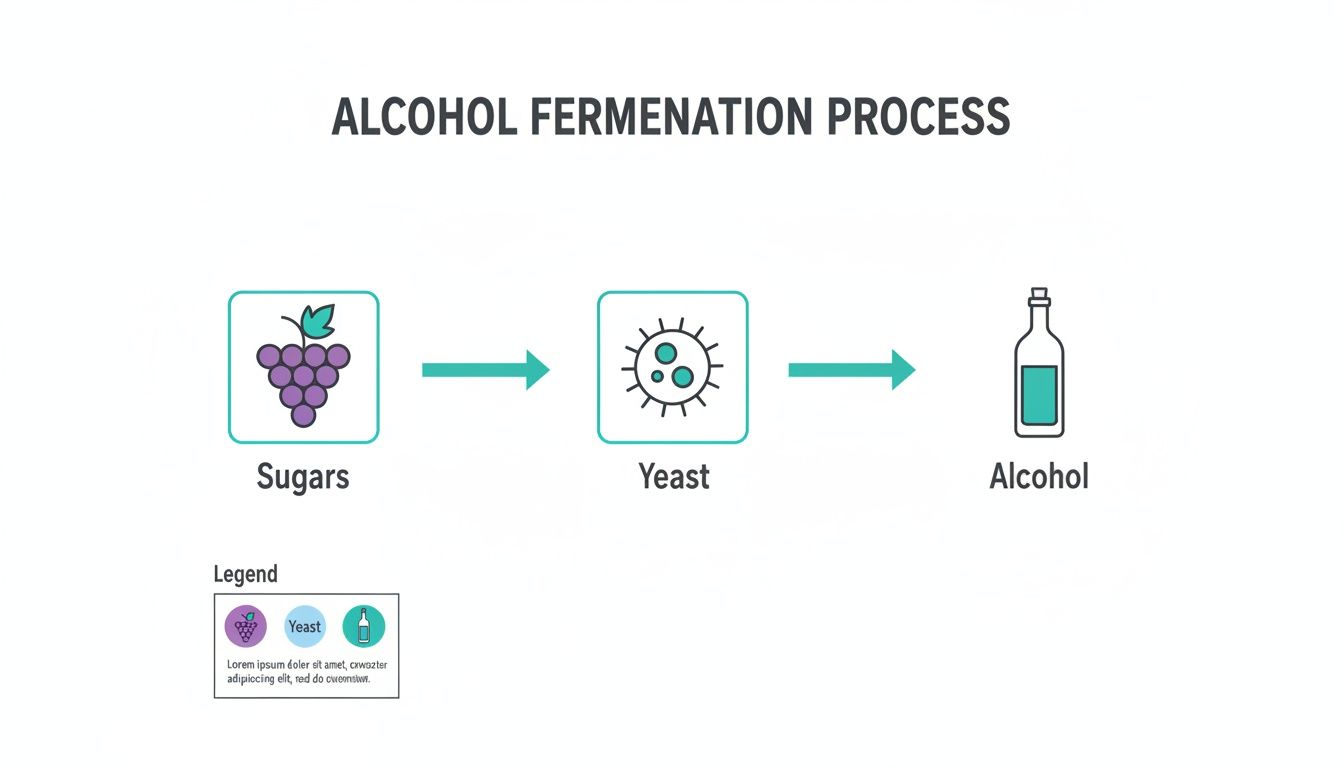
As you can see, yeast eats the natural sugars from ingredients like grapes or grains to produce alcohol. How much sugar is left behind determines the final sweetness of the drink.
To give you a clear, no-nonsense guide, we've broken down the sugar content in some of the most common drinks you'll find on any menu.
Sugar Content In Common Alcoholic Drinks Per Serving
Think of this table as your field guide to navigating the bar. It compares popular choices by serving size, showing you the sugar in both grams and those much easier-to-picture teaspoons.
| Drink Type | Serving Size | Sugar (grams) | Sugar (teaspoons) |
|---|---|---|---|
| Distilled Spirits (Vodka, Gin, Whiskey) | 1.5 oz (45 ml) | 0g | 0 tsp |
| Dry Red Wine (e.g., Pinot Noir) | 5 oz (150 ml) | ~1g | ~0.25 tsp |
| Dry White Wine (e.g., Sauvignon Blanc) | 5 oz (150 ml) | ~1.5g | ~0.4 tsp |
| Light Beer | 12 oz (355 ml) | ~3g | ~0.75 tsp |
| Hard Seltzer | 12 oz (355 ml) | 2-4g | 0.5-1 tsp |
| Regular Beer | 12 oz (355 ml) | 10-15g | 2.5-3.75 tsp |
| Sweet White Wine (e.g., Riesling) | 5 oz (150 ml) | 10-14g | 2.5-3.5 tsp |
| Gin & Tonic | 7 oz (200 ml) | ~18g | ~4.5 tsp |
| Mojito | 6 oz (180 ml) | ~25g | ~6.25 tsp |
| Piña Colada | 6.8 oz (200 ml) | ~30g | ~7.5 tsp |
| Margarita (with mix) | 8 oz (240 ml) | ~35g | ~8.75 tsp |
| Long Island Iced Tea | 8.3 oz (245 ml) | ~40g | ~10 tsp |
As you can see, the difference is dramatic. Pure spirits are a clean slate, but cocktails are where things get wild. A single Piña Colada or Margarita can easily have more sugar than a can of soda, which typically contains around 39 grams.
Key Takeaway: The biggest sugar traps are almost always pre-made mixes, sweet liqueurs, and sugary sodas. Your choice of mixer can take a zero-sugar spirit and turn it into a high-sugar cocktail in an instant.
Knowing these numbers puts you back in control. You don't have to swear off your favorite drinks, but being aware of the sugar content helps you moderate or find lower-sugar alternatives that feel better for you. This awareness is the first step toward enjoying your social life without the dreaded sugar crash—and the monster hangover that often follows.
Exposing The Real Sugar Culprits In Cocktails
When you’re trying to track the sugar in your drink, the spirit itself is rarely the problem. A straight shot of vodka, gin, or tequila is a clean slate—we're talking zero grams of sugar. The real issue, and the reason your cocktail can quickly turn into a liquid dessert, is what you mix with it.
So many of us carefully choose a clear spirit, thinking we're making a healthy choice, only to unknowingly drown it in sugar from seemingly innocent mixers. These are the true villains in the cocktail world, turning what could be a low-sugar drink into a recipe for a nasty sugar crash and an even nastier hangover.
The truth is, your choice of mixer is just as important as your choice of spirit, maybe even more so. It's the one thing that decides whether you're sipping on something light and refreshing or a sugar-laden bomb that completely derails your night.
The Unseen Sugar In Mixers And Liqueurs
It's way too easy to overlook how much sugar is hiding in mixers. Things like tonic water, ginger ale, and especially those pre-made sour mixes are absolutely packed with it. These are the "sugar bombs" that sneak into our drinks.
Take a classic rum and Coke. A single 12-ounce can of cola dumps a staggering 39 grams of sugar into your glass. Even a simple gin and tonic isn't safe—the tonic water alone can add around 32 grams of sugar. It's a huge issue, and you can learn more about the global impact of sugar in beverages on FortuneBusinessInsights.com.
The takeaway here is simple but powerful: what you add to your spirit defines its sugar content. A zero-sugar spirit plus a high-sugar soda is no longer a low-sugar drink. It's just a high-sugar drink.
Sweet liqueurs are another major offender. Just a splash of something like Baileys or Grand Marnier can send a cocktail’s sugar count through the roof, adding a ton of flavor but at a very high sugar cost.
Uncovering Hidden Sugars In Popular Drink Mixers
To really see what's going on, let's break down some of the most common mixers and liqueurs. This table shows just how fast the sugar can add up, even in small amounts.
| Mixer / Liqueur | Serving Size | Sugar (grams) |
|---|---|---|
| Club Soda | 8 oz (240 ml) | 0g |
| Fresh Lime Juice | 1 oz (30 ml) | ~1g |
| Cranberry Juice Cocktail | 8 oz (240 ml) | ~30g |
| Orange Juice | 8 oz (240 ml) | ~22g |
| Tonic Water | 8 oz (240 ml) | ~21g |
| Ginger Ale | 8 oz (240 ml) | ~22g |
| Cola | 8 oz (240 ml) | ~26g |
| Margarita Mix | 4 oz (120 ml) | ~24g |
| Baileys Irish Cream | 1.5 oz (45 ml) | ~11g |
| Grand Marnier | 1.5 oz (45 ml) | ~11g |
Seeing the numbers laid out like this makes it pretty obvious why some cocktails are so high in sugar. Once you can spot these culprits, you can start making smarter swaps at the bar.
For a deeper dive into which popular cocktails to avoid, check out our guide on the top drinks not to order at the bar. Knowing what you're up against is the first step toward a better night out—and an even better morning after.
How Sugar And Alcohol Affect Your Body And Hangover
Ever notice how a night of sweet cocktails feels so much worse the next day than a few glasses of wine? It’s not your imagination. A sugary alcoholic drink delivers a nasty one-two punch that goes way beyond just empty calories.
The mix of sugar and booze sends your blood sugar on a wild ride. First, you get that energetic buzz from the sugar spike, but it’s always followed by a dramatic crash. That rollercoaster is a huge reason you feel exhausted, irritable, and headachey the next morning.
The rapid fluctuation in blood sugar levels compounds the dehydrating effects of alcohol, creating a perfect storm for a miserable morning. Your body is left trying to manage dehydration, inflammation from alcohol, and unstable glucose levels all at once, leaving you feeling completely drained.
The Metabolic Connection
When you sip on a sweet drink, your body isn't just dealing with alcohol; it's also managing a flood of fructose. That combination puts extra stress on your liver. Think of it like a traffic jam—the metabolic pathways for both alcohol and sugar are closely linked, and throwing both at your system at once can amplify the negative effects.
Realizing this can be a powerful motivator to rethink your drink order. It’s not about being restrictive; it's about connecting the dots between what you drink and how you feel.
- Blood Sugar Crash: This is a primary cause of that classic hangover fatigue and weakness.
- Increased Inflammation: Sugar can actually heighten the inflammatory response your body has to alcohol.
- Liver Strain: Making your liver process both substances at the same time just adds to its metabolic workload.
Global Trends And Local Impact
The preference for sweet drinks is a worldwide thing. Just look at the popularity of sweet liqueurs like Baileys (13 grams of sugar per 1.5oz) and Kahlúa (11 grams). They easily outsell drier spirits.
This trend has a real impact. Back in 2016, the US was leading the pack with an average sugar intake of about 102g per person per day, with a huge chunk of that coming from beverages—including the alcoholic kind. In places like Thailand, where the average drinker consumes 20.3L of pure alcohol each year, spirits are often mixed with sugary sodas, adding to both the health and economic costs. If you're curious, you can dig into more global sugar intake data at World Population Review.
Ultimately, a smarter approach to drinking starts with knowing just how much sugar is hiding in your glass. By choosing drinks with less sugar, you can help keep your blood sugar stable, take the edge off your hangover, and wake up feeling a whole lot better.
Simple Swaps For A Low Sugar Night Out
Trying to cut back on sugar doesn’t mean you have to skip your night out or sip on water while everyone else is having fun. It really just comes down to making a few smart, simple swaps. Knowing what to order—and how to ask for it—can slash your sugar intake and help you feel way better the next morning.
The easiest win? Change your go-to mixer. Instead of sugary sodas or tonic water, ask for club soda or seltzer. Both are completely free of sugar and calories, giving you that fizz you love without the inevitable crash. A splash of fresh lime or lemon is all you need to add a burst of flavor for practically zero sugar.
Smart Choices For Every Drink Category
Whether you’re a wine lover, a beer drinker, or a cocktail enthusiast, there’s a great low-sugar option waiting for you.
- For Wine Lovers: The key is to stick to drier varieties. A dry red like Pinot Noir or a crisp white such as Sauvignon Blanc usually has only 1-2 grams of sugar per glass. You'll want to steer clear of the sweeter stuff like Riesling, Moscato, or dessert wines, which can be loaded with sugar.
- For Beer Drinkers: Lighter is almost always better. Go for "light" or "ultra-light" beers. These are brewed specifically to have fewer carbs and, by extension, less sugar. A typical light beer has about 3 grams of sugar, which is a huge drop from the 10-15 grams you might find in regular or darker brews.
- For Cocktail Fans: This is where you can really take control. Order your spirit of choice—vodka, gin, tequila, you name it—with club soda and a lime wedge. If you're craving something a bit more complex, just ask the bartender to hold the simple syrup or use half as much. You can also get creative and ask for muddled fresh fruit, like berries or orange slices, for a touch of natural sweetness.
The most powerful phrase you can use at the bar is, "No simple syrup, please." This one small request puts you in control of the sugar content in your drink, allowing you to enjoy a classic cocktail without the unnecessary sweeteners.
These little adjustments are easy to make and add up to a big difference in how much sugar you end up drinking. This mindset helps even when you're looking for non-alcoholic options. For more ideas on tasty and healthier alternatives, check out our guide on what to drink instead of alcohol.
By making these simple swaps, you’re not just dodging extra sugar—you’re setting yourself up for a much brighter morning.
Common Questions About Sugar And Alcohol
Let's be honest, figuring out the whole sugar and alcohol thing can feel like you're trying to solve a puzzle. To clear things up, here are some quick answers to the questions we hear most often.
Does Sugar-Free Alcohol Mean It Has No Calories?
Not a chance. This is one of the biggest misconceptions out there. When you see a spirit like vodka, gin, or whiskey labeled as having zero sugar, that’s true—but it definitely doesn't mean it's calorie-free.
The calories in these drinks come from the alcohol itself. A single gram of alcohol packs about 7 calories. So while you're cleverly dodging the extra calories from sugar, the alcohol content still adds up. The leanest, cleanest option will always be a pure spirit mixed with something that has zero calories, like club soda or a splash of lime.
Is The Sugar In Wine Different From The Sugar In A Cocktail?
Yep, and it's a pretty important distinction. The sugar you find in wine is mostly residual sugar. Think of it as the natural sweetness from the grapes that didn't get converted into alcohol during fermentation. It's part of the wine's DNA.
Cocktails, on the other hand, are a whole different ballgame. The sugar in most of them is added sugar. We’re talking about things like simple syrup, sweet liqueurs, fruit juices, and sodas that are tossed into the mix. While your body processes both types, those high-octane sugary cocktails are famous for sending your blood sugar on a wild rollercoaster, which can make hangover symptoms feel way, way worse.
Can Low-Sugar Drinks Prevent A Hangover?
Choosing low-sugar drinks can definitely take the edge off a hangover. By avoiding that gnarly blood sugar spike and crash, you can help minimize some of the worst parts of the morning after, like the pounding headache, fatigue, and general irritability.
But let’s be real—it's not a magic bullet. Low-sugar drinks won't stop the dehydration or inflammation that alcohol causes in your body. The only surefire way to prevent a hangover is to drink in moderation, chug plenty of water, and give your body the support it needs to bounce back.
When you want to have a great night without paying for it the next day, Upside has your back. Our Hangover Jelly is packed with proven, natural ingredients to help you party smarter and recover faster. Stay prepared and feel your best by checking us out at https://enjoyupside.com.
#upside #enjoyupside #upsidejelly #livemore #hangovercure #hangoverprevention #fighthangovers #preventhangovers #HangoverRelief #MorningAfter #PartySmarter #HydrationStation #WellnessVibes #RecoverFaster #NoMoreHangovers #HealthyParty #HangoverHacks #FeelGoodMorning #NightlifeEssentials #HangoverFree #SupplementGoals #PostPartyPrep #GoodVibesOnly #HealthAndParty #HangoverHelper #UpsideToPartying