

· By Annemarie
Does Drinking Water Prevent Hangovers The Real Story
Let's just get this out of the way right now. Does drinking water prevent hangovers?
The short answer is a hard no. While it's absolutely a good idea to stay hydrated, relying on water alone to dodge a hangover is like bringing a squirt gun to a five-alarm fire. You might put out a tiny flame, but you’re not touching the real source of the damage.
The Final Word on Water and Hangovers

It's the oldest advice in the book: "Just drink a glass of water between every drink." And while that’s a solid strategy for pacing yourself and staying hydrated, it creates a false sense of security. A real hangover is a complex biological storm, and dehydration is just the opening act.
Think of it this way: that sandpaper-dry mouth and pounding headache? Classic signs of dehydration. Gulping down some water is the perfect fix for those specific problems. But water does absolutely nothing to stop the real issues brewing under the surface—like toxic byproducts, inflammation, and a wrecked sleep cycle.
What Water Can and Cannot Fix
Science actually backs this up. One study found that even though drinking causes dehydration, the thirst that comes with it is usually pretty mild and fades quickly. Meanwhile, the truly miserable hangover symptoms—like nausea and that can't-get-off-the-couch fatigue—stuck around long after people rehydrated. This suggests they're totally separate problems that just happen to show up at the same party. You can read the full research about hangover severity here.
This is exactly why you can follow the "one-for-one" rule perfectly and still wake up feeling like you wrestled a truck. Your body is still battling the true villains of the morning after.
A hangover is your body's response to alcohol's toxic effects, not just a lack of water. Hydration is a piece of the puzzle, but it's far from the complete picture.
Understanding this difference is the key to actually avoiding a miserable next day. To make it crystal clear, here’s a quick breakdown of where water actually helps and where it completely misses the mark.
Water's Role in a Hangover At a Glance
This table gives you a quick reference for what water can realistically do for your hangover symptoms versus what it simply can't touch.
| Symptom | Does Water Help? | Why or Why Not? |
|---|---|---|
| Thirst & Dry Mouth | Yes | Directly rehydrates tissues and restores fluid balance. It’s what water does best! |
| Dehydration Headache | Yes | Helps relieve headaches specifically caused by fluid loss and brain shrinkage. |
| Nausea & Stomach Pain | No | Water doesn't stop alcohol from irritating your stomach lining or causing inflammation. |
| Fatigue & Brain Fog | No | Fails to address the core issues of poor sleep quality and inflammation that drain your energy. |
| Body Aches | No | Cannot combat the body-wide inflammatory response to alcohol that makes everything hurt. |
So, while you should absolutely keep sipping water during a night out, know that it's playing defense against only one of the many problems alcohol creates.
Why Alcohol Leaves Your Body So Thirsty
Ever wake up after a night out feeling like you’ve been stranded in a desert? That intense, all-consuming thirst is no accident. It’s a direct consequence of how alcohol hijacks your body's hydration system, and understanding this is the first step in seeing why dehydration is just one piece of the hangover puzzle.
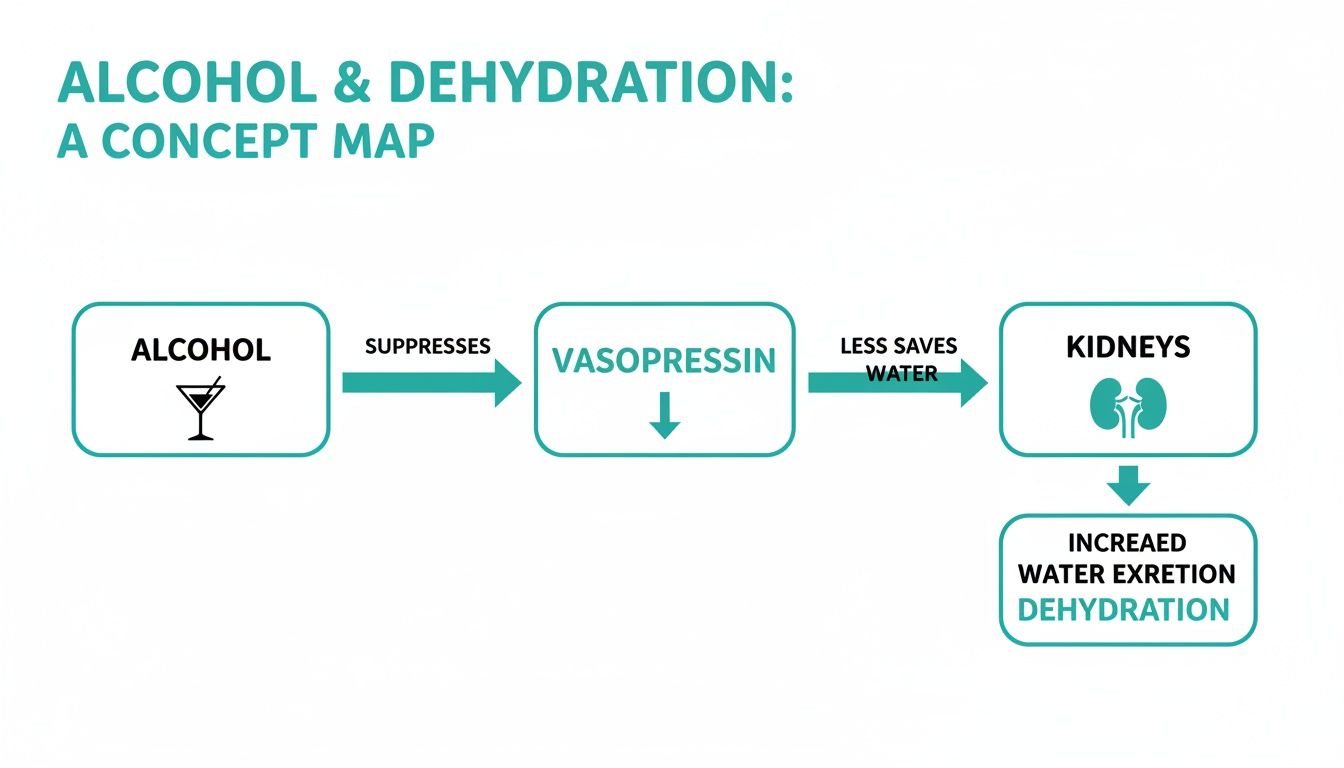
Think of your body as having a really smart water-management system. To keep everything stable, your brain produces a hormone called vasopressin. Its only job is to tell your kidneys, "Hey, hold onto some water, we need it!" It's a brilliant little system that keeps you perfectly hydrated—until alcohol crashes the party.
Alcohol is a diuretic, which is just a scientific way of saying it makes you pee a lot. Its main target? Vasopressin. When you drink, alcohol basically tells this crucial hormone to take a break.
The Floodgates Open
Without vasopressin on duty, your kidneys don't get the memo to conserve water. Instead, they start flushing it out like there’s no tomorrow, which is why you find yourself making so many trips to the bathroom. Here's a wild stat: for every 250 ml of an alcoholic drink (about one standard drink), your body can expel up to 1,000 ml of water.
That math doesn’t add up in your favor. You’re losing way more fluid than you’re taking in, and that quickly leads to the classic signs of dehydration:
- A pounding headache: Your brain is about 75% water. When it's dehydrated, it can literally shrink a tiny bit, pulling away from your skull. Ouch.
- Dizziness and lightheadedness: This is from a drop in blood volume and pressure caused by all that fluid loss.
- That sandpaper-dry mouth: The most obvious signal that your body’s water reserves are running on empty.
This is a key reason why the question "does drinking water prevent hangovers?" is so tricky. Sure, water replaces lost fluids, but it can't fix the hormonal chaos that alcohol kicked off in the first place. For a deeper dive, check out our guide on how alcohol dehydrates you.
The diuretic effect of alcohol forces your body into a state of rapid fluid loss. This dehydration is responsible for symptoms like thirst, headache, and fatigue, but it’s just the opening act of the hangover show.
This really highlights a critical point: you are definitely dehydrated, but the hangover you feel is a much bigger, more complicated problem. The thirst is real and it’s uncomfortable, but it’s happening at the same time as a bunch of other, more complex issues. Downing a glass of water is a good start, but it won't touch the deeper biological turmoil happening elsewhere in your body.
If dehydration is just a sidekick, who are the real villains ruining your morning?
The truth is, while you’re busy chugging water to fix a dry mouth, a trio of much more sinister things is unfolding inside your body. To really answer "does drinking water prevent hangovers?" we have to look at the core issues that no amount of H2O can touch.
It’s a classic morning-after mistake. You’re fighting dehydration, but the real damage comes from toxic byproducts, widespread inflammation, and a complete trainwreck of your body's essential repair cycles.
The Real Villains of Your Hangover
Let's break down the three main culprits that water simply can't handle.
Acetaldehyde: The Chemical Garbage
When you drink alcohol, your liver gets to work breaking it down. The first thing it produces is a nasty compound called acetaldehyde (pronounced uh-set-al-duh-hide).
Imagine your liver is a high-tech recycling plant. Alcohol comes in, and the first step turns it into acetaldehyde—a substance that's up to 30 times more toxic than alcohol itself. It’s like trying to recycle a plastic bottle but turning it into a pile of hazardous waste first. Your liver then has to work overtime to break that down.
When you drink faster than your liver can keep up, this toxic garbage piles up in your system, causing oxidative stress and contributing to that classic hangover combo of nausea and a pounding headache. Water can’t make this process go any faster.
Inflammation: Your Body's Red Alert
The second villain is inflammation. Think of it as your body's internal red alert system. When it spots a threat—like the toxic acetaldehyde we just met—it sounds the alarm and triggers an immune response.
This response is great for fighting off infections, but when it’s triggered by alcohol, it’s what leads to the aches, fatigue, and general feeling of sickness you experience during a hangover. It's your own body attacking the problem, but the collateral damage is what makes you feel so awful.
This is exactly why so much research shows that water has a pretty small effect on how bad a hangover gets. One study of nearly 1,600 students, for example, found that drinking water after a heavy night did little to reduce core symptoms like nausea and fatigue, which are driven by this immune response.
Sleep Disruption: The Interrupted Repair Crew
Finally, let's talk about sleep. You might pass out after a few drinks, but that’s not the same as getting restorative rest. Alcohol seriously messes with your sleep architecture, especially the REM (Rapid Eye Movement) stage.
Think of REM sleep as your brain's nightly repair crew. It’s when your mind processes memories, cleans out waste, and recharges for the next day. Alcohol basically sends this crew home early.
Even if you get a full eight hours of "sleep," you wake up feeling groggy and mentally foggy because your brain never got the deep, restorative rest it desperately needed. Water can quench your thirst, but it can't force your brain back into its proper sleep cycles. For a more detailed breakdown, check out our article on what causes hangovers.
To make it simple, let's look at what water can and can't do for the major hangover culprits.
Key Hangover Causes and Their Effects
| Hangover Cause | Primary Symptoms | Is Water an Effective Solution? |
|---|---|---|
| Dehydration | Thirst, dry mouth, mild headache, fatigue. | Yes. Water is the direct fix for fluid loss. |
| Acetaldehyde Buildup | Intense headache, nausea, facial flushing, vomiting. | No. Water cannot neutralize this toxic compound. |
| Inflammation | Body aches, fatigue, inability to concentrate, feeling sick. | No. Water doesn't stop the immune response from alcohol. |
| Sleep Disruption | Grogginess, poor focus, irritability, mental fog. | No. Water can't restore lost REM or deep sleep cycles. |
As you can see, while hydrating is important, it only solves one piece of a much larger puzzle.
A true hangover is a multi-front war. It's a battle against toxic chemicals, an overactive immune response, and a sleep-deprived brain—challenges that water is simply not equipped to handle on its own.
Smarter Hydration Strategies That Actually Work
Just because chugging a gallon of water before bed isn't a silver bullet doesn't mean you should give up on hydration altogether. The real secret isn't just about drinking more, it’s about drinking smarter. A truly effective plan is all about timing and what’s actually in your glass.
This means you’ve got to shift your thinking from a reactive approach—like frantically guzzling water the morning after—to a proactive one. The best moves happen before you even have your first drink and continue throughout the night, giving your body the support it needs in real-time.
One of the easiest habits to pick up is the "one-for-one" rule. It's simple: for every alcoholic drink you have, follow it up with a full glass of water. This little trick helps you pace yourself, dilutes the alcohol’s effects, and keeps you steadily replenishing the fluids you’re losing.
Beyond Water: The Role of Electrolytes
While the one-for-one rule is a great start, plain water is missing a key piece of the puzzle: electrolytes.
Think of electrolytes as the spark plugs for your body's cells. These essential minerals—we're talking sodium, potassium, and magnesium—are what carry the electrical signals that power everything from your muscles to your brain.
When alcohol makes you pee more, you're not just losing water. You're flushing out these crucial minerals, too. That imbalance is a major reason you feel so weak, dizzy, and just plain off. Topping them back up is a step that water alone just can't handle.
Simply drinking more water without replacing lost electrolytes can sometimes dilute the remaining minerals in your system, potentially worsening symptoms like fatigue and muscle weakness. Strategic rehydration is about restoring balance, not just volume.
This is where a little bit of planning goes a long way. Working an electrolyte-rich drink into your routine can make a huge difference in how you feel. For a full breakdown, check out our guide on the best way to rehydrate after drinking with proven science tips.
Your Hydration Game Plan
So, how do you put this into practice? Here’s a simple, actionable plan for your next night out that helps you support your body before, during, and after you drink.
- Pre-Hydrate with Electrolytes: Before you even leave the house, drink a glass of water with an electrolyte mix. This tops off your body’s fluid and mineral reserves, preparing it for what’s to come.
- Stick to the One-for-One Rule: This is non-negotiable. Alternate every alcoholic drink with a glass of water. It's the cornerstone of smart drinking and pacing.
- End-of-Night Replenishment: Right before you hit the hay, have one last electrolyte drink. This helps restore what you’ve lost and supports your body’s recovery while you sleep, giving you a serious head start on the morning.
Following this strategy won't completely erase a hangover on its own, but it will knock out the dehydration part of the equation, letting you focus on tackling the other root causes.
A Modern Approach to Post-Party Recovery
Chugging water is a solid defensive move, but it doesn't even begin to touch the real biological chaos a hangover creates. To truly bounce back, you need a game plan that tackles the actual villains we’ve been talking about—acetaldehyde, inflammation, and trashed sleep. This is where a modern approach comes in, shifting the focus from damage control to proactive support.
Instead of just slapping a bandage on the symptoms, the goal is to help your body's own recovery crew work more efficiently. Think of it like giving your liver a team of highly specialized assistants. While it’s busy dealing with the alcohol, these assistants can help manage the toxic mess and calm the resulting chaos.
Targeting the Root Causes
Once you understand the "why" behind your hangover, you can find a real solution. We know the toxic compound acetaldehyde is public enemy number one. So, a modern recovery aid should have ingredients picked specifically to help your body process this toxin faster, cutting down the time it spends wreaking havoc on your system.
And since inflammation is your body's "red alert" signal, a smart formula will include elements known for supporting a balanced immune response. This helps quiet the internal storm that leaves you feeling achy and awful. It’s all about working with your body, not just against it.
A truly effective solution does more than just rehydrate. It gives targeted support to your liver, helps neutralize toxic byproducts, and promotes a healthy inflammatory response. It’s about giving your body the right tools for the job.
Drawing inspiration from generations of Korean wellness traditions, products like Upside Hangover Jelly are designed to do exactly that. They combine potent, science-backed botanicals and vitamins into a simple, on-the-go format. This isn't about some magic bullet, but about using natural ingredients to reinforce your body's own ability to recover.
These kinds of formulas provide the key ingredients that directly address what water can't touch:
- Dihydromyricetin (DHM): An extract from the Japanese raisin tree, which has been studied for its ability to support the enzymes that break down alcohol and acetaldehyde.
- Milk Thistle & Prickly Pear: Botanicals famous for their antioxidant properties and their role in supporting liver health and a balanced inflammatory response.
- Essential Vitamins & Electrolytes: Topping up the critical nutrients and minerals you lose during a night out to fight off fatigue and get your system back in balance.
This strategy offers a complete system of support, finally addressing the real reasons you feel so rough the next day.
Your Hangover Prevention Playbook
Alright, let's pull all of this together into a simple, actionable game plan for your next night out. If there's one thing we've learned, it's that chugging water is a great start, but it's only one piece of the puzzle. A truly bulletproof strategy is about combining smart hydration with mindful drinking and the right kind of support.
The goal here isn't to kill the fun. It’s about giving you the tools to be a little smarter about it, so you can actually enjoy your social life without writing off the entire next day. This is your playbook for living it up and still bouncing back fast.
Your Pre-Party Checklist
Before you even think about heading out the door, a little prep work goes a long way. Think of it as laying a solid foundation for your body to handle what's coming.
- Eat a Real Meal: Seriously, never drink on an empty stomach. A good meal with protein, healthy fats, and some complex carbs slows down how quickly your body absorbs alcohol. This gives your liver a much-needed fighting chance.
- Pre-load with Electrolytes: About an hour before you start drinking, have a big glass of water with an electrolyte mix. You're basically stocking up on the essential minerals that alcohol is about to start draining from your system.
- Take Your Support System: If you’re using something more comprehensive like Upside Hangover Jelly, now’s the time to take it. This gives those hard-working ingredients a head start before the first drink even hits.
During the Night
What you do while you're out is just as critical as the prep work. Keep these simple rules in the back of your mind.
- Stick to the One-for-One Rule: For every alcoholic drink, have a full glass of water. It's the oldest trick in the book for a reason—it's the single best way to manage dehydration and keep yourself from going too hard, too fast.
- Choose Your Drinks Wisely: As a general rule, clearer liquors like gin and vodka have fewer congeners than darker spirits like whiskey or red wine. Congeners are those nasty little compounds that can make a hangover feel ten times worse.
Key Takeaway: A smart hangover prevention strategy is proactive, not reactive. It starts before your first drink and continues throughout the night, combining hydration with targeted nutritional support to address the root causes of a hangover.
Common Questions About Hangovers
Even with the best game plan, a few questions always seem to pop up. Let's tackle some of the most common myths and practical concerns to give you total clarity for your next night out.
Will an Electrolyte Drink Prevent My Hangover?
Electrolyte drinks are definitely a big step up from plain water. They’re fantastic at restoring essential minerals like potassium and sodium that get flushed out when you drink, which can certainly help with those dehydration-related symptoms like fatigue and dizziness.
But are they a complete hangover prevention tool? Not quite. Electrolytes don’t get to the core of the problem: acetaldehyde toxicity or widespread inflammation. Think of them as a premium hydration strategy, but not a cure for the whole hangover.
Is It Better to Drink Water Before Bed or in the Morning?
Honestly, both are helpful, but for different reasons. Chugging some water before you crash for the night helps get ahead of the dehydration that’s bound to happen while you sleep. Having more when you wake up helps rehydrate your system after a night of alcohol-disrupted rest.
The most effective approach, though, is to stay hydrated all the way through. Have a glass of water before you go out, alternate every alcoholic drink with a glass of water, and have one final glass before bed. This is a great way to manage dehydration, but remember, it won’t stop the underlying hangover from setting in.
The single most effective strategy for lessening a hangover's severity is to eat a substantial meal before you start drinking. Food slows the absorption of alcohol, giving your liver more time to process it and reducing the overall toxic load.
Does Eating a Big Meal Before Drinking Really Help?
Yes, absolutely. This is one of the most effective moves you can make. Eating a solid meal—especially one with a good mix of fats, proteins, and carbs—slows down how quickly that alcohol hits your bloodstream.
This simple act gives your liver a crucial head start and a lot more time to process the alcohol. It seriously cuts down on the toxic strain your body is under. While it won't eliminate the risk entirely, it's a powerful and proven way to take the edge off a potential hangover.
Ready to move beyond just managing symptoms and start truly preventing them? Upside offers a science-backed formula that targets the root causes of a hangover, helping your body process toxins and recover faster. Party smarter and reclaim your tomorrow by trying Upside today at https://enjoyupside.com.
#upside #enjoyupside #upsidejelly #livemore #hangovercure #hangoverprevention #fighthangovers #preventhangovers #HangoverRelief #MorningAfter #PartySmarter #HydrationStation #WellnessVibes #RecoverFaster #NoMoreHangovers #HealthyParty #HangoverHacks #FeelGoodMorning #NightlifeEssentials #HangoverFree #SupplementGoals #PostPartyPrep #GoodVibesOnly #HealthAndParty #HangoverHelper #UpsideToPartying