

· By Annemarie
Unlock alcohol and electrolytes: Fast Hydration and Hangover Relief
That foggy-headed, sluggish feeling you get after a night of drinking isn't just your body begging for water. It’s a tell-tale sign that your internal chemistry is out of whack, specifically the critical balance between alcohol and electrolytes. Alcohol is a diuretic, which means it makes you flush out not just water, but the essential minerals that keep your nerves and muscles firing on all cylinders.
Getting a handle on this connection is the first real step toward a smarter recovery. It’s how you can actually reclaim your morning after.
Your Body on Alcohol: The Dehydration and Electrolyte Drain
Ever notice how a few drinks send you running to the bathroom way more often? That's because alcohol messes with a hormone called vasopressin. Normally, vasopressin is the boss telling your kidneys, "Hey, hold onto some water." But when alcohol shows up, vasopressin clocks out. Your kidneys get the wrong message and go into overdrive, flushing out fluid like there’s no tomorrow.
This rapid flush doesn't just get rid of water; it takes vital electrolytes along for the ride. Think of these minerals—like sodium, potassium, and magnesium—as the tiny spark plugs for your body's electrical system. They’re behind everything from muscle contractions to your brain sending signals.
The Science of the Flush-Out
The effect alcohol has on your hydration levels is no joke. Research shows that just 4–6 drinks can trigger an extra fluid loss of 400–1,800 mL—that’s on top of your normal output. This huge fluid shift also means you’re losing a ton of key electrolytes.
Studies have measured a significant increase in the amount of potassium and magnesium you pee out after drinking. Some metabolic reports show a 10–40% jump in potassium loss after a night of moderate to heavy drinking. And this isn't a niche problem. In the U.S., the average adult drinks about 9.8 liters of pure alcohol every year, making this cycle of fluid and electrolyte loss a regular thing for millions. You can check out the global trends for yourself on World Population Review.
This one-two punch of dehydration and electrolyte depletion is a huge reason why hangovers feel so awful.
The pounding headache, the thirst you can't seem to quench, those weird muscle cramps, and the crushing fatigue? Those are all direct results of this internal imbalance. Your body is basically running on a low battery, and just chugging water won't be enough to fully recharge it.
To really get why the next day feels like a battle, you have to understand the full picture of what causes hangovers. It’s about more than just being thirsty. The real key to a faster, smoother recovery is putting back both the fluids and the specific electrolytes you lost.
How Alcohol Drains Your Body of Essential Minerals
When you have a few drinks, alcohol acts as a diuretic, kicking off a chain reaction that throws your body's delicate mineral balance way out of whack. It’s not just about losing water; you’re literally flushing out the vital electrolytes that keep your body's most important systems humming along.
To really get what's happening, let's look at the "Big Four" essential minerals. You'll see how losing them leads directly to those all-too-familiar hangover symptoms. Think of them as the key players on your body's internal team—if one is benched, the whole system starts to fall apart.
Meet the 'Big Four' Electrolytes
Through all that extra urination, alcohol is systematically showing these crucial minerals the door. Here’s a quick rundown of who they are and why you need them:
- Sodium the Fluid Manager: Sodium is the master conductor of your body's fluid. It tells water where to go, making sure your cells, tissues, and blood volume stay in perfect harmony.
- Potassium the Muscle Spark: This is the electrical current for your muscles and nerves. Potassium is what powers everything from your heartbeat to simple muscle movements and nerve signals.
- Magnesium the Master Relaxer: Magnesium is a workhorse, involved in over 300 different processes in the body. A big part of its job is calming the nervous system, relaxing muscles, and keeping your mood stable.
- Calcium the Structural Support: It’s famous for keeping bones strong, but calcium is also absolutely critical for muscle function and nerve communication. It works in tandem with the other electrolytes to make sure signals fire correctly.
Losing these isn't some minor inconvenience; it's the root cause of much of the misery you feel the next day.
When alcohol puts your kidneys into overdrive, these essential minerals become casualties of the flush. The result is an internal electrical grid that's short-circuiting, leading straight to the physical and mental fog of a hangover.
Connecting the Dots: Mineral Loss to Hangover Pain
Once you know what these minerals do, it's pretty easy to see how being low on them creates specific hangover symptoms. It’s a straight-up cause-and-effect situation. Low electrolytes aren’t just a side effect of a hangover—they are a primary reason you feel so awful.
This is where you can start to pinpoint what’s actually going on inside your body after a night of drinking.
Here’s a simple table to connect the dots between losing a specific mineral and the symptom you feel.
How Alcohol Impacts Key Electrolytes
| Electrolyte | Primary Function in the Body | Hangover Symptom Caused by Depletion |
|---|---|---|
| Sodium | Manages fluid balance and blood pressure. | Dizziness, fatigue, and headaches from cellular dehydration. |
| Potassium | Powers muscle contractions and nerve signals. | Muscle weakness, cramps, and a feeling of general lethargy. |
| Magnesium | Calms nerves and relaxes muscles. | Heightened anxiety, irritability, and tension headaches. |
| Calcium | Supports muscle movement and nerve communication. | Muscle twitching and contributing to overall weakness and fatigue. |
When it comes down to it, that feeling of being completely wiped out is your body screaming that it’s in a severe mineral deficit. The relationship between alcohol and electrolytes is direct: the more you drink, the lower your mineral levels drop, and the worse your hangover gets. Getting that balance back is the first—and most important—step to feeling human again.
Why Water Alone Is Not Enough for Recovery
We’ve all been there. You try to be responsible, chugging a few glasses of water before bed, thinking you've outsmarted the next day's hangover. But it’s only half the battle.
While replacing lost fluids is a great start, the real secret to effective rehydration is getting that water inside your cells where it can actually do its job. This is where the relationship between alcohol and electrolytes comes into play.
Think of your cells like tiny, locked rooms. Water can't just barge in whenever it wants; it needs a key to open the door. Electrolytes—especially sodium—are that key.
The Science of Cellular Hydration
Your body uses a clever biological trick called the sodium-glucose cotransport system. It sounds complicated, but it's basically an express shuttle that uses sodium and a little bit of glucose to actively pull water from your gut into your bloodstream and, finally, into your cells.
Without enough electrolytes, that water you're drinking is surprisingly inefficient. A lot of it just passes right through your system without properly rehydrating you on a cellular level. It’s why you can down plenty of H2O and still wake up feeling foggy and parched.
Effective recovery isn't just about volume; it's about absorption. Replenishing electrolytes alongside water is what truly turns the tide, helping your body rebalance and recover much more efficiently.
This diagram breaks down how drinking directly leads to mineral loss, which is the real culprit behind most hangover symptoms.
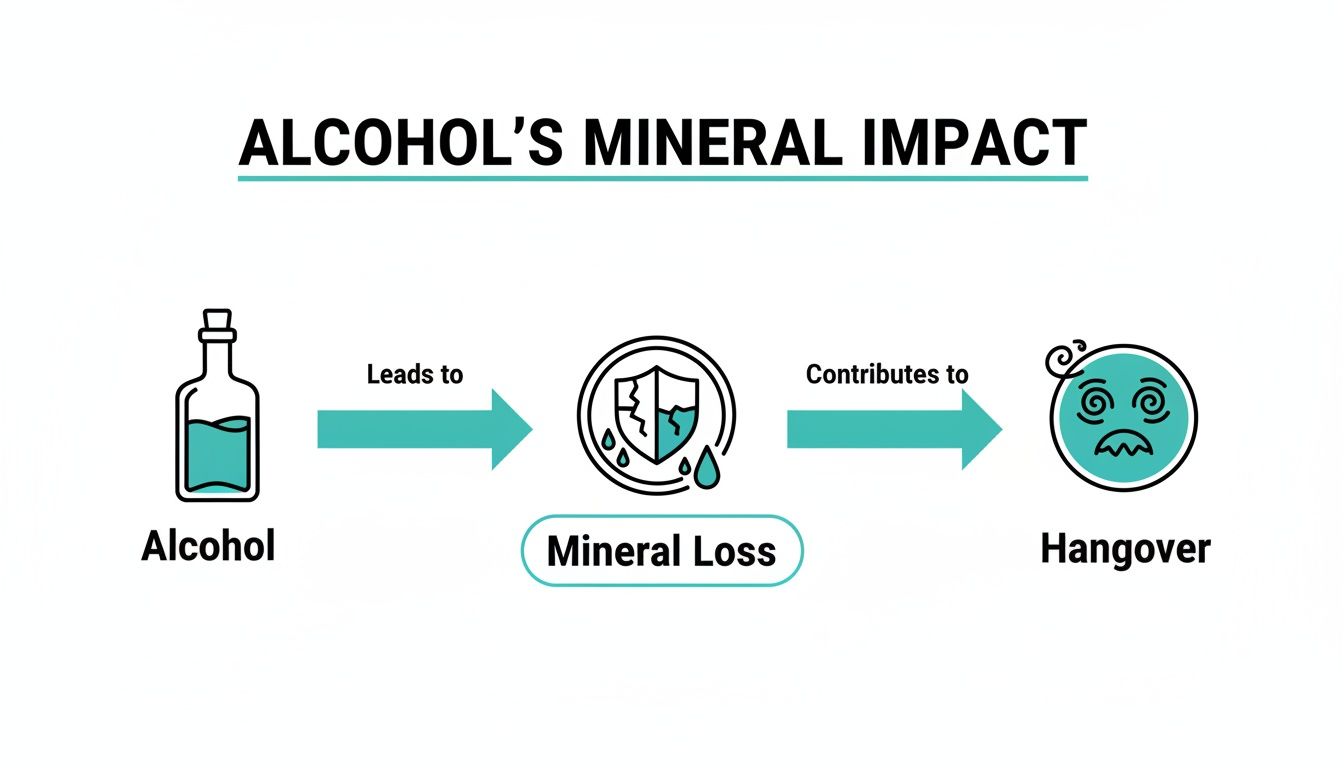
As you can see, alcohol kicks off a chain reaction that leaves you with a mineral deficit, leading to those feelings we all know and want to avoid.
What Makes an Electrolyte Solution Effective
To really push back against alcohol-induced dehydration, a recovery aid has to put back the specific minerals you've lost. Clinical guidance is clear: effective rehydration requires both water and a balanced mix of electrolytes.
Any good formula will include sodium to help your body hold onto fluid, plus potassium and magnesium to correct what you've lost through urination. For consumer products, you'll often see a sweet spot of 200–500 mg of sodium and 100–300 mg of potassium per serving—enough to be effective without being overkill. Magnesium is another key player, with doses of 100–400 mg helping with headaches and muscle cramps.
For a deeper dive, check out our guide on different drinks that have electrolytes. These targeted amounts are designed to nudge your body back toward balance, making them a smart, safe choice for social drinkers. If you're curious about the bigger picture, the World Health Organization-per-capita-(15-)-consumption-with-95-ci-projections) has some fascinating global insights on alcohol consumption and its effects.
Your Practical Guide to Restoring Electrolytes
Okay, so we've established how alcohol and electrolytes are basically frenemies. Knowing the why is the first step, but turning that knowledge into a game plan is what really saves you the next day.
To get back what you’ve lost after a night out, you need a simple, smart strategy that covers all your bases. It boils down to three things: the right foods, the right drinks, and the right timing. Nail these three, and you’ve got a powerful recovery plan to help you bounce back faster and feel human again. It’s all about working with your body, not against it.
Power Up with Electrolyte-Rich Foods
Before you reach for a special drink or supplement, take a look in your kitchen. It’s your first line of defense. So many whole foods are naturally packed with the essential minerals your body is screaming for after drinking.
Just weaving some of these into your pre-gaming snack or post-party meal can make a huge difference. You'll want to zero in on foods high in potassium and magnesium, since these two take the biggest hit from alcohol's diuretic party trick.
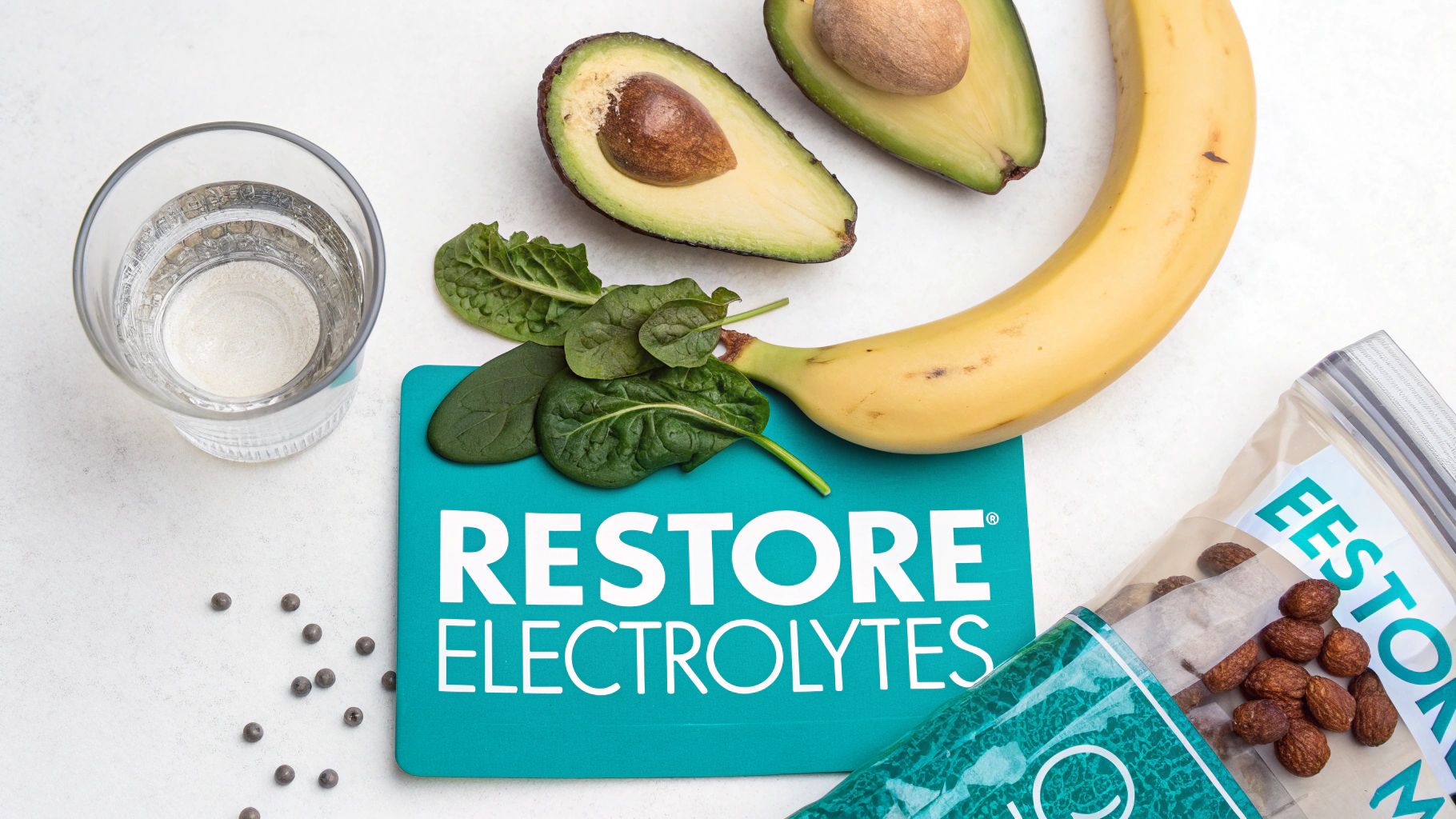
- For Potassium: Bananas are the go-to for a reason, but don’t forget about avocados, sweet potatoes, and spinach. Think of these as bringing back the "muscle spark" you need to fight off that weak, tired feeling.
- For Magnesium: Grab some almonds, pumpkin or chia seeds, and dark leafy greens. Magnesium is like the "master relaxer" for your system, helping to ease those tension headaches and calm down that post-drinking crankiness.
A killer recovery meal could be as simple as a spinach salad topped with avocado and grilled chicken. Or, if you're not up for chewing, a smoothie with banana, almond butter, and chia seeds. These give your body exactly what it's craving to get back in balance.
Choosing Your Rehydration Drink Wisely
Food is your foundation, but the right drink can put your recovery in the fast lane by getting fluids and electrolytes into your system, stat. But not all drinks are created equal. Some of the usual suspects might actually be doing more harm than good.
Let’s break down the common options:
- Sports Drinks: Sure, they have electrolytes, but many are also just sugar bombs with a side of artificial colors. They're designed for what you lose through sweat during a workout, not for the specific mineral drain caused by alcohol.
- Coconut Water: A solid natural choice. It's loaded with potassium but often low on the sodium front, which is key for actually holding onto the fluids you're drinking. It's a good piece of the puzzle, but not the whole picture.
- Targeted Electrolyte Solutions: This is where you get smart. Products made specifically for rehydration or hangover recovery offer a balanced, precise blend of sodium, potassium, and magnesium. They deliver exactly what you need without the junk, making them way more efficient.
The Critical Role of Timing
Finally, when you replenish is just as important as what you replenish with. Getting ahead of the game can totally change how you feel the next day. I like to think of it as a three-part strategy: before, during, and after.
- Pre-Hydrate: Having an electrolyte-rich meal or drink before you start drinking sets your body up for success. You’re starting with a full tank.
- Maintain During: This is a pro move. Sipping water or an electrolyte drink between your alcoholic ones slows down the whole dehydration train.
- Prioritize After: This is your money-maker window. Taking a targeted supplement like Upside Hangover Jelly right before bed is a game-changer. It gives your body all the tools it needs to rehydrate and rebalance while you sleep, basically kickstarting your recovery before you even wake up.
Why a Portable Jelly Is a Smarter Hangover Solution
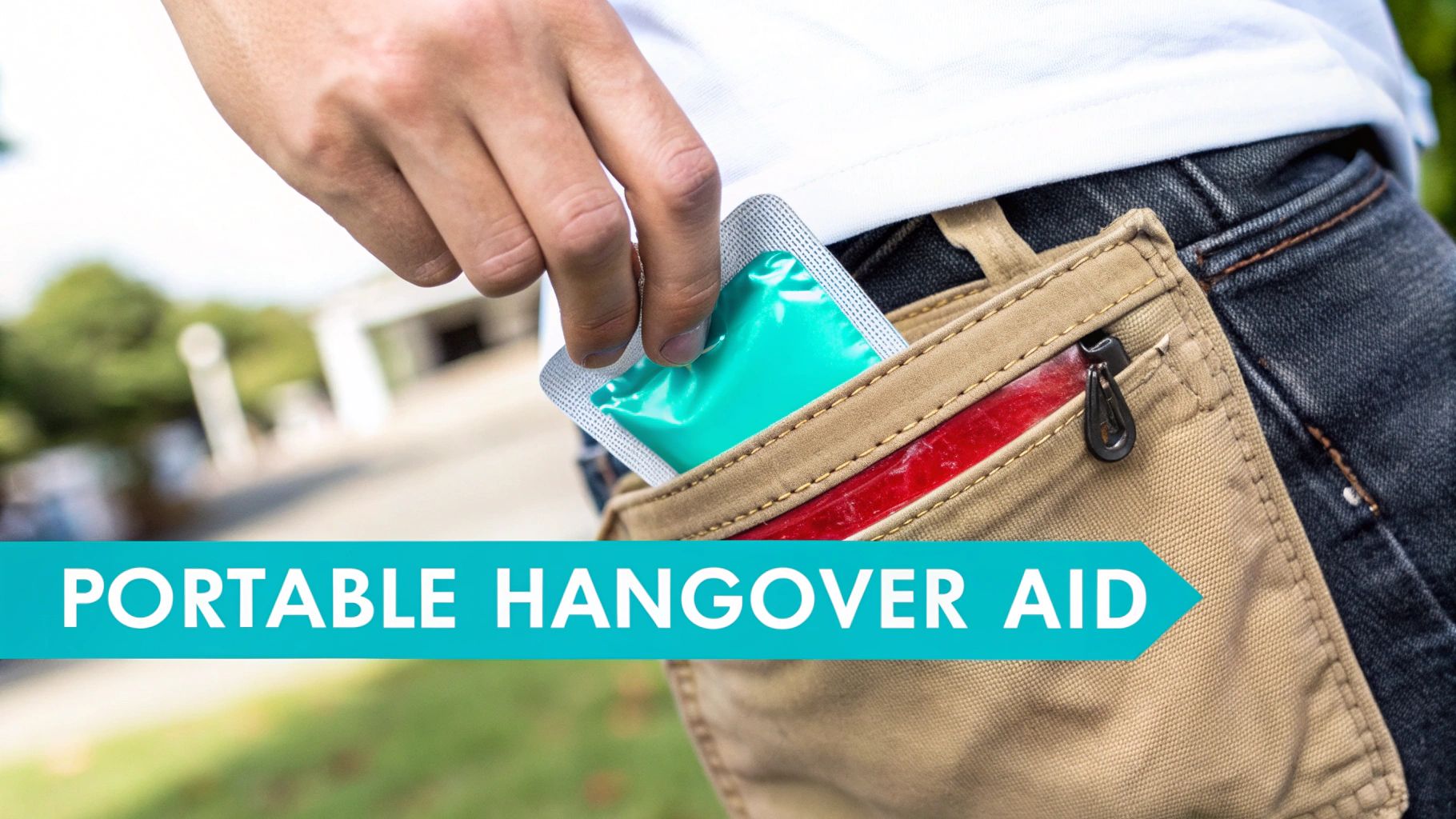
Let’s be real for a second—most hangover remedies are just plain clumsy. Who wants to be mixing messy powders in a bathroom or lugging around a giant sports drink on a night out? It’s just not practical.
Because of the hassle, even if we have the best intentions, we usually just put it off until the next morning. But by then, the damage is already done.
This is where a totally new approach changes the game. Upside Hangover Jelly was specifically designed to get around all that awkwardness. It’s a clean, simple, and effective way to tackle the whole alcohol and electrolytes issue without the fuss. It's built for anyone who’s actually out and about.
Smart Design Meets Effective Formulation
The beauty of a portable jelly isn't just that it fits in your pocket. It's about having a precisely formulated solution ready to go the second you need it. Unlike a generic sports drink, Upside is packed with a science-backed blend of ingredients that zero in on the exact electrolyte depletion we've been talking about.
Each little packet gives you a balanced hit of sodium, potassium, and magnesium to help reset your body's mineral stores. This isn't just some random mix; it's a calculated formula meant to counteract alcohol's diuretic effects, helping your body rehydrate where it counts—at the cellular level. If you want to dive deeper, check out our guide on hydration packets for hangovers.
When you look at the numbers, the need for something this convenient is obvious. In the United States, 58% of adults reported drinking alcohol in 2024. With people consuming an average of 9.8 liters of pure alcohol every year, that’s a whole lot of drinking occasions. This social reality creates a huge need for on-the-go electrolyte support, especially as ready-to-drink beverages become more popular and encourage single-serve situations where a portable remedy is perfect. As you can see from insights on the global drinks market, this trend highlights a huge opportunity for convenient, effective recovery aids. Learn more about global alcoholic beverage trends on The Drinks Business.
Upside is more than just a product; it’s a lifestyle tool. It’s designed for socialites, travelers, and busy professionals who want to enjoy life to the fullest without sacrificing their well-being the next day.
By combining smart, portable design with an effective, science-backed formula, a jelly offers a far better way to manage your recovery. It lets you be proactive, turning hangover prevention from a chore into a simple, discreet part of your night. This little shift empowers you to live without compromise, making sure a great night out doesn't ruin your tomorrow.
Party Smarter and Reclaim Your Tomorrow
So, what's the bottom line? It's pretty simple, actually. Hangovers are far more about losing essential electrolytes than just being thirsty. Once you grasp the connection between alcohol and electrolytes, you can stop playing damage control the morning after and start getting ahead of the game.
Now you have the science and the game plan to put back what a night out takes away. You can finally have a social life that doesn't demand your entire next day as payment.
The real secret to feeling human again after a night out isn't chugging a gallon of water before bed. It's about planning ahead. Giving your body the electrolytes it needs before the damage is done is way more effective than trying to play catch-up.
With a smart move like grabbing an Upside Hangover Jelly, you can party smarter, bounce back faster, and actually own your morning. It’s a dead-simple way to make sure a great night out doesn’t steal your tomorrow. Reclaiming your day really does start the night before.
Your Questions, Answered
When you start digging into the whole alcohol and electrolytes connection, it's natural for a few questions to pop up. Let's tackle some of the most common ones so you can feel confident about your recovery plan.
Can I Just Chug a Sports Drink?
It seems like a quick fix, right? But grabbing a Gatorade isn't your best bet here. Sports drinks are designed to replace what you lose from sweat when you're working out, which is a totally different chemical mix than what your body loses when you drink alcohol.
Plus, most of them are packed with sugar and don't have the right ratio of sodium, potassium, and magnesium your system is crying out for after a night out. A targeted solution gets you what you actually need, without the sugar crash.
When’s the Best Time to Take Electrolytes?
For this, timing is everything. It's way easier to get ahead of the problem than to play damage control the morning after.
Taking an electrolyte supplement like Upside Jelly right before bed is a game-changer. You're giving your body a massive head start, letting it rehydrate and restock on essential minerals while you sleep. You'll wake up feeling miles ahead.
But hey, we've all been there. If you forget, taking it first thing in the morning will still kick your recovery into gear and help you feel human again, faster.
Are These Supplements Safe for Everyone?
For most healthy adults, absolutely. Using electrolyte supplements as directed is perfectly safe—they’re just giving your body back what it naturally needs to run smoothly.
That said, your health always comes first. If you have any pre-existing health conditions, you'll want to be a little more careful.
- Kidney Issues: Your kidneys are the master regulators of electrolytes, so if they're not working at 100%, you need a doctor's guidance.
- High Blood Pressure: Some supplements are heavy on the sodium, which can be a problem if you're watching your blood pressure.
- Certain Medications: Things like diuretics can mess with your electrolyte levels, so you definitely want to avoid any weird interactions.
If any of these sound like you, just have a quick chat with your doctor before adding a new supplement to your routine. It’s the smartest way to make sure you’re doing what’s best for your body.
Ready to take back your mornings and party smarter? Upside makes it easy with a portable, effective solution designed for your lifestyle.
Discover the difference and grab your Upside Hangover Jelly here: https://enjoyupside.com
#upside #enjoyupside #upsidejelly #livemore #hangovercure #hangoverprevention #fighthangovers #preventhangovers #HangoverRelief #MorningAfter #PartySmarter #HydrationStation #WellnessVibes #RecoverFaster #NoMoreHangovers #HealthyParty #HangoverHacks #FeelGoodMorning #NightlifeEssentials #HangoverFree #SupplementGoals #PostPartyPrep #GoodVibesOnly #HealthAndParty #HangoverHelper #UpsideToPartying