

· By Annemarie
How to Network at Events: Proven Strategies to Build Your Professional Network
Walking into a networking event without a plan is like going grocery shopping when you’re hungry—you’ll end up with a lot of random stuff you don't need. The real magic happens long before you shake a single hand. It’s all about preparation and a clear intention. This is what turns a room full of strangers into a goldmine of opportunities.
When you know what you’re there for, you carry yourself with a different kind of confidence. You’re not just there to see what happens; you’re there to make something happen.
Build Your Networking Game Plan Before You Go
Seriously, showing up and "winging it" is a one-way ticket to awkward conversations and a pocketful of business cards you’ll never use. A little bit of strategy ensures your time and energy are spent where they’ll have the biggest impact.
The best place to start is by setting a few realistic goals. Forget trying to meet every single person in the room. It’s about quality, not quantity. Your real goal isn't a fatter contact list; it's a handful of genuine connections.
Define Your "Why"
Before you even glance at the guest list, you need to ask yourself one simple question: Why am I going? The answer to this will be your compass for the entire event. Are you hoping to find a mentor? Get the inside scoop on a new industry? Maybe even scout out a few potential clients?
Think about what a "win" would look like for you. Some common goals include:
- Knowledge Gathering: Pick the brain of a specific speaker or get a handle on emerging industry trends.
- Career Advancement: Connect with a hiring manager or a potential mentor from a company you admire.
- Business Development: Identify three potential partners for a cool collaboration you have in mind.
- Personal Branding: Position yourself as a go-to person in your niche.
A concrete goal like, "I want to have three meaningful conversations with people in the marketing world," is so much more powerful than a vague wish to "meet new people."
Do Your Homework
Once you’ve figured out your "why," it's time to focus on your "who." Most conferences and events publish an attendee list or have an app you can use. This is your treasure map. Hop on LinkedIn and do some light pre-event recon.
Pinpoint the speakers, sponsors, or other attendees whose work you find interesting or whose experience lines up with what you're trying to achieve. Trust me, a little research pays off big time. Knowing about someone's latest project or a shared connection gives you an instant, authentic way to start a conversation.
And if you’re traveling for the event, being prepared is even more crucial. Check out our guide on what to pack for business travel so you don’t forget the essentials.
A bit of research helps you skip the boring small talk. You can jump right into specific, insightful questions that show you’ve done your homework and make you stand out from everyone else.
Craft Your Introduction Story
Please, ditch the robotic elevator pitch. Nobody wants to listen to a canned sales script. What you need is a natural-sounding "introduction story"—a quick, 30-second snapshot of who you are and what you're fired up about.
This goes beyond your job title. It's a tiny story that connects your work to your passions or goals. For instance, instead of the bland, "I'm a software developer," try something with more personality:
"I'm a software developer, but I'm really passionate about using tech to make healthcare more accessible. Lately, I've been working on a project that helps connect patients in rural areas with specialists."
See the difference? It’s memorable, it’s human, and it immediately opens the door to a real conversation.
Making a First Impression That Actually Lasts
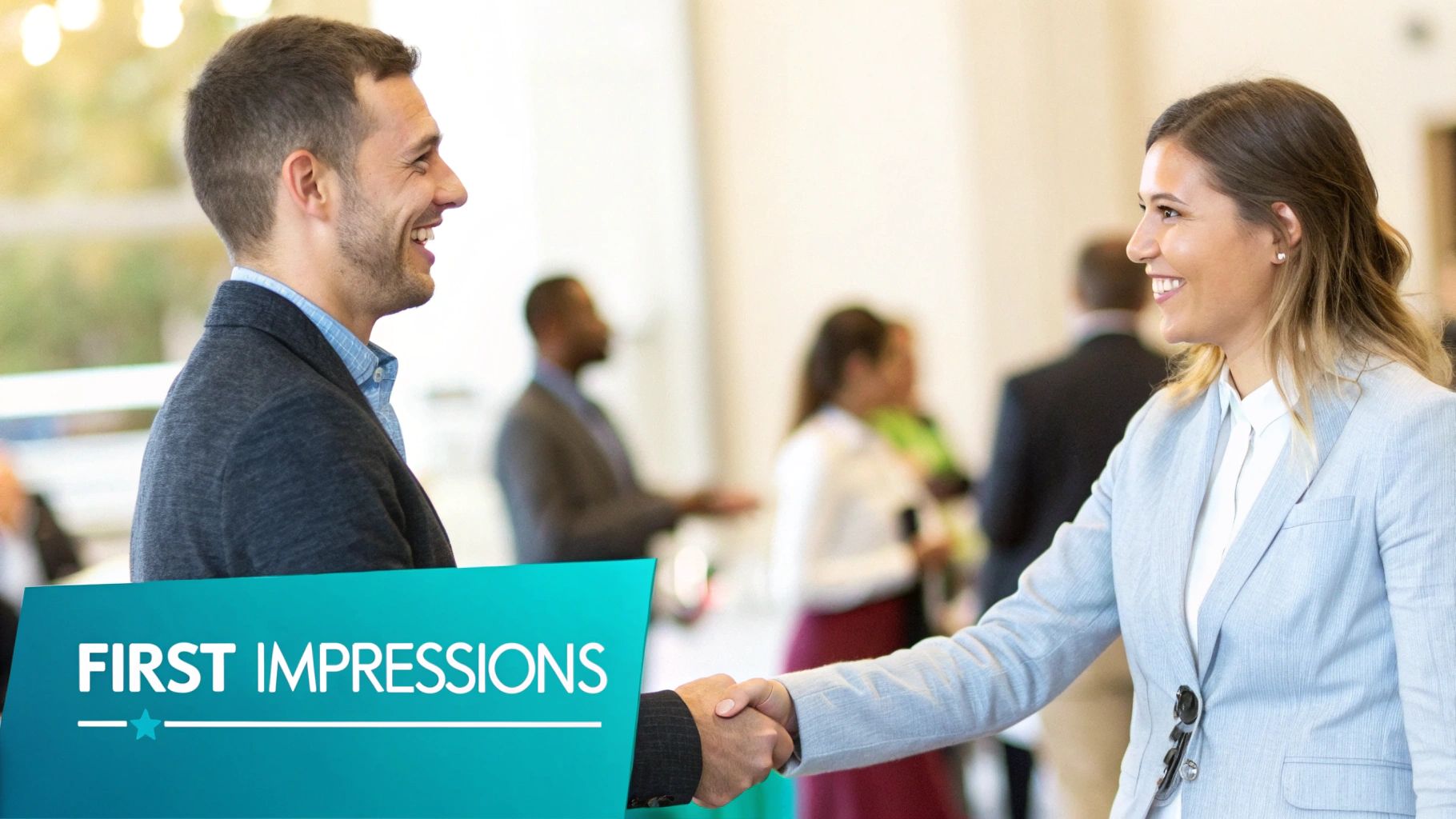
That first interaction is everything. It's the moment that separates you from the crowd and determines if you’re someone worth remembering. Your mission isn't just to say your name; it’s to genuinely connect and make the other person feel like they're the only one in the room.
Believe it or not, this all starts before you even open your mouth. Your body language screams volumes. A confident, open posture and a real smile are universal signals for "I'm approachable and happy to be here." Making eye contact seals the deal—it shows you’re present and actually interested.
Master Your Nonverbal Cues
In a noisy, crowded room, your actions are your introduction. To come across as confident and warm, dial in these three things:
- The Handshake: Go for firm, not bone-crushing. A limp fish handshake screams indifference, but a death grip can feel way too aggressive. Find that happy medium.
- Posture: Stand tall, shoulders back. Whatever you do, don't cross your arms—it’s the classic “don’t talk to me” pose.
- Eye Contact: Keep it natural and friendly. This is how you build trust and show you're hanging on their every word.
Nailing these small details makes a huge difference in how you're perceived, and it sets the stage for a great conversation.
Quick tip: Remember, the person you're talking to is probably just as nervous as you are. A warm smile and solid body language can put you both at ease, making the whole interaction feel less like work and more like a chat.
Sparking Real Conversations
Okay, you've made your approach. Now what? Ditch the tired, "So, what do you do?" and try something that shows you're paying attention. Context-specific, open-ended questions are your best friend here.
This shift toward authentic connection is happening everywhere. Face-to-face networking is back in a big way—the U.S. B2B trade show market ballooned to $15.78 billion in 2023. Event organizers are swapping out stuffy panels for interactive lounges designed to get people talking, a change that's led to twice as many mentorships and deals. If you want to dive deeper, you can check out more on these game-changing event trends and see how networking is evolving.
Conversation Starters That Work in Any Setting
Walking up to a stranger is always the hardest part. The key is to have a few go-to openers that feel natural and not like a script. The right icebreaker really depends on the vibe of the event—what works at a buttoned-up conference won't land the same way at a casual mixer.
Here’s a quick guide to help you break the ice, no matter where you are.
| Situation | Professional Conference Opener | Social Mixer Opener |
|---|---|---|
| At the registration line | "This is my first time at this conference. Have you been before?" | "This place is great. Have you tried any of the appetizers yet?" |
| After a speaker session | "What was your biggest takeaway from that presentation?" | "That was an amazing band! What did you think of the music?" |
| At the coffee or bar area | "Anything you're particularly excited to see on the agenda today?" | "I love the vibe here. How did you hear about this event?" |
Using the environment as your starting point is always a smooth move. It's relevant, easy, and opens the door for a real conversation to begin.
Moving Conversations Beyond Just Small Talk
Alright, you've broken the ice. That's step one. But the real magic of networking happens when you push past the usual chatter about the weather or the surprisingly decent conference coffee.
This is where you make a real connection—something memorable that’s built on shared interests and genuine curiosity, not just exchanging business cards. To do that, you have to shift from just being a participant to being a valuable part of the conversation. It all comes down to asking better questions and actually listening to the answers.
Uncovering Deeper Connections
If you want to have a conversation that sticks, you need to go deeper than surface-level questions. Forget the simple yes/no stuff. Your goal is to ask questions that invite people to share stories, opinions, and a bit of who they really are.
Try a few of these on for size:
- "What's been the most surprising challenge you've run into in your role this year?"
- "Beyond your official title, what's a project you're genuinely passionate about right now?"
- "What’s one common myth about your industry you wish everyone would forget?"
Questions like these show you’re interested in the person, not just their professional stats. They crack open the door to real discussions about goals, frustrations, and maybe even a way you can help each other out.
The Give-First Principle
Here’s a secret all the best networkers know: always operate with a "give-first" mindset. Before you even think about what you can get, focus on what you can offer. This one small shift changes the entire dynamic. You’re no longer a contact collector; you’re a genuine resource.
And offering value doesn’t have to be some grand, time-consuming gesture. It can be incredibly simple.
- Share an Insight: "That problem you're describing reminds me of an article I just read. I'll shoot it over to you."
- Provide a Resource: "Oh, I know a great tool for that. Let me send you the link."
- Make an Introduction: "You know, you should really connect with my colleague, Sarah. She's an absolute pro in that specific area."
When you lead with generosity, you build trust instantly. People remember the person who helped them, not the person who just wanted something from them.
Generosity is the cornerstone of great networking. When you focus on helping others succeed, your own success often follows as a natural byproduct. It's about building a community, not just a contact list.
Navigating Group Conversations
We've all been there—standing awkwardly on the edge of a group, trying to figure out how to jump in. It's intimidating, but it's a skill you can learn. The trick is to be an observer first. Just hang back for a minute and listen to get the vibe and topic of the conversation.
Wait for a natural pause, make some eye contact with one person in the group, and then ease in with a relevant comment. Something as simple as, "That's a really interesting point. Have you considered...?" is a perfect, low-pressure way to join the circle.
Event organizers are catching on, too. Many are now designing events to encourage these smaller, more valuable chats. Some are even using apps to create "lounges" of 6-10 people with similar goals, which can boost real engagement by up to 40%. The data shows these curated small groups generate 2.5 times more follow-up meetings than just aimlessly mingling in a huge crowd.
These skills translate perfectly to more casual settings as well. If you’re looking for tips on how to connect when the vibe is more relaxed, check out our guide on making fun virtual happy hours feel genuinely engaging.
Wrapping It Up: The Graceful Exit and Smart Follow-Up
Look, we've all been there. You're deep in a great conversation, but you can see three other people you need to talk to before the night is over. Knowing how to network is just as much about the graceful goodbye as it is about that killer opening line.
A solid chat can turn awkward fast if you don't know how to stick the landing. The goal isn't to ghost them mid-sentence; it's to leave the conversation on a high note, making it clear you enjoyed their time while respectfully moving on. It’s a subtle art, but it’s what separates the pros from the rookies.
How to Make a Smooth Getaway
Ending a conversation doesn't require a smoke bomb or a complicated excuse. A simple, polite line is all it takes. Just be direct, be appreciative, and you're golden.
Here are a few lines I've used that work like a charm:
- The Positive Pivot: "This has been great—I especially loved hearing about [topic]. I'm going to grab a drink, but I'll definitely look you up on LinkedIn later."
- The Action-Oriented Out: "I really want to follow up on that idea about [topic]. What’s the best way to get in touch with you next week?"
- The Classic Close: "Well, I don't want to monopolize you! It was a pleasure meeting you, and I hope you have a great rest of the event."
Each one signals a clear, polite end to the chat while reminding them that your conversation was valuable.
The Real Work Starts After the Event
Let's be real: all those handshakes and great conversations are basically worthless if you don't follow up. The real networking magic happens after the event lights dim. This is where you turn a fleeting chat into a real professional relationship. Don't let all that effort go to waste.
Your follow-up is your first chance to show you're reliable, thoughtful, and genuinely interested in building a connection. A prompt, personal message makes you memorable long after the free drinks have run out.
Timing is everything here. You have a 24-48 hour window to send a personalized follow-up. Any longer, and the details of your conversation start to get fuzzy for both of you. And in-person events are making a huge comeback—they're expected to generate 60% of total event revenue by 2025, with 78% of organizers calling them their most powerful marketing tool. Your quick follow-up capitalizes on that powerful in-person momentum. (You can dig into more of these numbers in the full event industry statistics here.)
Nailing the Follow-Up Message
A generic "It was nice to meet you" message is a one-way ticket to their trash folder. If you want to make an impact, you need to get personal and specific. Jog their memory by referencing something you actually talked about.
Here’s a simple template I use for LinkedIn requests or emails that gets a great response rate:
Subject: Great Connecting at [Event Name]!
"Hi [Name],
It was a pleasure meeting you at [Event Name] yesterday. I really enjoyed our chat about [specific topic you discussed, e.g., the future of AI in marketing].
I especially found your take on [mention a specific point] interesting. As promised, here's that [article/link/resource] I mentioned.
I'd love to stay connected and continue the conversation.
Best, [Your Name]"
This approach works because it’s personal, it provides value, and it isn't pushy. It cements the connection and opens the door for what comes next, turning a simple handshake into a genuine asset for your network.
Your Actionable Networking Checklist
To bring everything we've talked about together, here's a no-fluff guide to nail your networking every single time. Think of this as your go-to cheat sheet to keep you confident, organized, and effective from the moment you decide to go until long after the event wraps up.
This isn't about just collecting business cards; it's about making real connections. Let's break it down into three simple phases: before, during, and after.
The Ultimate Event Networking Checklist
This checklist is your game plan. It’s designed to keep you focused on what really matters at each stage of the networking process, ensuring you walk away with valuable new relationships, not just a pocketful of cards.
| Phase | Key Actions |
|---|---|
| Before the Event | Set 1-3 clear goals. Know what a "win" looks like for you. |
| Research attendees. Identify a few people you actually want to meet. | |
| Prep your opener. Have a go-to conversation starter ready. | |
| Pack essentials. Business cards, portable charger, mints. | |
| During the Event | Use open body language. Uncross your arms, smile, and make eye contact. |
| Ask great questions. Go beyond "What do you do?" | |
| Listen more than you talk. People remember how you make them feel. | |
| Know your graceful exit. Have a polite closing line ready to move on. | |
| After the Event | Follow up within 24-48 hours. A personalized email or LinkedIn message. |
| Add context. Remind them what you talked about. | |
| Provide value. Share a relevant article or offer an introduction. | |
| Nurture the connection. Stay in touch periodically, not just when you need something. |
Stick to these steps, and you'll be building a powerful network before you know it. It’s all about being intentional and genuine.
Before the Event
Your prep work is what separates the pros from the amateurs. Showing up with a clear plan gets rid of the anxiety and frees you up to focus on real conversations.
- Set 1-3 Clear Goals: Seriously, what does a "win" look like? Are you hoping to find a mentor, land a client, or just get some solid industry insights? Write it down.
- Research Key Attendees: Hop on the event app or LinkedIn and find a handful of people you genuinely want to connect with. A little homework makes your approach feel personal, not random.
- Prepare Your Essentials: Don't forget the basics. Pack your business cards, a portable charger (a dead phone is a networking killer), and some mints. If it's a multi-day event, being prepared is even more crucial. Our guide on what to bring to music festivals actually has some great packing tips that apply here, too.
During the Event
Alright, it's go-time. The key is to stay present, listen like you mean it, and remember you're there to build rapport, not just pitch. Let your prep be your guide, but don't be afraid of those spontaneous conversations—they're often the best ones.
- Focus on Body Language: Keep your posture open, make eye contact, and offer a firm handshake. It’s a simple way to look confident and easy to talk to.
- Lead with Quality Questions: Ditch the "So, what do you do?" and ask something open-ended that gets people talking. This is how you have memorable discussions.
- Graceful Exits: Know how you're going to end a conversation. Having a polite closing line ready lets you wrap things up on a high note and move on to your next connection without any awkwardness.
After the Event
This is where the real work begins. Following up is how you turn a brief chat into a meaningful professional relationship. The event might be over, but the opportunity is just getting started.
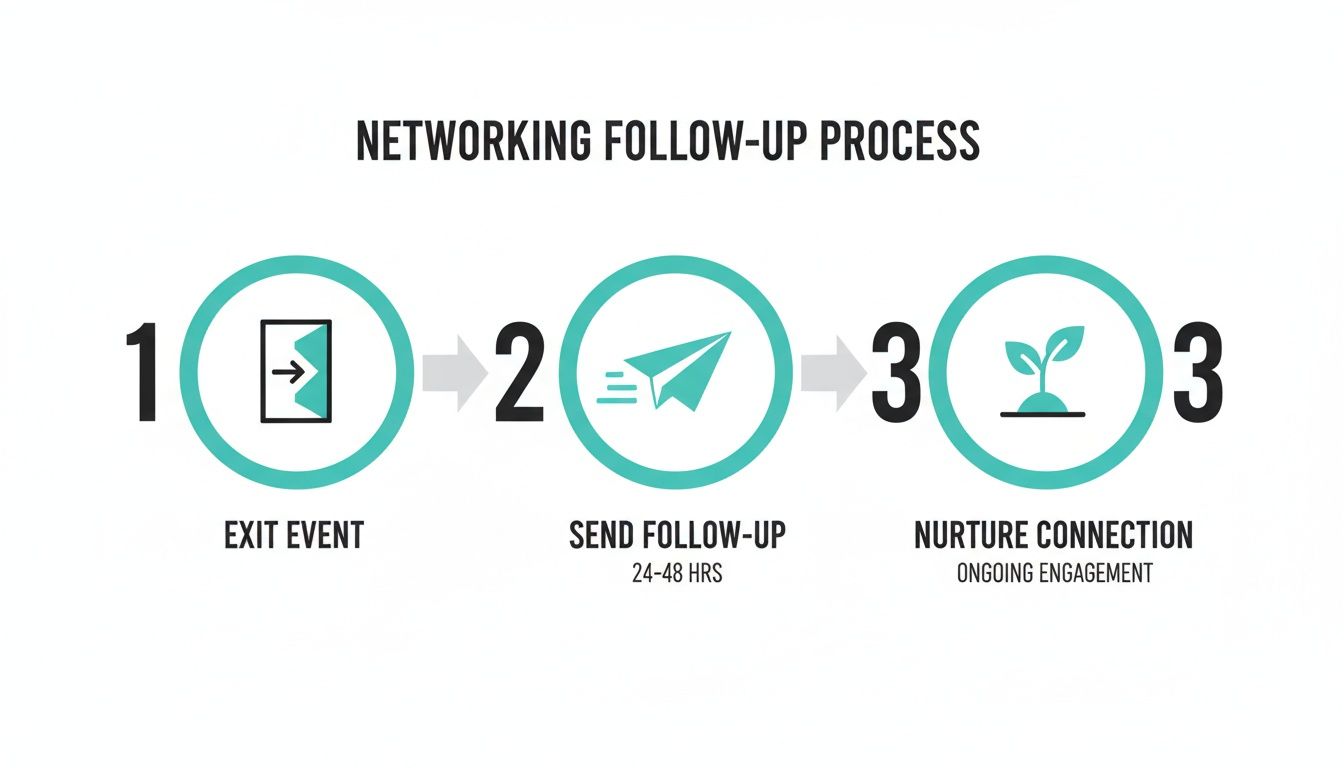
This simple process is a great reminder that the magic happens after you leave. A quick, thoughtful follow-up message can transform a fleeting moment into a lasting asset for your career.
Answering Your Most Common Networking Questions
Even the best-laid plans can go sideways at a networking event. Let's be real, certain situations pop up over and over, leaving even the most seasoned pros wondering what to do. Here are some straight answers to the questions we all have about navigating those tricky moments.
Think of this as your field guide for handling those awkward encounters with a bit more grace.
How Do I Join a Group That Is Already Talking?
Walking up to a group deep in conversation can feel like crashing a private party. It doesn't have to be. The trick is all about observation and timing.
Find a group discussing something that genuinely interests you and just stand nearby. Listen in for a natural pause. Make some brief eye contact with one person and offer a small, friendly smile. When you see your opening, step in with something simple like, "That sounds fascinating, mind if I jump in?" Your only goal right now is to listen and catch up on the context. Don't try to immediately steer the conversation—that’s how you make a smooth entrance instead of a disruptive one.
What Is the Best Way to Remember People's Names?
We've all been there. You forget a name seconds after hearing it. It’s a classic, universal fear, but there are some simple hacks to fight it.
The second you meet someone, repeat their name back to them. "It's great to meet you, David." It feels natural and helps lock it in.
Then, try to use their name one more time in the conversation. When you get a free moment, discretely jot down their name and a quick note about your chat on their business card or in your phone. Connecting a name to a topic is a game-changer for your follow-up.
Honestly, don't overthink this one. Most people are just focused on what they're going to say next. A quick and honest, "I'm so sorry, your name just slipped my mind," is always a better move than guessing wrong.
Should I Try to Meet Everyone at an Event?
No. Absolutely not. This is probably the biggest mistake you can make. The goal of networking is connection, not collection. You’re not trying to win the award for the thickest stack of business cards.
Instead, your mission should be to have 3-5 quality conversations. Aim for chats where you actually feel a real rapport and see some mutual interest. One solid, memorable interaction is worth a hundred forgettable handshakes. If you hit that goal early, great! You can relax, people-watch, or just have more casual chats with zero pressure. Quality over quantity. Always.
How Can I Network Effectively if I'm an Introvert?
Believe it or not, introverts can be incredible networkers. Why? Because they're masters of the deep, one-on-one conversations that build the strongest professional relationships. You just need to play to your strengths.
- Show Up Early: Get there before the room turns into a wall of sound. It gives you a chance to get your bearings and start conversations in a much calmer setting.
- Have a Mission: Use that pre-event research to pick out 2-3 specific people you want to talk to. This gives you a clear purpose so you don't feel like you're just drifting aimlessly.
- Take Breaks: It is 100% okay to step outside or find a quiet corner for a few minutes. Recharge that social battery. No one will notice.
Focus on those quality individual chats instead of trying to "work the room." You’ll find a style that feels authentic and won't leave you feeling completely drained.
Networking events, whether they're for your career or just for fun, should be energizing. They shouldn't leave you wiped out the next day. For those social nights where you want to make connections and feel great, Upside has your back.
Our Hangover Jelly is designed to help you enjoy every moment without dreading the morning after. Keep one in your pocket, take it before your night gets going, and wake up ready for whatever’s next. Learn more about how Upside can help you party smarter.
#upside #enjoyupside #upsidejelly #livemore #hangovercure #hangoverprevention #fighthangovers #preventhangovers #HangoverRelief #MorningAfter #PartySmarter #HydrationStation #WellnessVibes #RecoverFaster #NoMoreHangovers #HealthyParty #HangoverHacks #FeelGoodMorning #NightlifeEssentials #HangoverFree #SupplementGoals #PostPartyPrep #GoodVibesOnly #HealthAndParty #HangoverHelper #UpsideToPartying