

· By Annemarie
What Causes Alcohol Intolerance and Why You Feel Sick
If you’ve ever felt flushed, sick, and just plain miserable after a single drink, you’ve probably asked yourself, what causes alcohol intolerance? The short answer is it's usually a metabolic traffic jam rooted in your genetics. It’s not about your tolerance level or being a lightweight; it's a very real, predictable biological reaction.
Why Alcohol Makes Some People Feel Awful
Ever wonder why one friend can enjoy a couple of cocktails without a problem, while you feel awful after just a few sips? That frustrating experience isn't just in your head. It points to a fundamental difference in how your body handles alcohol, and it often comes down to your DNA.
For many, this instant, unpleasant reaction is caused by an inherited trait that messes with a key enzyme. Think of your body’s alcohol-processing system as a factory assembly line. When everything’s running right, the line moves smoothly. But for some of us, a crucial worker on that line is moving in slow motion.
The Metabolic Bottleneck
This "slow worker" is an enzyme called aldehyde dehydrogenase 2 (ALDH2). When you drink, your body first turns alcohol into a nasty, toxic compound called acetaldehyde. The whole job of ALDH2 is to quickly break this toxin down into something harmless.
"When ALDH2 doesn't function properly, acetaldehyde builds up in your bloodstream. This buildup is what triggers the classic symptoms of alcohol intolerance: a bright red face, nausea, a racing heart, and a pounding headache."
Globally, an estimated 540 million people carry a mutated ALDH2 gene, which is about 8% of the world’s population. This genetic variant is especially common in people of East Asian descent, affecting a huge portion of the population in countries like Japan, China, and Korea. You can learn more about this specific genetic trait from the experts at Stanford Medicine.
This is why understanding how your body handles alcohol is the first step toward having a better time. Recognizing that your symptoms come from a metabolic bottleneck—not a personal failing—empowers you to make smarter choices. It’s all about protecting your health while still enjoying your social life, helping you live more without those miserable after-effects.
The Genetic Mismatch Behind Asian Flush
For a lot of people, especially those with East Asian roots, that awful, uncomfortable reaction to alcohol isn't a mystery—it's literally written into their DNA. If you’ve ever experienced a bright red face, a wave of nausea, and a racing heart after just one drink, you're dealing with a unique metabolic process often called "Asian Flush." It all comes down to a genetic quirk in how the body handles alcohol.
Think of your body's alcohol-processing system like a two-step factory assembly line.
The first station, run by an enzyme called alcohol dehydrogenase (ADH), takes the ethanol you drink and converts it into a nasty, toxic chemical called acetaldehyde. Then, the second station, managed by the enzyme aldehyde dehydrogenase 2 (ALDH2), is supposed to quickly break down that toxic acetaldehyde into a harmless substance your body can easily get rid of.
This little diagram breaks down the simple but crucial pathway alcohol takes through your system.
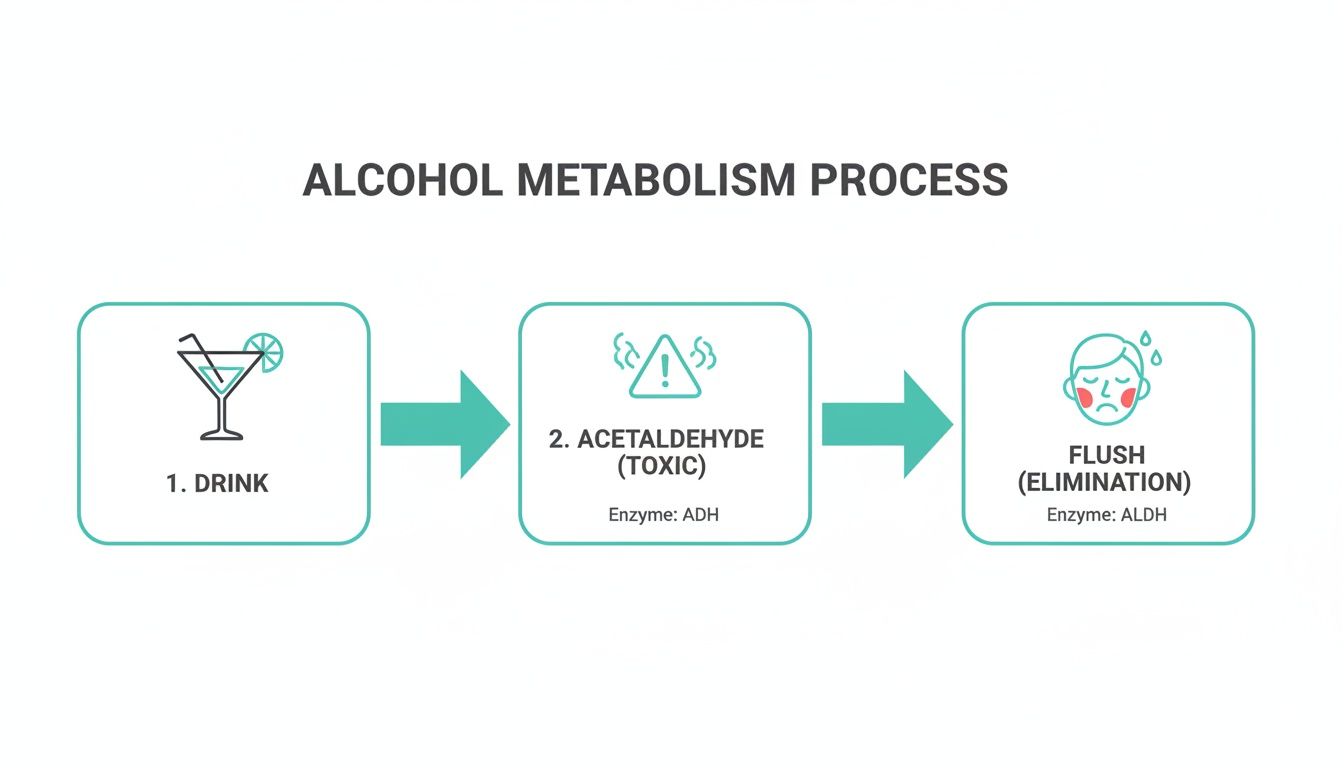
As you can see, when that toxic acetaldehyde builds up, it directly causes the flushing and all those other miserable symptoms of alcohol intolerance.
The Double Hit Phenomenon
For many people with this genetic trait, a "double hit" happens that makes the whole factory wildly inefficient. First, their ADH enzyme works in overdrive, rapidly churning out massive amounts of toxic acetaldehyde. At the same time, their ALDH2 enzyme is sluggish or just plain broken, meaning the "cleanup crew" can't clear the toxins fast enough.
It’s like a factory where the production line is going a hundred miles an hour, but the shipping team is understaffed and moving in slow motion. The warehouse gets completely overwhelmed with toxic inventory, causing the whole system to freak out. That's exactly what’s happening in your body. It’s not a personal weakness—it's a predictable biochemical reaction.
This genetic combo creates the perfect storm for alcohol intolerance. Research has found that a specific ADH variant, which is common in many Asian populations, can work up to 100 times faster than other versions. When you pair that with a slow-acting ALDH2 enzyme—a trait found in about 20–30% of East Asians—you get a rapid-fire production and a snail's-pace clearance of acetaldehyde.
This toxic overload is what triggers those signature symptoms. The red face, or "Asian Glow," is just your blood vessels dilating from the toxin buildup. The nausea, headache, and pounding heart are all direct physiological responses to what is essentially acetaldehyde poisoning. If this sounds painfully familiar, our guide on how to prevent Asian Glow has some practical tips for dealing with these genetic reactions.
This genetic "double hit" means you produce acetaldehyde way faster and clear it out much slower than people without these gene variants. The result? Immediate and intense symptoms, even after just a little bit of alcohol.
Getting your head around this genetic mismatch is a game-changer. It confirms that your body's reaction is real and based on a concrete biological process, which puts the power back in your hands to make smart decisions about drinking.
Intolerance, Allergy, Or Just a Bad Hangover?
That awful, sick feeling after a few drinks isn’t always the same for everyone. So, what’s going on? Is it a true alcohol intolerance, a rare (but serious) allergy, or just the early signs of a nasty hangover?
It’s easy to mix them up, but figuring out the difference is key to managing your symptoms and feeling better. Think of it this way: a traffic jam, a blaring security alarm, and a total system burnout are all problems, but they have completely different causes and solutions. Your reaction to alcohol is no different.
The real answer comes down to what your body is reacting to and how it's reacting. Getting this straight is the first step to understanding why you feel sick after drinking and what you can actually do about it.
The Critical Differences Unpacked
An alcohol intolerance is a metabolic problem, plain and simple. It means your body, usually because of your genetics, just can't break down alcohol's toxic byproducts the way it should. This is that factory assembly line issue we talked about—it creates a buildup of acetaldehyde that leads to that tell-tale flushing, nausea, and a racing heart almost immediately.
A true alcohol allergy, on the other hand, is a full-blown immune system attack. Your body incorrectly flags an ingredient in your drink—like the wheat in beer, grapes in wine, or added sulfites—as a dangerous invader and goes into defense mode. This can trigger hives, swelling, and in serious cases, even life-threatening breathing problems.
And then there's the all-too-familiar hangover. This is a delayed reaction to drinking too much, caused by a perfect storm of dehydration, inflammation, and leftover acetaldehyde that doesn't really kick in until hours after your last drink.
While an intolerance and a hangover might share symptoms like a headache or nausea, the timing and root causes are worlds apart. An allergy is the most severe of the three and involves a direct immune response to a specific ingredient, not the alcohol itself.
A Side-By-Side Comparison
To make things crystal clear, let's put these three side-by-side. This table should help you start connecting the dots between what you're feeling and when it's happening.
Intolerance vs Allergy vs Hangover Key Differences
| Feature | Alcohol Intolerance | Alcohol Allergy | Hangover |
|---|---|---|---|
| Cause | Genetic enzyme deficiency (metabolic) | Immune system reaction (IgE antibodies) | Dehydration, inflammation, acetaldehyde buildup |
| Onset | Almost immediate (after 1-2 drinks) | Within minutes to an hour | Delayed (hours after drinking stops) |
| Key Symptoms | Facial flushing, nausea, rapid heartbeat, headache | Hives, swelling, difficulty breathing, anaphylaxis | Headache, fatigue, nausea, muscle aches |
| Trigger | Alcohol itself (ethanol/acetaldehyde) | Specific ingredients (grains, sulfites, yeast) | Excessive alcohol consumption |
See how timing is one of your biggest clues? Immediate flushing almost always points to an intolerance, while feeling terrible the next morning is a classic hangover. If you want to dig deeper into why these symptoms pop up, check out our guide on why you feel sick after drinking.
Pinpointing your reaction isn't just about satisfying curiosity—it’s about empowering yourself to make smarter choices for your health and social life.
What Else Could Be Causing Your Reaction?
While your genes play a huge role in how you handle alcohol, they aren't the whole story. What if you used to enjoy a glass of wine with dinner, but now it leaves you feeling flushed and miserable? If symptoms seem to pop up out of nowhere, there’s likely another culprit at play.
It's easy to blame the alcohol itself, but often, the real problem is other compounds hiding in your drink. These ingredients can create symptoms that look and feel just like alcohol intolerance, even if your enzymes are working perfectly fine.
Could It Be Histamines or Sulfites?
Believe it or not, your favorite red wine or craft beer might be loaded with histamines. Yep, the very same chemicals your body pumps out during an allergic reaction. For some people, consuming them directly is enough to trigger headaches, a stuffy nose, flushed skin, and an upset stomach. Sound familiar?
On top of that, many wines and beers contain added sulfites to keep them fresh, which can cause nearly identical problems. If you find that you react way worse to certain drinks—especially aged or fermented ones like red wine—a histamine or sulfite sensitivity might be the real reason you're feeling so lousy.
A lot of people mix these reactions up with a true allergy, but they're not the same thing. Clinically speaking, alcohol intolerance is a digestive issue, while a true allergy is a full-blown immune system attack.
Sometimes, an underlying health issue can also throw a wrench in your body's ability to process alcohol. For instance, anyone with chronic liver disease is at a much higher risk for a bad reaction because their liver is already working overtime and just can't handle metabolizing alcohol safely. You can get more details on this from Cedars-Sinai.
When Your Meds and Your Drink Don't Get Along
Another big, often-missed reason for what feels like sudden alcohol intolerance is medication. It's wild how many common prescription and over-the-counter drugs can mess with the enzymes that break down alcohol, basically putting you in a temporary state of intolerance.
This interaction grinds your metabolic pathway to a halt, causing that nasty acetaldehyde to build up fast—just like it does for people with the genetic variant. The result is a really unpleasant, intense reaction that can bring on severe nausea, vomiting, flushing, and a racing heart.
Some of the usual suspects include:
- Certain Antibiotics: Metronidazole (Flagyl) and tinidazole (Tindamax) are notorious for causing a terrible reaction when mixed with alcohol.
- Diabetes Medication: Some drugs, like chlorpropamide, can make you feel flushed and nauseous if you drink.
- Disulfiram (Antabuse): This one is actually designed to make you sick from alcohol. Doctors prescribe it to help people quit drinking by creating a guaranteed bad time.
If your symptoms conveniently started right after you began taking a new medication, that's a huge red flag. It’s definitely time to have a chat with your doctor or pharmacist. Figuring out these hidden triggers is all about listening to your body and getting to the bottom of any new or worsening reactions to stay on top of your health.
How to Manage Intolerance and Enjoy Your Night Out
Knowing what causes your alcohol intolerance is half the battle. The other half? Figuring out how to deal with it so you can actually enjoy a night out with friends. Let's be clear: living with this doesn't mean you're sentenced to a life of seltzer water at every party. With a few smart moves, you can keep those nasty symptoms at bay and feel way more in control.
It all starts with being a little more thoughtful about what you're actually drinking. Those awful feelings you get from certain drinks aren't just in your head. Compounds like histamines and sulfites are major culprits, and choosing your beverages wisely can make a world of difference. If you’ve noticed that red wine or dark beers consistently make you feel terrible, you're onto something—they're often loaded with these exact compounds.
Making Smarter Choices
The trick is to lean towards drinks that are naturally lower in these triggers. For many people with sensitivities, clear spirits are a much safer bet.
- Stick with clear spirits: Think gin, vodka, and white rum. They generally have fewer histamines and other congeners compared to barrel-aged liquors and fermented drinks.
- Watch the mixers: Don't sabotage a good choice with a bad mixer. Super sugary juices and sodas can increase the inflammatory load on your body, potentially making your reaction even worse. Keep it simple with mixers like soda water.
Beyond what’s in your glass, how you drink is just as crucial. You've heard it a million times, but the advice to pace yourself, chug water between alcoholic drinks, and never, ever drink on an empty stomach is gold. This is especially true when your body is already struggling to process alcohol. Eating a solid meal beforehand slows down alcohol absorption, giving your system a much-needed head start.
Supporting Your Body's Natural Processes
Even if you do everything right, your body might still need a little backup to deal with nasty byproducts like acetaldehyde. This is where giving your body some targeted nutritional support can be a game-changer.
Giving your body the right tools can help support its natural metabolic pathways, making it easier to process alcohol and its byproducts. The goal is to work with your body, not against it.
That’s the whole idea behind Upside Hangover Jelly. It’s specifically designed to give your system the key ingredients it needs to help its metabolic "cleanup crew" run more efficiently. Think of it as calling in reinforcements to tackle that acetaldehyde buildup that’s responsible for so many of those miserable intolerance symptoms.
By pairing smarter drinking habits with helpful tools like Upside, you can create a real, practical plan that actually works for you. It’s all about making informed choices so you can join in on the fun and celebrate without paying for it later. This approach puts you back in the driver's seat, so you can stop worrying and start living.
When Your Symptoms Warrant a Doctor's Visit
While it’s great to get smart about managing your alcohol intolerance, some reactions go way beyond just being uncomfortable. They’re red flags. Knowing when to put down your drink and pick up the phone to call a doctor is a big deal for your long-term health.
Certain symptoms are non-negotiable and shouldn't ever be brushed aside. If you're experiencing anything more intense than a mild flush or a bit of nausea, it's definitely time to get some professional medical advice. Trying to figure it all out on your own can be risky, especially when your well-being is on the line.
Key Signs You Should See a Doctor
Pay close attention if you have a severe or unusual reaction after drinking. These symptoms could point to something more serious that really needs a proper diagnosis from a healthcare professional.
Here are some of your body's warning signs to look out for:
- Severe breathing difficulties: If you're wheezing, gasping for air, or feel a tightness in your chest, this could signal a true, life-threatening allergy—not just a simple intolerance.
- Intense pain after drinking: Sharp cramps or abdominal pain after even a tiny bit of alcohol can sometimes be a sign of an underlying medical issue that needs to be checked out.
- Sudden onset of symptoms: Have you always been fine with alcohol but suddenly developed intolerance symptoms later in life? This could be tied to a new medication or an emerging health condition.
Remember, supplements like Upside can give your body support, but they are absolutely not a substitute for professional medical care. Putting your health first means knowing when it’s time to get an expert involved for severe or unusual reactions.
Make sure you always chat with your doctor or pharmacist about potential medication interactions. It's the best way to understand what causes your alcohol intolerance and make sure you're making safe choices.
Common Questions About Alcohol Intolerance
Figuring out the world of alcohol intolerance can definitely bring up a lot of questions. Getting clear, straightforward answers is the key to feeling like you're in control of your health. Let’s tackle some of the most common ones we hear.
Can I Develop Alcohol Intolerance Later in Life?
Yes, absolutely. While a genetic intolerance is something you’re born with, it’s entirely possible to start having symptoms later in life.
This can happen for a few reasons—maybe you started a new medication, developed an underlying health condition, or even just became more sensitive to things like histamines or sulfites over time. If you suddenly start reacting badly to alcohol, it’s a good idea to chat with your doctor to figure out what’s going on.
Does Alcohol Intolerance Get Worse with Age?
For a lot of people, it seems to. As we get older, our body's ability to produce key enzymes like ALDH2 can slow down, and our liver just isn't as efficient as it used to be. This means it gets harder for your body to process alcohol, which can lead to stronger, more unpleasant symptoms than you might have experienced in your younger years.
This shift happens because your body's metabolic machinery naturally slows down over time. It’s not just you; it's a common biological change that makes managing your intake even more important.
Is There a Test to Diagnose Alcohol Intolerance?
A doctor can usually figure out if you have an intolerance just by listening to your symptoms and medical history. If a true allergy is suspected, they might run skin or blood tests to see if your immune system is reacting to a specific ingredient in your drink.
While there are genetic tests for the ALDH2 gene variation, they’re often not necessary. That classic “Asian flush” reaction is a pretty strong indicator all on its own. Understanding what causes alcohol intolerance for you is always the first step toward managing it.
Ready to enjoy your night without worrying about the next morning? Upside has your back. Our Hangover Jelly is designed to support your body's natural processes, helping you feel your best. Try it for yourself at https://enjoyupside.com.
#upside #enjoyupside #upsidejelly #livemore #hangovercure #hangoverprevention #fighthangovers #preventhangovers #HangoverRelief #MorningAfter #PartySmarter #HydrationStation #WellnessVibes #RecoverFaster #NoMoreHangovers #HealthyParty #HangoverHacks #FeelGoodMorning #NightlifeEssentials #HangoverFree #SupplementGoals #PostPartyPrep #GoodVibesOnly #HealthAndParty #HangoverHelper #UpsideToPartying