

· By Annemarie
Charcoal pills for hangover: Do they help or hinder your recovery?
Let's get straight to it: Do charcoal pills for a hangover actually work? The short and simple answer from the scientific community is a resounding no.
While activated charcoal is a lifesaver in emergency rooms for treating specific types of poisoning, it's completely the wrong tool for the job when it comes to a hangover.
The Charcoal Hangover Myth: Answering The Big Question
You've probably seen it pop up on your feed. Wellness influencers and health blogs tout activated charcoal as the miracle cure after a night of drinking. On the surface, the logic kind of makes sense—if it can soak up toxins in the hospital, why can't it soak up the effects of alcohol at home?
Unfortunately, this whole idea is built on a massive misunderstanding of how both charcoal and alcohol work in your body.
Think of it this way: using charcoal for a hangover is like trying to pick up a pile of wooden blocks with a powerful magnet. The magnet is incredibly strong and works perfectly on metal, but it’s completely useless against wood. That's the perfect analogy here. Activated charcoal is a specialized tool, and alcohol just isn't what it's designed to work on.
Charcoal for Hangovers Claim vs Reality
Before we get into the nitty-gritty science, let's just lay out the common claims you'll hear about activated charcoal and stack them up against what we actually know. This table gives you a quick snapshot of why this "remedy" just doesn't hold up.
At its core, the problem is that hangovers are incredibly complex, driven by a whole cascade of biological reactions. You can learn more about what's really going on inside your body in our detailed guide to what causes hangovers.
| Common Claim | Scientific Reality | Effectiveness |
|---|---|---|
| "It absorbs alcohol." | Charcoal binds very poorly to alcohol molecules. | Very Low |
| "It prevents hangovers." | Alcohol is absorbed into the bloodstream too quickly for charcoal to catch it. | Ineffective |
| "It removes toxins." | It can't address acetaldehyde, alcohol's main toxic byproduct and a key hangover culprit. | None |
| "It's a safe detox." | It can bind to medications, vitamins, and nutrients, making them useless and causing side effects. | Potentially Harmful |
As you can see, the popular wellness claims don't align with the biological facts.
The Unfavorable Evidence
When you look at actual controlled human studies, the case for charcoal completely falls apart. Not only does it fail to show any real benefit, but one pharmacokinetic trial actually found that when volunteers were given charcoal with their ethanol, their peak blood alcohol concentration was 8% higher. Yikes.
On top of that, toxicology experts will tell you that an effective dose for a real poisoning is often 50–100 grams. That’s a massive amount that is both impractical and unsafe to take casually at home.
All this data just widens the gap between the trendy charcoal-for-hangovers myth and the established science. The evidence is clear: it’s not the solution you're looking for.
What Exactly Is Activated Charcoal? The Super-Porous Sponge
To really get why the hype around charcoal pills for hangovers is totally off base, we have to first understand what activated charcoal is and how it actually works. Let’s skip the complicated chemistry diagrams and boring textbook definitions. The easiest way to picture activated charcoal is as a microscopic super-sponge.
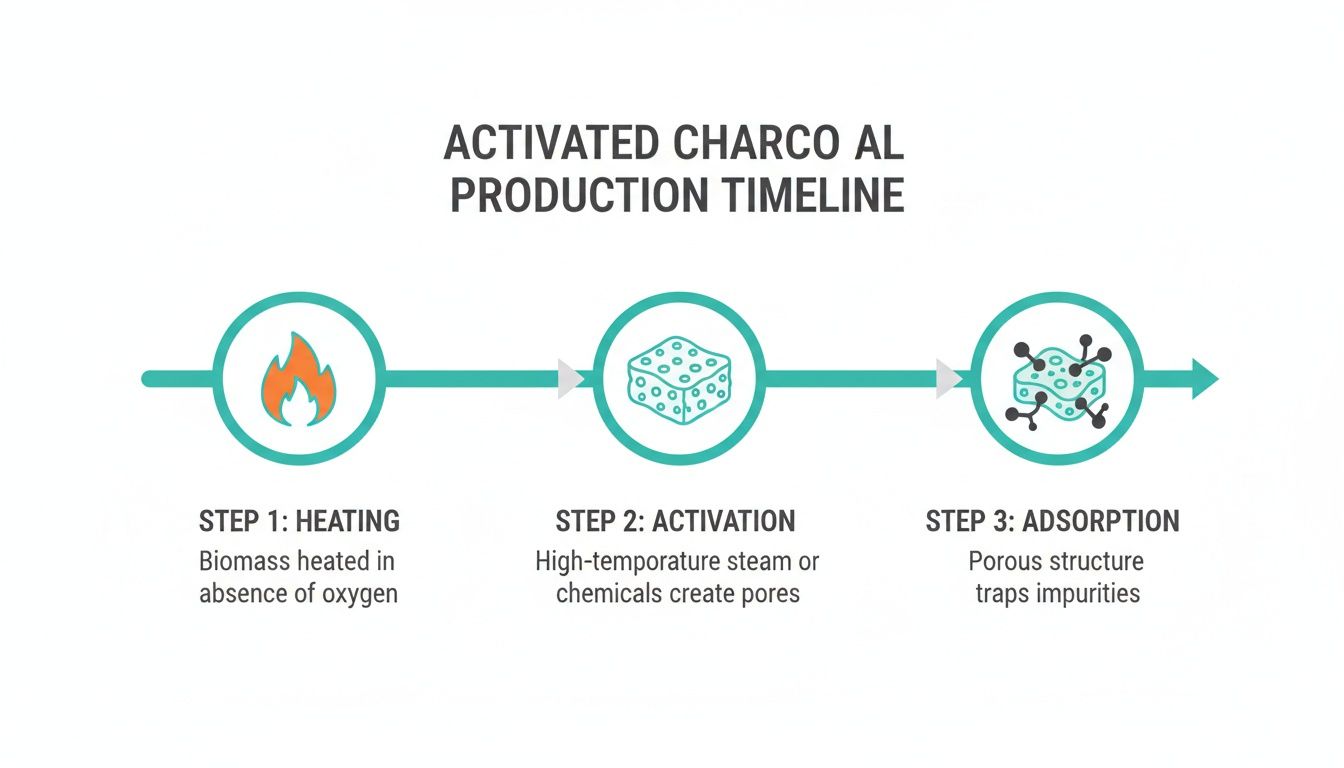
First off, this is absolutely not the same stuff you use for a backyard barbecue. Activated charcoal starts as carbon-heavy materials, like coconut shells or wood, which are heated to insane temperatures in an oxygen-free environment. This is followed by an "activation" process, where steam or hot air is used to blast away at the material's internal surfaces.
This activation process is what gives it its unique power. It carves out millions and millions of tiny pores, massively increasing its surface area. To put it in perspective, a single gram of activated charcoal can have the surface area of a football field. It's this incredibly vast, porous structure that lets it trap certain things.
How The Charcoal "Sponge" Really Works
When activated charcoal is used in a real medical emergency, its job is to grab onto specific drugs or poisons that are still in the stomach. The science behind this is called adsorption—and you have to know the difference between this and absorption.
Here’s a simple way to think about it:
- Absorption is like a regular sponge soaking up water. The water actually becomes part of the sponge's internal structure.
- Adsorption is more like lint sticking to a velvet jacket. The lint particles are just stuck to the surface of the fabric; they don't become part of the jacket itself.
Activated charcoal works through adsorption. Its massive, negatively charged surface is like a magnet for certain positively charged toxins and chemicals. When someone ingests a poison, doctors can give them a big dose of charcoal. It travels down to the stomach and chemically latches onto these harmful substances, keeping them from ever getting into the bloodstream.
Activated charcoal is a non-selective binder. It can't tell the difference between a dangerous toxin, a crucial nutrient from your dinner, or a medication you need. This is a huge deal and a major reason why using it casually for a hangover is a bad idea.
Once the toxins are stuck to the charcoal's surface, the whole package is too big for the body to absorb. It just continues its journey through your digestive system and is eventually eliminated, taking the bad stuff out with it.
The Right Tool for the Wrong Job
This whole process is a lifesaver in very specific emergency situations, but it has some serious limitations. These limitations are exactly why using it for hangovers is a flawed strategy. For activated charcoal to work, two things have to be perfect: what it's trying to bind and when it's given.
The charcoal has to be in the stomach at the exact same time as the substance it needs to catch. On top of that, it has to be able to chemically stick to that specific substance. As we're about to see, this is precisely where the sponge analogy falls apart when we're talking about alcohol.
The idea of a miracle sponge mopping up a night of drinking sounds great, but the biology just doesn't work that way. You can dive deeper into the science of why activated charcoal and alcohol don't mix in our complete breakdown. Knowing this is the first step to understanding why charcoal is a dud for hangovers.
Why The Science Says Charcoal Fails For Hangovers
The idea of popping a few charcoal pills for a hangover sounds pretty good on the surface. You drank something "toxic," and charcoal is known for absorbing toxins, right? It seems logical, but when you dig into the actual science, the whole theory completely falls apart.
It’s a classic case of using the right tool for the wrong job, and it all boils down to a fundamental misunderstanding of how your body actually processes alcohol.
The Timing Is All Wrong
First and foremost, the core of the problem is timing. From the moment you take a sip of that cocktail or beer, the alcohol (ethanol) doesn't just hang out in your stomach. It starts getting absorbed into your bloodstream almost immediately, straight through the lining of your stomach and small intestine.
By the time you’d even think about reaching for a charcoal pill—maybe at the end of the night or, worse, the next morning—most of the alcohol is already long gone from your gut. It's circulating through your body, and the window for charcoal to intercept it has slammed shut.
A Serious Chemical Mismatch
But even if you could somehow take the charcoal at the exact same time as your drink, there’s another huge flaw: a basic chemical mismatch.
Activated charcoal works its magic because it has a ridiculously porous surface that’s great at trapping large, complex molecules—the kind you find in certain drug overdoses or poisons.
Ethanol, on the other hand, is an incredibly small and simple molecule. It just doesn't have the right structure to get "stuck" to the charcoal's surface. Think of it like trying to catch sand with a net designed for basketballs. The tiny grains just slip right through.
This isn't just a theory. A 2017 hospital review put it bluntly, stating that charcoal “doesn’t bind well to alcohol.” So, even if the charcoal and the booze were in your stomach together, the charcoal would pretty much ignore it.
Okay, But What About Congeners?
This is where the marketing often pivots. Sellers of these pills will claim that charcoal isn’t for the alcohol itself, but for the congeners. These are the chemical byproducts found in darker drinks like whiskey, red wine, and aged rum that are notorious for making hangovers worse.
Sure, in a controlled lab setting—like a test tube—activated charcoal might be able to bind to some congeners. But a petri dish is a world away from the dynamic, complex environment of your digestive system.
The reality is, there's no convincing evidence that the small doses in consumer-grade charcoal pills can effectively snatch up these compounds inside your body before they, too, are absorbed. A comprehensive pharmacist's guide to OTC hangover remedies highlighted this exact issue, concluding there is no convincing in-vivo evidence that realistic doses do anything to reduce hangover severity.
The bottom line is simple: by the time you feel the effects of drinking, the alcohol and its byproducts are already doing their work in your bloodstream and liver. Taking a charcoal pill at this stage is like showing up to a house fire with a bucket of water after the building has already burned down. The damage is done, and the intervention is far too late.
This "too little, too late" problem is precisely why relying on charcoal pills for a hangover just doesn't work. The science is clear: it fails on every critical front, from timing and speed to basic chemical compatibility.
The Hidden Risks And Side Effects Of Charcoal Pills
So, beyond the fact that they don't really work for hangovers, taking charcoal pills comes with a whole set of risks that the wellness world tends to gloss over. It's often painted as this gentle, natural "detox" aid, but the truth is a lot more complicated. That powerful binding ability isn't just a feature; it's also a major liability when you're not in a hospital.
Here’s the core issue: activated charcoal is completely non-selective. Think of it as a blunt instrument. It can’t tell the difference between a harmful substance and a beneficial one. Because of this, it can end up causing more problems than it solves, turning a simple attempt at feeling better into a real gamble with your health.
The Medication Interference Problem
This indiscriminate binding is particularly dangerous for anyone on prescription medication. Picture activated charcoal as a powerful magnet tumbling through your digestive system—it’s going to grab onto almost everything it bumps into, including the active ingredients in your daily meds.
When that happens, your medication gets trapped and escorted out of your body before it ever has a chance to be absorbed. A critical dose of medicine can be rendered completely useless, which can have some pretty serious consequences. As health outlets are now pointing out, hangover-marketed charcoal products can easily blunt the absorption of everyday medicines like birth-control pills, antidepressants, or thyroid drugs if you take them too close together. You can learn more about how charcoal interacts with medications from health experts at GoodRx.
This isn't a minor concern. It applies to a huge range of common prescriptions:
- Birth Control Pills: Taking charcoal can seriously reduce the pill's effectiveness, creating a risk of unintended pregnancy.
- Antidepressants & Anti-Anxiety Meds: Charcoal can interfere with the absorption of SSRIs and other mental health medications, which could trigger a relapse of symptoms.
- Thyroid Medication: It can prevent your body from properly absorbing levothyroxine, throwing your hormone levels out of whack.
- Heart and Blood Pressure Medication: Charcoal can bind to these vital drugs, messing with their intended effects on your cardiovascular system.
Taking charcoal pills within a few hours of any crucial medication is a significant risk. It effectively neutralizes the medicine you depend on, creating a dangerous gap in your treatment.
Common And Uncomfortable Side Effects
Even if you aren't on any prescription meds, activated charcoal isn't exactly a walk in the park. The side effects can range from just plain unpleasant to genuinely concerning, piling more misery onto an already rough morning.
Most of the common side effects are gastrointestinal. Since charcoal is basically an inert substance just passing through, it can really disrupt your normal digestive flow.
Frequent Issues Include:
- Constipation: This is a big one. Charcoal is known for slowing things down in your gut, leading to uncomfortable and sometimes painful constipation.
- Black Stools: While it’s harmless, this is a very common side effect that can be pretty alarming if you aren't expecting it.
- Nausea and Vomiting: Especially in larger doses, charcoal can irritate the stomach lining and make you feel sick.
In rarer, more serious cases, you could even be looking at an intestinal blockage. Medical professionals are clear that the high doses used for poison control should only be administered under medical supervision for exactly these reasons. The tiny, unproven benefit of using charcoal for a hangover just doesn't stack up against these potential downsides.
Smarter Hangover Strategies That Actually Work
Alright, we’ve pretty much put the charcoal pills for hangover myth to bed. So, where does that leave us? It's time to talk about what actually works—strategies that have real science behind them.
The key to a better morning isn't some magic eraser you take after the fact. It’s about being smart and supporting your body before, during, and after a night out. Think of it as a simple, three-part game plan: Prepare, Participate, and Recover. This approach is practical, effective, and will make a huge difference in how you feel.
Prepare For Your Night Out
The best defense is a good offense, right? What you do in the hours leading up to your first drink sets the stage for the entire night and the morning after. It's all about building a solid foundation.
First up, eat a real meal. Seriously. Drinking on an empty stomach is like opening the floodgates—alcohol rushes into your bloodstream way too fast. A balanced meal with protein, healthy fats, and carbs slows that whole process down, giving your body a fighting chance to metabolize the booze.
Hydration is just as important. Alcohol is a diuretic, which is just a fancy way of saying it makes you pee a lot, flushing out fluids and electrolytes. If you start the night dehydrated, you're practically signing up for a massive headache. So, make a point to drink plenty of water all day long. For more tips on this, check out our guide on the best way to rehydrate after drinking.
Participate With Intention
This is where you can really take control. How you drink matters just as much as what you're drinking. A little mindfulness goes a long way.
-
Pace Yourself: A good rule of thumb is to stick to about one standard drink per hour. This gives your liver a chance to actually keep up with what you're throwing at it.
-
Alternate with Water: For every cocktail or beer, have a full glass of water. It's a dead-simple trick that keeps you hydrated and naturally slows down your drinking pace. Win-win.
-
Choose Lighter Liquors: Darker spirits like whiskey, brandy, and red wine are packed with congeners—nasty little compounds known to make hangovers worse. Sticking with clear liquors like gin, vodka, or white rum can help take the edge off the next day.
Recover With Modern Solutions
Okay, this is where you can truly level up your recovery game. Water and rest are non-negotiable, but modern science has given us tools that directly tackle the root causes of a hangover. This is something charcoal just can't do.
This is exactly why products like Upside Hangover Jelly are a smarter choice. Instead of a blunt, clumsy tool like charcoal, Upside uses a targeted blend of ingredients that work with your body.
The real problem with charcoal is that it does nothing for the actual biological fallout from drinking—acetaldehyde buildup, inflammation, and nutrient loss. A modern remedy hits these problems head-on, offering a precise and effective fix.
Upside's formula is built on powerhouse ingredients that are proven to help:
-
Dihydromyricetin (DHM): This plant extract is a game-changer. It helps your liver process alcohol more efficiently and breaks down acetaldehyde, the toxic byproduct that's the main villain behind most hangover symptoms.
-
Milk Thistle: This herb has been used for ages to support liver health. It’s full of antioxidants that help protect your liver cells from the stress of processing alcohol.
-
Korean Pear Extract: A staple in traditional Korean medicine for centuries, this extract has anti-inflammatory properties that help calm your system down.
By targeting the actual causes of a hangover, Upside provides a safe, reliable, and effective way to feel better the next day. For anyone who cares about their well-being, the choice is pretty clear: leave the charcoal myth in the past and go with a solution backed by modern science.
Your Questions On Charcoal And Hangovers Answered
We’ve dug into the science behind hangovers and busted a few myths along the way, but you might still have some questions floating around. Think of this as your final, quick-reference guide for the most common questions about using charcoal pills for hangovers—and what you should be doing instead.
If I Still Want To Try Charcoal Pills How Much Should I Take
Okay, while we strongly advise against this, let's talk dosage. It actually makes the flaws of using charcoal for hangovers even clearer.
Most charcoal supplements you find online or in stores come in tiny doses, usually around 500mg to 1 gram per serving. In a hospital setting, when they use activated charcoal for actual poisonings, the dose is between 50 to 100 grams. That’s up to 200 times more than what you get in a single supplement. The amount in consumer products is basically medically insignificant for tackling alcohol.
And please, don't even think about taking a medical-grade amount on your own. It's incredibly dangerous and can lead to severe intestinal blockages, dehydration, and stop your body from absorbing vital nutrients. There’s simply no “right” dose of charcoal for a hangover, because the risks are way bigger than any unproven upside.
Can I Take Charcoal With Other Hangover Supplements Or Painkillers
That's a definite no-go. As we covered, activated charcoal is like a sponge that isn't picky—it can't tell the difference between something harmful and something helpful. When you take it, it will bind to pretty much anything else sitting in your stomach.
That includes any other supplements you might be taking, like electrolytes or vitamins, and even common painkillers like ibuprofen. By glomming onto them, the charcoal stops these from being absorbed, making them completely useless right when you need them most.
To avoid this, you’d have to wait at least two to four hours between taking charcoal and any other medication. It’s a lot easier to just use a targeted remedy that’s designed to work with your body, not against it.
Who Should Absolutely Never Take Activated Charcoal
Yes, some people should steer clear of activated charcoal unless a doctor specifically tells them to take it for an emergency.
You should avoid it if you fall into any of these groups:
- Individuals with digestive issues: If you have a history of intestinal blockages, chronic constipation, or just slow digestion, charcoal can make things much, much worse.
- Pregnant or breastfeeding women: There isn’t enough research on how charcoal affects these populations, so it’s an unnecessary risk.
- People on critical daily medication: This is the big one. If you take essential meds for heart disease, epilepsy, thyroid disorders, or mental health, charcoal is a bad idea. It can stop your prescription from being absorbed properly, which can be seriously dangerous.
What Makes A Product Like Upside Jelly A Smarter Alternative
The real difference comes down to science and precision. Using charcoal for a hangover is like trying to fix a watch with a sledgehammer—it’s a blunt instrument that completely misses the point.
Upside Hangover Jelly, on the other hand, is a precision tool built for the job. Its ingredients were specifically chosen to tackle the actual root causes of a hangover, something charcoal just can't do.
- Dihydromyricetin (DHM): This is a powerhouse plant extract that gets right to the source, helping your liver break down acetaldehyde, one of the main toxic culprits behind your worst symptoms.
- Milk Thistle & Korean Pear Extract: These ingredients give your liver extra support and have potent anti-inflammatory properties, helping to calm down the stress alcohol puts on your whole body.
Unlike charcoal, which just sits in your gut grabbing everything in sight, these ingredients work with your body’s natural recovery systems. That makes it a safer, smarter, and way more effective choice for a better morning after.
Ready to ditch the myths and embrace a smarter way to recover? Upside offers a science-backed, convenient, and delicious solution to help you enjoy your nights without sacrificing your mornings. Try Upside Hangover Jelly and feel the difference for yourself.
Explore Upside and Party Smarter Today
#upside #enjoyupside #upsidejelly #livemore #hangovercure #hangoverprevention #fighthangovers #preventhangovers #HangoverRelief #MorningAfter #PartySmarter #HydrationStation #WellnessVibes #RecoverFaster #NoMoreHangovers #HealthyParty #HangoverHacks #FeelGoodMorning #NightlifeEssentials #HangoverFree #SupplementGoals #PostPartyPrep #GoodVibesOnly #HealthAndParty #HangoverHelper #UpsideToPartying