

· By Annemarie
What causes inflammation in the body: Top causes, risks, and simple relief
Inflammation is your body's built-in defense system. It’s the first responder to any kind of threat, whether it’s a physical injury or an infection. But it can also be triggered by things like a bad diet, too much stress, not enough sleep, and yes, even a fun night out.
Basically, anything that harms your cells can kickstart an inflammatory reaction.
Understanding Inflammation: A Fire Within Your Body

Think of inflammation like your body’s internal fire department. When you twist an ankle or get a cut, your immune system rushes specialized cells to the scene. This response cranks up blood flow, bringing in the troops to fight off any invaders and start the repair process. The result? That classic heat, redness, and swelling.
This is a "controlled burn." It’s meant to be fast, effective, and temporary. Once the threat is neutralized, the fire department packs up, and the inflammation dies down. This is your body working just as it should—it’s a crucial part of healing.
When The Fire Never Goes Out
But what happens when that fire never gets put out? This is where a much bigger problem begins, something known as chronic inflammation. Instead of a short-term, controlled burn, you’ve got a low-grade wildfire smoldering silently in the background.
This kind of persistent fire isn't sparked by a single injury. It’s fueled by continuous exposure to irritants, which can come from a lot of different places:
- Dietary Choices: A steady diet of ultra-processed foods, too much sugar, and unhealthy fats.
- Lifestyle Habits: Chronic stress, poor sleep, and drinking too much alcohol.
- Environmental Factors: Ongoing exposure to toxins and pollutants.
Unlike a swollen ankle, this internal fire often has no obvious symptoms at first. It quietly damages healthy tissues and cells over months, or even years. This constant state of alert forces your immune system into overdrive, which can eventually show up as widespread fatigue, body aches, and brain fog.
Chronic, low-grade inflammation is now seen as a key player in many modern health issues. It's a foundational problem that can mess with everything from your energy levels to how you bounce back after a night of drinking.
Getting this internal fire under control is a huge step toward feeling your best. By understanding what’s fanning the flames, you can start to put them out. Switching to a diet based on whole foods is a great first move. You can learn more by checking out this antioxidant-rich foods list, which breaks down the nutrients that help fight inflammatory damage.
In the next sections, we'll get into the specific triggers and give you some real, actionable strategies to help you get back in balance.
The Two Faces Of Inflammation: Acute Versus Chronic
Not all inflammation is the bad guy. While the word itself has a pretty negative reputation, your body's inflammatory response is actually a highly sophisticated tool with two completely different jobs.
Think of it as having two distinct "faces"—one is a heroic first responder, and the other is a silent intruder. Getting to know the difference is the first real step in figuring out what’s causing inflammation in your body and how to get a handle on it.
One face is acute inflammation, which is the body's immediate, helpful reaction to a sudden injury or illness. The other is chronic inflammation, a slow-burning, persistent state of alert that does its damage over the long haul. Telling them apart is crucial for protecting your health down the road.
Acute Inflammation: The Heroic First Responder
Acute inflammation is your body’s emergency response team in action.
When you sprain your ankle, get a papercut, or catch a cold, this is the process that rushes to the rescue. It's fast, it's obvious, and it’s designed to fix the problem and get out.
You know the classic signs: redness, heat, swelling, and pain. These aren't actually signs of something going wrong; they're signals that your body is actively healing itself. Blood vessels expand to get immune cells and nutrients to the site, which is what causes that visible swelling and warmth. This whole process is essential for clearing out damaged cells and fighting off any nasty pathogens.
A key feature of acute inflammation is that it's temporary. Once the threat is gone and healing is underway, the response shuts itself off. The "fire" is put out, and your body goes back to business as usual.
This type of inflammation is a sign of a healthy, functioning immune system. It’s a short-term fix for a short-term problem, working exactly how nature designed it to. Without it, even a tiny cut could turn into a life-threatening infection.
Chronic Inflammation: The Silent Intruder
Now, let's look at the other face: chronic inflammation. This is the one you need to watch out for.
Unlike its fast-acting counterpart, chronic inflammation is a low-grade, simmering response that can last for months or even years. It’s like a smoke alarm that just won’t turn off, keeping your immune system on a constant, low-level alert.
This silent intruder doesn’t show up with obvious symptoms like a swollen ankle. Instead, it works quietly in the background, fueled by persistent triggers like a poor diet, ongoing stress, lack of sleep, or even the toxic byproducts your body creates when processing alcohol. Because it’s so subtle, most people don’t even realize it's happening until it starts contributing to bigger health issues.
This prolonged state of defense eventually starts to damage healthy tissues and organs. The very same tools your body uses to heal can become destructive when they are never put away. This is exactly why chronic inflammation is linked to so many modern health problems, from nagging fatigue and brain fog to more serious conditions. It's a key reason you might feel run-down all the time or notice that hangovers are hitting way harder than they used to.
Acute Vs Chronic Inflammation At A Glance
To make the differences crystal clear, it helps to see them side-by-side. Think of this table as a quick cheat sheet for understanding how your body responds to different threats.
| Characteristic | Acute Inflammation (The First Responder) | Chronic Inflammation (The Silent Intruder) |
|---|---|---|
| Onset | Immediate and rapid, occurring within minutes to hours. | Delayed and slow, developing over weeks, months, or years. |
| Duration | Short-term, typically lasting for a few days. | Long-term, persisting for months or even a lifetime. |
| Symptoms | Obvious and localized signs like redness, swelling, heat, and pain. | Often subtle and widespread, such as fatigue, body aches, or brain fog. |
| Purpose | To heal, repair tissue, and eliminate immediate threats. | A persistent, low-level response to ongoing irritants. |
| Outcome | Leads to healing and a return to normal function. | Can lead to tissue damage and is linked to chronic diseases. |
Ultimately, one is a necessary, life-saving process, while the other is a malfunction that can slowly wear you down. Recognizing the triggers for chronic inflammation is the first step toward keeping it in check.
The Lifestyle Triggers Fanning The Flames
So far, we’ve covered the what and why of inflammation, but this is where it gets personal. Chronic inflammation isn't some random biological glitch; it's often the direct result of our day-to-day choices. The modern world, with all its conveniences and pressures, can accidentally create the perfect storm for that internal fire to start burning out of control.
For busy professionals, frequent travelers, and social butterflies, these triggers are lurking everywhere. They’re the subtle, everyday habits that add a little more fuel to the fire, day after day. Getting a handle on these specific lifestyle factors is the first real step toward taking back control.
Your Diet: The Primary Source Of Fuel
What you eat is easily one of the most powerful levers you can pull to manage your body's inflammation levels. Think about it this way: your body is constantly building and repairing itself with the materials you provide. Give it high-quality stuff, and you get a strong, resilient system. Give it junk, and you’re looking at constant problems and patch-up jobs.
Certain foods are basically kindling for inflammation. The biggest culprits are usually hiding in plain sight in those convenient, grab-and-go options:
- Ultra-Processed Foods: These are the items engineered for a crazy-long shelf life and addictive flavor, often loaded with additives, refined grains, and unhealthy fats that your body just doesn't recognize.
- Refined Sugars: All those sugary drinks, snacks, and desserts cause a massive spike in your blood sugar, which in turn triggers the release of inflammatory messengers called cytokines.
- Industrial Seed Oils: Oils like soybean, corn, and sunflower oil are packed with omega-6 fatty acids. While we need some omega-6, our modern diet gives us way too much of it compared to the anti-inflammatory omega-3s, completely throwing off our internal balance.
This concept map breaks down the crucial differences between your body's helpful and harmful inflammatory responses.
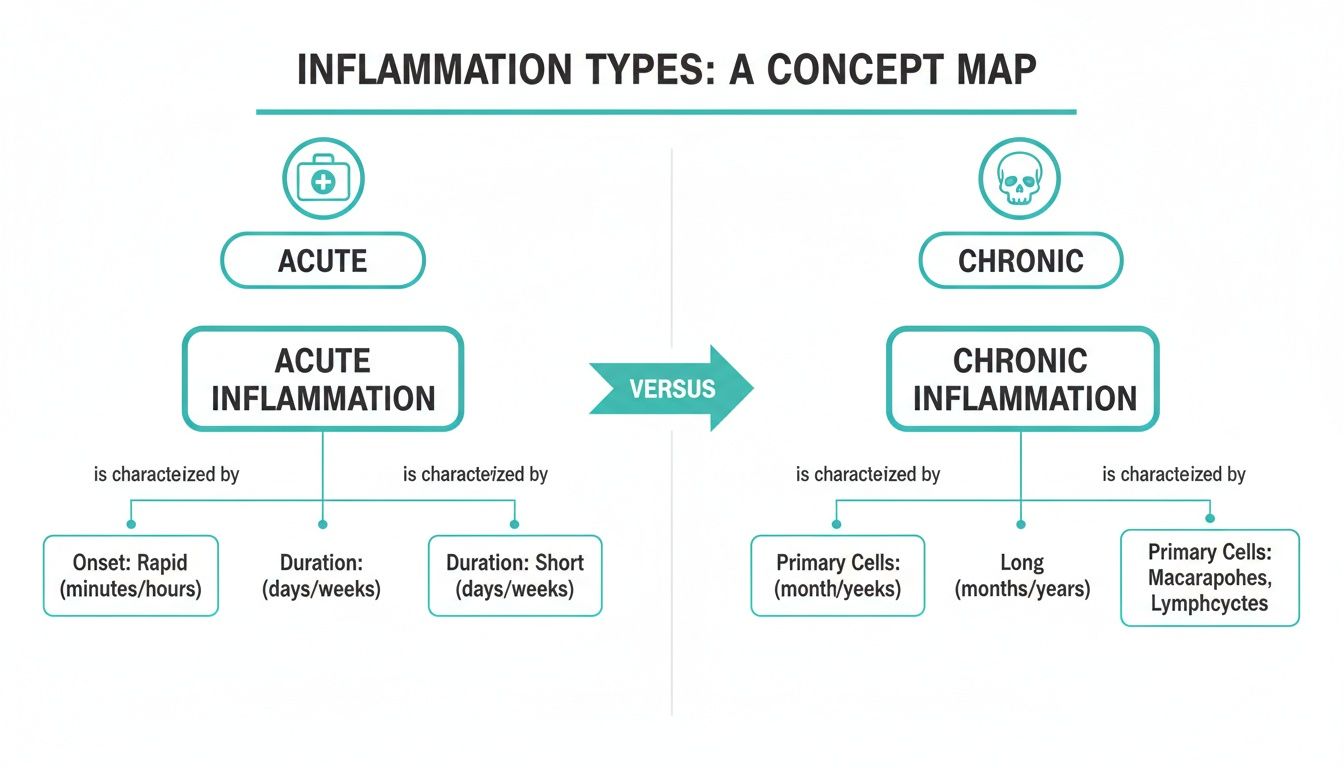
You can see pretty clearly how acute inflammation is a quick, short-term fix, while chronic inflammation becomes a long-term problem that just keeps feeding itself.
Excess Body Fat: The Active Inflammatory Factory
Most people think of body fat as just passive energy storage, but that’s not the whole story. Certain fat tissue, especially the visceral fat packed around your internal organs, is actually metabolically active. This tissue acts almost like its own organ, and one of its main jobs is to pump out pro-inflammatory molecules.
Essentially, this means excess body fat operates as a 24/7 factory, constantly churning out signals that keep your immune system on high alert.
This is a huge reason why maintaining a healthy weight is so critical for managing inflammation. It isn't just about how you look; it’s about shutting down a major source of the signals that are telling your body to stay in defense mode.
Inflammation is supposed to be a good thing, but our modern lifestyle has twisted it into a chronic problem. Our diet is a major driver; in many high-income nations, ultra-processed foods make up over 50% of daily calories, delivering a steady stream of inflammatory sugar and industrial oils. This gets amplified by rising obesity rates, since excess fat tissue actively secretes these inflammatory molecules. Even a modest 5–10% increase in body weight can cause a measurable spike in inflammatory markers. For busy professionals who rely on convenience foods, this background inflammation can make fatigue worse and turn hangover symptoms from a moderate night out into a full-blown ordeal. You can check out more detailed data on the market for recovery solutions at Future Market Insights.
The Unseen Stressors: Sleep And Your Mind
Beyond what you eat and what you weigh, two of the most potent—and most overlooked—causes of inflammation are chronic stress and poor sleep. They’re deeply connected and can create a vicious cycle that’s tough to escape.
When you’re constantly stressed from work deadlines, money worries, or personal drama, your body is flooded with the stress hormone cortisol. At first, cortisol is actually anti-inflammatory. But when it’s always high, your body starts to ignore it, allowing inflammation to run wild.
At the same time, not getting enough quality sleep robs your brain of its nightly "housekeeping" time. During deep sleep, your brain clears out metabolic junk. Research shows that without enough sleep, this waste can build up and lead to neuroinflammation—the kind that fuels brain fog, fatigue, and headaches.
This connection explains a lot:
- Stress elevates cortisol, which messes with your immune function over time.
- Poor sleep prevents recovery, letting inflammatory proteins build up.
- Inflammation itself can disrupt sleep, making it even harder to get the rest you need.
For anyone trying to balance a demanding career with a social life, this cycle is a killer. It sets a high baseline of inflammation that makes your body way less resilient to other triggers, including a night of drinking. When your system is already smoldering, adding alcohol is like pouring gasoline on the fire, leading to much rougher hangovers and longer recovery times.
How Alcohol Sparks An Inflammatory Response
While things like diet and stress are major players in the inflammation game, alcohol is a particularly powerful trigger. It’s the direct link between a fun night out and that all-too-familiar misery the next day.
Just a few drinks can kick off a complex, body-wide inflammatory cascade. This is why a hangover often feels less like a simple headache and more like a full-blown case of the flu.
The whole process starts the moment your liver clocks in for duty. When you have a drink, your liver’s job is to metabolize the ethanol. This creates a highly toxic byproduct called acetaldehyde—a nasty compound that's even more damaging to your cells than the alcohol itself.
Your body immediately flags acetaldehyde as a dangerous invader, and your immune system launches a swift counter-attack. This response unleashes a flood of inflammatory cytokines, which are the exact same signaling proteins your body uses to fight off an infection. The result? Systemic, low-grade inflammation that affects everything from your brain to your muscles.
From Your Liver To Your Head
This wave of inflammation doesn't just hang out in your liver; it travels through your entire system, which explains the wide range of hangover symptoms. That classic pounding headache, the muscle aches, and the crushing fatigue are all direct results of this immune system freak-out.
And it’s not just an issue for heavy drinkers. Even moderate drinking is enough to cause a significant inflammatory spike.
For anyone already dealing with a baseline level of inflammation from other lifestyle factors—like a high-sugar diet, chronic stress, or not enough sleep—the effects of alcohol are dramatically amplified. Think of it as a pre-existing "smoldering" fire in your system that’s already on high alert.
Adding alcohol is like throwing gasoline on those flames, leading to way more severe hangovers, longer-lasting brain fog, and a much tougher recovery. This is a critical piece of the puzzle for understanding how alcohol affects your body on a much deeper level.
The Science Behind The "Hangover Flu"
The link between alcohol and inflammation is crystal clear and well-documented. When you drink, your liver turns ethanol into toxic acetaldehyde, which in turn generates oxidative stress and sends inflammatory signals throughout your entire body.
Controlled studies have shown that just one night of heavy drinking can raise blood levels of key inflammatory markers like C-reactive protein and IL-6 within 4–12 hours.
For social drinkers who might enjoy a few nights out a month, this repeated inflammatory spike creates a cycle of poor recovery. It makes next-day productivity and hitting the gym feel significantly harder than they should.
This biochemical stress shows up as those familiar hangover symptoms—headache, nausea, and muscle aches—which are direct reflections of neuroinflammation and your immune system kicking into overdrive. That feeling of being completely wiped out is just your body dealing with a self-inflicted inflammatory storm.
Think of it this way: Your body can't tell the difference between the threat from a virus and the threat from acetaldehyde. It launches the same defensive inflammatory response, leaving you feeling sick, achy, and totally exhausted.
Understanding this completely reframes what a hangover really is. It isn't just about being dehydrated; it's a sign of a major, short-term immune event. Recognizing alcohol as a direct inflammatory trigger is the first step toward smarter socializing and, more importantly, a much better next day.
Practical Steps To Control Your Inflammatory Fire
Alright, knowing what sparks inflammation is half the battle. Now for the good part: turning that knowledge into action.
The best news is you have a massive amount of say over your body's inflammation levels. This isn't about some miserable, restrictive plan. Think of it more like a series of simple, strategic upgrades to your daily routine. By being a little smarter about what you eat, how you move, and how you rest, you can actively dial down that internal fire.
Adopt An Anti-Inflammatory Diet
Your diet is easily the most powerful tool you have. The food you put on your plate can either fan the flames of inflammation or be the very water that puts them out. Shifting to an anti-inflammatory diet just means choosing whole, nutrient-packed foods that help calm your system down.
The guiding principle is simple: eat real food. Focus on things that look as close as possible to how they came out of the ground or the sea.
An anti-inflammatory plate is usually bursting with color. Here's what to load up on:
- Fatty Fish: Think salmon, mackerel, and sardines. They’re swimming in omega-3 fatty acids, which are serious inflammation fighters.
- Leafy Greens: Spinach, kale, and their cousins are full of antioxidants that protect your cells from the damage that kicks off inflammation.
- Colorful Fruits and Veggies: Berries, cherries, oranges, broccoli—they all bring a unique blend of phytonutrients that combat inflammation from every angle.
- Healthy Fats: Avocados, olive oil, and nuts provide the good fats and compounds your body needs for healthy cells and lower inflammation.
- Spices and Herbs: Turmeric and ginger are famous for a reason. Their potent anti-inflammatory properties make them an amazing addition to just about any meal.
To get you started, we put together a detailed guide to build your shopping list. Check out our anti-inflammatory foods list to find more options and see exactly how they help your body find its balance.
Harness The Power Of Regular Movement
Exercise is a game-changer for managing inflammation. Sure, a super intense workout can cause a short-term inflammatory spike (that’s how muscles grow!), but consistent, moderate movement drastically lowers chronic inflammation over time.
Moving your body works its magic in a few ways. It helps shrink visceral fat—that dangerous fat around your organs that acts like a little inflammation factory—and makes your body better at handling blood sugar.
You don’t have to start training for a marathon. The secret ingredient is consistency.
Just a 30-minute brisk walk, five days a week, is enough to show measurable drops in key inflammatory markers. The goal is just to make movement a non-negotiable part of your life.
Prioritize Restorative Sleep
Sleep is your body's nightly deep-clean crew. While you're sleeping, your brain flushes out metabolic junk that can lead to neuroinflammation—the kind that makes you feel foggy and headachy.
When you regularly get less than seven hours of sleep, that cleaning process gets cut short. Inflammatory proteins can build up, keeping your body in a stressed-out, fired-up state. It's a nasty cycle: inflammation messes with your sleep, and bad sleep makes inflammation worse.
To clean up your sleep hygiene, try these simple moves:
- Stick to a Schedule: Try to go to bed and wake up around the same time every day. Yes, even on weekends.
- Create a Relaxing Routine: Put the phone away. Wind down with a book, a warm bath, or some light stretching.
- Optimize Your Environment: Make your bedroom a cave: dark, cool, and quiet.
Smarter Socializing And Targeted Support
Finally, let's talk about one of the biggest short-term inflammation triggers: alcohol. You don't have to become a hermit to keep inflammation in check, but you can definitely be smarter about how you socialize.
Start with the basics. For every alcoholic drink, have a glass of water. And never, ever drink on an empty stomach. A meal with protein, healthy fats, and fiber will slow down alcohol absorption and soften the blow.
This is also where some targeted support can make all the difference. For those nights when you know you'll be having a few drinks, a specialized supplement can help your body handle the fallout.
Upside is designed for exactly this moment. Its blend of natural ingredients helps your liver process alcohol's toxic byproducts (like acetaldehyde) and delivers antioxidants to fight the oxidative stress that fuels inflammation.
By taking Upside before you go out, you're not just dodging a hangover. You’re giving your body the tools to mitigate the inflammatory fire that alcohol sparks. It’s the perfect fit for a health-conscious lifestyle, letting you enjoy a night out without totally derailing your progress.
Answering Your Top Questions About Inflammation
We’ve unpacked a lot, from what actually sparks inflammation to the real-world steps you can take to cool it down. To tie it all together, let's run through some of the questions I hear most often. Think of this as your quick-reference guide to help you feel confident on your path to better health.
How Quickly Can I Actually Reduce Inflammation?
This is a great question. While moving the needle on long-term lab markers like C-reactive protein takes consistent work over several months, you can start feeling the difference way sooner than you'd think.
Most people tell me they notice a huge drop in bloating and a welcome surge in energy within just a week or two of ditching sugar and ultra-processed junk. It happens that fast.
Once you layer in regular exercise and make quality sleep a priority, you’ll likely feel a better mood and fewer random body aches within a few weeks. The real magic here is consistency. Every small, smart choice you make each day builds on the last, creating powerful momentum that lowers your baseline inflammation and completely changes how you feel.
Are There Any "Superfoods" That Are Best for Fighting Inflammation?
Honestly, no single food is a magic wand. But an entire arsenal of them? That's where the power is. Instead of getting hung up on one specific "superfood," your best bet is to aim for variety. When you build a diet packed with a wide range of anti-inflammatory compounds, you’re giving your body all the different tools it needs to do its job.
Try to weave these staples into your meals regularly:
- Fatty Fish: Think salmon and mackerel, which are swimming in omega-3s.
- Leafy Greens: Spinach and kale deliver antioxidants that act like bodyguards for your cells.
- Colorful Berries: Blueberries and cherries are loaded with inflammation-busting phytonutrients.
- Healthy Fats: You can't go wrong with olive oil, nuts, and avocados for keeping your cells happy.
- Powerful Spices: Turmeric (thanks to its active compound, curcumin) and ginger are famous for a reason—their benefits are seriously well-researched.
The goal isn’t to rely on one ingredient; it’s to create an eating pattern that’s consistently anti-inflammatory. It’s the overall diet that truly makes the biggest impact on what causes inflammation in the body.
What’s a Major Hidden Cause of Inflammation for Busy People?
For anyone juggling a demanding career or frequent travel, one of the biggest culprits is the nasty combination of chronic stress and bad sleep.
When you’re constantly up against deadlines and bouncing between time zones, your body is marinating in the stress hormone cortisol. Over time, your system actually becomes resistant to cortisol's usual anti-inflammatory effects, which allows inflammation to creep up unchecked.
Pair that with not getting enough sleep, and you're robbing your body of its prime time for repair. During deep sleep, your brain runs a "wash cycle" to clear out metabolic junk. Skip that, and the waste builds up, leading to the kind of neuroinflammation that fuels brain fog, fatigue, and those gnarly headaches that can feel suspiciously like a hangover.
Can Supplements Actually Help Me Manage Inflammation?
Yes, the right supplements can be a fantastic ally—but they’re meant to support a healthy lifestyle, not replace it. Think of them as calling in reinforcements for all the good habits you’re already building.
Well-studied options like omega-3 fatty acids, curcumin, and ginger can give you a powerful boost in lowering systemic inflammation.
And for specific situations, like when you know you’re going to have a few drinks, a specialized formula can be a game-changer. It can supply the key ingredients your body needs to process alcohol’s inflammatory byproducts, helping you bounce back faster. It's the perfect way to support your wellness goals without having to totally give up your social life.
At the end of the day, managing inflammation is all about making smarter, more consistent choices. For those times you want to enjoy a night out without setting back your progress, Upside offers targeted support to help your body recover. It’s designed to fit right into your health-conscious lifestyle.
Ready to party smarter and feel better tomorrow? Discover how Upside can help you live more.
#upside #enjoyupside #upsidejelly #livemore #hangovercure #hangoverprevention #fighthangovers #preventhangovers #HangoverRelief #MorningAfter #PartySmarter #HydrationStation #WellnessVibes #RecoverFaster #NoMoreHangovers #HealthyParty #HangoverHacks #FeelGoodMorning #NightlifeEssentials #HangoverFree #SupplementGoals #PostPartyPrep #GoodVibesOnly #HealthAndParty #HangoverHelper #UpsideToPartying