

· By Annemarie
Why Do I Feel Sick After Drinking: Causes, Prevention & Tips
That awful, sinking feeling the morning after a few drinks is something most of us know all too well. Why do you feel so sick after drinking? The short answer is your body is having a pretty rough time dealing with alcohol, and it's letting you know loud and clear. It’s a full-on internal revolt involving dehydration, stomach irritation, and a tough detox process.
The Uncomfortable Truth About the Morning After
Waking up to a pounding headache, a stomach doing gymnastics, and a level of exhaustion that feels almost supernatural isn't just in your head. It’s your body sending out an S.O.S., signaling that it’s struggling to handle the alcohol you drank. This misery is the result of a multi-front battle inside you, where a bunch of your key systems have been completely thrown out of whack.
Think of your body as a finely tuned machine. Pouring alcohol into it is like throwing a handful of sand into the gears. It messes up communication between cells, puts your liver into overdrive, and saps your body of essential fluids. That sick feeling is just your body’s cry for help while it works overtime to clean up the mess and get back to normal.
Understanding the Main Culprits
While everyone's "morning after" is a little different, the symptoms almost always point back to a few core problems. Getting a handle on these root causes is the first step to making sure they don't ruin your next day.
So, let's break down the primary reasons you feel sick. We've created a quick summary table to show what's really going on inside your body when you're feeling the effects of a night out.
Key Reasons You Feel Sick After Drinking
| Physiological Cause | How It Happens | Common Symptoms |
|---|---|---|
| Toxic Byproducts | Your liver metabolizes alcohol into a compound called acetaldehyde, which is far more toxic than the alcohol itself. A buildup of this is a major problem. | Nausea, vomiting, headaches, facial flushing. |
| Severe Dehydration | Alcohol is a diuretic, which is a fancy way of saying it makes you pee a lot more than usual. This leads to a significant loss of fluids and electrolytes. | Pounding headaches, dizziness, extreme thirst, dry mouth, fatigue. |
| Stomach Irritation | Alcohol directly irritates the lining of your stomach, causing it to produce more acid. This inflammation really upsets your digestive system. | Stomach pain, nausea, vomiting, heartburn, and indigestion. |
As you can see, it's not just one thing making you feel terrible; it's a combination of these factors hitting you all at once. It’s a physiological response to being overloaded with something your body treats as a poison.
When you feel sick after drinking, you're experiencing your body's natural response to toxicity and imbalance. It’s a clear signal that you’ve pushed past your limit and now it needs time and resources to recover.
Ultimately, that unwell feeling is a complex cocktail of these issues working together. In the next few sections, we'll dive deeper into each of these culprits, giving you the knowledge you need to drink smarter and wake up feeling much, much better.
Your Body's Battle with Alcohol Metabolism
Ever wondered what’s really going on inside your body from that first sip of your drink? To get why you feel so sick after drinking, we first have to look at how your body actually processes alcohol.
Think of your liver as a specialized factory with one critical job: breaking down toxins. The second alcohol shows up, that factory goes into overdrive.
The moment alcohol, or ethanol, hits your system, your liver’s top priority is to get it out. Fast. It treats it like a poison, so the factory’s main goal is detoxification. This whole process has a few steps, but it’s the very first one that causes almost all the trouble.
The Toxic Assembly Line
Your liver gets to work with an enzyme called alcohol dehydrogenase (ADH) to start breaking down the ethanol. This first step converts the alcohol into a completely new, and frankly nasty, substance called acetaldehyde.
And this is where the real problem starts.
Acetaldehyde is a highly toxic compound, estimated to be up to 30 times more toxic than the alcohol you drank in the first place. It’s the true villain behind that pounding headache, the waves of nausea, and the flushed face that can make you feel so miserable.
Your body knows just how dangerous this stuff is and works frantically to break it down again into a harmless substance called acetate, which you can then flush out. But this whole cleanup operation takes time and a lot of resources.
This diagram shows how it all comes together: the toxic buildup, the dehydration, and the irritation to your stomach.
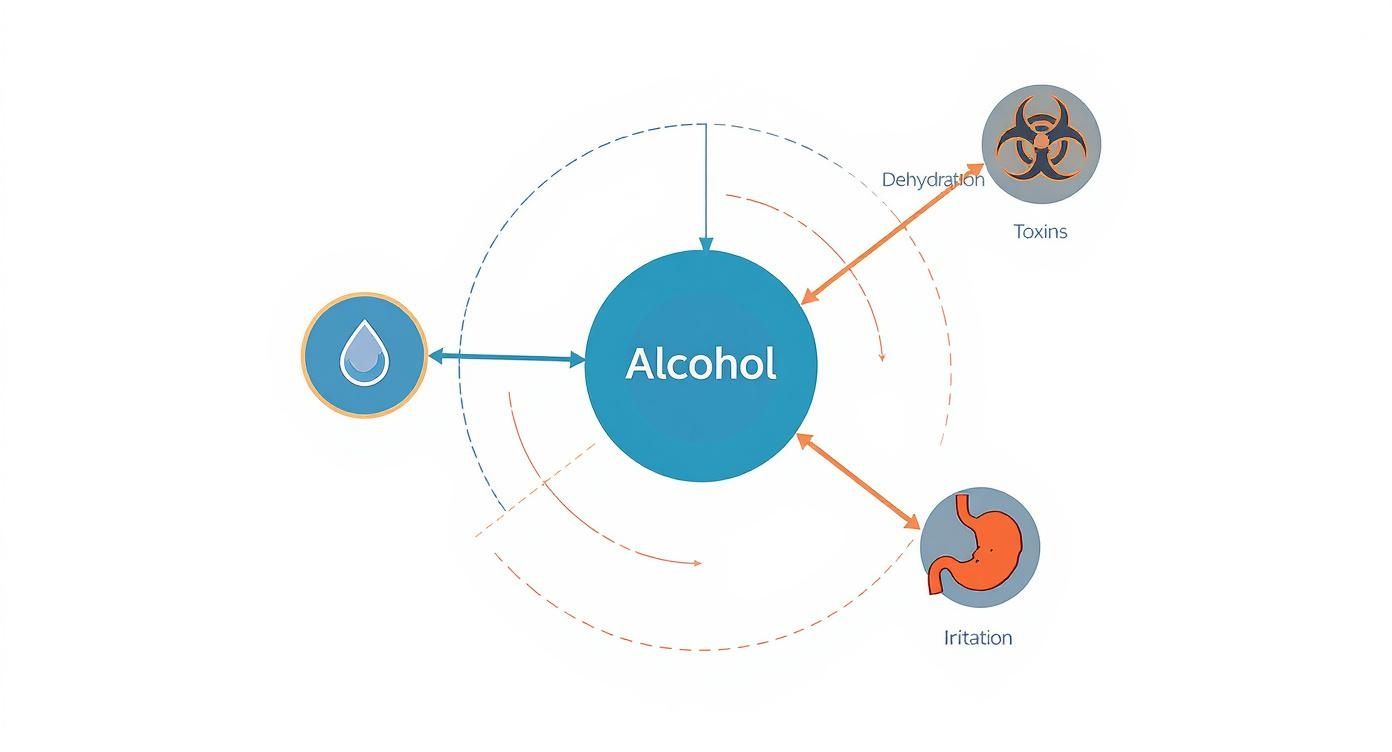
As you can see, that pile-up of toxic byproducts is a huge piece of the puzzle, right alongside the classic culprits of dehydration and stomach lining irritation.
When the Factory Gets Overwhelmed
Here’s the catch: your liver’s assembly line has a speed limit. On average, it can only handle about one standard drink per hour. When you drink faster than your liver can work, the whole system gets backed up.
Imagine that factory assembly line, with toxic acetaldehyde piling up way faster than the workers can clear it. This backlog is what causes so much damage and is directly tied to why you feel sick.
The buildup of acetaldehyde triggers oxidative stress and inflammation all over your body, hitting your brain, stomach, and other organs hard. To get a closer look at this process, you can learn more about how alcohol is metabolized in our detailed guide.
That sick feeling you get is the direct result of your body's detoxification system being pushed past its limit, leaving you with a buildup of a chemical far more damaging than the alcohol you drank.
It’s all a delicate balance. Even a small amount of alcohol kicks off this toxic conversion, and everyone’s "factory speed" is a little different because of genetics and overall health. This is exactly why one person feels awful after a single drink while someone else seems to handle more without issue.
Understanding this internal battle is the first step toward avoiding the fallout. The key is not to overload the system in the first place. By supporting your body’s natural detox process, you can help the factory run a little more smoothly, clear out those toxins, and hopefully dodge that morning-after misery.
The Seven Key Culprits Behind Your Sickness
While the buildup of that nasty toxin acetaldehyde is a primary villain, it definitely doesn't work alone. Feeling sick after a night of drinking is really the result of a coordinated attack on your body from multiple angles.
Think of it like a domino effect. Once one system gets knocked off balance, others are quick to follow. Understanding these individual culprits is the key to stopping the whole chain reaction before it starts.
So, let's break down the seven main factors that team up to make you feel so awful.
1. The Dehydrating Power of Alcohol
You've probably noticed that when you're drinking, you're making a lot of trips to the bathroom. There’s a scientific reason for that. Alcohol is a diuretic, which is just a fancy way of saying it makes your body flush out more fluid than it takes in.
It does this by messing with a hormone called vasopressin, which normally tells your kidneys to hold onto water. When alcohol suppresses that signal, your kidneys go into overdrive, sending water straight to your bladder. For every drink you have, you can lose way more than that in fluid, leading to rapid dehydration.
That pounding headache, dizziness, and desperate thirst the next morning? That’s your body screaming for water. If you want the full scoop, you can learn more about exactly how alcohol dehydrates you and all its downstream effects.
2. Direct Stomach Irritation
Ever wonder why nausea is practically a given after too many drinks? Alcohol is a direct irritant to the lining of your stomach and intestines. This irritation kicks your stomach acid production into high gear, which is a recipe for heartburn, indigestion, and that all-too-familiar queasy feeling.
In more serious cases, this can lead to gastritis—actual inflammation of the stomach lining. This is a big reason why drinking on an empty stomach is always a bad idea. Without any food to act as a buffer, the alcohol has a direct line to your stomach wall, making all those irritating effects hit harder and faster.
3. Critical Electrolyte Imbalances
As your body is busy flushing out water, it's also losing a ton of essential electrolytes. We're talking about crucial minerals like sodium, potassium, and magnesium that your body needs for everything from nerve function to muscle contractions.
When your electrolytes get depleted, your body's internal communication system starts to short-circuit. This is a huge reason why you might feel weak, exhausted, and even get muscle cramps or spasms the next day. It's like trying to run your phone on 1% battery; everything just feels slow, sluggish, and wrong.
The weakness and fatigue you feel aren't just from a lack of sleep. They are often a direct result of your body being starved of the essential electrolytes it needs to function properly.
Getting that balance back is a massive part of feeling human again.
4. The Blood Sugar Crash
Alcohol can send your blood sugar on a wild rollercoaster ride. At first, sugary cocktails might cause a spike. But the real trouble comes later. Your liver gets so preoccupied with breaking down alcohol that it can't do its other important job: producing glucose to keep your blood sugar stable.
This leads to hypoglycemia, or low blood sugar, which brings its own set of miserable symptoms:
- Shakiness and Tremors: Your muscles are literally running out of fuel.
- Weakness and Fatigue: Your whole body feels like it's running on empty.
- Irritability and Mood Swings: Your brain is extremely sensitive to drops in glucose.
That blood sugar crash is a major player in why you feel so drained and just completely off after drinking.
5. Disrupted Restorative Sleep
You might think a drink or two helps you nod off faster, and you're not wrong. But the quality of that sleep is terrible. Alcohol is notorious for suppressing REM sleep, which is the most restorative stage where your brain processes memories and your body does its most important repair work.
So, even if you manage a full eight hours, you'll probably wake up feeling like you barely slept at all. That’s because your body spent the whole night fighting to metabolize alcohol instead of actually resting. The result is that classic brain fog, irritability, and a deep-seated exhaustion that no amount of coffee can truly fix.
6. The Immune System's Inflammatory Response
Here's a weird one: your body often reacts to a night of drinking as if it's fighting an infection. Alcohol and its toxic byproducts can trigger your immune system to release inflammatory compounds called cytokines. These are the same things your body releases when you're sick with the flu, and they cause very similar symptoms.
This inflammatory response is behind that general feeling of malaise, the inability to concentrate, and even memory issues. You've essentially tricked your body into making itself feel sick, and it’s a huge contributor to that overall feeling of being unwell.
7. The Role of Congeners in Darker Drinks
Finally, what you drink can make a huge difference. Congeners are chemical compounds created during the fermentation and aging process that give drinks their distinct flavor, aroma, and color.
Darker liquors and wines—think whiskey, bourbon, dark rum, and red wine—are loaded with them. While they add character to the drink, they are also notorious for causing more severe hangover symptoms. Studies show these compounds can make headaches, nausea, and fatigue much worse.
On the other hand, clear spirits like vodka, gin, and white rum have far fewer congeners, which is why they're often associated with a less brutal morning after. Choosing your drink wisely can be a pretty strategic move.
When Sickness Is More Than Just a Hangover
Sometimes, that awful sick feeling after drinking isn't just your run-of-the-mill hangover. If your body’s reaction feels way out of proportion, happens almost instantly, or is totally different from how your friends feel, it could be a sign of something more specific.
A typical hangover is a delayed reaction to drinking too much. But some people feel sick right away, even after just a few sips. This isn't about how much you drank; it's a signal that your body is having a much more intense, immediate reaction. Let's get into what might be going on.
The Genetic Factor: Alcohol Intolerance
Ever get a flushed, hot face after just a little bit of alcohol? That tell-tale blush, often called the "Asian flush," is a classic sign of alcohol intolerance. This isn't an allergy—it's a genetic trait where your body literally can't process alcohol the right way.
It usually boils down to a faulty enzyme called aldehyde dehydrogenase 2 (ALDH2). Remember how your liver turns alcohol into the toxic chemical acetaldehyde? The ALDH2 enzyme is supposed to swoop in and break that toxin down. If your body's "factory" is missing this crucial piece of equipment, acetaldehyde builds up fast.
This toxic overload is what triggers those immediate, unpleasant symptoms:
- Facial Flushing: A blotchy redness spreading across your face, neck, and chest.
- Intense Nausea: Feeling sick to your stomach almost immediately.
- Rapid Heartbeat: Your heart might feel like it's racing or pounding.
- Headaches: A throbbing headache that kicks in way too soon.
If this sounds familiar, especially when you haven't had much to drink, there’s a good chance you have a genetic intolerance. It’s more common than you’d think, affecting a large chunk of the global population. Some studies show it impacts over 35% of people of East Asian descent.
True Alcohol Allergies
While it’s way less common than intolerance, a real alcohol allergy is a serious medical issue. This is when your immune system goes on high alert, mistaking an ingredient in your drink for a dangerous invader and launching a full-scale allergic reaction.
The culprit might not even be the alcohol itself. It could be another ingredient like sulfites, grains (wheat, barley), or grapes. The symptoms can be severe and need immediate medical help, including hives, swelling, intense stomach pain, and trouble breathing.
Dangerous Medication Interactions
This is one of the most common—and most overlooked—reasons people get incredibly sick from drinking. Mixing booze with certain medications can throw your body for a loop, sometimes with dangerous results.
Alcohol can mess with how your body absorbs and metabolizes both over-the-counter and prescription drugs. It can crank up the side effects of the medication, the alcohol, or both. For instance, mixing alcohol with everyday painkillers, antidepressants, or even some antibiotics can lead to extreme drowsiness, dizziness, nausea, and in serious cases, liver damage or heart problems.
Some common meds that just don't play well with alcohol include:
- Antibiotics: Can trigger nausea, vomiting, flushing, and headaches.
- Antidepressants & Anxiety Meds: Often leads to major drowsiness and poor coordination.
- Pain Relievers (like ibuprofen or acetaminophen): Massively increases the risk of stomach bleeding and liver damage.
- Sleeping Pills: A truly dangerous combo that can suppress your breathing and lead to unconsciousness.
Always, always read the warning labels on your medications and have a chat with your doctor or pharmacist before drinking. Sometimes, the answer to "why do I feel so sick?" is hiding in your medicine cabinet. Knowing what’s really going on is the first step to staying safe and making smarter choices.
Practical Strategies for Preventing Sickness
Knowing the science behind why you feel awful after drinking is one thing, but actually using that knowledge is what will change your morning-after game for good. The best defense is always a good offense. If you adopt a few smart habits before and during your night out, you can give your body the backup it needs to handle alcohol more efficiently and minimize the next-day misery.
Think of it like getting ready for a big workout. You wouldn't just jump into a marathon without hydrating or stretching, right? The same logic applies here. A little bit of prep work goes an incredibly long way in stopping that dreaded sick feeling before it even starts. These aren't magic tricks—they’re just simple ways to work with your body, not against it.
Pre-Drinking Preparations
The groundwork for a better morning is laid hours before you even take your first sip. What you do beforehand has a massive impact on how your body processes alcohol. Honestly, it can be the difference between waking up feeling great or waking up full of regret.
First things first: never drink on an empty stomach. It's the golden rule for a reason. Eating a solid meal with protein, healthy fats, and some complex carbs is non-negotiable. Food in your stomach acts like a speed bump, slowing down how quickly alcohol gets absorbed into your bloodstream. This prevents that sudden spike that totally overwhelms your liver's metabolic "factory."
Also, start hydrating way ahead of time. Guzzling water throughout the day leading up to your plans means you're starting with a full tank, giving you a serious advantage against the dehydrating effects of alcohol.
A smart pre-drinking routine isn't just about downing a burger on the way to the bar. It's about setting your body up for success all day long. A balanced meal and staying hydrated are your first lines of defense.
Smart Habits During Your Night Out
Once the party starts, the choices you make continue to shape how you'll feel later. The goal is to stay ahead of the curve and manage alcohol's effects in real time, not try to play catch-up when you're already feeling it.
Here are a few game-changing tips to keep in mind:
- Pace Yourself: Your liver can only process about one standard drink per hour. That's its limit. By slowing down, you avoid the toxic traffic jam of acetaldehyde that makes you feel so sick.
- Alternate with Water: For every alcoholic drink you have, follow it with a full glass of water. It's such a simple move, but it fights dehydration, helps dilute the alcohol, and naturally slows you down.
- Choose Your Drinks Wisely: As we covered, darker liquors like bourbon and red wine are loaded with congeners, which can make your symptoms much worse. Sticking to clear spirits like vodka or gin might just lead to a much kinder morning.
For an even deeper dive into more tactics, check out our full guide on how to prevent a hangover. It's packed with other easy strategies you can build into your routine.
The Role of Proactive Support
Beyond just food and water, you can give your body an extra boost. That’s where proactive support comes in. Supplements designed to help your body's natural defense systems can be a real game-changer. Products like Upside Hangover Sticks, for example, are packed with ingredients that help your body deal with alcohol's toxic byproducts and restock all the good stuff you lose.
Taking a supplement before you start drinking gives your body the tools it needs to handle the stress that's coming its way. It's an easy, practical step to add to your pre-game routine, letting you have a great time socializing without sacrificing your next day. A little bit of strategy is all it takes to turn a potentially rough morning into just another great day.
When Feeling Sick Becomes a Serious Concern
Look, we all know that feeling sick after a night of drinking is pretty standard. But there are times when it’s more than just a miserable hangover. It’s crucial to know when that feeling crosses the line into a genuine medical emergency.
A hangover is just your body working overtime to recover. Alcohol poisoning, on the other hand, is a life-threatening overdose that needs immediate medical attention. The most dangerous thing you can do is assume someone just needs to "sleep it off"—this can be a fatal mistake. A person’s blood alcohol level can actually keep rising even after they’ve passed out.
Recognizing the Red Flags of Alcohol Poisoning
If you or someone you’re with has any of these symptoms after drinking, it's not a hangover. It's an emergency. Don't wait. Call for help right away.
Key warning signs include:
- Confusion or Stupor: They seem out of it, can't respond coherently, or you can't keep them awake.
- Persistent Vomiting: We're talking uncontrollable vomiting, where they can't keep anything down.
- Slow or Irregular Breathing: Taking fewer than eight breaths a minute or having scary pauses between breaths.
- Seizures: Any kind of seizure or convulsion is an undeniable sign of a critical problem.
- Clammy Skin or Low Body Temperature: Their skin feels pale, bluish, or cold to the touch.
Alcohol poisoning is a serious medical condition where the areas of the brain that control basic life-support functions—like breathing, heart rate, and temperature—begin to shut down. Immediate action is crucial.
Taking Decisive Action
If you think someone has alcohol poisoning, call 911 or your local emergency number immediately. Don’t second guess it.
While you're waiting for help to arrive, gently turn the person onto their side. This simple step can prevent them from choking if they vomit. Never try to make them throw up or give them food or coffee, and whatever you do, do not leave them alone.
Globally, alcohol is a leading cause of premature death and sickness, contributing to about 2.6 million deaths every single year. This really highlights the serious risks of excessive drinking, especially when things escalate to poisoning. You can learn more about these global health stats from the National Institute on Alcohol Abuse and Alcoholism.
Knowing the difference between a rough morning and a real crisis is a vital part of drinking responsibly. A hangover makes you feel awful, but alcohol poisoning is a direct threat to someone's life that demands a swift, serious response.
Still Have Questions? Let's Clear a Few Things Up
It's one thing to understand the science, but it’s another to connect it to your own experiences. If you're still wondering why you feel a certain way after a night out, you’re not alone. Let’s tackle some of the most common questions people have.
"Why Do I Feel Awful After Just One Drink?"
Ever had just one beer or a single glass of wine and felt surprisingly sick? It happens, and it usually points to a heightened sensitivity or a body that’s just not great at processing alcohol.
Your liver might have a limited supply of the enzymes needed to break down toxic stuff like acetaldehyde. When that happens, the toxin builds up fast, bringing on nausea and a headache much quicker than it would for your friends. It could also signal alcohol intolerance, a genetic trait where your body just can’t handle booze properly. Or, it might be as simple as drinking on an empty stomach or being dehydrated to begin with—both of which make even one drink feel like you’ve had three.
"Does the Type of Alcohol Really Make a Difference?"
Absolutely. As we mentioned earlier, those dark liquors like bourbon, whiskey, and even red wine are packed with congeners. These are the chemical compounds that give these drinks their distinct flavors and colors, but they’re also notorious for making hangovers a whole lot worse.
Clear spirits like vodka, gin, and white rum have way fewer congeners, which is why they often lead to a less brutal morning after. It’s not a free pass, but switching to clear alcohol can definitely help.
"Can I Build a Tolerance to Feeling Sick?"
Here’s a common misconception. You can definitely build a tolerance to alcohol’s intoxicating effects—meaning you need more to get the same buzz—but that doesn't make you immune to the sickness that follows.
In fact, it’s the opposite. Chasing that buzz by drinking more puts a massive strain on your liver and exposes your body to even more toxic byproducts. Over time, this can lead to some serious health issues, even if you think your hangovers are getting milder.
A high tolerance isn’t a superpower. It usually just means you’re consuming more alcohol, which can ramp up the long-term damage and still leave you feeling sick.
Ultimately, feeling good the next day isn't about finding a magic bullet. It’s about being smarter and more mindful about how you drink.
By prepping your body and making better choices during the night, you can actually enjoy your social life without dreading the morning after. For an extra layer of support, Upside is an easy way to help your body process the night. Find out how Upside Hangover Sticks can fit into your routine. Visit https://enjoyupside.com to learn more.
#upside #enjoyupside #upsidejelly #livemore #hangovercure #hangoverprevention #fighthangovers #preventhangovers #HangoverRelief #MorningAfter #PartySmarter #HydrationStation #WellnessVibes #RecoverFaster #NoMoreHangovers #HealthyParty #HangoverHacks #FeelGoodMorning #NightlifeEssentials #HangoverFree #SupplementGoals #PostPartyPrep #GoodVibesOnly #HealthAndParty #HangoverHelper #UpsideToPartying