

· By Annemarie
How Long Can Hangovers Last? A Realistic Timeline for Recovery
So, how long can you expect a hangover to stick around? The short answer is usually about 24 hours. But let's be real, that's just an average. For many of us, the misery can drag on much longer, peaking only when your body has finally kicked out every last trace of alcohol from the night before.
The Uncomfortable Truth About Your Hangover Timeline
That pounding headache and churning stomach you’re all too familiar with isn't just bad luck; it’s your body's complex reaction to a night of drinking. Think of a hangover less as a single event and more as your body’s slow, grueling cleanup process after the party’s over. The real trouble kicks in long after your last drink, right as your blood alcohol concentration (BAC) starts its slow descent back to zero.
This delayed fuse is what catches so many people off guard. You might hit the pillow feeling fine, maybe even a little buzzed, only to wake up to the full, brutal force of a hangover. That's because the worst symptoms almost always show up as your BAC drops, hitting their peak right when it gets back to near-zero.
What Determines Your Recovery Timeline
How long your personal hangover nightmare lasts depends on a few key things. Getting a handle on these can help you better anticipate—and maybe even manage—the morning after.
Here are a few factors that can make or break your next-day experience:
- Amount and Type of Alcohol: It’s simple math: the more you drink, the more your body has to work to process it, which usually means a longer, nastier hangover. Darker liquors also contain something called congeners, chemical compounds that are notorious for making symptoms even worse.
- Dehydration Levels: Alcohol is a diuretic, which is just a fancy way of saying it makes you pee a lot. All that fluid loss leads straight to dehydration, one of the main culprits behind classic hangover symptoms like headaches, dizziness, and fatigue.
- Your Own Biology: Everyone’s body is different. Things like genetics, age, and even gender can influence how efficiently you metabolize alcohol, directly impacting how long you're stuck feeling the consequences.
A hangover is your body waving a big red flag. It’s a signal that your system is working overtime to get back in balance after being hit with alcohol's toxic byproducts.
Typical Hangover Duration at a Glance
To give you a clearer picture, here’s a quick rundown of what to expect and what can change your recovery timeline.
| Factor | Impact on Hangover Duration |
|---|---|
| Typical Duration | Most hangovers last around 24 hours from your last drink. |
| Peak Symptoms | Expect the worst about 8-11 hours after you stop drinking, when your BAC hits zero. |
| Factors That Extend It | Heavy drinking, choosing dark liquors (high in congeners), dehydration, and poor sleep. |
| Factors That Shorten It | Pacing yourself, staying hydrated, eating a good meal, and getting a full night's sleep. |
While these are general guidelines, remember that your personal experience might vary depending on the factors we've discussed.
The Science Behind the Timeline
The length of a hangover isn't just a feeling; it's rooted in real physiological processes. Scientific studies back this up, showing that symptoms can easily last for hours and often stretch beyond a full day.
The most intense discomfort usually hits between 8 and 11 hours after you stop drinking, lining up perfectly with your BAC bottoming out. This is when you'll feel the classic cocktail of headaches, fatigue, nausea, and that frustrating brain fog. Interestingly, some research on hangovers and their effects suggests women may even experience more severe and longer-lasting hangovers than men due to differences in metabolism and body composition.
This timeline is exactly why the morning after can feel so much worse than the night before, setting you up for a recovery day that can truly test your patience.
A Step-by-Step Guide to the Hangover Timeline
A hangover isn't a single event—it's more like a multi-act play where you're the unwilling star. Understanding how it unfolds can help you figure out what's coming next and why you often feel worse hours after your last drink.
It all starts pretty subtly, often tricking you into thinking you've dodged the bullet. From there, it builds to a peak of pure misery before finally, slowly, fading away. Each stage is just your body working overtime to deal with alcohol and its byproducts.
The Deceptive Calm (0–6 Hours Post-Drink)
Right after you finish your last drink, you might feel pretty good. In fact, you could still be riding a nice buzz. During this window, your blood alcohol concentration (BAC) is still up, which does a great job of hiding the early warning signs of the hangover that’s brewing.
This phase is a total bait-and-switch. Your body is already in crisis mode: dehydration is kicking in, and your liver is working furiously to process everything. You can get a closer look at what’s happening behind the scenes in our guide on how your body processes drinks. Think of this as the quiet before the storm.
Peak Misery (6–12 Hours Post-Drink)
This is when the party officially ends. As your BAC drops back toward zero, the hangover comes crashing down, usually right when you're waking up. It’s no coincidence that this is when you feel the absolute worst.
The headliners for this stage are the classics:
- Pounding Headache: A lovely combination of dehydration and widened blood vessels.
- Nausea and Stomach Pain: Alcohol really irritates the stomach lining and cranks up acid production.
- Serious Fatigue: You didn't get quality sleep, and your body is wiped out from filtering toxins.
- Light and Sound Sensitivity: Your nervous system is on high alert and completely overstimulated.
This timeline gives you a visual of the journey from that last sip to (eventual) recovery.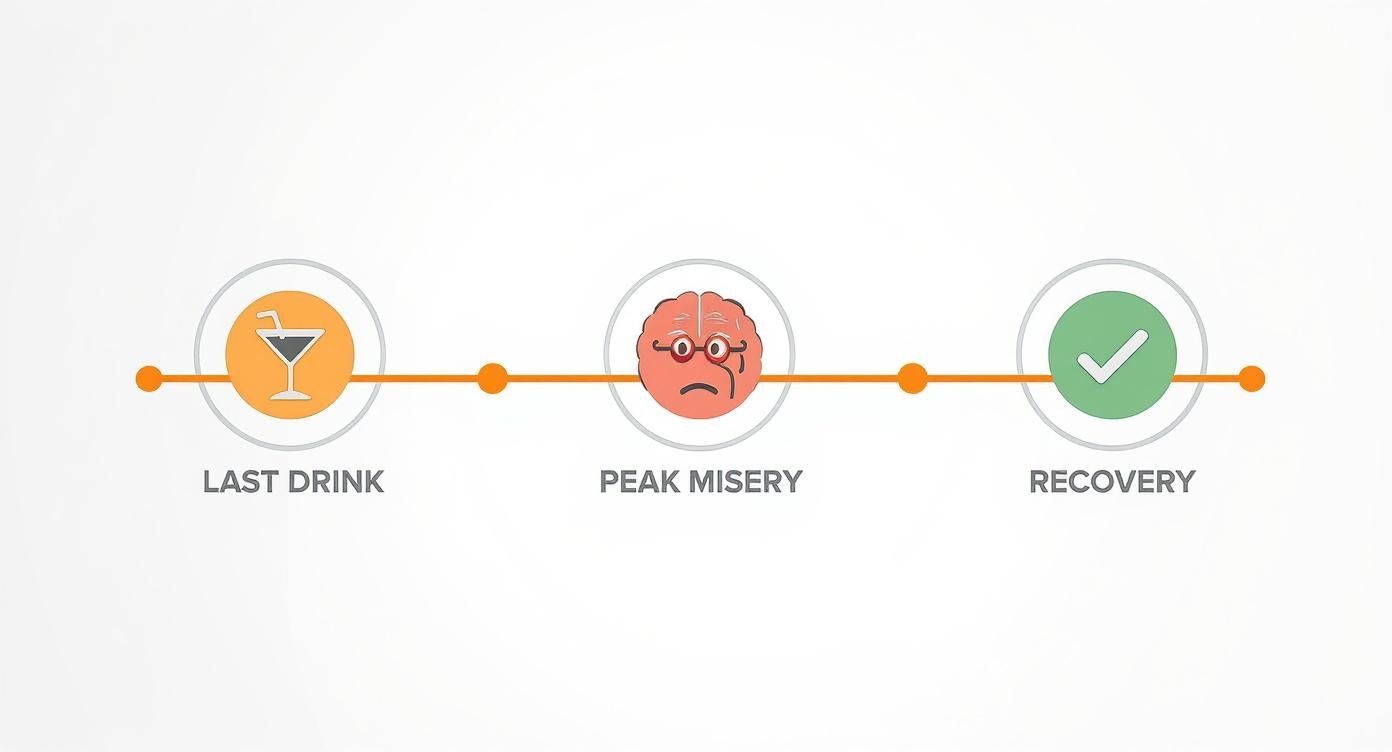
As you can see, the worst of it hits hours after you've stopped drinking, once your body has had time to process the alcohol.
The Lingering Fog (12–24 Hours Post-Drink)
Once you’re past the peak, the most intense physical symptoms might start to chill out. That skull-crushing headache might dial back to a dull throb, and the nausea might finally give you a break. But you're not quite in the clear.
This next phase is all about the mental and emotional fallout. Brain fog, trouble focusing, and mood swings are super common as your brain tries to get back to normal. You might feel extra irritable or anxious—a feeling people have fittingly dubbed "hangxiety."
The Hangover That Won't Quit (24+ Hours)
For some unlucky folks, especially after a really big night, the misery doesn't just wrap up at the 24-hour mark. It's totally possible for symptoms to stick around for up to 48 hours.
This extended stay is usually because of severe dehydration, a totally wrecked sleep schedule, and a major inflammatory response that your body just needs more time to sort out. If your hangovers regularly last this long, it's a pretty clear signal that your body is having a tough time with the amount you're drinking.
Why Your Hangovers Are Uniquely Yours
Ever woken up after a night out feeling like you’ve been hit by a truck, only to see your friend who drank just as much is already at the gym? It’s a classic story, and it highlights a simple truth: the answer to "how long can hangovers last" is different for everyone.
Your body’s reaction to alcohol is as unique as your fingerprint. Everything from your genetics to what you ate for dinner plays a part in how you feel the morning after. Understanding what makes your hangovers tick is the first real step toward getting them under control.
Biological Factors That Shape Your Hangover
Let's start with the things you can't change. Your body has a built-in playbook for processing alcohol, and some of us just got a more efficient edition than others.
- Genetics: It really does run in the family. Small variations in the genes responsible for enzymes like alcohol dehydrogenase determine how fast your body can break down alcohol and its nasty byproducts. If your system is on the slower side, those toxins hang around longer, stretching out your hangover.
- Age: Remember when you could bounce back in your early twenties? As we get older, our body composition changes—typically less muscle, more fat. This shift can mess with how alcohol is metabolized, often making hangovers hit harder and last longer.
- Gender: Biological differences play a big role. Women tend to have less body water to dilute alcohol and lower levels of the enzymes needed to process it. This can lead to a higher BAC and more intense hangovers from the same number of drinks.
You can't do much about these built-in factors, but just knowing they exist helps explain why your experience is what it is. It’s not in your head—it’s in your biology.
The Role of Lifestyle and Drink Choices
Okay, now for the things you can control. Your day-to-day habits and what's actually in your glass have a massive impact on your recovery. One of the biggest offenders here? Congeners.
Congeners are chemical byproducts from the fermentation and aging process in booze. Darker drinks—think whiskey, bourbon, and red wine—are packed with them, and they’re notorious for making hangovers feel a whole lot worse.
By sticking to clear liquors like vodka or gin, which have way fewer congeners, you can do yourself a huge favor. But it goes beyond just your drink order. Simple things like getting a good night’s sleep and making sure you’re hydrated before you even start drinking give your body a much better fighting chance.
Everyone's hangover is a unique cocktail of genetics, habits, and choices. The table below breaks down how some of these key factors can either make your morning miserable or a whole lot more manageable.
Factors That Influence Hangover Severity and Duration
| Factor | How It Worsens a Hangover | How It Mitigates a Hangover |
|---|---|---|
| Genetics | Slow metabolism of alcohol and its byproducts means toxins linger longer, extending symptoms. | Efficient enzymes clear alcohol and acetaldehyde from the system quickly, shortening recovery time. |
| Hydration | Drinking on an empty stomach or being dehydrated from the start intensifies alcohol's effects and diuretic properties. | Drinking plenty of water before, during, and after helps dilute alcohol and counteracts dehydration. |
| Sleep | Poor or inadequate sleep before drinking compromises your body's ability to recover and heightens fatigue. | A full night's rest gives your body the resources it needs to process alcohol and repair itself more effectively. |
| Drink Choice | Darker liquors (whiskey, bourbon) and red wine are high in congeners, which are known to worsen hangover symptoms. | Clear liquors (vodka, gin) have very few congeners, generally leading to less severe next-day effects. |
| Pacing | Drinking quickly spikes your BAC, overwhelming your liver's ability to metabolize alcohol. | Sipping drinks slowly and alternating with water gives your body more time to process the alcohol. |
| Nutrition | Drinking on an empty stomach allows alcohol to be absorbed faster, leading to a higher peak BAC. | Eating a balanced meal before drinking slows alcohol absorption and provides essential nutrients. |
As you can see, you have more influence over your hangovers than you might think. Small, smart changes can make a world of difference.
For a deeper dive into the science behind that pounding headache and queasy stomach, check out our guide on the seven science-backed causes of hangovers. When you understand what’s happening in your body, you can finally start to outsmart the morning-after misery.
The Global Perspective on Hangovers
A hangover isn't just a personal problem; it’s a global phenomenon. The answer to "how long do hangovers last?" can change dramatically depending on where you are in the world. Believe it or not, cultural norms, social drinking habits, and even economic pressures all play a huge role in shaping that morning-after misery.
The connection between a country's culture and the average hangover is surprisingly strong. Think of it this way: some cultures encourage a slow, moderate pace of sipping drinks with a meal, while others have a more established pattern of binge drinking on weekends. These social scripts create wildly different outcomes for millions of people every single Saturday morning.
A Tale of Two Hangovers
A quick look at global statistics shows just how much hangover timelines can vary. In the United States, for instance, the average hangover clocks in at around 5.58 hours. While certainly not fun, it’s a relatively short recovery window compared to other parts of the world. This number reflects a huge spectrum of drinking habits across the country.
Now, let's hop across the Atlantic. In the United Kingdom, hangovers tend to drag on for much, much longer. The data shows that the typical person in the UK endures two hangovers a month, with each one lasting an average of 36 hours. That’s a day and a half! This adds up to about 72 hours a month, or three full days a year, spent in a hungover fog—a pattern often linked to the UK’s higher rates of binge drinking. You can dig into the numbers yourself in a report on global hangover habits.
This massive difference—from under six hours to a day and a half—isn't some biological quirk. It’s a clear reflection of how deeply cultural drinking patterns can impact our physical recovery.
When we look at hangovers globally, we see that they're more than just a collection of symptoms. They are an economic issue, a public health concern, and a direct consequence of societal norms around alcohol.
The economic fallout is also a big deal. Lost productivity from employees showing up to work hungover—or not showing up at all—costs economies billions of dollars every year. This wider context shows that the length of a hangover isn’t just about individual choices, but about the collective habits of an entire culture. Understanding this global perspective adds a whole new layer to figuring out how to manage your own recovery.
Actionable Strategies to Shorten Your Recovery Time
Okay, so you get the science behind why you feel so rough. But knowing why a hangover happens is only half the battle—the real prize is figuring out how to make it go away, fast. While there’s no magic wand to instantly undo a big night out, there are some seriously effective, science-backed ways to speed up your recovery and get your day back.
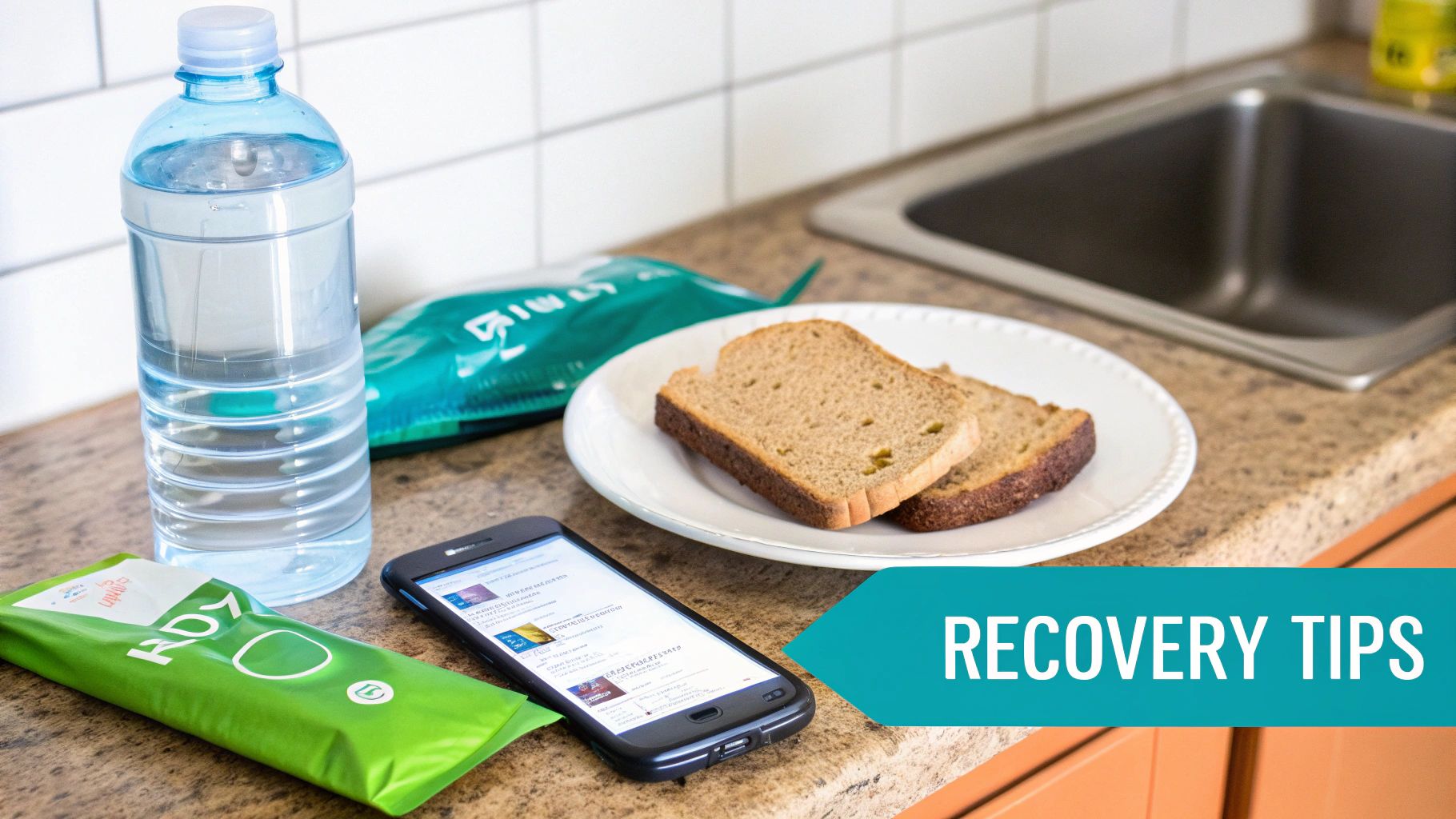
The best game plan always tackles the root of the problem: dehydration, missing nutrients, and inflammation. It's time to move from theory to action and give your body exactly what it needs to reboot.
Rehydrate Like a Pro
That pounding headache and crushing fatigue? Dehydration is a huge culprit. Guzzling water is a solid first move, but your body also flushed out a ton of essential electrolytes—minerals like sodium and potassium that your system needs to balance fluids and function properly.
Plain water just won't cut it. You need to replenish those lost minerals to truly rehydrate.
- Electrolyte Drinks: These are designed specifically to restock the essential minerals you lost, helping your body get back in balance way more efficiently than water alone.
- Coconut Water: It’s a great natural source of potassium and can help restore your electrolyte levels without a bunch of added sugar.
- Nutrient-Rich Broth: A warm cup of bone broth or a simple vegetable broth can feel amazing on your stomach while delivering a dose of sodium and other key minerals.
For a deeper dive into smart hydration, check out our guide on the best way to rehydrate after drinking.
Refuel with the Right Foods
What you eat the morning after can either be your best friend or your worst enemy. A greasy burger might sound amazing, but it can just make an irritated stomach feel even worse. The move is to go for gentle, nutrient-dense foods that give your body back what it lost.
Think of it like putting premium fuel in a car that's been running on fumes. Your body needs quality ingredients to start the repair process. Good choices include bananas for potassium, eggs for amino acids that help your liver process toxins, and some whole-wheat toast to get your blood sugar back on track.
Prioritize Quality Rest
Alcohol absolutely wrecks your sleep. It messes with your natural sleep cycles, keeping you from hitting that deep, restorative REM stage your brain and body are desperate for. So even if you were in bed for eight hours, you probably woke up feeling like you barely slept at all.
The most powerful recovery tool you have is often the simplest one: rest. Just giving your body a break lets its natural repair systems do their job, which can seriously cut down on that lingering brain fog and exhaustion.
If you can swing it, a quick nap of 20–30 minutes can be a total game-changer, rebooting your system without messing up your sleep later that night. Find a dark, quiet spot, silence your phone, and let your brain power down for a bit. A 2022 survey found that the average hangover in the U.S. lasts about 5.58 hours, but for millennials, it can drag on for 7.27 hours—that’s a huge chunk of lost productive time.
On-the-Go Recovery Solutions
Let's be real, taking a full "sick day" to recover isn't always in the cards, especially for busy professionals or when you're traveling. That’s where smart, convenient solutions can save the day. Portable supplements like Upside's jelly sticks are made for this exact scenario. They pack a punch of research-backed ingredients into a format you can toss in your bag, so you can proactively manage your recovery wherever you are.
Your Top Hangover Questions, Answered
Even when you know the basic timeline, a few questions always seem to pop up about just how long this misery can last. Let's get straight to it and clear up some of the most common ones.
Can a Hangover Really Last for Two Days?
Yes, the dreaded two-day hangover is very, very real. It’s not just you. This usually happens after a night of particularly heavy drinking, but it can also be triggered by severe dehydration or getting next to no quality sleep.
When this happens, your body is still completely overwhelmed. That inflammatory response we talked about, plus major hormonal imbalances and a wrecked sleep cycle, can easily stick around for 48 hours or more. Your system is working overtime to clean house, and that lingering, run-down feeling is the result.
Is It a Hangover or Alcohol Withdrawal?
This is a really important one to get right. While a few symptoms might look similar on the surface—like headaches or nausea—they are worlds apart. A hangover is your body's short-term, acute reaction to too much alcohol, and it almost always clears up within 24-48 hours.
Alcohol withdrawal, on the other hand, is a serious medical condition that can happen to people with alcohol dependence. The symptoms are much more severe and can include intense anxiety, tremors (the shakes), and even seizures. These can start hours or even days after the last drink. If you're a heavy, regular drinker and notice these kinds of symptoms when you stop, it's critical to get medical help right away.
Why Do I Feel So Anxious During a Hangover?
Ah, "hangxiety." That awful feeling of dread and unease is unfortunately a classic part of the experience. Here’s why: alcohol initially gives you a boost of GABA, a brain chemical that makes you feel relaxed and calm. To compensate, your brain pumps the brakes on its own GABA production.
Then, when the alcohol wears off, you're left with a major deficit. This sudden drop is what can trigger those feelings of anxiety and restlessness. Throw in dehydration and a terrible night's sleep, and you’ve got the perfect storm for a full day of emotional turmoil.
Do Certain Drinks Cause Worse Hangovers?
Absolutely. What you drink can make a huge difference in how you feel the next day. Darker liquors like whiskey, red wine, and bourbon are packed with congeners—these are just chemical byproducts from the fermentation and aging process.
Unfortunately, these compounds are known for making hangover symptoms much more severe and longer-lasting. Clear liquors like vodka and gin have far fewer congeners, which often means a less brutal recovery. So yes, choosing your drink wisely can definitely be a smart move.
Don't let the fear of a long day-after hold you back from a great night out. Upside offers a super convenient, on-the-go solution with our research-backed jelly sticks. Our formula is designed to help you live more by supporting your body's natural recovery process, so you can wake up feeling refreshed.
Ready to party smarter? Visit https://enjoyupside.com.
#upside #enjoyupside #upsidejelly #livemore #hangovercure #hangoverprevention #fighthangovers #preventhangovers #HangoverRelief #MorningAfter #PartySmarter #HydrationStation #WellnessVibes #RecoverFaster #NoMoreHangovers #HealthyParty #HangoverHacks #FeelGoodMorning #NightlifeEssentials #HangoverFree #SupplementGoals #PostPartyPrep #GoodVibesOnly #HealthAndParty #HangoverHelper #UpsideToPartying