

· By Annemarie
How to Stop Feeling Dizzy After Drinking A Practical Guide
To stop feeling dizzy after drinking, your first move should be to immediately sit or lie down. Find a stationary object to focus on and start sipping water slowly. This simple combo helps stabilize your body, gives your brain a chance to reset its sense of balance, and starts fighting the dehydration that makes the spins so much worse.
Why Alcohol Makes the Room Spin
Ever had that feeling where the world decides to tilt on its axis after a few drinks? That classic, disorienting "room spin" is a super common—and seriously unpleasant—sensation. It’s not just in your head; it’s a direct result of how alcohol messes with your body's sophisticated balance system.
The main culprit is your vestibular system, tucked away in your inner ear. This intricate network is basically your body's gyroscope, telling your brain which way is up and whether you're moving. It all works using tiny, fluid-filled canals that sense motion and gravity.
The Inner Ear Disruption
When you drink, alcohol gets absorbed into your bloodstream and makes its way to the inner ear. There, it seeps into the delicate vestibular system and actually changes the consistency of the fluid in those canals.
As alcohol thins the blood, it creates a density mismatch between this fluid and the gel-like structure that senses movement. This distortion tricks your brain into thinking you're on a Tilt-a-Whirl, even when you're lying perfectly still.
This effect can kick in at a surprisingly low blood alcohol concentration (BAC)—as little as 0.08%, which is the legal driving limit in many places.
The sensation of dizziness is your brain's confused reaction to conflicting signals. Your eyes see a stationary room, but your inner ear is screaming that you're on a rollercoaster. This sensory mismatch is what creates that intense spinning feeling.
Other Factors That Make Dizziness Worse
It’s not just your inner ear causing trouble. Alcohol creates a perfect storm of conditions that crank up the dizziness and leave you feeling completely unstable. Knowing what’s going on can help you understand why you feel so off.
A few key secondary causes include:
- Dehydration: Alcohol is a diuretic, which is just a fancy way of saying it makes you pee a lot. All that fluid loss leads to dehydration, which lowers your blood volume and pressure. The result? Less blood flow to the brain and a serious case of lightheadedness.
- Low Blood Sugar (Hypoglycemia): Your liver is working overtime to process the alcohol, which gets in the way of its other job: releasing glucose into your bloodstream. This blood sugar crash can leave you feeling weak, shaky, and dizzy.
- Vascular Changes: Alcohol can cause your blood vessels to expand, which might lead to a sudden drop in blood pressure when you stand up or move too quickly. Hello, head rush.
All of these elements team up to turn a fun night into a dizzying mess. If you want to dive deeper into the other things at play, you can learn more about what causes hangovers in our detailed guide.
How to Stop Dizziness in the Moment
When the world starts tilting, you need a plan, and you need it fast. Dizziness after drinking is your body sending up a flare, but a few quick responses can help you find your footing before the spins completely take over.
The very first thing to do? Find a stable position. Don’t try to tough it out while standing. Get yourself seated immediately, or even better, lie down in a cool, dimly lit room to give your senses a break.
Once you're settled, try this surprisingly effective trick: focus your gaze on a single, stationary object. It could be anything—a light switch on the wall, a picture frame, a book on a shelf. By locking your eyes onto one spot, you give your brain a fixed reference point. This helps it sort out the confusing signals coming from your inner ear versus what your eyes are seeing.
Rehydrate the Right Way
Getting fluids back in your system is non-negotiable for stopping dizziness quickly. Alcohol is a diuretic, and the resulting dehydration can cause your blood pressure to drop. This means less blood flow to your brain, which cranks up that spinning sensation big time. In fact, medical studies have directly linked this effect to vertigo in heavy drinkers.
But how you rehydrate really matters. Chugging a huge glass of water seems like the logical move, but it can easily backfire by overwhelming your stomach and making you feel sick.
A smarter approach looks like this:
- Sip, Don’t Gulp: Take small, steady sips of water or an electrolyte drink over time.
- Choose Wisely: Electrolyte drinks can be a game-changer because they replenish the essential minerals like sodium and potassium you've lost, which plain water can't do.
- Keep it Cool (Not Cold): Stick with cool or room-temperature fluids. They’re usually much easier on an unsettled stomach than ice-cold drinks.
Feeling dizzy is a sign you need immediate, simple support. The right moves can make a world of difference in just a few minutes. Here's a quick checklist to guide you through the fog.
Immediate Dizziness Relief Checklist
| Action | Why It Works | How to Do It |
|---|---|---|
| Sit or Lie Down | Prevents falls and reduces the body's effort to maintain balance. | Find the nearest safe spot to sit or lie down. A dark, quiet room is ideal. |
| Focus on One Point | Gives your brain a stable reference point to combat the feeling of motion. | Pick a non-moving object across the room and keep your eyes fixed on it. |
| Sip Fluids Slowly | Reverses dehydration-induced low blood pressure without upsetting your stomach. | Take small sips of water or an electrolyte drink every few minutes. |
| Eat Bland Carbs | Helps stabilize low blood sugar, which alcohol is known to cause. | Nibble on a few plain crackers, a slice of toast, or half a banana. |
| Avoid Sudden Moves | Prevents a sudden drop in blood pressure that can bring the dizziness right back. | If you need to get up, do it slowly. Rest your head on a pillow if lying down. |
Think of this as your first-aid response. Once you've checked these boxes, you're on the right track to feeling more grounded.
Gentle Nutrition and Rest
After the initial wave of dizziness starts to fade, getting some simple food into your system can be a huge help. Alcohol can make your blood sugar take a nosedive, leaving you feeling weak and lightheaded on top of everything else.
Focus on easily digestible, bland foods. Think of things like plain crackers, a piece of toast, or a banana. These simple carbohydrates can help restore your blood sugar levels without putting extra stress on your digestive system.
Finally, give your body the rest it’s begging for. Any sudden movements—especially standing up too quickly—can cause a head rush and bring the spins roaring back. If you can, lie down with your head slightly propped up on a pillow and just close your eyes. Cutting down on all the external noise and light gives your brain and body the quiet time they need to recalibrate and recover.
Managing Dizziness The Morning After
Waking up with a pounding head is one thing, but when the room decides to join in with a gentle sway, it's a whole new level of awful. That lingering, next-day dizziness is your body waving a big, white flag, letting you know it's still dealing with the fallout from last night. What you're feeling is a messy cocktail of dehydration, nutrient depletion, and a very unhappy inner ear.
When you're trying to shake that dizzy feeling after drinking, your morning-after game plan should be all about gentle restoration. Don't even think about rushing into your day. Instead, focus on giving your body exactly what it needs: balance, nutrients, and plenty of rest. You'd be surprised how much of a difference a few small, deliberate actions can make in feeling grounded again.
This visual breaks down the first few critical steps to get you feeling steady right away.
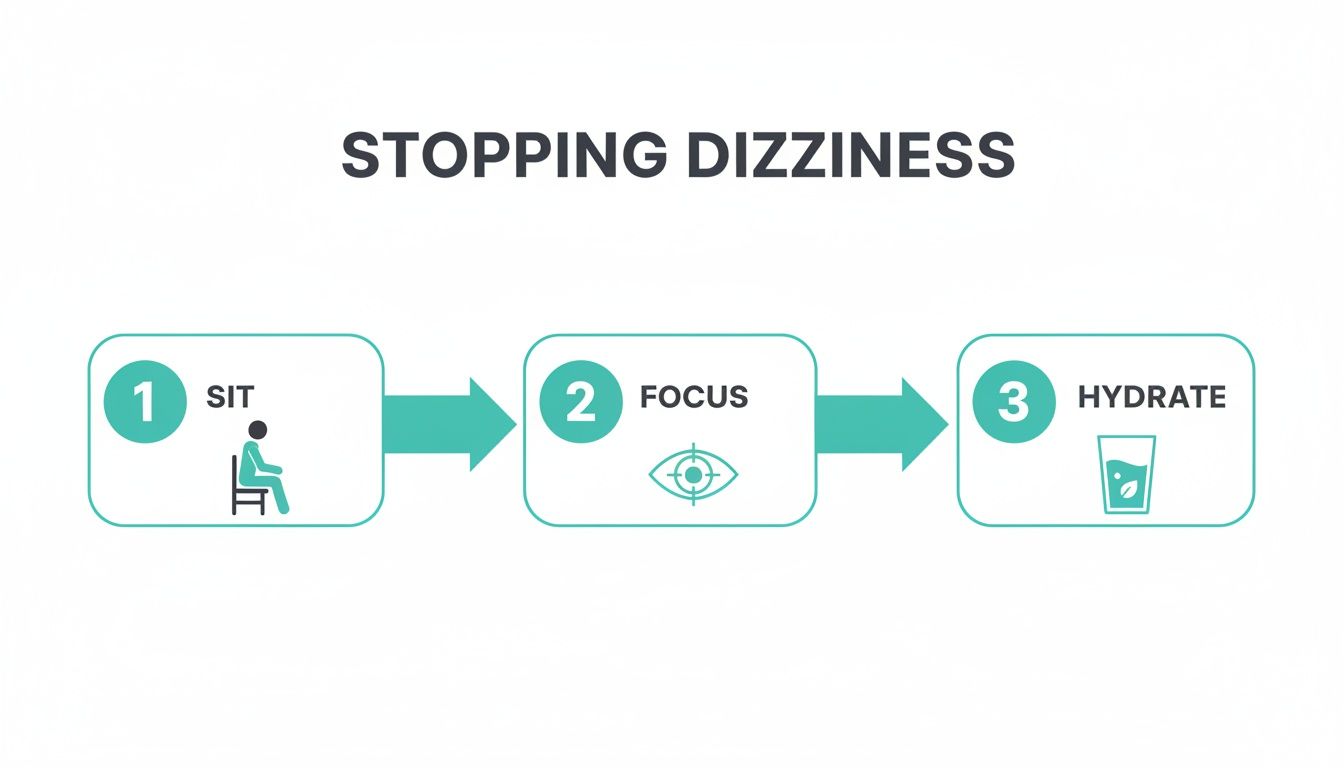
The main takeaway here is to keep it simple and stable. Find a place to sit, give your eyes a fixed point to focus on, and start sipping some water.
Fuel Your Recovery With The Right Foods
What you choose to eat can either be your best friend or your worst enemy in this situation. Your body is running on fumes, so it's time to restock with foods that are easy on your stomach but packed with the vitamins and minerals you've lost. This is absolutely not the time for a greasy, heavy breakfast that will just make you feel worse.
Instead, think about smart, targeted nutrition:
- Bananas for Potassium: Alcohol is notorious for draining your potassium, an electrolyte that's essential for everything from nerve function to fluid balance. A banana is a simple, gentle way to get it back.
- Eggs for Amino Acids: Eggs are a fantastic source of cysteine, an amino acid that helps your body break down acetaldehyde—one of the main toxins making you feel so miserable.
- Ginger Tea for Nausea: Ginger is a classic, natural remedy for an upset stomach. Sipping on some warm ginger tea can calm the nausea that often comes hand-in-hand with dizziness.
This combo of smart hydration and targeted food is a powerful one-two punch against that wobbly feeling. For a deeper dive into the science, check out our guide on the best way to rehydrate after drinking.
A Gentle Approach To Getting Back On Your Feet
If the dizziness sticks around into the next day, you're likely dealing with a form of vertigo. It's caused by alcohol's continued assault on your vestibular system—the part of your inner ear that controls balance. An easy way to calm this down is to rehydrate with an electrolyte-rich drink and rest by lying flat on your back (supine). This position can help soothe the involuntary eye movements that make the spins feel so much worse.
Your morning-after plan shouldn’t feel like a chore. The goal is to be kind to your body. Avoid jarring movements, bright screens, and loud noises that can overstimulate your already taxed sensory systems.
To give your body an extra boost, you might consider adding a targeted supplement to your routine. A product like Upside Hangover Jelly is specifically designed with ingredients that help support hydration and restore that all-important balance. Its jelly format makes it super easy to take—a perfect, no-fuss addition to your morning-after toolkit.
How to Prevent Dizziness Before You Drink
Knowing how to handle the spins after they start is a useful skill, no doubt. But the real power move is stopping them from ever happening. A few smart choices before you even take that first sip can completely change how your night—and the next morning—plays out.
Think of it as setting yourself up for success. The best defense is a good offense, and that starts hours before the party even begins. Your pre-drinking game plan can be the deciding factor between a great night and one that ends with the room spinning. It’s all about creating a solid foundation for your body to handle what's coming.
Lay the Groundwork with a Solid Meal
Drinking on an empty stomach is just asking for trouble. It's one of the fastest tickets to Dizzyland. Without any food to act as a buffer, alcohol slams into your bloodstream at full speed, completely overwhelming your system.
The fix is simple: eat a real, balanced meal one to two hours before you plan on drinking. And no, a handful of chips doesn't count. We're talking about foods that take a while to digest, giving your body a steady shield against rapid alcohol absorption.
An ideal pre-game meal should include a mix of:
- Lean Proteins: Things like chicken, fish, or tofu slow down digestion and keep you feeling full.
- Healthy Fats: Avocado, nuts, and olive oil are your friends here. They help slow the rate at which your stomach empties.
- Complex Carbs: Think sweet potatoes or brown rice. They provide sustained energy and help keep your blood sugar from going on a rollercoaster.
This combo essentially acts as a time-release system for alcohol, giving your body a much better chance to process it without sending your sense of balance into a nosedive.
The Power of Pacing and Hydration
Once you’re out, how you drink becomes just as important as the meal you had. It’s so easy to get swept up in the moment, but mindful pacing is a non-negotiable rule if you want to avoid feeling dizzy. A good rule of thumb is to stick to no more than one standard drink per hour.
This gives your liver, which can only process about that much alcohol in an hour anyway, a fighting chance to keep up. When you drink faster than your body can metabolize, your blood alcohol content skyrockets—and that’s prime time for dizzy spells to strike.
The old "one water for every one drink" rule is popular for a reason—it actually works. Alternating between your cocktail and a glass of water not only slows you down but also directly fights the dehydrating effects of alcohol, a major cause of dizziness.
Making hydration an active part of your night, instead of a desperate afterthought, is a total game-changer. For a complete strategy, our guide on how to prevent a hangover before drinking has even more tips to get you started.
Before you head out, it's worth having a clear plan. Here's a quick look at how different strategies stack up.
Preventive Measures For a Dizziness-Free Night
| Strategy | Impact on Dizziness | Practical Example |
|---|---|---|
| Eat a Balanced Meal | High Impact. Slows alcohol absorption significantly, preventing rapid blood alcohol spikes that cause dizziness. | Eating a grilled chicken salad with avocado and quinoa about 90 minutes before your first drink. |
| Strategic Hydration | High Impact. Counteracts dehydration, a primary trigger for dizziness and headaches. | Alternating every alcoholic drink with a full glass of water or a seltzer with lime. |
| Pacing Your Drinks | High Impact. Keeps blood alcohol levels from spiking, giving your liver time to process the alcohol. | Sticking to one beer or one glass of wine per hour and avoiding shots. |
| Choose Drinks Wisely | Medium Impact. Avoids sugar crashes that can mimic or worsen feelings of lightheadedness. | Ordering a vodka soda instead of a sugary margarita or daiquiri. |
Each of these steps builds on the others, creating a strong defense against the dreaded spins.
Choose Your Drinks Wisely
Finally, what’s in your glass matters. Super sugary cocktails and sweet mixers might taste amazing, but they can send your blood sugar on a wild ride. A sharp spike followed by a crash can easily bring on feelings of lightheadedness, even before the alcohol fully kicks in.
Opting for drinks mixed with soda water or sticking to beer and wine can help keep your blood sugar on a more even keel. The more you can do to keep your body in balance from the start, the less likely you are to be fighting off dizziness later.
When Dizziness Is More Than Just a Hangover
A little bit of lightheadedness is pretty standard issue for a hangover. But it’s really important to know when that dizzy feeling might be signaling something more serious. The goal here isn't to scare you, but to give you the confidence to tell the difference between a normal post-party symptom and a genuine red flag.
Most of the time, the spins are just a temporary nuisance from dehydration and your body working overtime to process the alcohol. Still, your body has its own alarm system for when it needs professional help. Learning to listen to those signals is a huge part of partying smarter and looking out for your long-term health.
Recognizing The Red Flags
It's tempting to write off every weird feeling as "just the hangover," but some signs should absolutely not be ignored. If your dizziness comes with any of the following symptoms, it's time to stop guessing and get medical advice—fast.
These warning signs can point to a more serious underlying issue that has nothing to do with how many drinks you had last night.
- Chest Pain or Difficulty Breathing: Dizziness paired with any chest tightness, shortness of breath, or a racing heart could be a sign of a cardiac event.
- A Severe, Sudden Headache: If you get a headache that feels way different or significantly more intense than your usual hangover headache, that’s an immediate red flag.
- Fainting or Loss of Consciousness: Feeling a bit faint can happen, but actually passing out is a major sign that you need a professional evaluation.
- Numbness, Weakness, or Slurred Speech: These are potential signs of a neurological issue and should always be treated as an emergency.
- Persistent Symptoms: If your dizziness just isn't getting better after hydrating and resting, or if it hangs around for more than 24 hours, it’s time to call a doctor.
Trust your gut. If something just feels wrong—way beyond a typical hangover—it’s always better to play it safe and check in with a healthcare professional. Your well-being is always the top priority.
When to Seek Medical Help
Here’s a simple way to think about it: a normal hangover, including some mild dizziness, should slowly get better with time, water, and rest. It’s when the symptoms are severe, come on suddenly, or show up with other alarming signs that you need to take action.
For example, feeling a little wobbly when you first get out of bed the morning after is pretty common. But experiencing vertigo so intense you can't even stand up, especially if it’s paired with vomiting or a high fever? That's not normal.
Those scenarios are way beyond a standard hangover and need to be looked at by a medical expert who can rule out other potential causes. Being informed is the best way to stay safe and responsible.
Got Questions? We've Got Answers.
When you're dealing with the spins, a million questions can pop into your head. Let's cut through the noise and get straight to what you need to know about feeling dizzy after a few drinks.
How Long Does This Dizzy Feeling Last, Anyway?
For most of us, that initial "whoa, the room is moving" feeling starts to fade as your blood alcohol content (BAC) drops back to zero. This can take a few hours, and it all depends on how much you drank, how fast your metabolism is, and if you had any food in your system.
But if the dizziness is part of a full-blown hangover, it can stick around for up to 24 hours. That's because your body is working overtime to rehydrate, get its electrolytes back in check, and clear out all the leftover byproducts from the alcohol. If you're still feeling seriously dizzy after a full day, it's probably time to check in with a doctor.
Do Certain Drinks Make the Spins Worse?
Oh, absolutely. What's in your glass can make a huge difference in how you feel later.
- Sugary Drinks: Think sweet cocktails, certain wines, and those sugary mixers. They can send your blood sugar on a wild ride, spiking it up and then crashing it down. That rollercoaster is a classic recipe for feeling lightheaded and unsteady on your feet.
- Dark Liquors: Things like whiskey, bourbon, and even some red wines are loaded with congeners. These are just natural chemical compounds from the fermentation process, but they're notorious for contributing to nastier hangovers—and prolonged dizziness is often one of the main complaints.
Is It a Good Idea to Pop a Motion Sickness Pill?
It might seem like a good idea, but mixing meds like Dramamine with alcohol is a big no-no. Motion sickness pills are designed to make you drowsy—that's one of their main side effects. Since alcohol is also a depressant, taking them together can amplify that sleepiness to a risky level.
Bottom line: avoid playing doctor when alcohol is still in your system. If you're thinking about taking any medication after drinking, even something over-the-counter, have a quick chat with a doctor or pharmacist first. It's way better to be safe than sorry when you're looking for ways on how to stop feeling dizzy after drinking.
Don't let the fear of a dizzy morning sideline you from enjoying life's best moments. With Upside Hangover Jelly, you can party smarter and wake up ready to go. Our formula is designed to help your body bounce back, so you can live more and worry less.
Grab your Upside and get back to the good times.
#upside #enjoyupside #upsidejelly #livemore #hangovercure #hangoverprevention #fighthangovers #preventhangovers #HangoverRelief #MorningAfter #PartySmarter #HydrationStation #WellnessVibes #RecoverFaster #NoMoreHangovers #HealthyParty #HangoverHacks #FeelGoodMorning #NightlifeEssentials #HangoverFree #SupplementGoals #PostPartyPrep #GoodVibesOnly #HealthAndParty #HangoverHelper #UpsideToPartying