

· By Annemarie
Dihydromyricetin Side Effects What Does the Research Say
Whenever you're looking at a new supplement to help you beat hangovers, the first question is always the same: is it safe?
When it comes to Dihydromyricetin (DHM), the answer is a resounding yes. Based on everything we know so far, it’s very well-tolerated and carries an extremely low risk of side effects. This isn't just some wellness trend; it's a natural plant-based compound with a seriously solid safety profile.
What Is Dihydromyricetin and Is It Safe?
Dihydromyricetin, or DHM for short, is a natural compound pulled from plants like the Japanese Raisin Tree (Hovenia dulcis). You can think of it like a specialized filter for your body after a night of drinking. Its main job is to help your liver break down alcohol and its nasty byproducts more efficiently, which is exactly why it’s become the star ingredient in modern hangover supplements.
We dive deep into how it works in our guide on dihydromyricetin for hangovers.
But back to the big question: what about adverse effects? The best news about dihydromyricetin side effects is that there really aren't many to talk about. Its safety is backed by two key things: a long history of traditional use and a growing body of modern scientific proof.
A Legacy of Safety
Believe it or not, DHM is nothing new. For centuries, it's been a go-to remedy in traditional Asian medicine for everything from intoxication to hangover relief.
While the kind of rigorous scientific data we look for today is still emerging, the modern toxicity studies we do have are incredibly reassuring. They consistently show an excellent safety profile with very few, if any, negative effects reported.
This long history provides a really strong foundation of real-world safety, which is now being confirmed by clinical research. Unlike some synthetic options, DHM seems to work in harmony with your body's natural detox processes.
To give you a clearer picture, let's break down what the current evidence tells us about DHM's safety.
DHM Safety at a Glance
This table sums up the key safety aspects of Dihydromyricetin (DHM) based on what science and typical usage have shown us so far.
| Aspect | Summary | Key Takeaway |
|---|---|---|
| General Safety | Considered overwhelmingly safe for most adults when used as directed. | The rate of adverse effects in human and animal studies is extremely low. |
| Typical Dosage | Supplement doses usually fall between 300 mg and 1,200 mg per use. | Sticking to the recommended dose on the label is always the best move. |
| Side Effects | Very rare. Some people have anecdotally mentioned mild stomach upset. | The vast majority of people who take DHM report no side effects at all. |
| Contraindications | Not recommended for pregnant or breastfeeding women due to a lack of research. | It's smart to be cautious if you have specific health conditions or take other medications. |
Essentially, the science and historical use both point to the same conclusion: DHM is a remarkably safe compound for its intended purpose. For the average social drinker, taking a DHM supplement as directed is highly unlikely to cause any issues.
Evidence from Human Trials on DHM Side Effects
While traditional use and animal studies offer a solid footing, the most convincing proof of DHM's safety comes from controlled human trials. These studies take us out of the theoretical and show us exactly how dihydromyricetin acts inside a real, living person under a scientific lens. For anyone on the fence about DHM, this is where you'll find the most reliable answers.
The great news? The clinical data we have so far, while still expanding, is overwhelmingly positive. Time and again, when researchers give DHM to people in a controlled setting, the results point to one thing: it’s incredibly well-tolerated. This is a big deal because it helps separate the hype from the hard facts, anchoring DHM's safety profile in real evidence, not just marketing claims.
The NAFLD Study: A Major Clue to DHM's Safety
One of the most telling human trials gives us a powerful look at how DHM works with the liver—the very organ that takes the hit from alcohol. This particular study focused on people with nonalcoholic fatty liver disease (NAFLD), a condition where fat builds up in the liver, leading to stress and inflammation.
This research is especially important because it really puts DHM to the test in a high-stakes scenario. If DHM were going to cause problems, you'd expect to see them in a group with already-sensitive livers. But what the researchers found was the complete opposite.
The trial painted a crystal-clear picture of safety. While clinical data on dihydromyricetin's side effects is still emerging, a small randomized controlled trial with 60 Chinese adults with NAFLD gave us some fantastic insights. They took 150 mg of DHM twice a day for three months, and the result was no adverse events reported in either the DHM group or the placebo group.
To date, there are no documented cases of clinically apparent liver injury linked to DHM anywhere in medical literature. You can dive into the full study details to see just how solid these findings are.
The term "no adverse events" is the clinical way of saying something simple but powerful: the people taking DHM felt no different than the people taking a sugar pill. That’s a huge vote of confidence for its gentle nature.
This is incredibly reassuring for the average social drinker. It strongly suggests that even when the liver is already under some strain, DHM doesn't pile on. In fact, the evidence points to it being supportive, which is a fantastic sign.
Demystifying Liver Enzymes: ALT and AST
To really get why this study is such a big deal, it helps to know a little about how doctors check liver health. They often look at the levels of specific enzymes in your blood, mainly alanine aminotransferase (ALT) and aspartate aminotransferase (AST).
Think of these enzymes as your liver's alarm system. When liver cells get damaged or inflamed—whether from alcohol, a bad diet, or a condition like NAFLD—they start leaking these enzymes into your bloodstream. High levels of ALT and AST are a clear red flag that your liver is stressed out.
In the NAFLD study, researchers were watching these markers like a hawk. What they found was that the people taking DHM actually showed a significant decrease in both ALT and AST levels compared to the placebo group.
This is a game-changer for two big reasons:
- It confirms safety: Instead of causing harm, DHM actually helped lower the markers of liver strain.
- It suggests a protective effect: This points to DHM potentially supporting liver cells, helping them work better even when they're under pressure.
For anyone worried about what a few drinks might be doing to their liver, this is incredible news. It shows that DHM doesn’t just stay out of the way; it seems to actively contribute to a healthier liver environment. The total lack of reported dihydromyricetin side effects in this sensitive group speaks volumes about its reliability for anyone looking to feel better after a night out.
How Dosage Affects DHM Safety and Efficacy
When you take any supplement, the golden rule is always about dosage. We all get this instinctively—a daily vitamin is good for you, but downing the whole bottle definitely isn't. This basic idea, called the dose-response relationship, is just as true for dihydromyricetin. Even though DHM has a fantastic safety profile, the amount you take is what dials in its effectiveness and keeps any potential side effects off the table.
The great news is that the risk of dihydromyricetin side effects is incredibly low, even when you take a good amount. But finding the right dose is all about hitting that sweet spot—getting all the hangover-fighting benefits without going overboard. Think of it like salting your food; just a pinch brings out all the flavors, but too much ruins the meal. The goal with DHM is to use just enough to help your body bounce back after a night out.
This is exactly why you should always stick to the recommended serving size on a supplement's label. Those numbers aren't just pulled out of thin air. They’re based on research to give you the best results safely, ensuring DHM can do its job and help you wake up feeling human again.
What Research Says About Safe DHM Doses
To figure out what a safe and effective dose looks like, we can turn straight to the science. Clinical trials give us a solid benchmark, showing the exact amounts that have been tested on people in controlled settings without causing any problems.
In human studies, DHM has been given at doses typically ranging from 300 mg to over 1,000 mg per use. Some long-term studies on liver health, for instance, had participants taking 150 mg twice a day for months without a single issue. The amounts you’ll find in most hangover supplements fit comfortably within this well-researched range, so you can be confident you’re taking a dose backed by solid evidence.
On top of that, animal studies really drive home DHM's massive safety margin by showing just how much it would take to even get close to a toxic level.
In a notable toxicity study conducted on mice, researchers administered extraordinarily high doses of DHM, up to 22 grams per kilogram of body weight, and observed no deaths or toxic symptoms over a 14-day period.
For a 70-kilogram (154 lb) person, this would be like taking 15.7 grams—an amount that's worlds away from what you'd find in any supplement. This incredible tolerance just underscores how exceptionally safe DHM is at normal, recommended levels.
Finding the Right Dose for You
While the research gives us great guidelines, the perfect dose can be a little different for everyone. Things like your body weight, how much you drank, and your personal metabolism all play a part. The smartest way to go about it is to start with the suggested serving size on the product label and just see how you feel.
Here are a few practical tips to get it right:
- Follow the Label: Always begin with what the manufacturer recommends. They formulate their products based on the science to make sure they’re both safe and effective.
- Consider Your Plans: If you're just having a glass or two of wine, a standard dose is probably all you need. For a bigger night out, you might think about taking the upper end of the suggested dose range, if the product provides one.
- Listen to Your Body: The proof is in how you feel the next morning. You want to notice a real difference in how you feel without having to take a huge amount.
Your first and most important step is simply understanding the label. To get more comfortable with what you’re putting in your body, check out our guide on how to read supplement labels. Knowing how to do this empowers you to make smarter choices and ensures you're getting a quality product with a clear, effective dose. At the end of the day, even though DHM is very forgiving, using it responsibly is always the best move for a better morning after.
Potential Drug Interactions and Who Should Be Cautious
Dihydromyricetin is remarkably safe for most people, but just like any supplement, it doesn’t exist in a bubble. Understanding how it might interact with other things you’re taking is just smart, responsible supplement use.
The most important interaction, of course, is the one it’s supposed to have—with alcohol.
By design, DHM gives your liver a helping hand to process alcohol more efficiently, all while shielding your brain's GABA receptors from some of alcohol's less-desirable effects. This is exactly what makes it a go-to for preventing hangovers. But because it's working so closely with your liver, it's worth thinking about how it might play with other medications and for certain groups of people.
DHM's Dance with Alcohol and Other Meds
Let’s get one thing straight: DHM’s primary job is to interact with alcohol. Think of your liver as a super busy kitchen. When you drink, alcohol is the dish that needs to be prepped right now. DHM swoops in like an expert sous-chef, helping the head chefs—enzymes called alcohol dehydrogenase (ADH) and acetaldehyde dehydrogenase (ALDH)—break down alcohol and its nasty byproduct, acetaldehyde, way faster.
This is a good thing, but it does shine a spotlight on DHM's influence over the liver's metabolic pathways. It naturally raises a question: what about the other dishes the liver is preparing at the same time? Many prescription drugs are also processed by the liver, often using the very same pathways.
Since DHM can ramp up liver activity, there's a theoretical chance it could change how quickly other drugs are broken down. This could potentially make them a little less effective if they’re cleared out too fast. While no specific negative drug interactions have ever been reported in clinical studies, a little caution is always the best policy.
Here’s what to keep in mind:
- Liver-Metabolized Drugs: If you take common medications for things like high cholesterol, blood pressure, or diabetes, they’re almost certainly processed by your liver.
- Sedatives and Anti-Anxiety Meds: DHM interacts with GABA receptors in the brain—the same system affected by alcohol and drugs like benzodiazepines. Mixing them could lead to unpredictable effects.
- Chat with Your Doc: The easiest and most reliable way to stay safe is to have a quick conversation with your doctor or pharmacist. They know your health profile and can give you personalized advice.
This isn't about creating fear around dihydromyricetin side effects; it's about being smart. A simple five-minute chat with a pro can give you total peace of mind.
Specific Groups Who Should Take a Pass on DHM
While DHM is a great option for most adults, some groups should probably sit this one out. It’s not because it’s known to be harmful, but simply because there isn't enough research to confirm its safety for them.
When it comes to supplements, an absence of safety data is reason enough to be cautious. Until more specific studies are done, these groups should avoid using DHM.
Who Should Be Cautious
- Pregnant or Breastfeeding Women: We just don't know how DHM might affect a developing fetus or a nursing infant. To keep both mom and baby safe, it’s best to avoid it completely during this time.
- Anyone with Pre-existing Liver Disease: While some research on fatty liver disease is promising, if you have a serious condition like cirrhosis or hepatitis, don't take any new supplement without your doctor's direct okay. Your liver is already under stress, and adding anything new to the mix needs an expert's green light.
- Children and Adolescents: Supplements like DHM are made for and tested on adults. The effects on a developing body haven't been studied, so it’s not recommended for anyone under the legal drinking age.
At the end of the day, using any supplement is a personal choice. For the vast majority of social drinkers, DHM is a safe and incredibly effective tool. By keeping these potential interactions in mind, you can make sure you're using it in the smartest and safest way possible.
Comparing DHM With Other Hangover Remedies
When you’re staring down a potential hangover, it’s easy to reach for the first thing you can find. But not all remedies are created equal, and their side effect profiles can be surprisingly different. To really get why dihydromyricetin side effects are so minimal, it helps to see how it stacks up against the other usual suspects.
Many conventional hangover "cures" just mask symptoms. Think of it like putting a band-aid on a bigger issue. Over-the-counter painkillers might dull your headache, but they don’t do a thing to help your liver process the toxins that are causing the problem in the first place. In fact, some can even pile more stress onto your system.
A Proactive Approach vs. a Reactive One
The biggest difference between DHM and other remedies comes down to how it works. DHM is proactive, targeting the root causes of a hangover. It helps your liver break down alcohol and its nasty byproduct, acetaldehyde, more efficiently. It also works in the brain to chill out alcohol's effect on GABA receptors, which is a big contributor to that dreaded "hangxiety."
In contrast, other popular ingredients are often reactive, only dealing with symptoms after they’ve already crashed the party.
Let’s look at a few common alternatives:
- N-Acetylcysteine (NAC): This is a powerful antioxidant that helps your body replenish glutathione, a key player in detoxification. While it's effective, it can cause stomach upset, nausea, or diarrhea for some people, especially at higher doses.
- Milk Thistle: Known for its liver-protective qualities, its main job is long-term liver support, not immediate hangover relief. Occasionally, it can cause digestive issues or allergic reactions.
- Ibuprofen or Aspirin: These non-steroidal anti-inflammatory drugs (NSAIDs) can definitely help with headaches and body aches. The problem? Taking them after drinking can seriously irritate your stomach lining and, in some cases, increase the risk of gastrointestinal bleeding or put extra strain on your liver and kidneys.
This chart quickly breaks down the key areas where you need to be cautious with DHM.
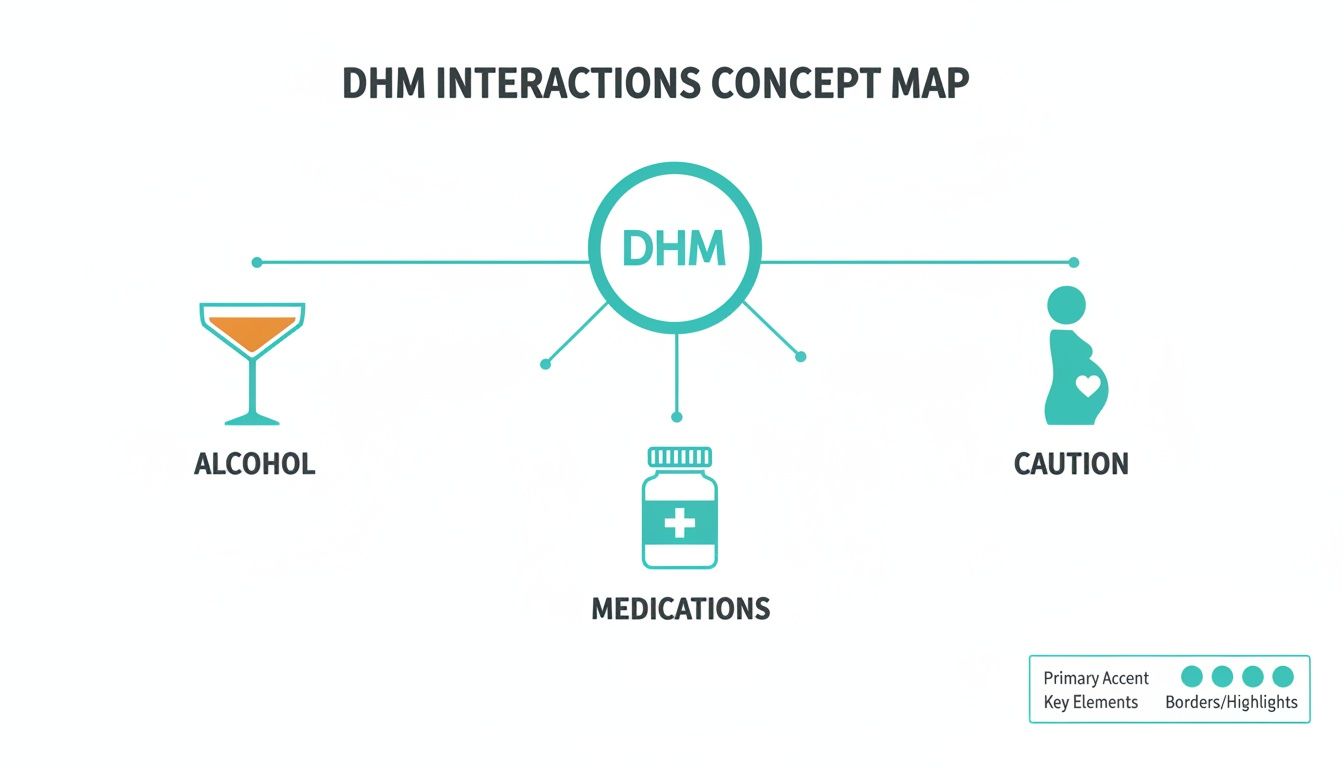
It’s just a simple visual reminder to think about how it might interact with alcohol, other meds, and situations like pregnancy.
Comparing Side Effects of Hangover Remedy Ingredients
To lay it all out, this table compares the side effects and core functions of DHM against other common ingredients.
| Ingredient | Primary Mechanism | Common Side Effects | Key Considerations |
|---|---|---|---|
| Dihydromyricetin (DHM) | Enhances alcohol metabolism; supports liver enzymes and brain receptors. | Extremely rare; occasional mild digestive upset noted anecdotally. | Targets root causes of hangovers, not just symptoms. |
| N-Acetylcysteine (NAC) | Boosts glutathione production for antioxidant support. | Nausea, vomiting, diarrhea, stomach cramps. | Can have a strong sulfur-like smell and taste, which some find unpleasant. |
| Milk Thistle | Supports long-term liver cell health and protection. | Digestive issues (gas, bloating), allergic reactions. | More suited for ongoing liver support than acute hangover prevention. |
| Ibuprofen (NSAID) | Blocks inflammatory pathways to reduce pain and headache. | Stomach irritation, potential for GI bleeding, kidney strain. | Can be harsh on an already-irritated stomach from alcohol. |
The key takeaway is simple: DHM stands out for its remarkably gentle safety profile. Its focus on helping the body's natural processes, rather than just covering up pain, makes it a smarter and more targeted choice for the modern social drinker.
While no supplement is a magic bullet, comparing DHM to the alternatives really shows why it’s gained such a solid reputation. Its minimal side effects, combined with its ability to address the biochemical mess drinking leaves behind, puts it in a category of its own.
For a deeper dive, check out our guide on the best supplements for hangovers, which breaks down the science behind the most effective ingredients. Choosing DHM means you're opting for a proactive solution designed to work with your body, not against it.
How to Use DHM Supplements for the Best Results
It’s great knowing that dihydromyricetin side effects are almost unheard of, but to really get the most out of any supplement, you have to use it the right way. A fantastic product only works its magic when it's part of a smart routine. That means figuring out the best time to take it, what to look for in a quality bottle, and how to pair it with other good habits.
Think of DHM as the star player on your team—it's powerful, but it can't win the game alone. To truly conquer a hangover, you need a full game plan. This is your practical playbook for making DHM work for you, so you can feel confident and wake up ready to go.
Timing Your Dose for Maximum Impact
When it comes to DHM, timing is everything. It works by helping your body process alcohol more efficiently, so you need it in your system while the party's still going. Taking it proactively is way more effective than damage control the next morning.
Here are the best times to take your DHM supplement:
- Before Your First Drink: Pop your DHM about 30-60 minutes before you start drinking. This gives it time to get into your system and prep your liver for what's coming.
- During Your Night Out: If you forget to take it beforehand, no worries. Taking it with your first or second drink is still a solid move.
- Immediately After Your Last Drink: This is your last real chance to get ahead of the hangover. It lets DHM work its magic overnight as your body metabolizes the rest of the alcohol.
Waiting until the next morning is just too late. By then, the inflammatory damage and toxin buildup have already set in.
Choosing a High-Quality DHM Supplement
The supplement aisle can be a bit of a jungle, but a few key signs can help you spot a quality product that’s both safe and effective. Don't just grab the first thing you see; a little label-reading goes a long way.
Look for these markers of quality:
- Clear Dosage: The label should spell out exactly how much DHM is in each serving, which is usually between 300 mg and 1,200 mg.
- Purity and Standardization: A good brand will use a standardized extract. This guarantees you’re getting a consistent, reliable dose of the active ingredient every single time.
- Third-Party Testing: This is a non-negotiable. Certifications from independent labs confirm that what’s on the label is what’s in the bottle and that it's free of any nasty contaminants.
A supplement that's been third-party tested gives you an extra layer of confidence, assuring you that its purity and potency have been double-checked by an unbiased source.
A Holistic Approach to Preventing Hangovers
DHM is an amazing tool, but it's not a free pass to go overboard. For the absolute best results, you need to combine it with other smart drinking habits.
Don't forget these basics:
- Stay Hydrated: This is a big one. Alternate your alcoholic drinks with water to fight off dehydration, a major cause of that morning-after misery.
- Eat a Meal: Drinking on an empty stomach lets alcohol hit you faster and harder. A good meal beforehand slows everything down.
- Listen to Your Body: Drink in moderation and know your limits. No supplement can completely erase the consequences of drinking too much.
And if you ever think you might be experiencing a side effect? The advice is simple: stop taking the supplement and chat with your doctor. While bad reactions are incredibly rare, it's always smarter to be cautious and get a professional opinion.
Got Questions About DHM?
Alright, let's wrap this up by hitting some of the most common questions that pop up about dihydromyricetin. Think of this as the final rundown to make sure you've got all the facts straight.
Can I Take DHM Every Day?
While DHM is a champ for occasional, responsible drinking nights, the jury is still out on long-term daily use. There was one human study where people took it twice a day for three months to support their liver, and no issues popped up.
But for most of us just looking to sidestep a rough morning, it's best to use DHM as intended—when you're drinking. Unless a doctor specifically tells you otherwise, save it for your social nights.
Does DHM Make You Sober Up Faster?
In a word, no. DHM isn’t a magic sobriety switch. It helps your body process alcohol more efficiently and can lessen alcohol's harsh effects on your brain, but it doesn't instantly zap the alcohol out of your system.
Let’s be crystal clear: You should never drive or operate machinery after drinking, even if you’ve taken DHM. Its real power lies in preventing or dialing down the misery of a next-day hangover, not in reversing being drunk.
Is It Possible to Be Allergic to DHM?
Allergic reactions to DHM are extremely rare. Since it’s a natural extract from a plant, a sensitivity is technically possible—just like someone could be sensitive to strawberries or peanuts.
If you ever notice signs of an allergic reaction like a rash, itching, or swelling, stop taking it immediately and give your doctor a call. It's always better to be safe, so you can enjoy the good stuff DHM has to offer without a worry.
Ready to party smarter and actually enjoy your morning? With Upside, you get a powerful, science-backed formula made to stop hangovers in their tracks. Our tasty, easy-to-use jelly sticks are packed with DHM and other natural goodies to help your body bounce back. Try Upside today and feel the difference for yourself!
#upside #enjoyupside #upsidejelly #livemore #hangovercure #hangoverprevention #fighthangovers #preventhangovers #HangoverRelief #MorningAfter #PartySmarter #HydrationStation #WellnessVibes #RecoverFaster #NoMoreHangovers #HealthyParty #HangoverHacks #FeelGoodMorning #NightlifeEssentials #HangoverFree #SupplementGoals #PostPartyPrep #GoodVibesOnly #HealthAndParty #HangoverHelper #UpsideToPartying