

· By Annemarie
Wine hangover cures: Quick, science-backed fixes for after the party
When it comes to wine hangovers, the best "cure" is really a combination of smart prevention and next-day care. Think of it as a multi-step game plan: rehydrating with electrolytes, getting some good, nutrient-dense food in you to level out your blood sugar, and letting your body rest.
While there's no single magic button to erase a rough morning, you can absolutely get ahead of the worst symptoms by understanding what makes wine hangovers so uniquely punishing. It’s all about those specific compounds—like congeners and histamines—that wine brings to the party.
Why Wine Hangovers Feel So Severe
If you've ever sworn that a wine hangover feels particularly brutal compared to other drinks, you're not just imagining things. It's a real phenomenon. While any hangover involves the usual suspects like dehydration and your liver working overtime, wine adds a few extra troublemakers to the mix, making your morning-after misery feel a whole lot worse.
Getting to know these culprits is the first real step toward finding a strategy that works. It’s about more than just the alcohol content—it’s about everything else swirling around in your glass.
The Role of Congeners in Your Hangover
Congeners are the chemical byproducts created during the fermentation and aging process in alcoholic drinks. They're what give many spirits and wines their distinctive flavors, aromas, and deep colors, but this comes with a serious downside. When your body tries to break them down, it creates some pretty toxic stuff that makes hangover symptoms feel a lot more intense.
As a rule of thumb, the darker the drink, the higher the congener content. This is exactly why a few glasses of a big, bold Cabernet Sauvignon or a rich Merlot can leave you feeling worlds away worse than the same amount of a light, crisp Pinot Grigio.
Think of it like giving your liver a double-whammy. It's already putting in the hours to process the alcohol itself, and adding these complex compounds into the mix is a surefire recipe for a pounding headache and that deep, lingering fatigue.
Debunking the Sulfite Myth
Sulfites get a lot of blame for hangovers, but the truth is, their role is often misunderstood. These compounds are simply preservatives added to wine to stop it from spoiling or oxidizing. Now, for a very small group of people (around 1%), a true sulfite sensitivity can trigger symptoms like headaches or asthma.
But for the vast majority of us? Sulfites aren't the main villain behind our wine hangovers. The real culprits are usually the other things we've been talking about, like dehydration, those pesky congeners, and histamines. They typically play a much, much bigger role in how bad you feel.
Key Takeaway: While sulfites can be a problem for a select few, your average wine headache is almost certainly caused by other factors. If you only blame the sulfites, you might be missing the real reasons you feel so rough.
Histamines and the Instant Headache
Ever get a headache after just one glass of red? You can probably thank histamines for that. These are the very same compounds your body releases during an allergic reaction, and they're found in much higher concentrations in red wines.
For people who are sensitive, the histamines in wine can set off an inflammatory response, leading to classic symptoms like:
- Flushed skin
- A stuffy nose
- That all-too-familiar, throbbing headache
This can happen shockingly fast, long before a typical hangover even has a chance to set in. It’s a direct response to the histamines themselves, not just the alcohol. The reason red wines pack more of a histamine punch is because they’re fermented with the grape skins, which is where these compounds are concentrated.
Understanding this unique cocktail of congeners, histamines, and the usual effects of dehydration is key. We dive even deeper into the science in our guide on what causes hangovers. By figuring out exactly why wine hangovers can feel so punishing, you can arm yourself with the right strategies for prevention and recovery—which we'll get into next.
Your Pre-emptive Hangover Prevention Plan
Let's be honest, the best way to deal with a wine hangover is to stop it from ever happening in the first place. This isn't about some miracle cure the morning after; the real magic happens hours before you even pop the cork.
Think of it as laying a solid foundation for the night ahead. A little bit of prep work is genuinely the difference between waking up feeling great and waking up filled with deep, pounding regret. This is about more than just grabbing a bite to eat—it's about arming your body with the right fuel and support to handle what's coming.
Fortify Your System With the Right Foods
We've all heard it before: don't drink on an empty stomach. It's a cliché for a reason. With no food to act as a buffer, alcohol slams into your bloodstream, and your liver simply can't keep up. But the real key is choosing the right kind of food.
Aim for a balanced meal about an hour or two before you start drinking. You'll want a good mix of:
- Healthy Fats: Think avocado, nuts, or salmon. These help slow down how quickly your stomach empties, which means the alcohol is released into your system more gradually. No sudden shock to the system.
- Lean Protein: Chicken, fish, and beans are your friends here. They provide the amino acids your liver needs to function properly and help keep your blood sugar stable, heading off those nasty energy crashes that make hangovers feel so much worse.
- Complex Carbohydrates: Sweet potatoes or brown rice give you sustained energy without the sharp spike and crash you get from simple sugars. This is your defense against that classic hangover fatigue and weakness.
It's a common mistake to just load up on greasy, heavy food, thinking it will soak up the alcohol. More often than not, that just leads to indigestion and heartburn later. For more smart meal ideas, check out our guide on what to eat before drinking alcohol.
To make things simple, here's a quick checklist to run through before you head out.
Pre-Drinking Hangover Prevention Checklist
Before you have your first glass, a quick check-in with this list can set you up for a much better morning.
| Action Item | Why It Works | Pro Tip |
|---|---|---|
| Eat a Balanced Meal | Slows alcohol absorption and provides essential nutrients for your liver. | Include protein, healthy fats, and complex carbs. Avoid overly greasy or sugary foods. |
| Hydrate with Water | Counteracts alcohol's diuretic effect, preventing dehydration-related headaches. | Drink a full 16-ounce glass of water about an hour before your first alcoholic drink. |
| Take a Supplement | Provides targeted support to help your liver process alcohol more efficiently. | Look for ingredients like DHM, Milk Thistle, and B Vitamins for a powerful preemptive boost. |
Following these simple steps gives your body a serious advantage before the night even begins.
Prioritize Proactive Hydration
Dehydration is the main villain behind most hangover symptoms—the pounding headache, the dizziness, the exhaustion. Alcohol is a diuretic, which is just a fancy way of saying it makes you pee a lot, flushing water out of your system.
If you start the night already a little dehydrated, you're setting yourself up for failure. The goal is to get ahead of it. Make it a non-negotiable rule to drink at least one full 16-ounce glass of water about an hour before that first glass of wine. It tops off your body's fluid levels and gives you a much-needed buffer.
The Power of Proactive Supplementation
Okay, so you’ve eaten well and you’ve had your water. What else can you do? This is where you can get a real edge on the hangover curve by giving your body an extra layer of defense with the right supplements.
Preparing your liver and metabolic pathways before the alcohol shows up can make a massive difference in how you feel the next day.
This is exactly why we created Upside Hangover Sticks. Taking one before you start drinking is a dead-simple way to prepare your body. Our formula is packed with science-backed ingredients designed specifically to support your liver's natural detox process when it needs it most.
Here's what's doing the heavy lifting:
- Dihydromyricetin (DHM): This incredible plant extract helps your liver metabolize alcohol and its toxic byproducts way more efficiently.
- Milk Thistle: Famous for its liver-protective qualities, milk thistle helps shield your liver cells from the stress alcohol causes.
- B Vitamins: Alcohol burns through these crucial vitamins, which are essential for producing energy and processing what you drink. Topping them up beforehand keeps your body's engine running smoothly.
When you combine smart eating, proper hydration, and a powerful supplement like Upside, you're not just crossing your fingers and hoping for the best. You're building a strategic defense plan. This preemptive strategy is, without a doubt, the most effective tool in your arsenal for enjoying wine without the morning-after punishment.
Smart Sipping Strategies For The Night
Once the wine starts flowing, the choices you make with each glass become your main line of defense. The prep work you did earlier sets the stage, but how you handle the night itself is what really determines if you wake up feeling fresh or regretting that last pour.
This isn't about holding back. It's about being smart so you can actually enjoy your night—and the next morning. A few simple, mindful actions can make a massive difference in how your body processes everything.
Master The Art Of Pacing And Pairing
Here’s one of the simplest and most effective tricks in the book: for every glass of wine, drink a full glass of water. Think of it as "one for one." It's a game-changer for two big reasons. First, it tackles dehydration head-on, which is a major cause of those killer hangover headaches. Second, it naturally slows you down, giving your liver a fighting chance to keep up.
This little habit helps you avoid falling into the trap of drinking wine too quickly. Since it's served in smaller pours than, say, a beer, it’s deceptively easy to down more alcohol in less time than you realize. Alternating with water just builds in a natural, easy rhythm.
A simple rule to live by: never let your wine glass be refilled until your water glass is empty. Trust me, this small shift can completely change your morning-after experience.
This visual guide shows how getting ahead of the game with food, hydration, and supplements really builds the foundation for a better night.
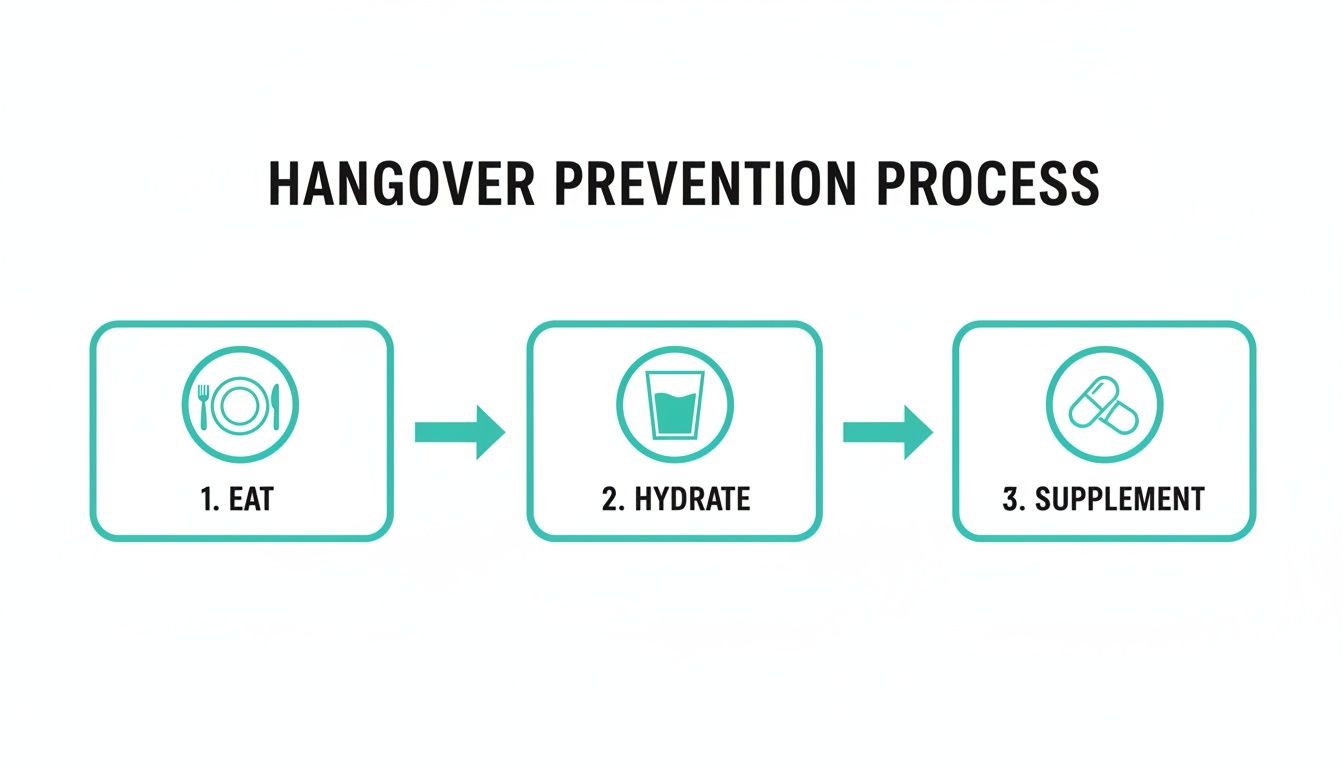
This process really underscores that what you do during the night is built on the critical groundwork you laid before your first sip.
Choose Your Wine Wisely
Not all wines are created equal, especially when it comes to hangover potential. As we covered earlier, those dark, rich wines are loaded with congeners, which can make your next day absolutely miserable. Going for lighter, clearer varieties is always a smarter move.
Think about making a few simple swaps:
- Instead of that heavy Cabernet Sauvignon, maybe try a lighter-bodied Pinot Noir.
- If you're reaching for a sugary Riesling, consider a crisp, dry Sauvignon Blanc instead.
- Sparkling wines like Prosecco or Champagne are often a gentler choice since they tend to be lower in both sugar and alcohol.
Also, keep an eye out for wines with high residual sugar. Your body needs extra water to process sugar, which just adds to the dehydrating effects of the alcohol and can stir up inflammation. A drier wine is almost always a safer bet.
Avoid Sugary Mixers And Keep Snacking
If you're in the mood for a wine spritzer or sangria, what you mix it with is huge. Sugary sodas, bottled juices, and syrups are a fast track to a hangover. They can send your blood sugar on a rollercoaster, leaving you feeling wiped out and weak.
Stick to clean mixers. Sparkling water or a splash of fresh lime or lemon are perfect—they hydrate you without piling on the sugar.
And finally, don't stop eating when dinner is over. Keep some snacks handy. A handful of nuts, a few pieces of cheese, or some olives throughout the night will continue to slow down alcohol absorption. It gives your body a steady stream of energy and helps keep everything stable, adding one more layer of protection in your quest for a hangover-free morning.
The Critical End-Of-Night Recovery Routine
Look, the night isn’t over just because you’ve had your last sip. That small window of time between your final glass and when your head hits the pillow? That's your golden hour. This is where you can do some serious damage control.
Think of it as setting yourself up for success. A few simple, strategic moves now can make all the difference, fighting off the nasty effects of alcohol before they have a chance to ruin your morning. It’s less about reacting to a hangover and more about getting ahead of it.
First Things First: Rehydrate Like You Mean It
Your number one priority is to rehydrate, but chugging plain water isn't quite enough. Alcohol is a diuretic, which is a fancy way of saying it makes you pee out not just water, but crucial electrolytes like potassium and sodium. That imbalance is a huge reason hangover headaches and fatigue feel so brutal.
So, before you even think about crawling into bed, grab a big glass of water and add some electrolytes. This could be a low-sugar sports drink, a hydration multiplier powder, or even just water with a pinch of salt and a squeeze of lemon. Getting those minerals back in your system is non-negotiable for restoring balance.
Pro Tip: Keep a hydration packet or some electrolyte tablets on your nightstand. If it's right there, you have no excuse to skip this step, no matter how tired you are.
Give Your Body Some Targeted Support
While rehydration is a great start, you can give your body an even bigger leg up by replenishing the specific stuff alcohol depletes. This is where a targeted supplement becomes your best friend, working its magic while you get some shut-eye.
Taking an Upside Hangover Stick before bed is like sending in the cavalry. It gives your system a concentrated dose of exactly what it needs to support your liver and get back on track.
- B Vitamins: Alcohol burns through your B vitamin reserves, which you absolutely need for energy. Topping them off helps fight that next-day brain fog and exhaustion.
- Milk Thistle & DHM: These are the power players that help your liver process all those toxic byproducts from alcohol much more efficiently overnight.
This step hands your body the right tools for the job, turning your sleep into a seriously productive recovery session.
Stabilize Your Blood Sugar with a Smart Snack
Ever wake up after a few glasses of wine feeling shaky, weak, and weirdly irritable? That’s often because your blood sugar has taken a nosedive overnight. A small, easy-to-digest snack before bed can work wonders to keep everything stable.
Just stay away from anything heavy, greasy, or super sugary—that’s a recipe for bad sleep and indigestion. Instead, go for something simple that gets the job done:
- A banana: Perfect. It’s loaded with potassium (an electrolyte you just lost) and gives you some gentle carbs.
- A handful of almonds: These have healthy fats and magnesium, which can actually help you sleep better.
- A piece of whole-wheat toast: This provides a steady release of energy to prevent that awful morning crash.
This little snack gives your brain the fuel it needs to get through the night, which means a much happier you in the morning.
Don’t Fall for the Pre-Bed Painkiller Trap
If you feel a headache coming on, it's tempting to pop a painkiller and hope for the best. Resist the urge. Taking acetaminophen (Tylenol) with alcohol still in your system can put a dangerous amount of stress on your liver.
And while NSAIDs like ibuprofen are generally a bit safer, they can really irritate your stomach lining, which is already sensitive from the wine. Your best bet is to just wait. See how you feel when you wake up. If the headache is still there, then take an NSAID with a big glass of water and some food. This routine is about recovery, not pre-emptive medication.
Your Morning-After Recovery Guide
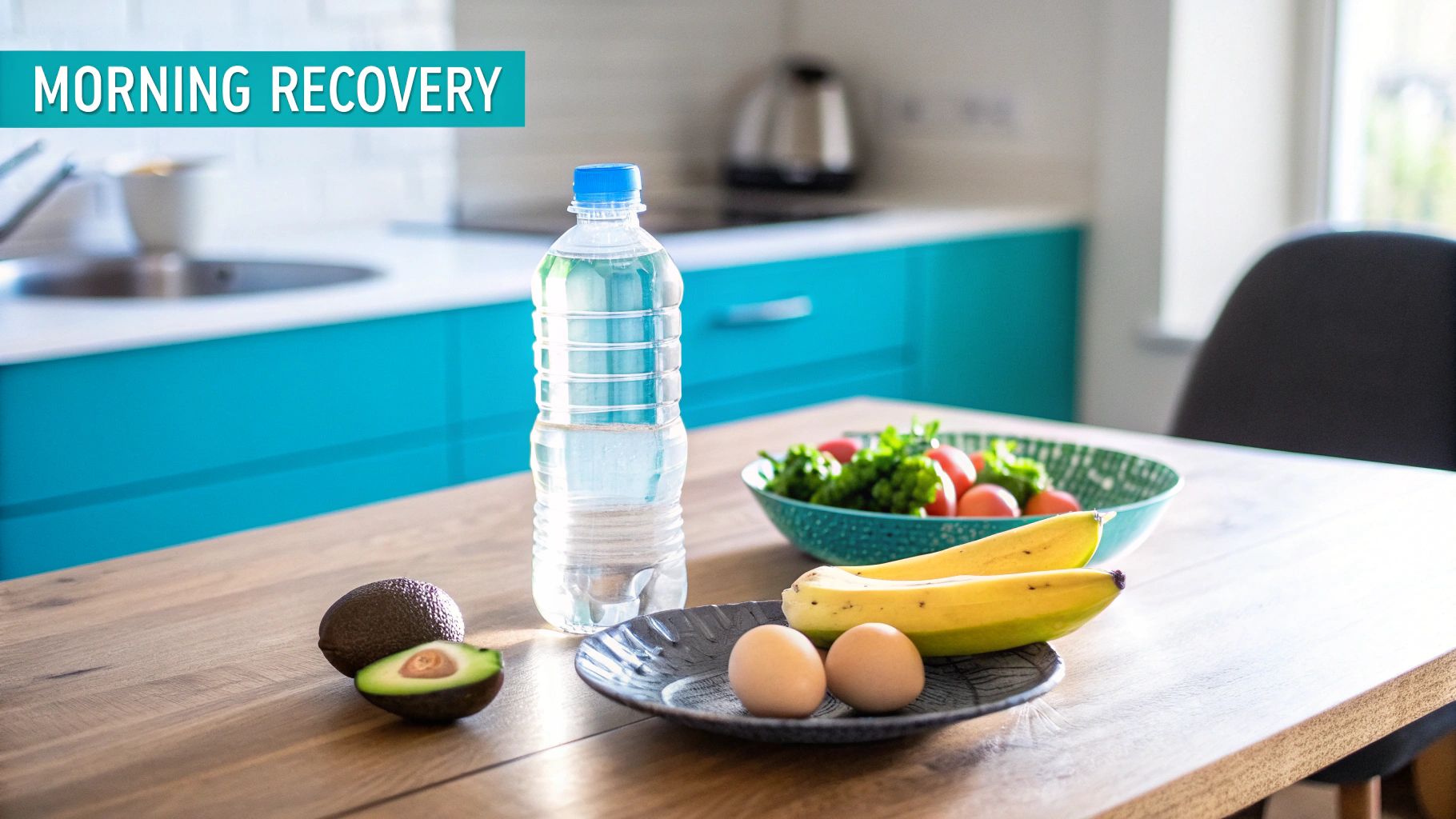
Sometimes, despite all our best intentions, the morning still hits like a ton of bricks. We’ve all been there—the pounding head, the wave of regret. When that happens, the game plan switches from prevention to gentle, effective recovery. This is your guide to feeling human again.
First things first: rehydration. Your body is screaming for fluids, so grab a big glass of water as soon as you can. Follow that up with an electrolyte drink to start replacing the crucial minerals like potassium and sodium that last night’s wine flushed out.
Getting this balance back is the foundation for shaking off dizziness and fatigue. To get a better idea of what your body is craving, check out our detailed guide on the best hangover recovery drinks.
Ditch The Greasy Breakfast Myth
That old advice about soaking up alcohol with a greasy fry-up? It’s one of the most stubborn hangover myths out there, and it’s time we put it to rest. Your liver is already working overtime, and slamming it with a heavy, fatty meal is the last thing it needs. You’ll likely just end up with an upset stomach, feeling even more sluggish.
Instead, your body needs nutrients it can actually use to repair and refuel. Go for a breakfast that’s easy on the stomach but packed with the good stuff.
Eggs, for example, are a fantastic choice. They're loaded with cysteine, an amino acid that helps your body break down acetaldehyde—that nasty toxin largely responsible for your hangover misery.
Pair them with some avocado for a much-needed hit of potassium, an electrolyte you’re definitely low on. This combo gives your body exactly what it’s asking for without adding any extra stress.
A simple, recovery-focused breakfast could be scrambled eggs with a side of sliced avocado and whole-wheat toast. It’s light, nutrient-dense, and directly tackles what your body needs.
Gentle Movement And Smart Pain Relief
The thought of moving might feel impossible, but a little bit of gentle activity can work wonders. A short, slow walk outside gets the blood flowing, delivers more oxygen to your brain, and can even trigger a release of endorphins—your body’s natural mood-lifters.
This isn’t about a workout. Just 15-20 minutes of light movement can help clear the mental fog and shake that lethargic feeling. The key is to listen to your body and not push it.
For that headache that just won’t quit, an over-the-counter pain reliever is often the answer. But which one you choose really matters.
- Choose Wisely: Stick with non-steroidal anti-inflammatory drugs (NSAIDs) like ibuprofen (Advil) or naproxen (Aleve). They work by reducing inflammation, a key cause of hangover headaches.
- Avoid Acetaminophen: Steer clear of acetaminophen (Tylenol). Your liver is already stressed from processing alcohol, and adding this medication to the mix can increase the risk of liver damage. Always take any pain reliever with some food and a full glass of water.
If you're looking for better ways to beat a wine hangover, you're definitely not alone. The global market for hangover remedies was valued at USD 2.34 billion in 2023 and is projected to hit USD 6.18 billion by 2030. That’s a huge jump, and it shows just how many people are searching for reliable morning-after solutions. You can dig into the numbers in this market analysis by Grand View Research.
Got Questions About Wine Hangovers? We Have Answers.
When it comes to the dreaded wine hangover, there's a lot of conflicting advice out there. Let's be honest, it's confusing. Separating the helpful hacks from the harmful myths is the key to making smart decisions. We've put together some clear, science-backed answers to the most common questions we hear, so you can navigate your next morning with confidence.
Does The "Hair Of The Dog" Actually Work?
It's an age-old remedy you've probably heard a million times, but does drinking more alcohol the next day really help?
The short answer is a definitive no. While having another drink might temporarily numb your symptoms, you're essentially just postponing the inevitable crash. It's like hitting the snooze button on your hangover.
This "cure" just puts additional strain on your already overworked liver and makes your dehydration even worse. You're forcing your body to process new toxins while it's still struggling with last night's. True recovery means rehydrating, replenishing nutrients, and giving your body the rest it desperately needs—not adding more alcohol to the fire.
Are Expensive Wines Less Likely To Cause Hangovers?
There's a tiny kernel of truth to this, but it’s definitely not a golden rule.
Pricier wines often go through more meticulous filtration and aging processes, which can lower the concentration of congeners—those nasty compounds known for making hangover symptoms more severe. This is why a cheaper, mass-produced red might hit you harder than a carefully crafted one.
However, the main culprit behind any hangover is ethanol, and that’s in every single bottle, no matter the price tag. Drinking too much of any wine will lead to dehydration and put your body under stress.
Your best defense will always be moderation, proper hydration, and a solid prevention strategy. Relying on a high price tag alone is not a real plan.
Should I Take Painkillers Before Bed To Prevent A Headache?
This is a really common but very risky tactic. Popping a painkiller before you go to sleep might seem like a smart, preemptive move, but it can do way more harm than good.
The biggest concern is with acetaminophen (Tylenol). Mixing it with alcohol that's still in your system can put dangerous stress on your liver. While NSAIDs like ibuprofen are generally considered safer in this context, they can still irritate your stomach lining, which is already sensitive from the wine you've been drinking.
The smarter, safer approach? Just wait until you wake up. See how you feel, and if a headache has set in, then take an NSAID with plenty of water and some food.
Why Do I Get A Headache After Just One Glass Of Red Wine?
If a single glass of red wine consistently gives you a headache, you're likely sensitive to specific compounds beyond just the alcohol. This kind of reaction often points to natural substances found in much higher concentrations in red wines.
Here are the usual suspects:
- Histamines: Red wines are rich in histamines, which come from grape skins. For some people, these can trigger an inflammatory response, leading to flushing, congestion, and that all-too-familiar headache.
- Tyramine: This compound, also found in things like aged cheeses and cured meats, can cause blood vessels to constrict and then expand—a classic headache trigger.
- Tannins: These are the compounds that give red wine its dry, slightly bitter quality. For a small subset of people, tannins can provoke the release of serotonin, which may lead to headaches.
If this sounds like you, you might just have a specific intolerance. Try experimenting with low-histamine red wines or switching to a crisp white wine. It could help you pinpoint the trigger and finally enjoy a glass without the painful consequences.
Don't let the fear of a hangover hold you back from enjoying the moment. With the right preparation, you can wake up feeling refreshed and ready for your day. Upside has made it simple with our science-backed Hangover Sticks, designed to support your body's natural recovery process.
Ready to party smarter and live more? Discover your hangover-free mornings at https://enjoyupside.com.
#upside #enjoyupside #upsidejelly #livemore #hangovercure #hangoverprevention #fighthangovers #preventhangovers #HangoverRelief #MorningAfter #PartySmarter #HydrationStation #WellnessVibes #RecoverFaster #NoMoreHangovers #HealthyParty #HangoverHacks #FeelGoodMorning #NightlifeEssentials #HangoverFree #SupplementGoals #PostPartyPrep #GoodVibesOnly #HealthAndParty #HangoverHelper #UpsideToPartying