

· By Annemarie
How Long Hangover Last (how long hangover last) - Realistic Recovery Timeline
So, you had a great night out, but now you're paying the price. How long is this misery going to last?
For most of us, the worst of a hangover is over within 24 hours, but that day can feel like an eternity. The most intense symptoms—that pounding headache, the wave of nausea—usually hit their peak in the first 8 to 12 hours after your blood alcohol level has returned to zero.
Mapping Your Hangover Recovery Timeline
A hangover isn't just you being tired; it's your body in full-on crisis mode. Think of it like the day after an incredibly punishing workout. Your system is inflamed, depleted of essential nutrients, and desperately trying to repair itself.
The whole ordeal follows a surprisingly predictable pattern. You'll move through a few distinct phases, from the initial "oh no" moment to that final, sweet relief. Understanding this timeline can help you know what to expect and, more importantly, when you can expect to feel human again.
The Typical Stages of a Hangover
To make sense of the day after, it helps to see the hangover broken down into stages. Each phase has its own unique set of challenges as your body battles dehydration, inflammation, and the toxic byproducts left over from metabolizing alcohol.
| Hangover Stage | Time After Last Drink | Common Symptoms |
|---|---|---|
| The Delayed Onset | 4-6 hours | Initial grogginess, mild headache, and early signs of dehydration (like a dry mouth). |
| The Peak Misery | 8-12 hours | This is the worst of it. Intense headaches, nausea, extreme fatigue, and sensitivity to light and sound. |
| The Slow Recovery | 12-18 hours | The most severe symptoms start to fade, but you're still left with lingering fatigue, brain fog, and a general feeling of being "off." |
| The Lingering Effects | 18-24+ hours | You're mostly functional, but you might still feel tired, a bit irritable, and not quite 100%. |
As the table shows, a hangover isn't a single event but a process. While the peak is brutal, the slow burn of recovery can drag on, impacting your whole day.
The Peak Discomfort Phase
That first stage after your blood alcohol content (BAC) hits zero is, ironically, the absolute worst. Your body is no longer processing alcohol and is now dealing with the full-blown consequences.
This is when the classic, can't-get-out-of-bed symptoms really kick in. You're likely dealing with:
- An intense, throbbing headache
- Serious nausea or an upset stomach
- Aversion to bright lights and loud noises
- Crushing fatigue and mental fog
This timeline gives you a visual of how a typical hangover plays out, from the moment the fun stops to when you finally feel like yourself again.
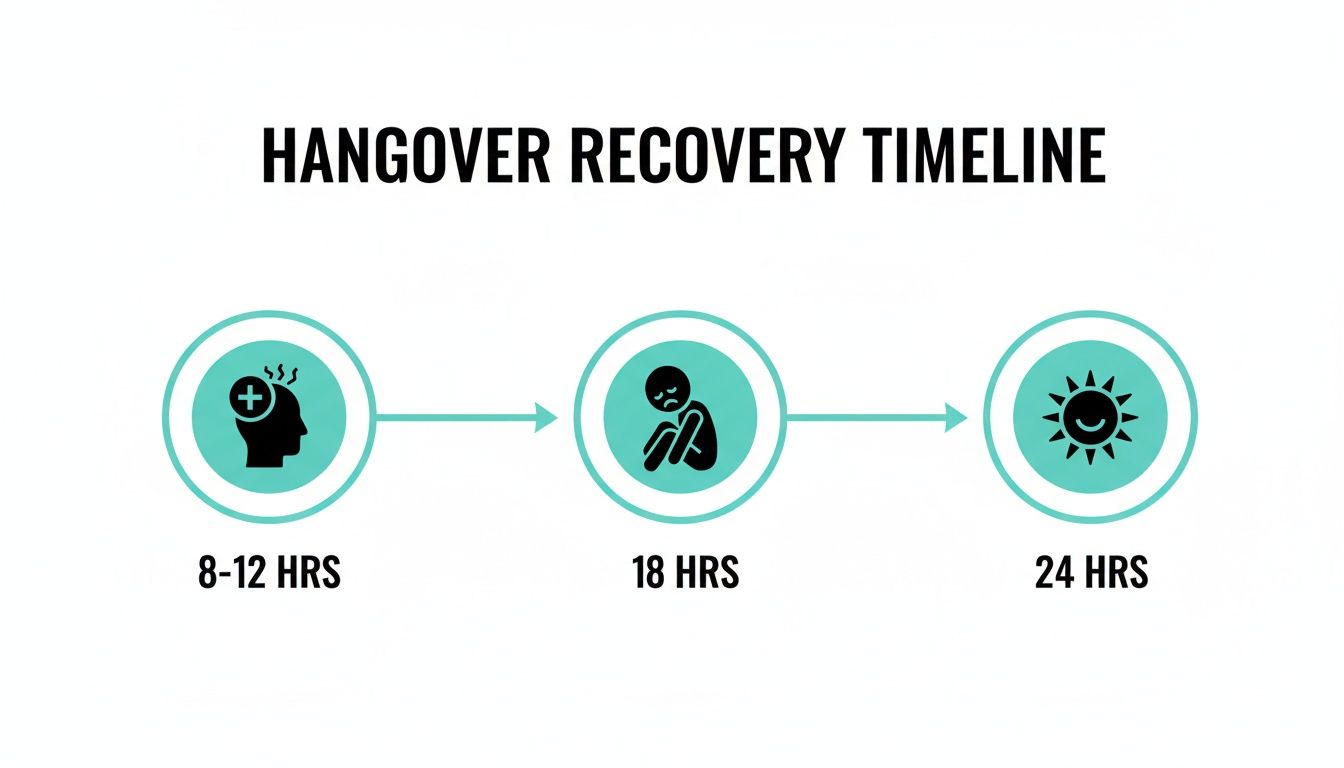
As you can see, even after the worst has passed around the 12-hour mark, that draining fatigue can stick around for a while longer.
The Science Behind the Timeline
Why does it take so long to bounce back? Researchers have clocked the average hangover at about 18.4 hours from your last drink, especially if it was a night with poor sleep. The peak suffering tends to land 8 to 11 hours after you stop drinking, turning a fun night into a full-day recovery mission.
This drawn-out timeline is why you still feel so awful long after the alcohol is gone. Your body is working overtime to rehydrate, clear out toxins, and calm the inflammatory fire that alcohol sparked.
Knowing what to expect is half the battle. If you're looking for a game plan, check out our guide on what to do after drinking to feel better faster.
What Happens Inside Your Body During a Hangover

We've all been there. That morning-after misery is more than just a headache—it’s your body's full-blown rebellion against last night's fun. Think of it like a finely-tuned machine, and alcohol just threw a massive wrench into the gears.
When you understand what's actually happening on the inside, it becomes pretty clear why a hangover sticks around for so long. The symptoms you’re feeling are a direct result of several different systems going haywire all at once.
The Key Culprits Behind Your Symptoms
Three main things are working against you after a night of drinking, creating a perfect storm of discomfort. Your body is basically fighting a battle on multiple fronts.
- Dehydration: Alcohol is a diuretic, which is just a fancy way of saying it makes you pee a lot. That fluid loss is a big reason you're dealing with a pounding headache, dizziness, and that desperate, can't-get-enough-water thirst.
- Gastrointestinal Distress: Alcohol is a known irritant to your stomach lining. It cranks up stomach acid production, which is why nausea, stomach pain, and sometimes even vomiting show up to the party.
- Inflammatory Response: Your immune system can actually kick into high gear and trigger an inflammatory response to alcohol. This contributes to that overall feeling of being sick and run-down, making it impossible to concentrate or remember anything.
These factors alone are enough to make you miserable. But there's another, more sinister compound at play that really cranks up the pain.
Acetaldehyde: The Real Villain
When your liver gets to work breaking down alcohol, it creates a byproduct called acetaldehyde. This stuff is seriously toxic—we’re talking up to 30 times more toxic than alcohol itself. It’s a primary suspect behind that splitting headache and even the flushed face you might get while drinking.
Your body tries its best to break acetaldehyde down into something harmless, but when you drink too fast, your liver gets overwhelmed. The toxic backlog is a huge reason why the answer to "how long does a hangover last?" is often much longer than you'd like.
If you want to get into the nitty-gritty of this whole process, check out our deep dive on alcohol metabolism.
The Disruption of Restorative Sleep
Finally, let's talk about sleep. You might think a few drinks help you pass out faster, and you're not wrong. But the quality of that sleep is terrible. Alcohol messes with your REM sleep, which is the most restorative, brain-healing part of your sleep cycle.
That’s why you can clock a full eight hours and still wake up feeling like you’ve been hit by a truck. Your brain and body never got the deep rest they needed to repair and reset, which just drags out the fatigue and brain fog. It's a full-system meltdown, which explains why recovery is a process, not an instant fix.
Why Some Hangovers Are Worse Than Others
Ever woken up feeling surprisingly okay while your friend, who drank the exact same amount, is totally out of commission? Or maybe it was the other way around. The truth is, hangovers are not a one-size-fits-all experience.
A whole lot of personal factors determine why some mornings are just a mild inconvenience and others are a full-day ordeal. Figuring out these variables can help explain why your answer to "how long does a hangover last?" might be wildly different from someone else's.
It’s like a personal equation where your age, genetics, gender, and even what you drank all add up to your next-day reality.
Personal Factors That Extend Your Misery
Your body's unique chemistry plays a massive role in how it deals with alcohol. What works for one person might not work for you, and your own tolerance can definitely change over time.
- Age: As we get older, our liver's efficiency can slow down, and our body composition changes. This just means it takes longer to process alcohol, leading to hangover symptoms that stick around.
- Genetics: Some people have genetic variations that affect the enzymes responsible for breaking down alcohol and its nasty byproducts. If your body has a slower breakdown process, those toxins linger in your system longer, making you feel much worse.
- Gender: On average, biological females may experience more severe hangovers. This often comes down to differences in body water content, hormones, and the specific enzymes that metabolize alcohol.
A recent survey really highlighted how much these factors matter. It found the average hangover for millennials is 7.27 hours—way longer than for other generations. It also showed that 29% of males blame whiskey or rum for their worst hangovers, while 27% of females point the finger at wine. You can find more details on how age and drink choice impact recovery in this fascinating survey about the time cost of hangovers.
The Role of Congeners in Your Drink Choice
Beyond your personal biology, the specific drink you choose has a huge impact. This is where congeners come into play.
Congeners are chemical compounds created during the fermentation and aging process of alcoholic drinks. They give drinks their unique flavor and aroma, but they are also notorious for making hangovers much, much worse.
Think of congeners as unwelcome guests that crash the party in your system. While your body is busy dealing with the alcohol, these compounds hang around, contributing to inflammation and oxidative stress that can dial up your headache and nausea.
Darker-colored drinks are famously high in congeners. We're talking about:
- Bourbon
- Whiskey
- Dark rum
- Red wine
On the flip side, clearer liquors like vodka, gin, and white rum have far fewer congeners, which often leads to less severe hangovers. This doesn't mean you can drink them without consequences, but it explains why a night of whiskey might leave you feeling way worse than a night of vodka sodas. To get the full picture, you can learn more about what causes hangovers in our detailed guide.
Smart Ways to Prevent and Recover from Hangovers
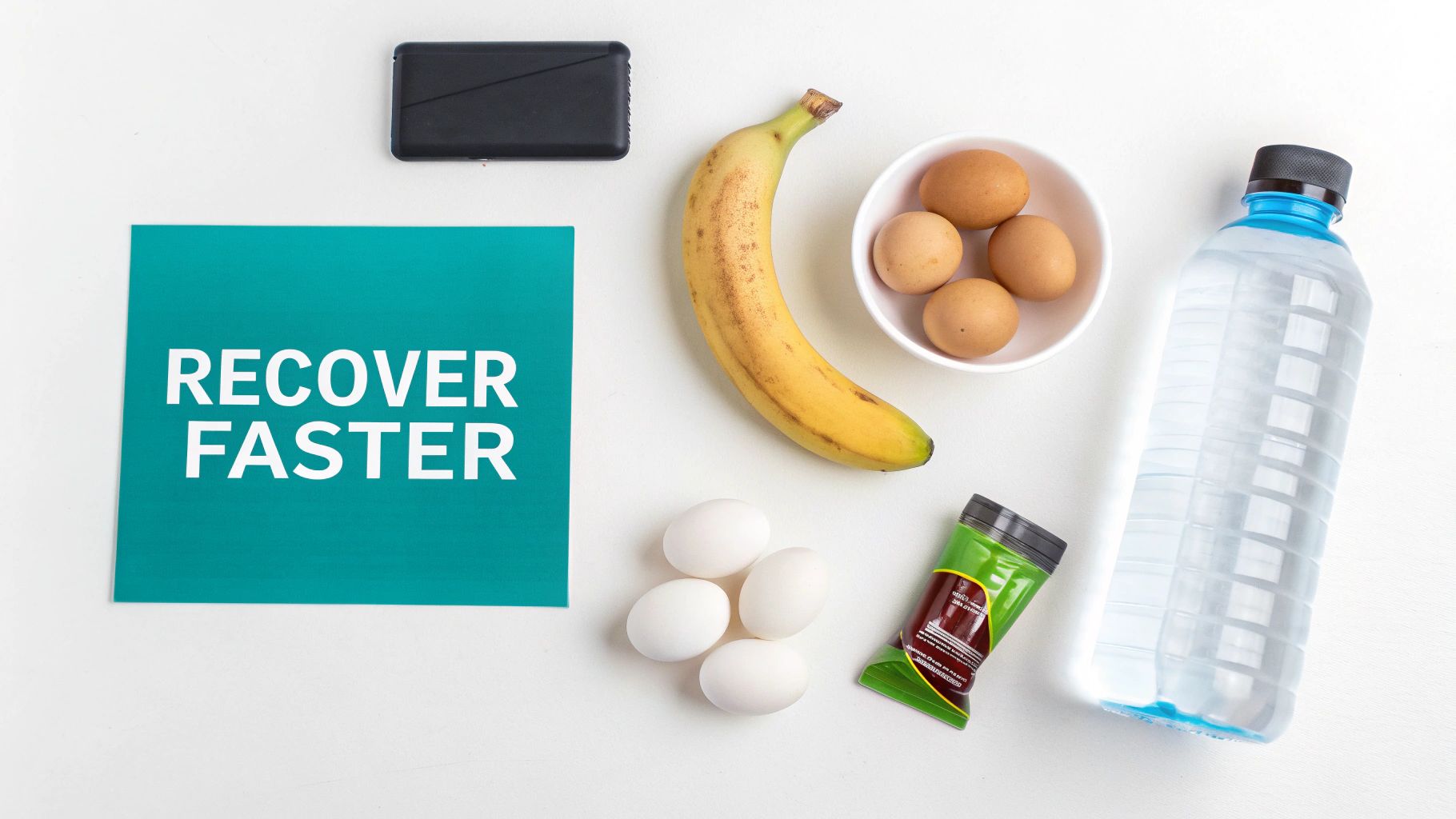
While it's cool to know the science, what we all really want is to spend less time feeling miserable. The best trick to managing a hangover is stopping it before it even starts. With a few smart moves, you can have a great night without writing off the entire next day.
Think of it like getting ready for a big game. You wouldn't run a marathon without hydrating and eating first, right? The same logic totally applies to a night out. A little prep work is always better than damage control the next morning.
Proactive Steps to Prevent a Hangover
Prevention starts way before you order that last round. If you give your body a little support throughout the night, you’re setting it up to process alcohol way more efficiently and deal with less of that toxic aftermath. It's all about working with your body, not against it.
A few easy habits can make a huge difference:
- Eat a Real Meal First: This one’s a big deal. Having a solid meal with carbs, protein, and healthy fats before you drink slows down how fast the alcohol hits your system. It gives your liver a fighting chance to keep up.
- Hydrate Like You Mean It: The golden rule: for every alcoholic drink, have a full glass of water. This simple trick helps fight off alcohol's dehydrating effects, which is a major reason for that killer headache the next day.
- Choose Your Drinks Wisely: Like we mentioned, darker liquors and red wine have more congeners, which can make a hangover feel so much worse. Sticking to clear spirits like vodka, gin, or white rum can often mean a much less painful morning.
Essential Recovery Tactics for the Morning After
Even with the best game plan, you might still wake up feeling a bit rough. When that happens, your new focus is giving your body exactly what it needs to repair itself. Forget old myths like "hair of the dog"—your system needs support, not more stress.
Gentle, restorative steps are your best friends here.
The goal isn't to find some magic cure, but to give your body a helping hand so its natural healing process can take over. That just means putting back what you lost and calming down all the inflammation alcohol caused.
To get back on your feet faster, here's what to do:
- Replenish Electrolytes: Alcohol drains you of key minerals like potassium and sodium. Sip on an electrolyte drink, grab some coconut water, or eat a banana to get your levels back in balance.
- Eat Smart: Go for gentle, easy-to-digest foods that are packed with amino acids and antioxidants. Things like eggs, avocado, and berries are awesome choices to help your liver out and reduce inflammation.
- Get Moving (Gently): A slow walk can be amazing for boosting circulation and helping your body clear out toxins faster. Just don't go for an intense workout—that'll only dehydrate you more.
For anyone looking for a modern, targeted assist, Upside Hangover Jelly is a super convenient way to support your body. It’s designed to tackle the root causes of a hangover, giving your system the key ingredients it needs to bounce back. It's perfect for busy people who want to enjoy a night out without paying for it the next day.
When a Hangover Is a Sign of Something More
Look, we've all been there. That morning-after misery is a pretty universal experience. But it's so important to know when that groggy, head-pounding feeling crosses the line from a standard hangover into something much more dangerous.
A typical hangover is a storm you can ride out. Alcohol poisoning, on the other hand, is a full-blown hurricane that needs an emergency response. If symptoms feel way over the top and just aren't getting better after hours, it’s time to pay close attention.
Recognizing Emergency Symptoms
Knowing the difference between a rough morning and a true medical crisis is crucial. A headache and some fatigue are one thing, but life-threatening symptoms are another. If you see any of the following signs in yourself or a friend after drinking, it's time to get medical help, pronto.
These go way beyond a normal hangover and could signal severe alcohol poisoning:
- Persistent Vomiting: We're not talking about once or twice. This is when someone can't keep any liquids down, which can lead to dangerous dehydration.
- Extreme Confusion or Stupor: If someone is totally disoriented, unresponsive, or you can't wake them up, that's a massive red flag.
- Seizures: Any uncontrollable shaking or convulsions are an immediate emergency.
- Irregular Breathing: This is a big one. Watch for slow breathing (fewer than eight breaths per minute) or scary pauses (a gap of more than 10 seconds between breaths).
- Blue-Tinged or Pale Skin: A noticeable change in skin color, especially if their skin feels cold or clammy, means their body isn't coping.
These aren't just "bad hangover" symptoms; they're your body's emergency sirens. Trying to "wait it out" is not an option. Severe alcohol poisoning can lead to brain damage or even be fatal. It's always, always better to be overly cautious and call for help.
When to Take Action
The second you suspect alcohol poisoning, treat it like the medical emergency it is. Don't ever assume the person will just "sleep it off." Their blood alcohol level can actually keep rising even after they've passed out, making the situation worse by the minute.
Your job is to keep yourself and your friends safe. Understanding these warning signs gives you the power to make the right call, potentially turning a tragedy into a story with a safe ending. A fun night should never have to end in a crisis.
Got Questions About Hangovers? We've Got Answers.
Still a little fuzzy on the details of the morning after? Let's clear things up. Here are some straightforward answers to the most common questions we hear, digging into what's really going on inside your body.
Can You Really Get a Hangover from Just One Drink?
Absolutely. It sounds wild, but it’s totally possible to feel rough after just one or two drinks. It all comes down to your unique body chemistry on any given day.
Think about it: your hydration level, whether you've eaten, your body mass, and just your personal sensitivity to alcohol are all playing a part. For some of us, even a tiny amount of alcohol is enough to kick off that dreaded inflammation and dehydration combo, leaving you with those classic, crummy hangover symptoms.
Does the "Hair of the Dog" Remedy Actually Work?
This is probably one of the most stubborn hangover myths out there, but the short answer is a hard no. Sure, drinking more alcohol the next morning might numb the pain for a little while, but you’re just kicking the can down the road.
All it really does is postpone the inevitable hangover and puts even more stress on your liver, which is already working overtime. You’re just dragging out the recovery process and setting yourself up to feel even worse later on.
Pouring another drink to "cure" a hangover is like hitting the snooze button. The alarm is still going to go off, and it'll probably be a lot louder when it does.
Are There Any Foods That Are Scientifically Proven to Help?
While there's no magic bacon, egg, and cheese that will instantly make your symptoms vanish, some foods can genuinely help your body get back on track. The game plan is to restock all the essential nutrients and fluids you lost.
- Electrolytes: Alcohol is a diuretic, which throws your electrolyte balance out of whack. Foods like bananas and avocados are loaded with potassium to help get things back to normal.
- Amino Acids: Eggs are your best friend here. They're packed with cysteine, an amino acid that helps your body break down acetaldehyde, that nasty toxin responsible for a lot of your misery.
- Antioxidants: Berries and other colorful fruits can help combat the inflammatory storm alcohol whips up in your system, giving your body the support it needs to repair itself.
Ready to enjoy your nights without writing off your mornings? Upside is a smart, effective way to help your body’s natural recovery process. Give our Hangover Jelly Sticks a try and feel the difference for yourself. Party smarter by visiting enjoyupside.com.
#upside #enjoyupside #upsidejelly #livemore #hangovercure #hangoverprevention #fighthangovers #preventhangovers #HangoverRelief #MorningAfter #PartySmarter #HydrationStation #WellnessVibes #RecoverFaster #NoMoreHangovers #HealthyParty #HangoverHacks #FeelGoodMorning #NightlifeEssentials #HangoverFree #SupplementGoals #PostPartyPrep #GoodVibesOnly #HealthAndParty #HangoverHelper #UpsideToPartying