

· By Annemarie
How to Recover From Alcohol Faster A Practical Guide
To get back on your feet after a night of drinking, you need to hit three key targets: rehydrate with electrolytes, replenish lost nutrients with food that's easy on your stomach, and get some real rest so your body and brain can heal. This isn't just about surviving the morning; it's a three-pronged attack that directly counters alcohol's dehydrating and inflammatory effects. Get this right, and you'll have a much faster, smoother recovery.
Your Morning After Game Plan
Waking up after a few too many drinks can feel like your body is sending out an SOS. That pounding headache, the waves of nausea, and the soul-crushing fatigue are all signs that your system is working overtime to deal with last night. Instead of just pulling the covers over your head and waiting for the misery to fade, you can take some active, science-backed steps to help your body bounce back.
The root of all this pain really boils down to three things: dehydration, an electrolyte imbalance, and inflammation. Alcohol is a diuretic, which is just a fancy way of saying it makes you pee—a lot. With all that fluid goes critical electrolytes like potassium and sodium that your nerves and muscles desperately need. This imbalance is a huge reason you're dealing with a headache and muscle weakness.
Understanding Your Immediate Needs
That first hour after you wake up is absolutely crucial. Think of it as your golden hour for recovery. Your body is depleted and screaming for support to start the healing process, and how you respond right away sets the tone for the rest of your day.
A simple three-step approach is the best way to think about your immediate priorities.
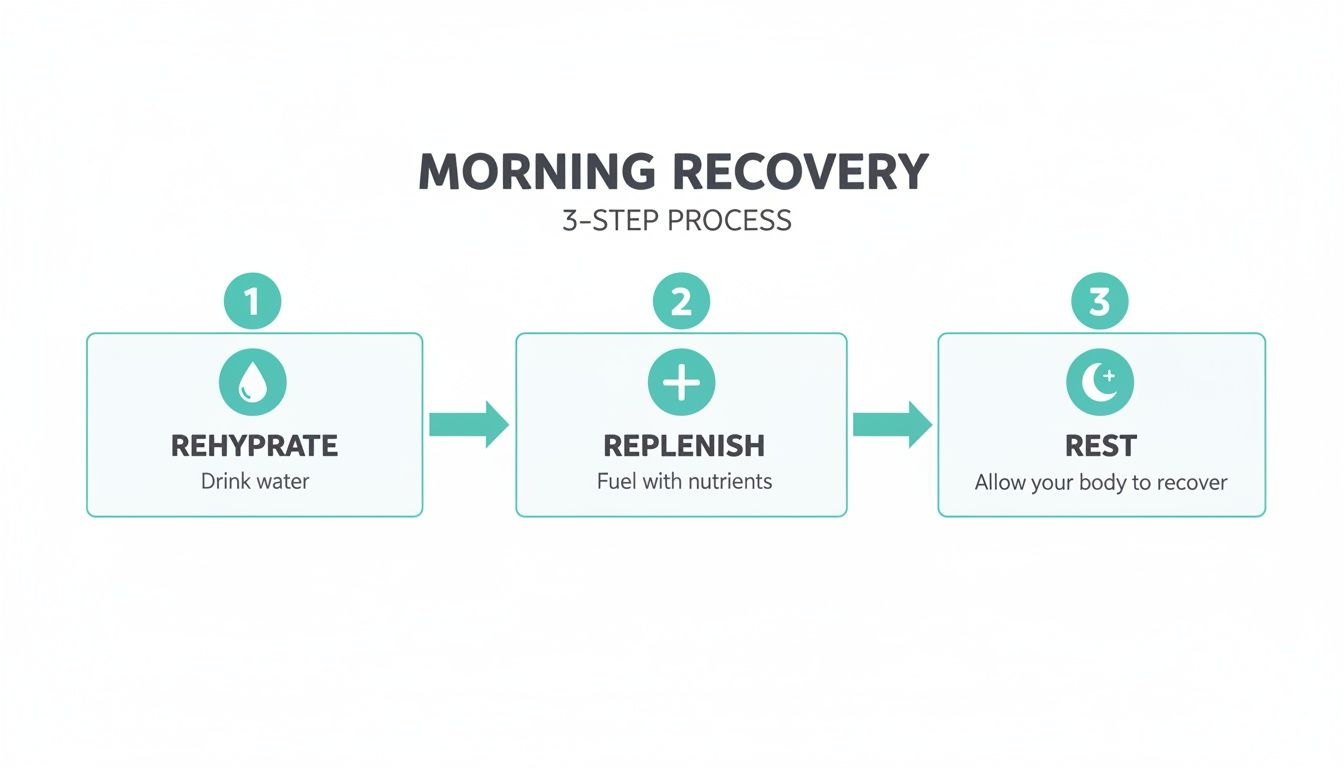
This really just boils down to rehydrating your system, getting some nutrients back in, and then letting your body rest and repair itself. Simple.
This is where having a convenient, modern solution can be a total game-changer. Let's be real, when you're feeling that rough, the last thing you want to do is cook up a complicated recovery meal. A targeted supplement like Upside Hangover Jelly is the perfect shortcut. Inspired by Korean wellness traditions, its formula gives you a concentrated blast of electrolytes, vitamins, and antioxidants in a format that's incredibly easy to take down. It’s a lifesaver when you need fast relief without any hassle. You can find more practical tips in our guide on what to do the morning after drinking.
When you're feeling rough, the last thing you want is a complicated checklist. Here’s a simple table to guide you through that critical first hour.
Your First 60 Minutes: The Immediate Recovery Checklist
| Action Item | Why It Works | Pro-Tip |
|---|---|---|
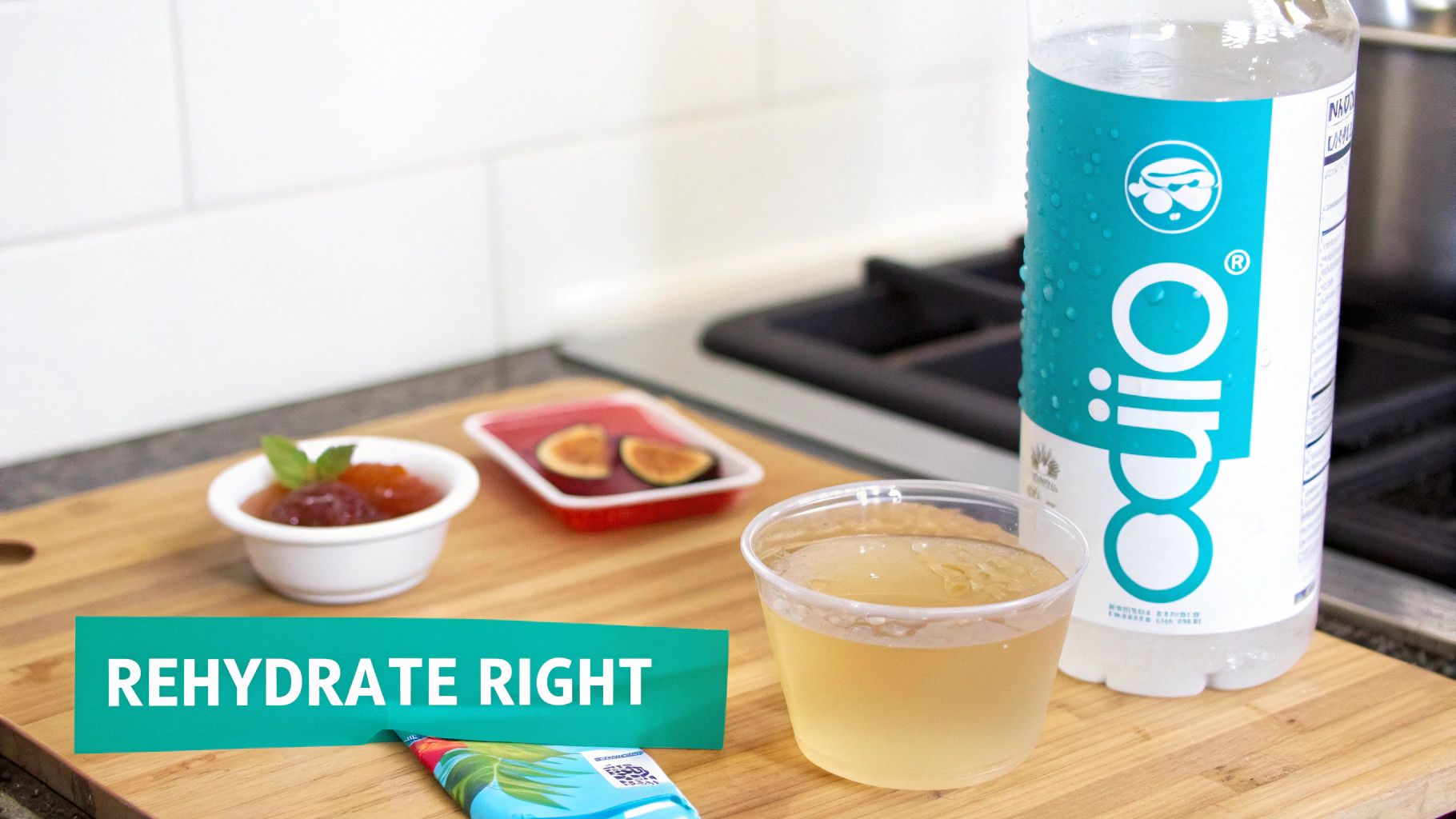
| Drink Water + Electrolytes | Alcohol is a diuretic, causing dehydration and electrolyte loss. Replenishing both is priority number one to fight headaches and fatigue. | Keep a water bottle and an electrolyte supplement (like an Upside Jelly) by your bed so you can start rehydrating before you even get up. |
| Eat Something Simple | Your blood sugar is likely low. Easily digestible carbs and nutrients help stabilize it without upsetting your stomach further. | Think toast, crackers, a banana, or a simple smoothie. Avoid greasy, heavy foods for now. |
| Take a Pain Reliever (Safely) | An NSAID like ibuprofen can help with the headache and muscle aches caused by inflammation. | Never take acetaminophen (Tylenol) when alcohol is still in your system, as it can be harmful to your liver. Stick to ibuprofen or aspirin. |
Focusing on these three things right away will make a world of difference in how quickly you start to feel human again.
Why A Targeted Approach Matters
We shouldn't downplay what alcohol does to the body. Excessive use led to an average of 178,000 deaths annually in the US from 2020-2021. Even on a less severe level, that diuretic effect we talked about is what makes hangover symptoms so much worse. In fact, some studies show that getting electrolyte-rich fluids back into your system after drinking can slash hangover severity by up to 50% for moderate drinkers.
This is exactly why something like Upside Hangover Jelly is so effective—it's packed with natural ingredients in a convenient vegan sachet designed specifically to replenish those lost electrolytes and vitamins.
By focusing on what your body has actually lost—fluids, electrolytes, and key nutrients—you can stop just masking symptoms and start fixing the root cause of your hangover. It's a strategic move that helps you get your day back, faster.
Ultimately, knowing how to recover from alcohol is all about giving your body the right tools at the right time. Your morning-after plan doesn't need to be complicated, it just needs to be smart.
Rehydration Beyond Just Drinking Water
We’ve all been there. You wake up after a night out, head pounding, and your first instinct is to chug a massive glass of water. It makes sense, but if you’re trying to recover from alcohol, it’s a bit more complicated than that.
While water is absolutely crucial, it's only one piece of the recovery puzzle. The real problem is that alcohol is a diuretic. It doesn’t just make you lose water; it forces your body to flush out vital minerals called electrolytes right along with it.
This loss of minerals is a huge reason why you feel so terrible. Think of potassium and sodium as the unsung heroes keeping your body's systems online. They regulate everything from nerve function to muscle contractions and are essential for maintaining your fluid balance. When those levels plummet, you get the classic hangover playbook: a throbbing headache, muscle weakness, dizziness, and that feeling of being completely wiped out.
Simply pouring water back into a system that’s been stripped of these critical minerals just won't cut it.
Why Your Body Needs More Than H2O
It’s like trying to run a car on watered-down gas. Sure, it might start, but it’s not going to perform well. When you only drink plain water after a night of drinking, you aren't giving your cells the electrolytes they need to actually absorb and use that water properly.
This is where smart rehydration comes into play. You have to tackle it with a two-pronged approach: fluids and minerals. That’s how you address the root cause of your dehydration, not just the symptom of being thirsty.
Focusing on electrolyte-rich hydration is the fastest way to help your brain, muscles, and nervous system get back online. It’s about restoring the body's internal electrical system, which is crucial for feeling normal again.
Knowing your options can make a huge difference, especially when your stomach feels less than cooperative. To get into the nitty-gritty, you can learn more about the science of hydration for hangover recovery in our detailed guide.
Comparing Your Rehydration Options
Let's be real—not all hydrating drinks are created equal. When you're figuring out how to bounce back, it helps to know the pros and cons so you can grab what works best for how you're feeling in the moment.
Here's a quick rundown of some popular choices:
| Rehydration Source | Key Benefits | Best For |
|---|---|---|
| Plain Water | Essential for basic fluid replacement and widely available. | General hydration throughout the day, once your electrolyte levels are more stable. |
| Coconut Water | Naturally rich in potassium and other electrolytes with a touch of natural sugar for energy. | A natural, gentle option when you can stomach liquids easily. |
| Sports Drinks | Formulated with sodium, potassium, and carbohydrates to refuel quickly. | Moments when you need a fast and accessible electrolyte boost. |
| Broth (Bone or Vegetable) | Provides sodium and other minerals in a savory, easy-to-digest liquid. | Soothing an upset stomach while replenishing lost salts and fluids. |
The Power of A Concentrated Solution
While all those options are helpful, they can be tough to get down when you're feeling nauseous or just have zero appetite. Let’s face it, chugging a big bottle of anything can feel like a monumental task.
This is exactly where a concentrated, easy-to-take solution like Upside Hangover Jelly comes in clutch. It’s designed to deliver a potent dose of electrolytes and vitamins in a small, easy-to-swallow jelly.
Instead of forcing yourself to drink something you don't want, you get a direct hit of what your body is screaming for. It’s the perfect fix for those first few hours when your stomach is unsettled but you desperately need to start the recovery process. It bridges the gap until you feel ready for bigger drinks or a real meal, making your road to recovery a whole lot faster and more comfortable.
Fueling Your Recovery The Right Way
After a long night, the siren song of a greasy, heavy breakfast is hard to ignore. It’s a classic hangover myth, but honestly, what you eat can either make your recovery a whole lot smoother or bring it to a grinding halt. When your body is already working overtime to process last night's fun, fueling it the right way is non-negotiable.
Right now, your body needs just a few simple things: to stabilize your blood sugar, replenish lost nutrients, and soothe that irritated stomach. A heavy, greasy meal forces your already-stressed digestive system to work even harder, which usually leads to more discomfort, not less. The real key is to focus on nutrient-dense foods that are easy for your body to handle.
This is how you recover with intention, rather than just crossing your fingers and hoping for the best.
Building Your Ideal Recovery Meal
Think of your first meal as a gentle reintroduction of fuel. Alcohol makes your blood sugar plummet, which is a huge reason you feel so tired and irritable. The goal here is to bring those levels back up steadily, not send them on another rollercoaster with a bunch of sugary junk.
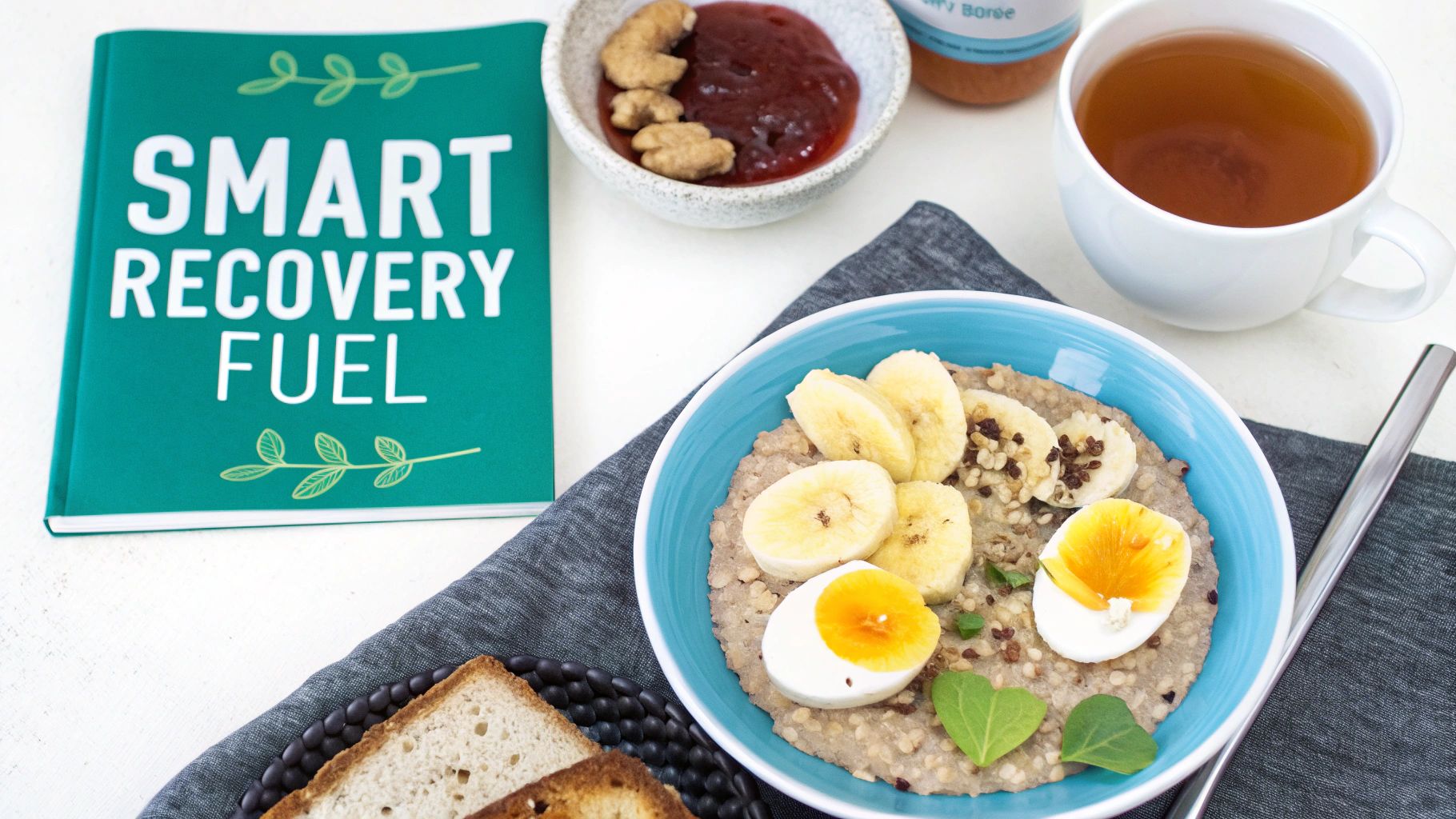
Here’s what a smart recovery plate actually looks like:
- Complex Carbohydrates: Think oatmeal, whole-wheat toast, or a sweet potato. These give you a slow, steady release of energy, helping to stabilize your blood sugar without the crash that comes from simple sugars.
- Lean Protein: Eggs are your best friend here. They're packed with amino acids like cysteine, which helps your body break down acetaldehyde—the nasty, toxic byproduct of alcohol that makes you feel so awful.
- Potassium-Rich Foods: You lose a lot of potassium when you drink. Bananas are an easy and effective way to get it back. Avocados are another fantastic choice, and they offer healthy fats that support brain function.
Don't try to force a huge meal if your stomach is protesting. Small, frequent snacks are often way more effective than one big, overwhelming plate. The goal is consistent, gentle nourishment.
For even more ideas, our guide on what to eat when hungover breaks down the best food choices to get you back on your feet fast.
Foods to Avoid When You're Recovering
Just as important as what you eat is what you don't eat. Some foods will just aggravate your symptoms and drag out your recovery.
Try to keep these off your plate for the time being:
- Greasy, Fatty Foods: Bacon, fried foods, and heavy cheeses can really irritate your stomach lining and are tough to digest.
- Sugary Drinks and Snacks: A soda or a pastry might give you a quick burst of energy, but the inevitable crash will leave you feeling even worse.
- More Alcohol: The "hair of the dog" is a total myth. It just postpones the pain and puts more strain on your liver.
- Highly Acidic Foods: Things like orange juice or tomato juice can sometimes make an already sensitive stomach feel worse.
Nightlife enthusiasts know the consequences of a big night out. In some places, the consumption is staggering—in Romania, for example, the per capita intake is 17 liters of pure alcohol every year. High intake inevitably fuels hangovers, but recovery data shows that targeted rehydration and nutrient restoration can slash symptom duration by 40-60%. This is where having something like Upside Hangover Sticks in your pocket becomes a game-changer. The soy-free jelly uses proven natural ingredients to combat dehydration and oxidative stress right when you need it most.
When a Full Meal Feels Impossible
Let's be real: sometimes, the thought of eating anything is just too much. Nausea is a killer hangover symptom, and forcing down food can feel like the last thing on earth you want to do.
This is where a nutritional "bridge" is essential. An easy-to-consume supplement like Upside Hangover Jelly delivers the key nutrients and electrolytes your body is screaming for without you having to chew a single bite. It gives you that initial boost of support, helping to settle your stomach and restore balance so you can eventually work your way up to solid food. Think of it as the perfect first move in your nutritional recovery plan—a simple, effective way to kickstart the healing process when your appetite has gone missing.
Balancing Gentle Movement With Mindful Rest
After a big night out, the idea of "sweating it out" with a hardcore workout might feel like the right move. I get it. You want to feel like you're actively doing something to fix the situation. But trust me, pushing your body through a grueling workout is one of the worst things you can do.
Intense exercise will only dehydrate you further and put a ton of stress on a system that's already working overtime. The real path to feeling human again is a smart, strategic balance—a little bit of gentle movement paired with a whole lot of deep, mindful rest. This isn't about being lazy; it's about listening to what your body is desperately asking for.
The Power of Gentle Movement
While a HIIT session is definitely off the table, some light, restorative activity can work wonders. The goal here isn't to burn calories; it's to get your blood flowing and boost your mood without draining your already low energy reserves. Think of it as a gentle nudge to get your body's recovery systems online.
Here are a few of my go-to options:
- A Slow Walk Outside: Never underestimate the power of fresh air. Just a 15-20 minute stroll can help clear that foggy head, increase circulation, and get some feel-good endorphins flowing.
- Simple Stretching: Alcohol can leave you feeling stiff and sore. A few minutes of gentle stretching, focusing on your neck, back, and hamstrings, can release a lot of that built-up tension.
- Restorative Yoga: Poses like Child's Pose or Legs-Up-the-Wall are incredibly calming for your nervous system. They take almost no effort but can do wonders for a queasy stomach and a racing mind.
The Non-Negotiable Need for Rest
Okay, while gentle movement is a nice supporting actor, quality rest is the headliner of your recovery show. Alcohol completely messes with your sleep cycle, especially REM sleep, which is critical for your brain to feel sharp and focused. That's a huge reason why you feel so mentally sluggish the day after.
Your body is in full-on repair mode. Your liver is working hard to process everything, and your immune system is dealing with inflammation. All of this takes a massive amount of energy, and the only way to provide that energy is to rest. Seriously, it's non-negotiable.
Mindful rest isn’t just about being asleep. It's about creating an environment that actively helps you heal. It's the single most effective thing you can do to let your body fix itself from the inside out.
Creating a Healing Environment
To really make the most of your rest, you need to set the stage. When you're hungover, your senses are often on high alert, so minimizing stimulation is key.
Here’s how to create your recovery cave:
- Dim the Lights: A throbbing headache and bright lights are a terrible combination. Close the blinds, turn off the overheads, and create a soothing, dim space.
- Put Screens Away: The blue light from your phone and laptop can strain your eyes and make it harder for your brain to truly switch off. Give yourself a digital detox for a few hours.
- Listen to Calming Sounds: If total silence feels weird, put on some gentle ambient music or a nature sounds app. A guided meditation can also be great for quieting that anxious, post-drinking mind.
By combining these simple acts of gentle movement and intentional rest, you give your body exactly what it needs to bounce back. This two-part strategy is the foundation for figuring out how to recover from alcohol the right way.
How To Prevent A Hangover Before It Starts
So far, we’ve been talking about the morning-after game plan—what to do when the damage is already done. But let's be real: the absolute best way to deal with a hangover is to stop it from ever happening in the first place.
Shifting your focus from reaction to prevention is the single smartest move you can make for enjoying a night out without dreading the next day. It’s all about being proactive and giving your body the support it needs before that first drink even touches your lips.
This isn’t about holding back or limiting your fun; it’s just about being smarter. A little bit of planning before you head out can make a world of difference. The idea is simple: you fortify your body so it's better equipped to handle alcohol, which minimizes the toxic stuff that causes those all-too-familiar hangover symptoms.
This approach transforms your night from a total gamble into a calculated success.
Your Pre-Drinking Prevention Checklist
Before you even think about ordering your first round, running through a quick mental checklist can set you up for a much better morning. Think of it as laying the foundation for a good night. Your body is about to go through a lot, and giving it the right tools beforehand is everything.
Here are the non-negotiables:
- Eat a Real Meal: Seriously, never drink on an empty stomach. A meal with a good mix of protein, healthy fats, and complex carbs slows down how quickly alcohol hits your bloodstream. This buys your liver more time to do its job, preventing that sudden spike that can overwhelm your system.
- Hydrate in Advance: Start chugging water hours before you go out. If you walk into the bar already a bit dehydrated, you're starting at a massive disadvantage. Alcohol is a diuretic (meaning it makes you pee a lot), so pre-loading with water ensures your baseline hydration is solid.
- Plan Your Support System: This is where you get strategic. Having something like Upside Hangover Jelly on hand is the ultimate proactive move. Taking it before you start drinking—or even during your night out—pre-loads your body with the nutrients and antioxidants it’s about to lose.
This pre-emptive strike helps your system process alcohol's nasty byproducts, like acetaldehyde, much more efficiently. It’s not a cure you take when you feel awful; it's a shield you put up beforehand.
The Science of Proactive Support
So, why does taking something like Upside before or during a night out work so well? It’s all about giving your body the right resources, right when the metabolic battle begins. When you drink, your body burns through critical B vitamins and antioxidants trying to break down the alcohol.
By taking a supplement like Upside Hangover Jelly ahead of time, you're basically stocking the shelves before the big rush hits. The jelly format is designed to deliver a concentrated shot of these hangover-fighting compounds, making sure they are ready and available for your liver to use.
This one simple step can be the difference between waking up a little tired and a full-blown, day-ruining hangover.
Key Takeaway: Prevention isn't just about drinking less; it's about preparing your body for what's coming. A smart pre-drinking routine fundamentally changes how your body responds to alcohol, making recovery faster and way less painful.
The global impact of heavy drinking is staggering. In 2021, high consumption was linked to 1.8 million deaths worldwide. Yet, there’s a smarter way forward. Natural supplements have been shown to reduce symptoms by 50-70% compared to a placebo by providing electrolytes, B-vitamins, and ingredients like ginger—all of which are core to Upside's vegan formula. As post-2021 sales for spirits surged by 50%, the need for effective prevention has only grown. Upside's quick-absorption jelly fits perfectly into a smart, modern lifestyle. You can discover more insights about alcohol and beverage trends on Escoffier.edu.
Prevention vs. Cure: A Smarter Drinking Strategy
To really get why prevention is such a game-changer, it helps to see how it stacks up against just hoping for a morning-after fix. One approach is about minimizing the damage from the get-go, while the other is about cleaning up a mess that’s already been made.
| Strategy | Proactive Prevention (Using Upside) | Reactive Recovery (Morning After) |
|---|---|---|
| Timing | Taken before or during drinking to pre-load your body with support. | Taken the next morning when you’re already feeling the pain. |
| Mechanism | Helps your body process alcohol byproducts more efficiently as they're created. | Tries to soothe existing symptoms like headaches and nausea. |
| Effectiveness | Can dramatically reduce the overall severity of a hangover, or even prevent it. | A band-aid solution that just manages the discomfort after it’s already there. |
| Overall Goal | To wake up feeling refreshed and ready to actually live your day. | To become functional enough just to get through the day. |
Ultimately, learning how to recover from alcohol starts long before you feel that first throb in your head. By arming your body with a solid meal, proper hydration, and a targeted supplement like Upside Hangover Jelly, you’re no longer just a passive victim of your night out.
You're taking active control. You're ensuring you can live more without letting the morning after hold you back.
Common Questions About Alcohol Recovery
As you figure out your own go-to plan for bouncing back after a night out, a few questions always seem to pop up. We hear them all the time. To wrap things up, we’ve put together some straight-up answers to clear the air and give you that extra confidence boost in your recovery strategy.
How Long Does It Actually Take to Recover From a Night of Drinking?
There’s no magic number here. How quickly you bounce back depends on everything from how much you drank to your age, metabolism, and general health. For most of us, the worst of it is usually over within 24 hours.
But you can absolutely speed things up and take the edge off the symptoms with a few smart moves. The real secret is to start putting back what your body lost—fluids, electrolytes, and nutrients—as soon as you can.
Something targeted like Upside Hangover Jelly really kickstarts this process. It's designed to help your body find its balance way faster, so you’re feeling human again in a few hours, not waiting out the entire next day.
Does the Hair of the Dog Trick Really Work for Hangovers?
Ah, the "hair of the dog." This is probably one of the most stubborn myths out there, and let’s be clear: it will only make things worse. Sure, having another drink might make you feel a flicker of relief, but all you're doing is delaying the inevitable crash.
You're essentially forcing your already overworked liver to process even more toxins, which just sets you up for an even meaner, longer-lasting hangover later. The best play is always to support your body's natural cleanup crew, not give it more to clean up.
When Is the Best Time to Take Upside Hangover Jelly for Maximum Effect?
For the best results, think ahead. The absolute best time to take Upside Hangover Jelly is right after your last drink, just before you hit the pillow.
This timing lets its powerhouse blend of vitamins, antioxidants, and electrolytes get to work while you sleep. It helps your body deal with alcohol's byproducts and restock what you've lost, setting you up to wake up feeling way more refreshed.
But hey, if you forget, it’s not a lost cause. Taking a sachet first thing in the morning is still a game-changer. It gives your system a much-needed jump-start to fight off that headache, nausea, and general sluggishness.
Are There Red Flags That Mean My Hangover Is Something More Serious?
Yes, and this is super important. You need to know the difference between a truly awful hangover and alcohol poisoning, which is a life-threatening emergency. A hangover feels terrible, but it shouldn't involve any of these symptoms:
- Confusion or stupor
- Vomiting that you can't control
- Seizures
- Slow or irregular breathing (less than eight breaths a minute)
- Skin that looks pale or bluish
- Being difficult or impossible to wake up
If you see any of these signs in yourself or a friend after drinking, don't second-guess it. Call for emergency medical help immediately. It is always, always better to be safe and get a professional opinion when serious symptoms like these are in the mix.
Ready to stop dreading the morning after? With Upside, you can enjoy your night and still conquer your day. Our expertly formulated Hangover Jelly is your pocket-sized secret weapon for smarter celebrations and faster recoveries. Experience the difference for yourself at enjoyupside.com.
#upside #enjoyupside #upsidejelly #livemore #hangovercure #hangoverprevention #fighthangovers #preventhangovers #HangoverRelief #MorningAfter #PartySmarter #HydrationStation #WellnessVibes #RecoverFaster #NoMoreHangovers #HealthyParty #HangoverHacks #FeelGoodMorning #NightlifeEssentials #HangoverFree #SupplementGoals #PostPartyPrep #GoodVibesOnly #HealthAndParty #HangoverHelper #UpsideToPartying