

· By Annemarie
Green Tea for Hangover Relief: A Soothing Morning-After Remedy?
That foggy, head-pounding morning after a great night out usually brings one big question to mind: what on earth can I do to feel human again?
Lots of people reach for a simple cup of green tea, and honestly, it’s not a bad idea. While it isn't a magical cure-all, green tea genuinely can help soothe some of those nasty hangover symptoms. It’s packed with natural compounds that give your body a helping hand in the recovery process.
Your Guide to Green Tea for Hangover Recovery
When you're dealing with the consequences of a fun night, grabbing a comforting drink just feels right. Green tea’s reputation as a wellness booster definitely extends to helping you feel better when you’re under the weather—even when that feeling is self-inflicted.
But how can a humble tea bag actually fight off the misery of a hangover? It all comes down to tackling the main villains behind your symptoms. A hangover isn't just one thing; it's a complex mess caused by what alcohol does to your body.
The big three problems are:
- Dehydration: Alcohol is a diuretic. That’s just a fancy way of saying it makes you pee more, which can leave you seriously low on fluids.
- Inflammation: Your immune system often freaks out a bit in response to alcohol, kicking off an inflammatory reaction that makes you feel sick all over.
- Oxidative Stress: As your body breaks down alcohol, it creates a bunch of nasty molecules called free radicals. This throws your system out of balance, damaging cells and leaving you feeling completely wiped out.
This guide is going to walk you through exactly how the good stuff in green tea helps push back against these issues.
What to Expect from This Guide
We’ll dig into the science, from green tea's powerhouse antioxidants to its calming amino acids. You'll also get the lowdown on the best ways to brew and use it for maximum effect, including a few simple recipes to make it even more soothing.
We're going to break down how a hangover’s main culprits—inflammation, dehydration, and oxidative stress—are no match for the antioxidants and calming agents found in a simple cup of green tea.
Think of this as your game plan for using green tea to bounce back. We'll cover what it's great at, where it falls short, and how you can pair it with a more targeted solution like Upside Hangover Sticks for a faster, more effective comeback. Let's get you on the path to a much better morning after.
What a Hangover Actually Does to Your Body
To get why something like green tea might even touch a hangover, we need to be real about what’s happening inside your body. It’s not just a headache and a bit of regret; it's a full-on, system-wide meltdown. Think of it as your body’s emergency response system going haywire after an all-night party it wasn’t invited to.
When you start drinking, your liver clocks in for overtime duty to break down the alcohol. But here’s the kicker: that process creates a nasty, toxic compound called acetaldehyde. This is the real villain of the story, the one responsible for the pounding head and that lovely feeling that you might get sick at any moment.
It’s like your body is a super-efficient factory. But when alcohol shows up, it’s like a truck just dumped a load of toxic waste on the factory floor. Now, not only is the main assembly line clogged, but the toxic byproduct—acetaldehyde—is seeping into every corner of the facility.
The Domino Effect of Alcohol
And the damage doesn't stop with acetaldehyde. Alcohol sets off a chain reaction of other not-so-fun responses throughout your body, all piling on to create that signature morning-after misery.
- Inflammatory Response: Your immune system basically sees alcohol as an invader and goes into attack mode, triggering widespread inflammation. That’s why you get that achy, run-down feeling, almost like you’re coming down with the flu.
- Stomach Irritation: Alcohol is no friend to your gut. It directly irritates the lining of your stomach, causing it to produce more acid. Hello, nausea and stomach pains.
- Sleep Disruption: A nightcap might make you feel sleepy, but it absolutely tanks your sleep quality. Alcohol stops you from getting into that deep, restorative REM sleep, which is why you can sleep for eight hours and still wake up feeling like you’ve been hit by a bus.
You can think of a hangover as your body fighting a war on multiple fronts: it's battling dehydration, inflammation, and a toxic chemical spill all at once. Every single symptom is just a signal from the battlefield.
This whole messy process is why you feel so drained, sore, and foggy. Your body is just stretched thin trying to clean up the mess. If you want to dive even deeper into the science, check out our guide on what causes hangovers.
Setting the Stage for Recovery
Once you understand what's actually going on, the path to recovery becomes a lot clearer. When you’re hungover, your body is already hard at work trying to find its balance again. It’s desperately trying to flush out toxins, calm down inflammation, and restock on all the fluids and nutrients it lost.
This is where hangover remedies come in. They aren’t magic pills. They’re support systems. By giving your body the right tools for the job—like the antioxidants you find in green tea—you’re basically sending in reinforcements to help the cleanup crew work faster and more efficiently. The goal is simple: help your body do what it’s already trying to do, just a little bit better.
Green Tea's Hangover-Fighting Compounds
So, how exactly does green tea help you bounce back after a long night out? It all comes down to a few powerful natural compounds working behind the scenes. Think of your teacup as a staging ground for your body's recovery reinforcements.
Two main heroes lead the charge: antioxidants called catechins and a unique amino acid known as L-theanine. These two work together to counteract the damage done by drinking, giving your system a gentle, supportive boost to get back on track.
Catechins: The Antioxidant Cleanup Crew
The most famous catechin in green tea is Epigallocatechin gallate, or EGCG for short. These catechins are incredibly potent antioxidants. When you drink alcohol, your body goes into overdrive producing unstable molecules called free radicals. This process kicks off oxidative stress and cellular damage, which is a big reason you feel so drained and unwell.
Catechins act like a specialized cleanup crew, swooping in to neutralize these harmful free radicals. This directly tackles the oxidative stress that contributes so heavily to that sluggish, run-down feeling you get with a hangover.
By calming this internal chaos, the antioxidants in green tea help protect your cells and reduce some of the physical strain your body is under. If you want to dive deeper into this process, you can learn more about what oxidative stress is and how it affects you.
This infographic breaks down the main ways a hangover hits your body, from inflammation to the buildup of toxins like acetaldehyde.
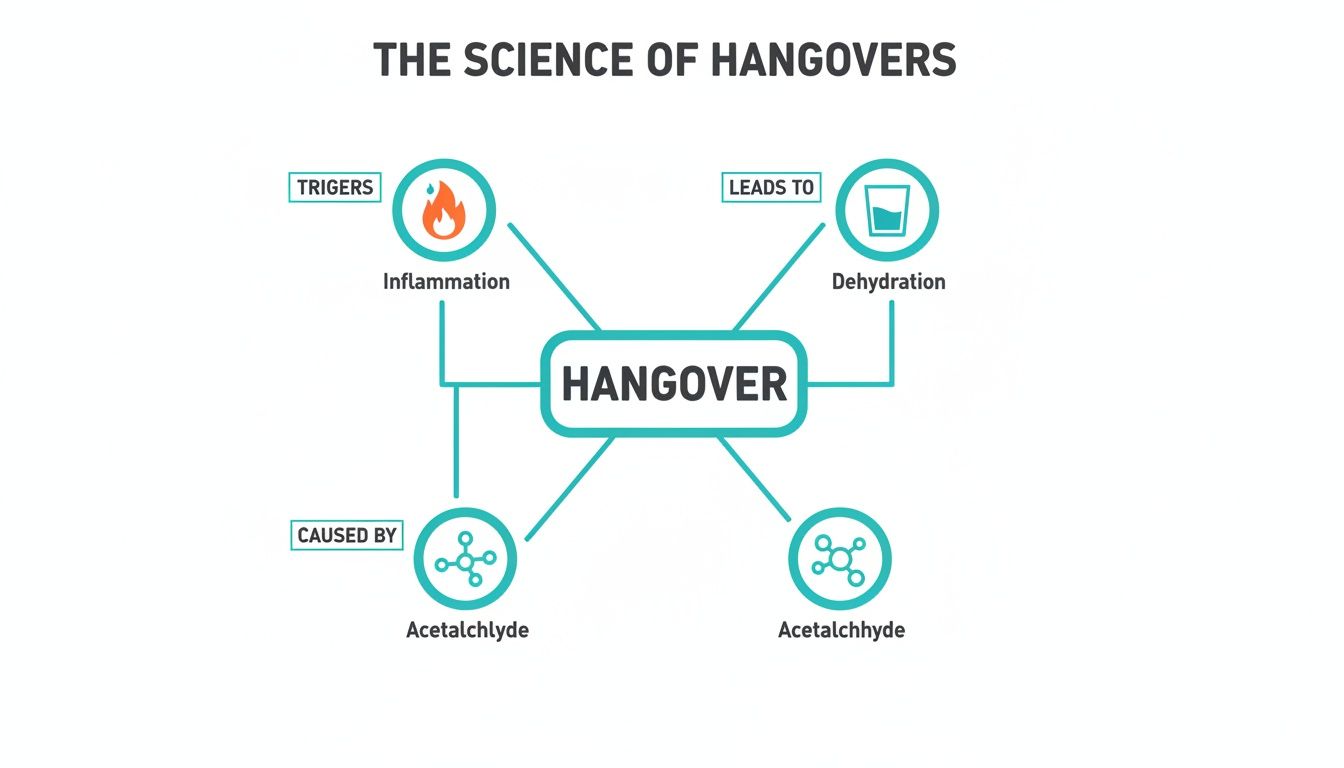
As you can see, a hangover isn’t just one problem—it’s a multi-front battle that requires a smart approach to recovery.
L-theanine: The Calming Agent for 'Hangxiety'
Beyond the pounding headache and nausea, hangovers often bring a nasty mental component—that jittery, on-edge feeling sometimes called ‘hangxiety’. This is where L-theanine, a remarkable amino acid found almost exclusively in tea plants, comes to the rescue.
L-theanine is known for promoting a sense of calm and relaxed focus without making you drowsy. It works by boosting calming neurotransmitters in the brain, like GABA, while tamping down stress hormones. This directly counteracts the mental fog and anxiety that often show up the morning after.
So, while the catechins are busy with the physical cleanup, L-theanine is working to soothe your mind. It helps you feel more centered and less frazzled, making the whole recovery process feel much more manageable.
This one-two punch of natural compounds is why using green tea for hangover relief is becoming so popular. In fact, green tea is now a go-to ingredient in many modern hangover products as people look for more natural solutions. Over in Europe, the UK dominated the market with a 23.3% revenue share in 2023, with manufacturers frequently adding green tea extracts to their formulas. This trend really highlights how recognized and effective these natural compounds are for post-party recovery.
How to Best Use Green Tea for Hangovers
Okay, so we know green tea can help. But just chugging a cup whenever isn't going to cut it. How you use it is what separates a little relief from a real recovery boost. Timing and the way you brew it are everything.
First up, when you drink it is a big deal. Whatever you do, don't drink green tea while you're still drinking alcohol or right before you crash. The caffeine, even though it's mild, can mess with the already-fragile sleep you’re about to get.
The sweet spot for green tea for hangover relief is the morning after. Once you're up and facing the day, that's the time to put the kettle on and start the healing process.
And speaking of the kettle, brewing it right is non-negotiable. If you pour boiling water over those delicate leaves, you’ll scorch them and destroy the very catechins you're trying to get. For the best brew, use water that's hot but not boiling—aim for around 175°F (80°C).
Creating the Ultimate Hangover Elixir
Why stop at just plain tea? You can easily upgrade your green tea into a powerhouse recovery drink. Think of it as building a supportive team in your mug, with each ingredient tackling a different hangover symptom.
Here are a few simple additions to turn your basic brew into something special:
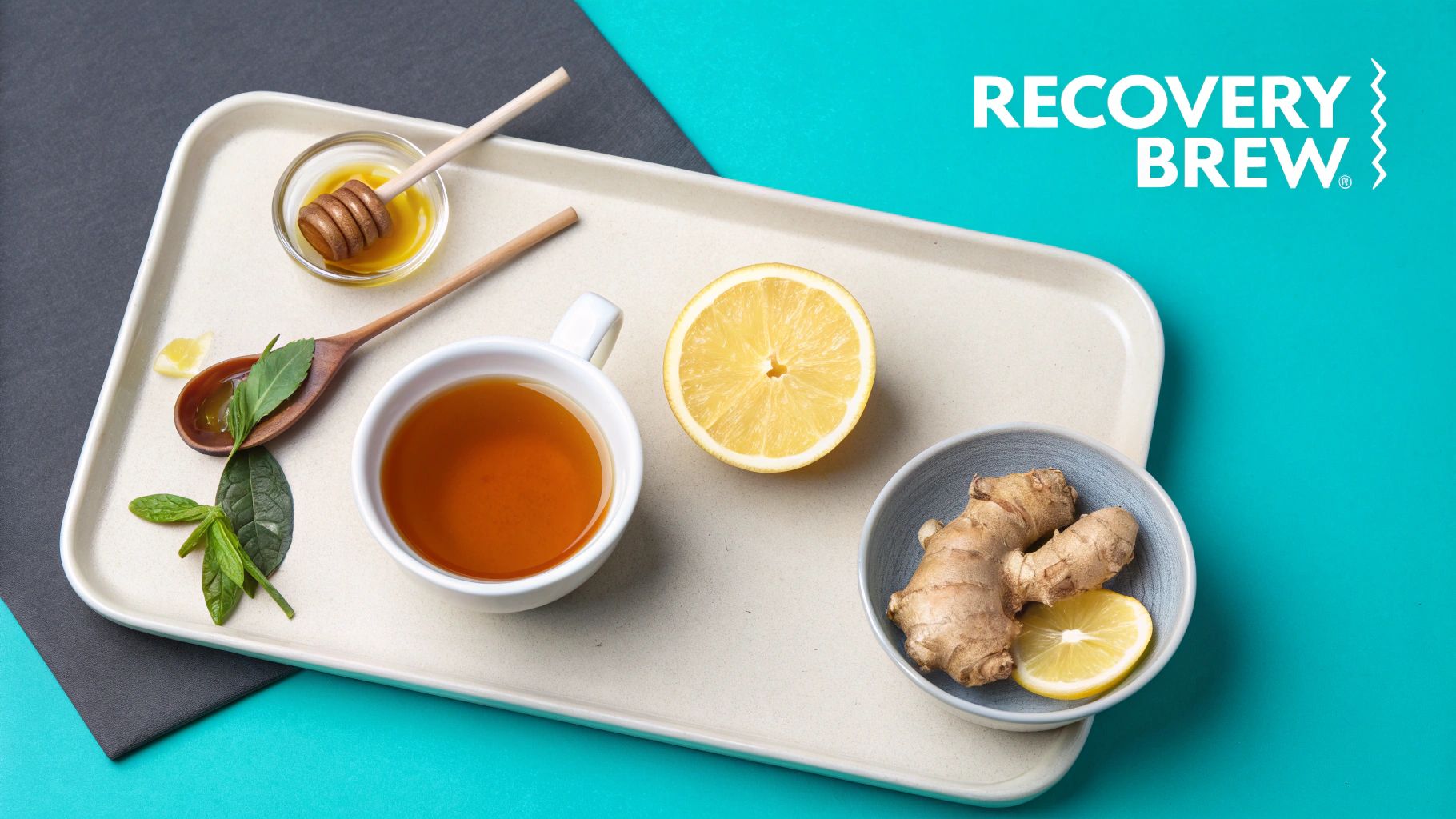
- Fresh Ginger: Famous for its anti-nausea magic. A few thin slices can work wonders on an upset, churning stomach.
- A Squeeze of Lemon: This not only brightens up the flavor but also adds a hit of Vitamin C, another antioxidant that helps your body clear out all those toxins.
- A Spoonful of Honey: The natural fructose in honey gives your body a hand in metabolizing any leftover alcohol, offering a gentle and much-needed energy lift.
When you mix these together, you get a soothing elixir that hydrates, settles your stomach, and gives you a gentle antioxidant boost. It just makes the whole recovery process feel a lot more comfortable.
To make it even easier, here are a few simple recipes you can throw together to enhance green tea's benefits. Each one uses common kitchen ingredients to target specific hangover woes.
Easy Green Tea Hangover Elixir Recipes
| Elixir Name | Ingredients | Key Benefit |
|---|---|---|
| The Stomach Soother | Green tea, 3-4 thin slices of fresh ginger, 1 tsp honey | Calms nausea and settles an upset stomach. |
| The Detox Zing | Green tea, juice from 1/2 lemon, a few fresh mint leaves | Provides a Vitamin C boost and refreshes your system. |
| The Gentle Energizer | Green tea, 1 tsp honey, a pinch of cayenne pepper | Offers a natural energy lift and improves circulation. |
These simple combinations take just a minute to prepare but can make a world of difference in how you feel.
Matcha vs. Brewed Green Tea
One question that comes up a lot is whether matcha is a better pick for hangovers. Since matcha is a fine powder made from the entire tea leaf, you’re consuming all of it, which means you get a much more concentrated dose of antioxidants and L-theanine. On paper, that makes it seem more potent.
But here's the catch: it also comes with a higher caffeine kick, sometimes almost double what you’d get in a regular brewed cup. If you're already feeling jittery, anxious, or your heart is pounding, sticking with traditional brewed green tea is the smarter, gentler choice.
Both can be effective, so it really comes down to listening to your body and picking the one that feels right for you.
The Limits of Green Tea as a Hangover Remedy
While a warm cup of green tea can feel like a gentle hug on a rough morning, we need to be real about what it can and can't do. Think of it as a helpful sidekick, not the hero who swoops in to erase every bad decision from the night before. Using green tea for a hangover is definitely a smart move, but it’s not a complete, one-and-done cure.
One of the biggest myths is that green tea can handle your dehydration all on its own. It's actually a mild diuretic, which is just a fancy way of saying it can make you pee more. If it’s the only thing you’re sipping on, you might not be rehydrating as much as you think. Prioritizing plain water is still the most critical step to get your body's fluid levels back on track.
Then there's the caffeine, which is a classic double-edged sword. On one hand, it can definitely help shake off that groggy, brain-fog feeling and get you focused. But if you’re sensitive to caffeine or already dealing with a queasy stomach, it could just make the jitters, anxiety, or gut irritation even worse.
Understanding Its Role in Your Recovery
Green tea really shines when it’s part of a bigger recovery plan, not as a standalone fix. Its benefits are real—it soothes, it provides antioxidants—but they’re more supportive than curative. It doesn’t have the full arsenal of ingredients needed to tackle the root causes of a hangover, like major nutrient loss or the strain on your liver.
Green tea is an excellent piece of your hangover recovery puzzle, but it’s just one piece. For a full comeback, you need to combine it with serious hydration, rest, and more targeted support.
This isn’t just talk; this supportive role is backed by a ton of health research. Huge studies, like the Shanghai Men's and Women's Health Studies, have shown that people who consistently drink green tea tend to have better overall health and longevity. It gives real scientific weight to its wellness benefits. You can dive into the findings yourself to learn more about green tea's long-term health associations.
Ultimately, knowing these limits is key. Green tea can make your morning after more bearable, but for a truly effective recovery, you need a more robust game plan. This is where solutions designed to fill the gaps left by a simple cup of tea come into play.
Pairing Green Tea with Upside for Faster Recovery
Look, while a warm cup of green tea is a nice, gentle way to ease into the morning after a big night, it’s really more of a supportive friend than a full-on rescue team. It helps, but for a real comeback, you need to bring in the specialists.
Think of it this way: green tea is the first-aid responder who shows up to offer a comforting word. But when you need serious help, you call in the pros. That's exactly where a product like Upside Hangover Sticks comes into the picture. It’s not meant to replace your calming cup of tea, but to work right alongside it, creating a seriously powerful recovery duo. While your tea is handling the antioxidant support, Upside is doing the heavy lifting.
Filling the Gaps Green Tea Leaves Behind
Upside is built differently. It's a concentrated, targeted blend of ingredients, inspired by traditional Korean herbal wisdom, that gets straight to the root causes of a hangover—the stuff green tea just can't touch.
- Robust Liver Support: Ingredients like Dihydromyricetin (DHM) and Milk Thistle give your liver the direct support it needs to process alcohol's nasty byproducts way more efficiently.
- Rapid Nutrient Replenishment: A night of drinking drains your body of essential vitamins and electrolytes. Upside delivers a powerful dose of B vitamins and other key nutrients to get you refueled and back in balance.
- Enhanced Detoxification: The formula packs antioxidants and botanicals that go way beyond the gentle touch of green tea, actively helping your body neutralize those leftover toxins.
This is the secret to a faster recovery. Green tea soothes the surface-level stuff, while Upside provides the deep, functional backup your body is crying out for to actually feel like yourself again.
Convenience Meets Efficacy
Let's be real—when you're feeling rough, the last thing you want is a complicated routine. The jelly stick format of Upside Hangover Sticks is incredibly easy to use. No mixing, no measuring. Just a simple, grab-and-go sachet that fits a busy, modern lifestyle.
And people are catching on. The demand for effective, easy-to-use solutions is exploding. The global market for hangover products is on track to hit USD 8.67 billion by 2033, growing at a crazy clip of around 15% a year. It just shows how much people are looking for reliable ways to recover faster. If you want to dive deeper, you can read the full research on the hangover products market.
When you pair the gentle benefits of green tea with the potent, targeted formula of Upside, you’re creating a complete system. It’s the ultimate way to enjoy your night out and still own the next day.
Answering Your Green Tea Hangover Questions
So, you're thinking about brewing up some green tea to fight that morning-after feeling. Smart move. But like anything, there are a few common questions that pop up. Let's get them answered so you can use it the right way.
How Much Green Tea Should I Actually Drink?
There's no magic number here, but a good rule of thumb is 1-3 cups the morning after. The goal is to get those nice antioxidant and L-theanine benefits without going overboard on caffeine, which can leave you feeling jittery and anxious.
Just remember, water is still your number one priority for rehydration. Think of green tea as a supportive, soothing sidekick to your water bottle, not a total replacement.
Can I Drink It Before Bed to Stop a Hangover Before It Starts?
I'd strongly advise against this one. It seems like a good idea in theory, but the caffeine in green tea, even though it's mild, can mess with your sleep.
Alcohol already ruins the quality of your sleep, so adding caffeine to the mix is just asking for a rougher night. Save your cup for the morning—that's when its calming and focusing effects will do you the most good.
Is Matcha Better Than Regular Green Tea?
Matcha can definitely be more powerful. Since you're drinking the entire ground leaf, you get a much bigger hit of antioxidants and L-theanine. But here's the catch: it also has a lot more caffeine, sometimes almost double what you'd get in a regular brewed cup.
If you're already feeling a bit on edge or your stomach is doing flips, sticking with a traditionally brewed green tea is a much gentler, safer bet. Both have their perks, so just listen to what your body is telling you.
While green tea is a great supporting player, give your body the complete recovery system it deserves. Upside delivers a targeted, science-backed formula to tackle hangovers at their source, helping you feel better, faster.
Discover how Upside can transform your morning after on enjoyupside.com #upside #enjoyupside #upsidejelly #livemore #hangovercure #hangoverprevention #fighthangovers #preventhangovers #HangoverRelief #MorningAfter #PartySmarter #HydrationStation #WellnessVibes #RecoverFaster #NoMoreHangovers #HealthyParty #HangoverHacks #FeelGoodMorning #NightlifeEssentials #HangoverFree #SupplementGoals #PostPartyPrep #GoodVibesOnly #HealthAndParty #HangoverHelper #UpsideToPartying