

· By Annemarie
What Is Oxidative Stress? A Guide to Cellular Balance
Let’s talk about something called oxidative stress. You’ve probably heard the term, but what does it actually mean?
At its core, oxidative stress is what happens when your body gets overwhelmed by unstable molecules called free radicals, and you don’t have enough antioxidants on hand to clean up the mess. It's like a microscopic tug-of-war happening inside your cells. When you lose that battle, it can lead to cell damage that affects everything from your energy levels to how you feel the morning after a night out.
The Cellular Tug-of-War

Think of your body as a massive, bustling city. For traffic to flow and everything to run smoothly, you need a perfect balance of activity and control. Oxidative stress is the cellular equivalent of a city-wide traffic jam, where chaos erupts because that delicate balance gets thrown off.
To really get what’s going on, we need to meet the two main players in this little drama: free radicals and antioxidants.
Meet the Troublemakers: Free Radicals
Free radicals are the reckless drivers of our cellular city. They're highly reactive, unstable molecules that are chemically incomplete—they’re missing an electron. This makes them desperate and aggressive.
To find stability, they literally steal electrons from any healthy molecule they bump into, whether it’s your DNA, proteins, or the very membranes that hold your cells together.
This theft kicks off a destructive chain reaction. The molecule that just got robbed is now unstable and becomes a free radical itself, continuing the cycle of damage. It’s a classic domino effect, started by just a few troublemakers.
It's important to know that producing some free radicals is totally normal. They’re a natural byproduct of basic functions like turning food into energy. Your immune system even uses them to fight off bacteria and viruses. The real trouble starts when their numbers get out of control.
Meet the Heroes: Antioxidants
On the other side of this fight, we have antioxidants. These are the heroes of our cellular city—the calm, collected traffic controllers who restore order.
Antioxidants are generous molecules. They can safely donate one of their own electrons to a free radical, instantly neutralizing it without becoming unstable themselves.
By handing over that missing piece, an antioxidant stops a free radical dead in its tracks and ends the destructive chain reaction. Your body naturally produces some of its own antioxidants, but we get a huge and vital supply from the foods we eat.
Understanding this constant push-and-pull is the first step to taking control of your cellular health. When the troublemakers outnumber the heroes, the damage that follows is what we call oxidative stress—a condition that has very real effects on how you feel, both today and in the long run.
How Free Radicals Affect Your Cells
To really get what oxidative stress is, we need to pop the hood and look at the delicate balancing act happening inside our cells. It all starts with understanding that your body is constantly producing unstable little molecules called free radicals and Reactive Oxygen Species (ROS). This isn't some kind of design flaw—it's just a normal part of being alive.
Think of your cells' power plants (the mitochondria) like a car engine. When an engine burns fuel to make the car go, it kicks out exhaust as a byproduct. In the same way, when your cells generate energy to keep you going, they create free radicals and ROS.
The Good Side of Free Radicals
Here’s the surprising part: these super-reactive molecules aren't always the bad guys. Your body is smart, and it actually puts them to work for some pretty important jobs. For instance, your immune system will unleash a controlled burst of free radicals to take out invading bacteria and viruses. They also act as tiny messengers, helping your cells talk to each other.
In a healthy, balanced body, free radicals are like a well-trained security team—always on standby but kept under tight control. The trouble doesn't start with their existence, but when they start to multiply uncontrollably.
And this is where oxidative stress enters the picture. When things like a bad diet, pollution, or a few too many drinks cause a massive spike in these molecules, your body’s natural cleanup crew gets completely overwhelmed.
When Balance Is Lost: The Antioxidant Defense System
Thankfully, your body comes with a sophisticated, built-in "cleanup crew" called the antioxidant defense system. This crew is made up of antioxidants your body makes on its own, plus the ones you get from the food you eat. Their one and only job is to track down and neutralize excess free radicals before they can cause a mess.
A real MVP on this team is an incredibly powerful antioxidant enzyme called glutathione. Often nicknamed the "master antioxidant," glutathione is like the primary guardian of your cells. It directly neutralizes ROS and even helps recycle other antioxidants like Vitamins C and E, getting them back in the fight. If you're curious about how vital enzymes are, you can learn more in our guide on what are liver enzymes.
At its heart, oxidative stress is a simple numbers game. When free radical production goes through the roof and just steamrolls the capacity of glutathione and your other antioxidants, the whole system breaks down. This imbalance lets free radicals run wild, attacking and damaging crucial parts of your cells like DNA, proteins, and membranes. This is the very definition of oxidative stress, and it’s what zaps your daily energy, slows your recovery, and impacts your long-term health.
Everyday Triggers of Oxidative Stress
Now that we have a feel for the delicate balance between free radicals and antioxidants, a pretty important question comes up: what tips the scales in the wrong direction? Oxidative stress doesn't just happen out of nowhere. It's often the direct result of our daily habits and the world around us, pushing our cellular defenses to their breaking point.
Many of these triggers are things we run into all the time. Think constant exposure to city pollutants, unprotected time in the sun soaking up UV rays, a diet heavy on processed foods, and even chronic psychological stress. Each one of these adds a little extra weight to the "free radical" side of the scale, making it harder for your body to keep up.
This image really helps visualize the goal of cellular balance, where our antioxidant crew is effectively managing the free radicals to keep things running smoothly.
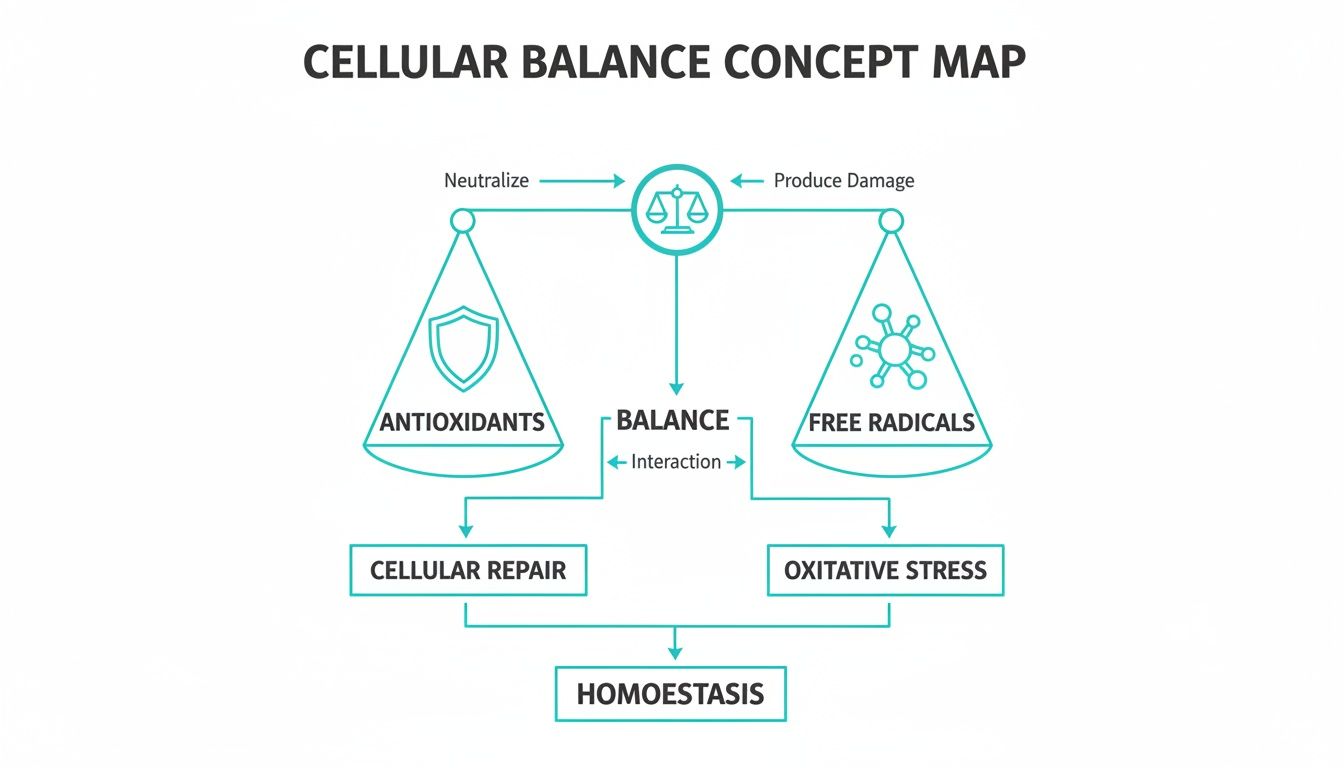
The main takeaway here isn't about getting rid of free radicals completely—that's impossible. It's about making sure your antioxidant defenses are strong enough to keep them in check.
How Alcohol Can Overwhelm Your System
When it comes to lifestyle choices, alcohol consumption is a big one. Enjoying a drink is a normal part of socializing for many, but it puts a serious strain on your body—specifically your liver, which does all the heavy lifting to process that alcohol.
As your liver gets to work breaking down alcohol, the process itself generates a massive wave of free radicals. This biochemical reaction is a primary source of oxidative stress, temporarily draining your liver's supply of antioxidants. It especially hits your reserves of glutathione, often called the body's "master antioxidant."
This is a huge reason why a hangover feels so awful. The headache, exhaustion, nausea, and general inflammation aren't just from being dehydrated; they're direct symptoms of this intense burst of cellular damage.
Fundamentally, oxidative stress occurs when there's an imbalance between free radicals and antioxidants in your body. After a night out enjoying drinks with friends, alcohol metabolism ramps up reactive oxygen species (ROS) production in the liver, contributing to that foggy-headed, nauseous hangover feeling the next morning. You can explore the full scientific breakdown of how alcohol induces oxidative stress in the liver.
Common Lifestyle and Environmental Culprits
Beyond alcohol, plenty of other factors consistently add to our free radical load. Pinpointing these culprits is the first real step toward minimizing their impact and helping your body find its natural equilibrium again.
This table breaks down some of the most common triggers we encounter in our day-to-day lives.
Everyday Causes of Oxidative Stress
| Category | Specific Trigger | How It Contributes |
|---|---|---|
| Diet | High-sugar foods, processed fats, fried meals | These foods promote free radical formation while lacking the antioxidants needed to fight them. |
| Environment | Cigarette smoke, air pollution, pesticides | Inhaling or ingesting these toxins introduces a heavy external load of free radicals into the body. |
| Lifestyle | Excessive UV sun exposure | UV radiation penetrates the skin and generates free radicals, directly damaging skin cells and causing premature aging. |
| Mental Health | Chronic psychological stress | Long-term stress triggers a constant inflammatory response, which produces free radicals as a byproduct. |
| Physical Activity | Overtraining or intense, prolonged exercise | While regular exercise is beneficial, extreme exertion can temporarily create an imbalance and increase oxidative damage. |
Recognizing these triggers—from the food on your plate to the air you breathe—is empowering. It lets you become more mindful of your choices and take proactive steps to support your body's built-in defense systems.
Health Impacts of Long-Term Imbalance
When oxidative stress goes from being a temporary visitor to a permanent resident in your body, its effects stretch far beyond a rough morning after a night out. This constant, low-grade cellular damage creates a ripple effect, showing up as both subtle daily annoyances and, down the road, more serious health problems.
At first, the signs of a long-term imbalance can be frustratingly easy to dismiss. You might feel a bone-deep fatigue that no amount of sleep can seem to fix, or a persistent "brain fog" that makes it tough to focus. It even shows up in the mirror. Chronic oxidative stress is a major driver of premature aging because it degrades collagen and elastin—the very proteins that keep your skin looking firm and youthful—leading to more fine lines and wrinkles.
The Connection to Chronic Conditions
Over time, this relentless strain on your cells starts to lay the groundwork for more significant health issues. The damage isn't neatly contained; it impacts multiple systems throughout the body.
One of the most well-documented connections is to cardiovascular health. When the linings of your blood vessels are constantly under attack, they can become stiff and dysfunctional, contributing to high blood pressure. In fact, hypertension—which is tightly linked to oxidative stress—has doubled in prevalence from 1990 to 2019, and now affects around 1.2 billion adults worldwide. Research even shows a clear link: a higher Oxidative Balance Score (OBS), which measures antioxidant intake and lifestyle habits, is strongly associated with a lower risk of hypertension. You can find out more about this link between lifestyle and blood pressure on Frontiers.
When free radicals consistently outnumber antioxidants, the body enters a state of chronic inflammation. This systemic inflammation is now understood to be a key factor in a wide range of modern health concerns, from metabolic disorders to autoimmune conditions.
This long-term imbalance is also tied to other serious conditions:
- Neurodegenerative Disorders: The brain is especially vulnerable to oxidative damage because it uses so much oxygen. This ongoing stress is believed to play a role in the progression of conditions like Alzheimer's and Parkinson's disease.
- Systemic Inflammation: Chronic oxidative stress and inflammation are a vicious cycle. Each one fuels the other, creating a body-wide state of alert that can damage tissues and organs over time. You can learn more about how to reduce inflammation in the body in our detailed guide.
Knowing all this isn't meant to be alarming. It’s about empowerment. By taking steps to restore your body's cellular balance, you aren't just trying to have more energy today—you're building a resilient foundation for long-term health and vitality.
A Practical Plan to Restore Cellular Balance
Alright, so you get the science behind what is oxidative stress. But knowing the what and why is only half the battle. Now comes the good part: putting that knowledge into action to actually restore your body’s natural balance.
The great news is that building a more resilient cellular foundation doesn't require some massive, life-altering overhaul. It’s all about making small, consistent, and intelligent choices that give your body’s built-in defense systems the support they need.
This plan is all about sustainable shifts that hit oxidative stress where it hurts—by cutting down on free radical production and loading up your antioxidant reserves. We'll focus on four key pillars: diet, exercise, stress management, and sleep. It’s the small things you do every day that add up, leading to big improvements in how you feel right now and your health down the road.
Fuel Your Defenses with an Antioxidant-Rich Diet
Your diet is your first—and best—line of defense. The food you put on your plate can either add fuel to the fire or provide the exact tools your body needs to put it out. An antioxidant-rich diet is really just a diet full of whole, colorful foods packed with the compounds that go to work neutralizing free radicals.
Think of your plate like a toolkit. Every vibrant fruit and vegetable you add brings a different type of antioxidant to the table, giving you a whole spectrum of protection.
- Vitamins C and E: These are the OG antioxidant powerhouses. Vitamin C (think citrus fruits, bell peppers, strawberries) is a beast at fighting free radicals in water-based environments. Vitamin E (found in nuts, seeds, and spinach) is fat-soluble, so it's a pro at protecting your cell membranes from damage.
- Polyphenols: This huge group of antioxidants is what makes things like berries, dark chocolate, and green tea so good for you. They’re famous for their anti-inflammatory effects and ability to beef up your cellular defenses.
- Carotenoids: These are the pigments that give carrots, sweet potatoes, and kale their gorgeous, bright colors. Your body converts them into Vitamin A, another critical antioxidant for your skin and immune system.
If you’re wondering where to start, our guide to a complete antioxidant-rich foods list has plenty of ideas to get you going.
To make things even easier, here’s a quick-glance table of some of the best foods you can add to your grocery list.
Antioxidant Powerhouses Your Diet Needs
| Antioxidant | Rich Food Sources | Primary Benefit |
|---|---|---|
| Vitamin C | Citrus fruits, bell peppers, strawberries, kiwi | A powerful, water-soluble antioxidant that neutralizes free radicals throughout the body. |
| Vitamin E | Almonds, sunflower seeds, spinach, avocado | A fat-soluble antioxidant that specializes in protecting cell membranes from damage. |
| Polyphenols | Berries, green tea, dark chocolate, red wine | A diverse group of compounds known for their anti-inflammatory and cell-protective properties. |
| Carotenoids | Carrots, sweet potatoes, kale, tomatoes | Precursors to Vitamin A that support immune function and protect skin and eye health. |
| Selenium | Brazil nuts, fish, eggs, brown rice | A crucial mineral that helps activate the body’s own powerful antioxidant enzymes. |
Loading up on these foods gives your body the raw materials it needs to keep everything in balance.
Incorporate Smart Lifestyle Habits
What you do outside the kitchen plays a massive role in managing your oxidative load, too. Regular physical activity, for example, has been shown to kick your body's natural production of antioxidant enzymes into a higher gear. The sweet spot is consistency and moderation—aim for about 30-45 minutes of moderate exercise most days of the week. That’s enough to get the benefits without putting too much stress on your system.
Remember, the goal is balance. While intense, prolonged exercise can temporarily increase oxidative stress, consistent, moderate movement strengthens your body’s long-term ability to manage it.
Rest and recovery are just as important. When you’re chronically stressed, your body is stuck in a state of high alert, churning out free radicals. Even simple mindfulness practices, like a few minutes of deep breathing or a quick walk outside, can help lower stress hormones and dial down that inflammatory response.
And finally, don't skimp on sleep. This is when your body does its most important cleanup and repair work, like clearing out cellular junk and replenishing its antioxidant supply. Making sure you get 7-9 hours of solid, uninterrupted sleep each night is one of the single most effective things you can do to get your cells back in balance.
Still Have Questions About Oxidative Stress?
Diving into the science of cellular health can bring up a few questions. We get it. Let’s tackle some of the most common ones with straightforward, science-backed answers so you can feel totally confident in your understanding.
Can You Completely Eliminate Oxidative Stress?
Honestly, no—and you wouldn't want to. It sounds counterintuitive, but a certain amount of oxidative stress is actually essential for a healthy body. It’s a key player in your immune system's ability to fight off infections, and free radicals aren't just villains; they also act as important signaling molecules for various cellular functions.
The real goal isn't to get rid of it entirely, but to strike a healthy balance. It’s all about making sure your body's antioxidant defenses are robust enough to handle the free radicals produced from normal metabolism and modern life, keeping them from running wild and causing widespread damage.
How Quickly Can Lifestyle Changes Really Help?
While the damage from chronic oxidative stress can build up over years, you can start tipping the scales back in your favor surprisingly fast. Small, positive shifts can make a noticeable difference in how you feel.
Think about it this way: dialing back on alcohol for a weekend or getting a few nights of solid, quality sleep immediately eases the oxidative burden on your system. If you start adding more antioxidant-rich foods to your plate, you can boost your body's defenses within just a few days. Keep those changes consistent, and you'll see more profound, long-term improvements in a matter of weeks.
Are Antioxidant Supplements as Good as Food?
When it comes to getting your antioxidants, whole foods are almost always the winning ticket. Why? Because a piece of fruit or a vegetable isn't just a single nutrient—it's a complex package of vitamins, minerals, fiber, and countless other plant compounds (phytochemicals) that all work together to support your body's health.
Supplements definitely have their place, especially if you need to fill a specific nutritional gap. But they should never be a substitute for a well-rounded diet. Food offers a full spectrum of compounds that support your body’s defense systems in a way that isolated supplements just can't match. The best strategy is always to eat a varied, colorful diet first.
When you know you’ll need a little extra support to bounce back after a night out, Upside is a smart move. Our Hangover Jelly is loaded with natural, antioxidant-rich ingredients specifically chosen to help your body’s recovery process. It's a simple way to help combat that oxidative load so you can wake up feeling refreshed.
Enjoy your night without dreading the morning. Try Upside today by visiting https://enjoyupside.com. #upside #enjoyupside #upsidejelly #livemore #hangovercure #hangoverprevention #fighthangovers #preventhangovers #HangoverRelief #MorningAfter #PartySmarter #HydrationStation #WellnessVibes #RecoverFaster #NoMoreHangovers #HealthyParty #HangoverHacks #FeelGoodMorning #NightlifeEssentials #HangoverFree #SupplementGoals #PostPartyPrep #GoodVibesOnly #HealthAndParty #HangoverHelper #UpsideToPartying