

· By Annemarie
How to Reduce Inflammation in the Body A Practical Guide
Before we dive in, we need to get one thing straight about inflammation.
Most of us hear that word and immediately picture a swollen ankle or a puffy, red cut. That’s definitely one type of inflammation, but it’s not the one that’s quietly messing with your energy and focus every single day. If you really want to feel better, you need to know the difference between your body’s helpful friend and its persistent, low-grade enemy.
Think of acute inflammation as your body's personal paramedic team. When you twist your ankle, it’s the force that rushes blood and immune cells to the scene, causing that classic swelling, heat, and pain. It's a critical, short-term healing process. It does its job, and then it clocks out.
The Silent Drain of Chronic Inflammation
The real troublemaker for anyone trying to balance a demanding career with a social life is chronic inflammation. This is a completely different beast. It's a low-level, system-wide hum of irritation where your body’s alarm system just never shuts off. It's not as obvious as a sprained ankle, but its effects are way more disruptive to your daily life.
What’s keeping this internal alarm on? A lot of it comes down to modern life:
- Constant Stress: Tight deadlines and a non-stop schedule can keep your body locked in "fight or flight" mode, pumping out stress hormones that fuel inflammation.
- Social Drinking: Even a couple of nights out a week can irritate your gut and put a strain on your liver, triggering an inflammatory response that makes you feel foggy and drained long after the fun is over.
- Frequent Travel: Between jet lag, questionable airport food, and a thrown-off routine, your body's inflammatory load can skyrocket.
- Poor Sleep: Skimping on deep, restorative sleep means your body and brain miss out on their nightly cleanup crew, letting inflammatory markers build up.
This isn’t just some vague medical theory; it’s the invisible force behind a lot of what you might just brush off as "being tired" or "getting older."
That nagging brain fog after a work trip? The deep fatigue that a second coffee can’t seem to touch? The hangovers that feel way worse than they should? These are often direct signs of underlying chronic inflammation.
Once you start seeing inflammation as a direct response to your daily habits—not some random illness—you can actually start doing something about it. The goal isn't to get rid of it completely, because you absolutely need that acute response when you get hurt. The real goal is to turn down the volume on that chronic, background static.
When you do that, you get your mental clarity back, your energy levels stabilize, and you can actually enjoy your social life without feeling like you have to pay for it the next day. This guide will show you exactly how.
Building Your Anti-Inflammatory Plate
When you hear "anti-inflammatory diet," it's easy to picture a joyless landscape of bland, restrictive meals. But that's not what this is about.
Learning how to dial down inflammation in your body isn't about taking things away; it’s about strategically adding powerful, delicious foods to your plate that actively fight back against cellular stress. Think of it as empowerment, not punishment.
Forget trying to follow a perfect, rigid plan. A much more realistic approach is to focus on crowding out the bad with the good. Start by thinking in color. The deep blues of blueberries, the rich greens of spinach, and the vibrant orange of sweet potatoes are all signals of potent antioxidants that help calm inflammation.
Focus on Nutrient-Dense Powerhouses
Instead of getting bogged down by a long list of forbidden items, just concentrate on weaving a few key players into your weekly routine. This makes the whole process feel way more manageable and sustainable, especially when life gets hectic.
- Fatty Fish: Salmon, mackerel, and sardines are packed with omega-3 fatty acids, which are absolute superstars at lowering inflammatory proteins.
- Berries and Cherries: These fruits are loaded with anthocyanins, antioxidants that have been shown to significantly reduce inflammation.
- Leafy Greens: Spinach, kale, and collard greens are excellent sources of vitamins that support your body's natural defense systems.
- Nuts and Seeds: Almonds, walnuts, and chia seeds offer a mix of healthy fats and fiber that help stabilize your body's inflammatory response.
The infographic below highlights the critical difference between the body's helpful acute inflammatory response and the draining, chronic type that your diet can directly influence.
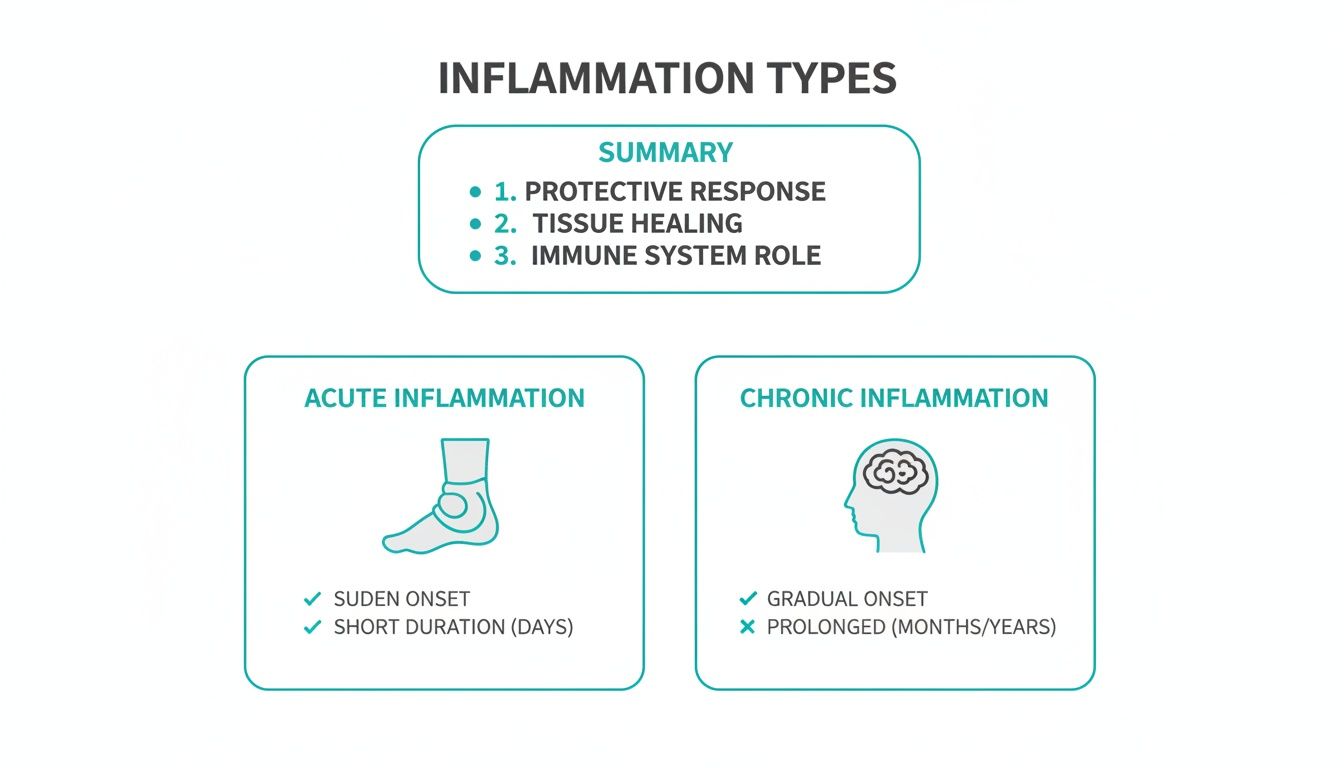
This distinction is key. While acute inflammation helps you heal from a cut, the goal here is to dial down the simmering, chronic inflammation that leaves you feeling wiped out and foggy.
Smart Swaps and Potent Spices
Making small, consistent changes is far more effective than a drastic, all-or-nothing overhaul. Start with simple swaps, like using olive oil instead of vegetable oil for cooking or choosing whole-grain bread over white. These little adjustments really add up.
This becomes even more crucial for social drinkers. Alcohol irritates the gut lining, which can boost systemic inflammation by as much as 50% via endotoxins. The result? Worsened fatigue and brain fog. This is where natural heavy-hitters like turmeric and ginger, stars in Korean-inspired remedies, come in. Some trials show they can lead to a 28% reduction in inflammatory markers.
Don’t underestimate the power of your spice rack. Turmeric (with its active compound curcumin) and ginger are two of the most potent natural anti-inflammatories you can find. Adding them to curries, smoothies, or teas is an easy way to give your meals a functional boost.
Foods That Fight vs Foods That Fuel Inflammation
While the main focus is on adding good things in, it's also smart to be aware of the common triggers. You don't need to eliminate them forever, but being mindful of how often you eat them can make a massive difference in how you feel.
This table is a quick-reference guide to help you easily identify which foods to embrace and which to limit.
| Eat More (Anti-Inflammatory) | Limit (Pro-Inflammatory) |
|---|---|
| Fruits: Berries, cherries, oranges, pineapple | Refined Carbs: White bread, pasta, pastries |
| Vegetables: Leafy greens, broccoli, bell peppers | Sugary Drinks: Soda, sweetened teas, fruit juices |
| Healthy Fats: Olive oil, avocados, nuts, seeds | Fried Foods: French fries, fried chicken |
| Fatty Fish: Salmon, mackerel, sardines, tuna | Processed Meats: Bacon, sausage, hot dogs, deli meat |
| Spices: Turmeric, ginger, garlic, cinnamon | Trans Fats: Margarine, shortening, many packaged snacks |
By making mindful choices most of the time, you create a resilient foundation. This lets you enjoy social occasions and have a few drinks without the severe inflammatory fallout.
For a more detailed breakdown, check out our guide on the top anti-inflammatory foods list.
Lifestyle Habits That Calm Inflammation

While your diet is a huge piece of the puzzle, the choices you make between meals are just as critical for taming inflammation. How you move, sleep, and handle stress creates the internal environment where inflammation either thrives or dies down.
The good news? You don’t need to overhaul your entire life. Small, consistent habits in these areas have a seriously powerful calming effect. This is about making smarter, more restorative choices that actually fit into a busy life.
Embrace Restorative Movement
The whole "go hard or go home" thing doesn't work when you're fighting chronic inflammation. In fact, intense, grueling workouts can backfire by jacking up stress hormones and inflammatory markers. The real secret is consistent, gentle movement that supports your body instead of punishing it.
Believe it or not, research shows that even simple stretching can help lower the amount of pro-inflammatory proteins floating around in your system. It gets your blood flowing, brings more oxygen to your tissues, and flips the switch on your body’s relaxation response.
Try working one of these into your routine:
- A Brisk 20-Minute Walk: Squeeze it in on your lunch break or after dinner. It’s fantastic for circulation and helps manage blood sugar without spiking cortisol.
- Gentle Yoga or Stretching: A quick 15-minute session when you wake up can do wonders for morning stiffness and get your body ready for the day.
- Cycling or Swimming: These low-impact options are gold for your heart and joints.
The goal here is sustainability. Pick something you actually like doing, because you’re way more likely to stick with it for the long haul.
Prioritize Quality Sleep for Repair
Sleep is absolutely non-negotiable for getting inflammation under control. It's when your brain’s dedicated "housekeeping" crew gets to work, flushing out all the inflammatory junk that builds up during the day. When you skimp on sleep, those toxins hang around, leading to that all-too-familiar brain fog and fatigue.
Just a single night of bad sleep can cause a spike in inflammatory molecules. Over time, this sleep debt becomes a major driver of the chronic inflammation that leaves you feeling totally run down.
Improving sleep quality is one of the most effective things you can do to lower inflammation. Even after a late night out, focusing on making the hours you do get as restful as possible can make a huge difference in how you feel the next day.
Master Your Stress Response
Chronic stress is like keeping your body's alarm system on 24/7, flooding your system with cortisol. This stress hormone is a primary trigger for inflammation. Learning to manage your stress is a direct way to turn that alarm off.
You don't need to go on a silent retreat—you just need a few tricks you can pull out of your back pocket anywhere. Mindful breathing exercises, for example, can quickly shift your nervous system out of "fight or flight" and into "rest and digest."
Give this simple technique a try:
- Inhale slowly through your nose for a count of four.
- Hold your breath for a count of seven.
- Exhale slowly through your mouth for a count of eight.
- Repeat this cycle three to five times.
You can do this at your desk, stuck in traffic, or right before a big meeting. For a little extra support, some people explore adaptogenic herbs, which are natural substances that help the body better adapt to stress. To learn more, check out our guide on what adaptogenic herbs are and how they work. By building in small habits like these, you build resilience and get a handle on a major source of inflammation.
Using Supplements for Targeted Support
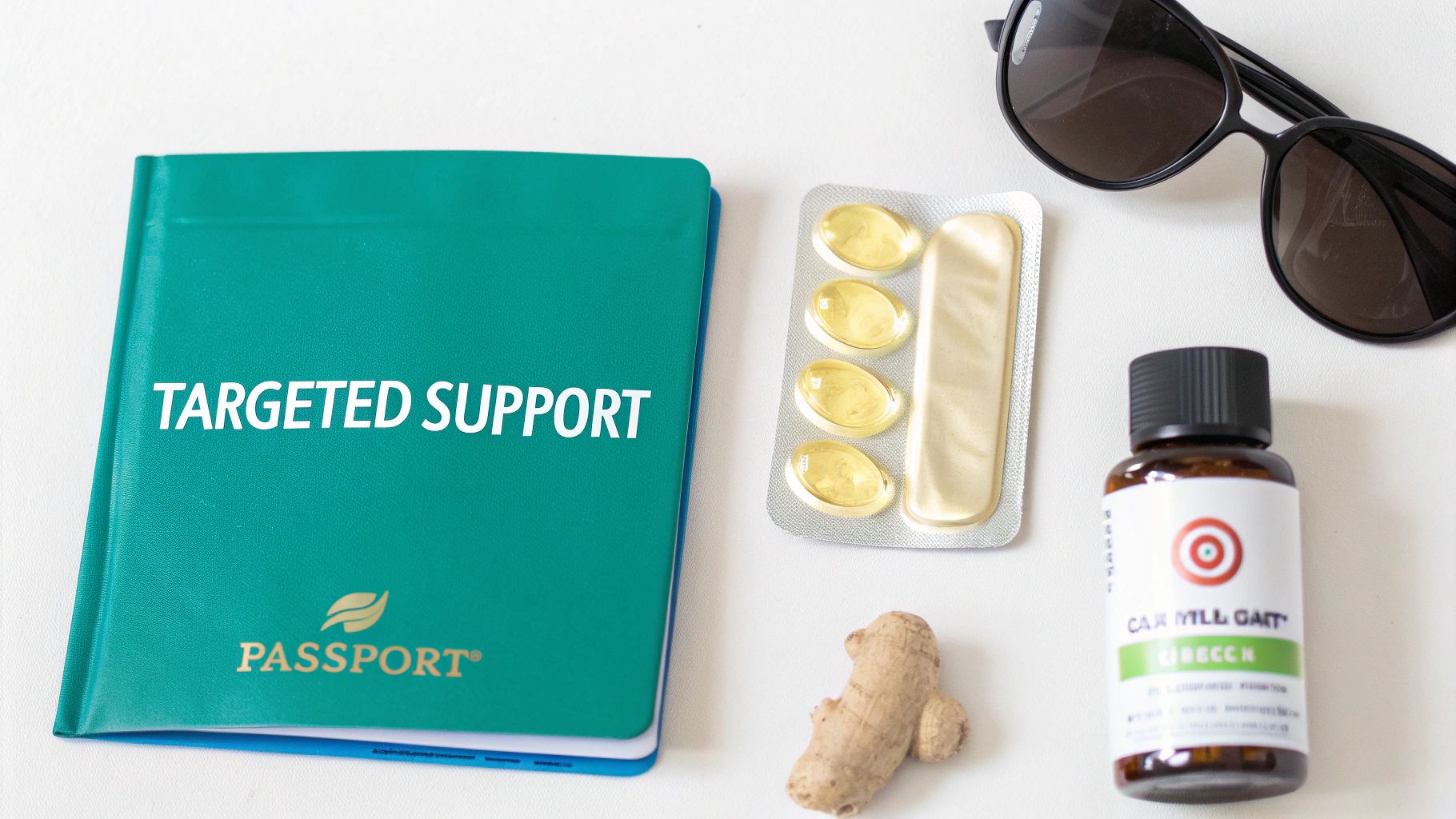
Even when you're crushing it with a clean diet and solid lifestyle habits, a packed schedule can still throw your body for a loop. It's best to think of supplements not as a quick fix, but as a strategic backup—a way to give your body targeted support right when it needs it most.
When life gets hectic with back-to-back social events, travel, and tight deadlines, your body's inflammatory load can really start to spike. This is where smart supplementation can step in, delivering a concentrated dose of anti-inflammatory compounds to help you stay on your game.
Key Anti-Inflammatory Supplements
Instead of getting overwhelmed by the sheer number of bottles on the shelf, it’s better to focus on a few well-researched players that offer proven benefits. When you know what they actually do, it’s much easier to pick what’s right for you.
- Curcumin (from Turmeric): This is the powerhouse antioxidant that gives turmeric its signature yellow glow. It works by helping to block the molecules that kickstart the inflammatory process in the first place.
- Omega-3 Fatty Acids: You'll find these in fish oil, and they are absolute champs at calming systemic inflammation. They’re especially great for supporting joint and brain health.
- Ginger: Famous for its ability to soothe an upset stomach, ginger also packs compounds called gingerols, which have some seriously potent anti-inflammatory properties.
Of course, not all supplements are created equal—quality and dosage make a huge difference. If you want a little more guidance on navigating labels and making smart choices, you can learn more about how to read supplement labels in our deep-dive guide.
Modern Solutions for a Modern Lifestyle
Ever wonder why that post-party puffiness and general achiness seems to linger? That's your body dealing with a flood of inflammation. The market for hangover rehydration supplements is exploding for this exact reason, projected to surge from USD 1.1 billion to USD 3.8 billion by 2035.
A night of drinking can cause a 25-40% jump in inflammatory cytokines. The fix? Smart formulas, often inspired by time-tested Korean remedies, combine electrolyte support with anti-inflammatory ingredients. Prickly pear extract, for instance, has been shown in some trials to slash nausea by 50% and knock down inflammatory markers by 30%.
This is where modern, convenient solutions really shine. For the health-conscious person who doesn't want to miss out on their social life, a product like Upside Hangover Jelly offers a genuinely practical way to handle that lifestyle-induced inflammation.
Its unique jelly format is made for life on the move. You can toss a sachet in your pocket, carry-on, or gym bag without a second thought. This travel-friendly design takes the hassle out of pills and powders, making proactive care feel effortless.
The takeaway: Smart supplementation isn't about covering up for bad habits; it's about reinforcing good ones. By using targeted, high-quality ingredients, you help your body better manage the inflammatory curveballs that come with a full and active life.
Upside's formula is inspired by potent Korean remedies, blending natural ingredients to help you feel your best. Think of it as a proactive tool that fits right into your routine, empowering you to enjoy all of life's moments without the inflammatory aftermath. It’s all about staying ahead of the game so you can keep firing on all cylinders, both at work and at play.
Your Blueprint for an Anti-Inflammatory Lifestyle
Knowing the what and why of inflammation is one thing, but actually putting it all into practice? That’s where the real magic happens. The goal isn't to follow a bunch of rigid rules. It's about building small, sustainable habits that fit into your actual life—even when things get a little chaotic.
Let's be real: perfect consistency is a myth. That's why simple, repeatable routines beat a complicated, all-or-nothing approach every single time. Think of it as building a solid foundation that can handle busy work weeks, travel, and social events without sending your inflammation levels through the roof.
Your Hectic Work Week Plan
When you’re swamped at work, the last thing you need is another complicated to-do list. The focus here is on small, strategic choices that keep your energy up and brain fog down.
- Morning Kickstart: Before you even think about coffee, drink a big glass of water. It’s a super simple way to rehydrate your system and wake everything up. After that, spend just five minutes doing some gentle stretches to work out the stiffness from sitting all day.
- Smart Meal Prep: On Sunday, cook a big batch of quinoa or brown rice and roast a tray of your favorite vegetables. This makes throwing together a quick, anti-inflammatory lunch during the week a total breeze.
- Afternoon Reset: When that 3 PM slump hits, skip the third coffee and get outside for a quick 15-minute walk instead. It’s a game-changer for lowering the stress hormone cortisol, boosting circulation, and clearing your head.
Weekend and Travel Strategy
Weekends and travel often mean social drinking, which can be a huge inflammation trigger. A little proactive planning makes all the difference, letting you have fun without feeling terrible the next day.
Ever wonder why hangovers feel so awful? Chronic inflammation is a major culprit. In fact, the global hangover cure market is expected to balloon to USD 5.16 billion by 2032, because people are finally catching on to inflammation's role. Alcohol’s nasty byproduct, acetaldehyde, unleashes pro-inflammatory messengers that make everything—from headaches to nausea—feel so much worse. We’ve even seen user trials show that taking anti-inflammatory supplements ahead of time can slash recovery time by a whopping 50%. You can read the full market forecast for more on this trend.
Pro tip: Before you head out for the night, eat a small, balanced meal with some protein, healthy fats, and fiber. This helps slow down how quickly your body absorbs alcohol and keeps your blood sugar from going on a rollercoaster. Oh, and for every alcoholic drink, chug a glass of water.
And for an easy win, I always keep a proactive tool like an Upside Hangover Jelly sachet in my bag. It’s so easy to take before bed to help your body deal with the inflammatory mess from a night of drinking.
Common Questions About Ditching Inflammation
When you start digging into how to reduce inflammation, a ton of questions usually pop up. It's totally normal. Getting some straight answers can make you feel a lot more confident about making the right changes. Let's get into some of the most common ones I hear.
How Long Does It Take to Actually Feel a Difference?
This is the big one, and the honest answer is: it really depends on where you're starting from and how consistent you are. A lot of people tell me they feel more energetic and way less bloated within the first week of cleaning up their diet.
But if you're talking about tackling deeper, chronic inflammation, you're looking at a longer game—usually several weeks to a few months. Real, lasting results come from sticking with it across the board: your diet, your movement, and how you handle stress.
Can I Still Have a Drink on an Anti-Inflammatory Plan?
Absolutely. The goal here is to be smarter about your choices, not to become a hermit. While throwing back drinks every night is definitely pro-inflammatory, you can still have a social life.
If you're going to drink, opt for red wine, which has some antioxidants, or stick to clear spirits like vodka or tequila with soda and a squeeze of lime. The real pro move? Plan ahead. Giving your body some backup with a targeted supplement before bed can help offset alcohol’s inflammatory punch by replenishing key nutrients and supporting hydration.
Wondering what the first signs of success look like? You'll probably start waking up with more energy. Better digestion and less bloating are also early wins. Some people even notice their skin clearing up. Over time, those little victories build into a more stable mood and bouncing back faster from a tough workout or a late night.
What Simple Daily Habits Can I Start Now?
It's the small, everyday things that add up to make a huge difference. Here are a few dead-simple habits you can weave into your routine to keep inflammation on the defensive:
- Hydrate First: Before you do anything else, chug a big glass of water. Your whole system is dehydrated after sleeping, and this is the easiest first step to get things moving.
- Stretch It Out: Just 5-10 minutes of stretching every morning works wonders. It gets your circulation going and eases that stiff, achy feeling that can contribute to inflammation.
- Take a Deep Breath: Seriously. A few minutes of deep, mindful breathing can lower cortisol, the stress hormone that loves to fuel inflammation.
- Catch Some Rays: If you can, get a little bit of morning sun. This helps your body produce Vitamin D, which is a big player in keeping your immune response balanced and inflammation in check.
Ready to feel your best without sacrificing your social calendar? Upside is a modern, no-fuss way to help your body recover. Our Hangover Jelly is loaded with natural, effective ingredients inspired by Korean remedies to help you get back on your feet faster.
Discover how Upside can fit into your anti-inflammatory lifestyle today.
#upside #enjoyupside #upsidejelly #livemore #hangovercure #hangoverprevention #fighthangovers #preventhangovers #HangoverRelief #MorningAfter #PartySmarter #HydrationStation #WellnessVibes #RecoverFaster #NoMoreHangovers #HealthyParty #HangoverHacks #FeelGoodMorning #NightlifeEssentials #HangoverFree #SupplementGoals #PostPartyPrep #GoodVibesOnly #HealthAndParty #HangoverHelper #UpsideToPartying