

· By Annemarie
How to Improve Sleep Quality Naturally for Better Mornings
If you want to genuinely improve your sleep, the single most powerful tool you have is a consistent nightly routine. This isn't just about going to bed at the same time; it's about creating a deliberate, repeatable ritual that signals to your body and mind that it's time to power down.
Think of it as a clear message you send yourself: the day is done, and it's time to rest and repair. By doing simple things like dimming the lights and stepping away from screens, you start working with your body's internal clock—your circadian rhythm—not against it. This simple habit is the foundation for transforming your sleep from the ground up.
Build a Nightly Routine That Signals Your Body to Rest
Let's be real: a solid evening wind-down is your secret weapon for amazing sleep. It’s how you naturally cue your biology for rest.
Your body runs on an internal 24-hour clock, the circadian rhythm, which controls everything from your energy levels to when you feel sleepy. A key part of this is the release of melatonin, the hormone that brings on that drowsy feeling. When your evenings are chaotic and unpredictable, this internal clock gets thrown off, making it tough to fall asleep and wrecking your sleep quality.
Why Consistency Is Your Greatest Ally
A predictable routine is the best way to anchor that internal clock. When you perform the same sequence of calming activities every night, you're creating powerful cues that your brain starts to associate with sleep. After a while, just starting your routine will be enough to kickstart the physiological changes needed for a good night's rest.
This isn't just some wellness theory; it's backed by a staggering amount of data. One massive Sleep Cycle study analyzed over 105 million nights of sleep and found a surprising drop in sleep quality worldwide. But the data also revealed a simple, powerful fix: consistency. The Dutch, who came out on top with 79.01% sleep quality, credit their steady routines and balanced lifestyles. It just goes to show that a simple, steady habit works wonders.
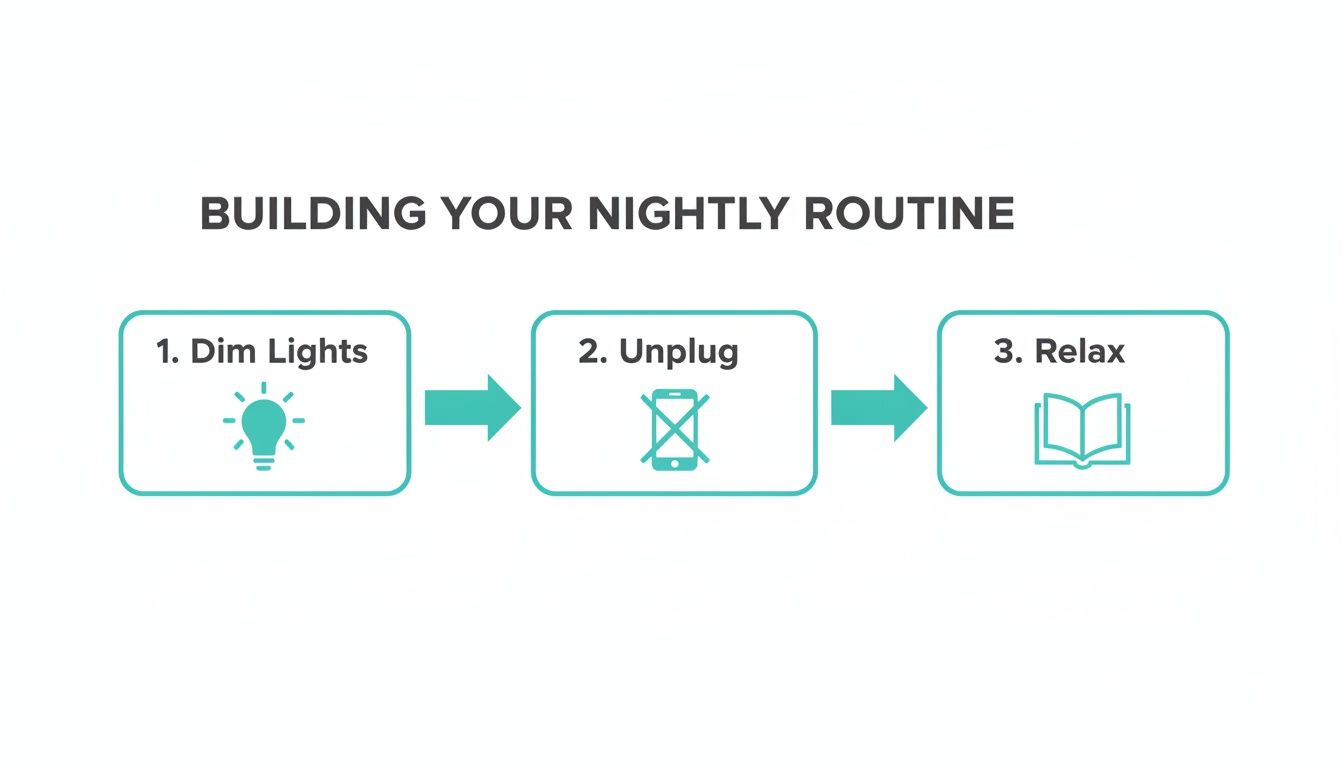
This simple flow is all it takes: reduce your light exposure, disconnect from the endless scroll, and find an activity that truly helps you relax.
Crafting a Routine for Your Lifestyle
The "perfect" routine is the one you'll actually stick with. It needs to fit your life, not the other way around. The goal is to pick a few simple, calming things you can do even when life gets hectic.
Here are a few ideas to get you started:
- For the Busy Professional: Your brain is probably still buzzing with to-do lists and deadlines. Focus on mental decompression. Try journaling for 10 minutes to get all those worries out of your head, then switch to a real, physical book (not your tablet!). This creates a hard stop between your workday and your rest time.
- For the Social Drinker: A late night can easily derail your routine. The trick is to get back on track as soon as you get home. Even if it's late, spend 15 minutes on a "mini" wind-down. Dim the lights, do a couple of gentle stretches, and whatever you do, don't look at your phone. It helps your body recognize its sleep cues, even after a disruption.
- For the Frequent Traveler: Jet lag is the ultimate circadian rhythm nightmare. Pack a small "sleep kit" with an eye mask and some herbal tea. As soon as you arrive, switch to the local time and do your routine at the new local bedtime. It’s the fastest way to help your internal clock catch up.
The last hour before you plan to sleep is the most critical. Having a structured "power-down" hour can make all the difference between tossing and turning and falling asleep easily.
Your 60-Minute Pre-Sleep Power-Down Routine
Here’s a sample timeline you can adapt to create a buffer between your busy day and a restful night.
| Time Slot | Action Item | Scientific Benefit |
|---|---|---|
| First 20 Mins | Tidy up, prep for tomorrow | Offloads mental clutter so you're not worrying about it in bed. |
| Next 20 Mins | Dim lights, unplug from screens | Low light triggers melatonin production, your natural sleep hormone. |
| Final 20 Mins | Read, stretch, meditate | Calms the nervous system and lowers cortisol (the stress hormone). |
This simple framework helps transition your mind and body from a state of alertness to one of deep relaxation, paving the way for better sleep.
By making a conscious effort to wind down, you're not just setting yourself up for a good night—you're investing in a more focused and energetic tomorrow. The payoff from a solid nightly ritual goes way beyond falling asleep faster; it's a critical piece of the puzzle for learning how to wake up refreshed and ready for anything.
Design Your Bedroom as a True Sleep Sanctuary
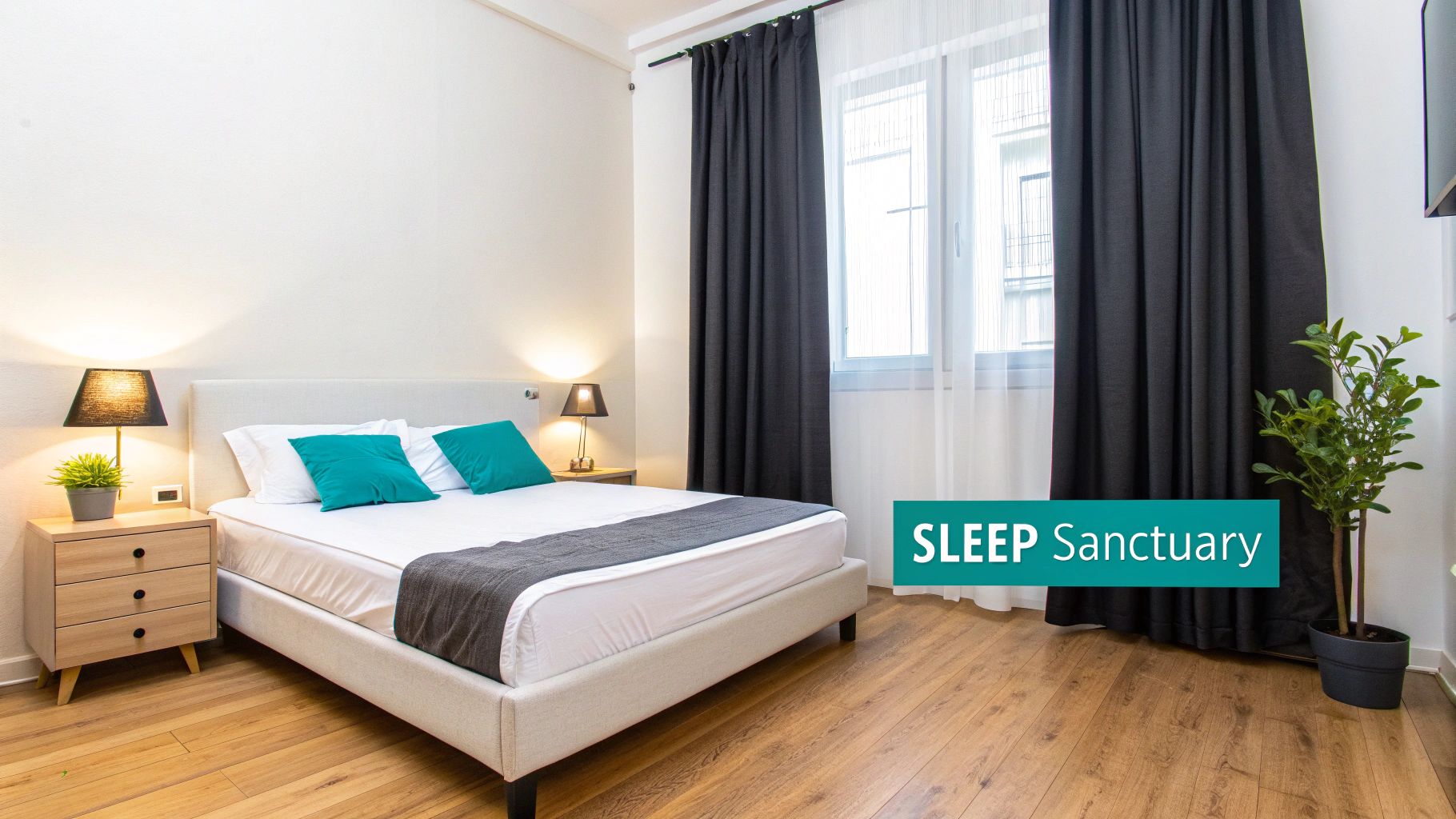
Your brain is constantly picking up cues from your environment. When your bedroom also serves as your office, home gym, or late-night movie theater, it sends some seriously mixed signals. It's tough for your mind to power down when it associates the space with work deadlines or the latest Netflix binge.
Turning your bedroom into a dedicated sleep sanctuary is one of the most powerful things you can do for your sleep quality. This isn't about a massive renovation. It’s about small, strategic tweaks to the three things that matter most: temperature, light, and sound. Get these right, and you’re creating a space that actively helps you fall—and stay—asleep.
Find Your Ideal Sleep Temperature
Ever find yourself tossing and turning in a room that’s just a little too warm? There’s a biological reason for that. To initiate sleep, your body's core temperature needs to drop by a couple of degrees, and a cool room makes that process a whole lot easier.
The sweet spot for sleep is actually cooler than most people think, somewhere between 60 and 67 degrees Fahrenheit (15 to 19 degrees Celsius). This cooler air helps your body hit that lower temperature needed for deep, slow-wave sleep—the kind that’s essential for physical recovery and locking in memories.
If you sleep with a partner who runs hot or cold, compromise is everything. Try using separate blankets with different weights, or if you're feeling fancy, look into a mattress with dual-zone temperature controls. Even a small change can make a huge impact on how fast you nod off.
Create Total Darkness
Light is the master switch for your body’s internal clock, or circadian rhythm. Even a tiny bit of it—from a streetlight peeking through the blinds, a digital clock, or your phone—can mess with melatonin production and disrupt your sleep. The goal is to make your room as dark as a cave.
Here’s how to get rid of that pesky light pollution:
- Blackout Curtains: Honestly, this is the best investment you can make for your sleep, especially if you live in a city. They are an absolute game-changer.
- Sleep Mask: A good, comfortable eye mask is a traveler's secret weapon but works just as well at home. It creates your own personal blackout zone, no matter where you are.
- Cover Up Electronics: Those tiny LED lights on your TV, chargers, and router might seem harmless, but your brain picks up on them. A little piece of electrical tape does the trick.
For anyone who travels often, this becomes a non-negotiable ritual. The first thing you should do in a hotel room is a "light audit." Use the clips on the hangers to clamp the curtains shut, unplug anything you don't need, and always pack that eye mask.
Key Takeaway: Your brain is incredibly sensitive to light, even when you're asleep. Getting rid of every single source tells your mind it’s officially time to check out, leading to deeper, uninterrupted rest.
Minimize Disruptive Noise
Nothing yanks you out of a deep sleep faster than a sudden noise, like a car alarm or your neighbor's dog deciding to practice its opera skills at 3 a.m. While you can't control the outside world, you can control the soundscape inside your room.
The trick is to mask those abrupt, jarring noises with a consistent, calming background sound. It’s less about total silence and more about creating a predictable audio environment.
Here are a few easy options:
- White Noise Machine: These are great for producing a steady, soothing sound that effectively drowns out everything else.
- A Simple Fan: Don't overlook the humble fan. Its consistent hum works just as well, plus you get the bonus of air circulation.
- Earplugs: If you're a really light sleeper or share a bed with a world-class snorer, a good pair of foam or silicone earplugs can be your ticket to blissful silence.
By dialing in these three elements—temperature, light, and sound—you stop leaving your sleep to chance. Your bedroom becomes less of a passive space and more of an active tool that helps you get the restorative rest you need.
How Your Diet and Drinks Impact Restful Sleep
What you eat and drink—and when you do it—has a massive impact on your sleep quality. Think of it this way: you wouldn't put diesel in a high-performance sports car, so why fuel your body with things that sabotage its recovery process? The link between your diet and a good night's rest is undeniable.
From that 3 p.m. espresso shot to a late-night pizza slice, every choice can either pave the way for deep, restorative slumber or sentence you to a night of tossing and turning. The good news is, a few simple tweaks to your routine can make a world of difference.
Smart Eating for Better Sleep
That heavy, spicy, or greasy dinner you had right before bed? It’s a classic recipe for heartburn and indigestion, forcing your digestive system to work overtime right when it should be powering down. That's a guaranteed way to disrupt your rest.
Try to wrap up your last big meal at least three to four hours before you hit the hay. This gives your body plenty of time to digest. If you get a little hungry later on, don't worry. A small, strategic snack can actually help you sleep.
Here are a few of my go-to's:
- A small banana with a spoonful of almond butter: Both are packed with magnesium, a natural muscle relaxant that helps calm your nervous system.
- A handful of tart cherries: These are one of the few natural sources of melatonin, the hormone that tells your body it's time to sleep.
- A warm cup of chamomile tea: It’s a classic for a reason. This herbal tea is well-known for its gentle, sleep-inducing properties.
These options give your body what it needs to relax without putting your stomach to work.
The Honest Truth About Alcohol and Sleep
We’ve all heard it: "A nightcap helps me relax." And sure, alcohol is a sedative, so it might make you feel drowsy and fall asleep faster. But that’s where the benefits end. The impact it has on your actual sleep quality is destructive.
As your body processes the alcohol overnight, it triggers a rebound effect. This leads to fragmented, shallow sleep in the second half of the night, robbing you of the critical deep and REM stages you need to feel mentally and physically restored.
Ever wonder why you feel so rough after a few drinks, even with a full eight hours of sleep? A massive ResMed sleep study of over 30,000 people found that alcohol is a primary culprit, slashing deep REM sleep by 20-30% after just one drink. With 38% of women and 29% of men already struggling to fall asleep, adding alcohol to the mix is like pouring fuel on the fire.
That’s why you wake up feeling foggy and exhausted—your brain and body never got the deep cleaning they needed.
Let's break down what to reach for and what to skip in the hours before bed.
Sleep Saboteurs vs Sleep Superstars
| Category | Sleep Saboteurs (Avoid in Evening) | Sleep Superstars (Enjoy in Evening) |
|---|---|---|
| Beverages | Alcohol, coffee, black/green tea, sugary sodas | Chamomile tea, valerian root tea, tart cherry juice, warm milk |
| Meals | Spicy foods (curry, hot wings), greasy/fried foods (pizza, burgers), large portions | Lean protein (turkey, chicken), complex carbs (oats, quinoa), leafy greens |
| Snacks | Chocolate, sugary desserts, ice cream, processed snacks (chips) | Almonds, walnuts, banana, kiwi, cottage cheese |
| Timing | Big meals within 3 hours of bed. Caffeine after 2 PM. Alcohol within 4 hours of bed. | Light snack 60-90 minutes before bed if hungry. Hydrate with water throughout the evening. |
Making these simple swaps can have a surprisingly big impact on how quickly you fall asleep and how refreshed you feel the next morning.
A Social Drinker's Guide to Protecting Sleep
Okay, let's get real. Telling you to never drink again isn't practical, especially if you have an active social life. The goal isn't total abstinence; it's about being smarter with your consumption.
First up: timing is everything. Try to have your last drink at least three to four hours before you plan to sleep. This gives your body a head start on metabolizing the alcohol before you get into your most important sleep cycles.
Next, hydrate like your life depends on it. For every alcoholic drink, have a full glass of water. This helps your liver process everything more efficiently and combats the dehydrating effects that also wreck your sleep.
If you know it's going to be a late one, a little planning goes a long way. For a deeper dive, check out our guide on how to sleep better after drinking. Following these tips can be the difference between a productive morning and a total write-off.
Mindful Techniques to Calm a Racing Mind
You’ve done everything right. The bedroom is perfect, you’ve nailed your nightly routine, and your diet is on point. And yet, there you are, staring at the ceiling at 2 a.m. Your brain has decided now is the perfect time to replay that awkward comment you made in a meeting or scroll endlessly through tomorrow's to-do list.
Sometimes the biggest hurdle to great sleep isn't physical at all—it’s a mind that just won't switch off.

The secret to improving your sleep quality naturally is training your brain to see your bed as a place for rest, not rumination. This is where mindful techniques are a total game-changer. They’re free, you don’t need any fancy equipment, and you can do them anywhere. That makes them incredibly powerful tools, especially for busy professionals and frequent travelers.
Master Your Breath to Master Your Mind
Ever notice how you breathe when you're stressed or anxious? It gets shallow and quick, which keeps your body stuck on high alert. Intentionally slowing down your breath sends a direct message to your nervous system: it’s safe to relax. It's one of the fastest ways to go from a "fight or flight" state to "rest and digest."
The 4-7-8 breathing technique is unbelievably simple but works like a charm. Think of it as a natural tranquilizer for your nervous system.
- Breathe out completely through your mouth. Make a little "whoosh" sound.
- Close your mouth and breathe in quietly through your nose for a count of four.
- Now, hold your breath for a count of seven.
- Finally, breathe out completely through your mouth with another "whoosh" sound for a count of eight.
Do this cycle just three or four times. The focus on counting interrupts your racing thoughts while the deep exhale physically calms your body down.
Offload Your Worries with a Brain Dump
Your brain isn't a hard drive with infinite space. When you try to hold onto every single worry, task, and random idea, it’s just plain exhausting—and a huge reason for nighttime anxiety. The fix is simple: get it all out of your head and onto a piece of paper.
This little trick is often called a "brain dump," and it’s basically mental decluttering. About an hour before you plan to sleep, take five or ten minutes to just write down everything rattling around in your head.
- For the busy professional: Map out a clear, actionable to-do list for tomorrow. Once it's on paper, your brain gets the message that it's safe to let go, trusting you won’t forget anything critical.
- For the anxious traveler: Jot down your itinerary, any packing concerns, or worries about the trip. Seeing it all written down can make everything feel so much more manageable.
The very act of writing down your thoughts creates a psychological distance from them. You’re telling your brain, "I see you, I hear you, but we're not dealing with this right now."
It’s no secret that sleep anxiety is on the rise, fueled by constant stress and our always-on culture. Globally, a staggering 62% of adults feel they don't sleep well, and 44% say their sleep has actually gotten worse in the last five years. This hits travelers particularly hard, with 63% reporting worse rest when they're away from home. One of the most powerful natural fixes is a tech-free wind-down ritual, especially since the blue light from our devices can slash melatonin production by up to 50%. You can learn more about these insights into global sleep trends and see just how much unplugging can help.
Practice Simple Mindfulness Meditation
Meditation doesn't mean you have to sit cross-legged on the floor for an hour chanting "om." At its heart, it's just about gently bringing your attention back to the present moment whenever your mind decides to wander off.
A simple body scan meditation is a perfect way to start. As you’re lying in bed, just bring your awareness to your toes. Notice whatever you feel—the warmth, coolness, the weight of your blanket—without judging it. Then, slowly move that focus up through your feet, ankles, calves, and keep going all the way to the top of your head.
Your mind will wander to a work project or a personal worry. That's what minds do. When it happens, just gently notice it, and then guide your attention right back to your body. This simple practice trains you to observe your thoughts without getting totally swept away by them, creating the mental peace you need for sleep to show up naturally.
Using Movement and Sunlight to Regulate Your Sleep Cycle
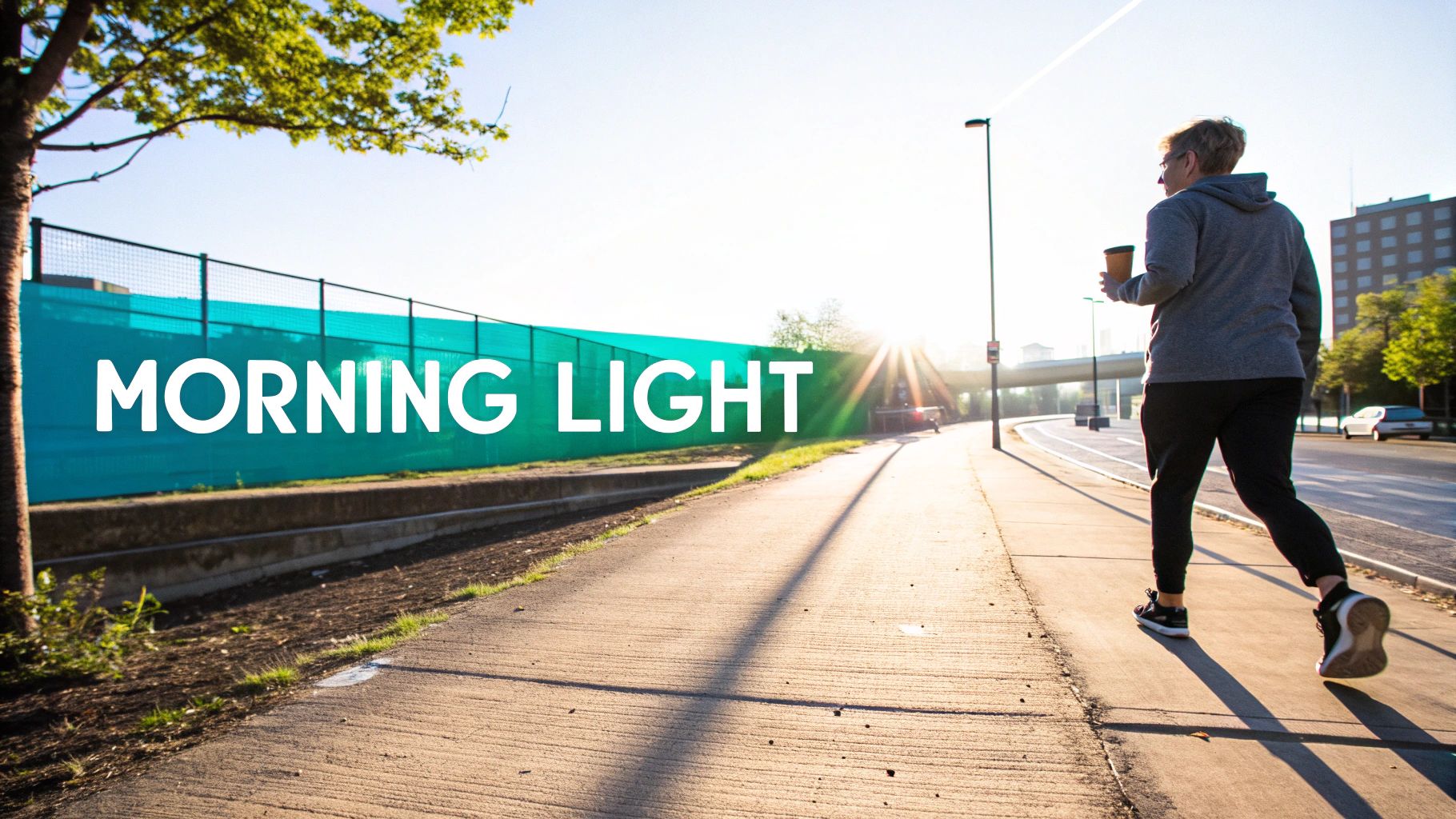
When it comes to sleep, two of the most powerful tools in your arsenal are completely free and often overlooked: your daily activity and your exposure to natural light. These two elements work together to anchor your body's internal clock, also known as your circadian rhythm, making it much easier to feel energized during the day and sleepy at night.
Think of it like this: by strategically using movement and sunlight, you're sending clear signals to your brain about when to be alert and when it’s time to wind down. This isn't about running a marathon or spending all day outside. Even small, consistent efforts can make a massive difference in how deeply you rest.
Harness the Power of Morning Sunlight
If there’s one single thing you can do to set your internal clock for the day, this is it: get 15 to 30 minutes of natural sunlight within an hour of waking up. It’s a game-changer.
This blast of early morning light is a powerful cue that tells your brain to slam the brakes on melatonin (the sleep hormone) and ramp up cortisol (the alertness hormone). Not only does this help you feel awake and focused all day, but it also sets a timer for when you'll naturally start feeling tired that evening.
It’s a simple biological hack that pays dividends when your head hits the pillow. Here are a few dead-simple ways to make it a habit:
- Take your coffee outside. Instead of sipping it at the kitchen table, head out to the porch or even just stand by a sunny window.
- Walk the dog (or yourself). A quick stroll around the block is all you need to get that essential light exposure.
- Park farther away. If you commute, park at the far end of the lot. Those extra few minutes of sunlight on your walk into the office add up.
Smart Exercise for Deeper Sleep
We all know physical activity is good for us, but it's fantastic for sleep. It helps melt away stress, eases anxiety, and actually increases the amount of time you spend in deep sleep—the most physically restorative stage of rest. Studies have shown that even moderate exercise, like a brisk walk, can significantly improve sleep quality.
The key, however, is timing.
Exercising raises your core body temperature, and that can interfere with sleep if you do it too close to bedtime. Your body actually needs to cool down to initiate sleep, so a sweaty, high-intensity workout right before you try to rest can be totally counterproductive.
Pro Tip: Aim to finish any intense workouts at least three to four hours before you plan to go to sleep. This gives your body plenty of time to cool down and your heart rate to return to normal, setting the stage for a peaceful night.
Movement and Light Strategies for Your Lifestyle
Making this work is all about fitting it into your existing schedule. A busy professional has different challenges than a frequent traveler, but the principles are exactly the same.
For the Busy Professional:
It’s so easy to get trapped indoors under artificial light all day. The fix? Be intentional with your breaks. Instead of scrolling through your phone at your desk, use your lunch break to take a 20-minute walk outside. That midday dose of sunlight and movement reinforces your circadian rhythm and is the perfect antidote to that dreaded afternoon slump.
For the Frequent Traveler:
Jet lag is the ultimate circadian rhythm nightmare, and sunlight is your absolute best friend for fixing it. As soon as you land, get outside into the daylight, no matter how tired you are. This immediately tells your body it's daytime in your new location, even if your internal clock is screaming that it's 3 a.m.
Want to dive deeper? We break down even more strategies in our guide to the best natural remedies for jet lag. This approach helps you adapt way faster, minimizing the grogginess and letting you actually enjoy your travels.
Of course, even when you're making all the right moves, questions are bound to pop up. Think of this as the troubleshooting section—quick, clear answers to the most common hurdles people face when trying to reclaim their sleep.
How Long Does It Really Take to See a Difference?
This is always the first thing people want to know. While some lucky folks might feel better after just a few nights, the honest answer is it usually takes about two to four weeks of consistent effort to really feel a change.
Think of it this way: you're retraining your body's internal clock (your circadian rhythm), and that doesn't happen overnight. It thrives on routine. The key isn’t perfection, but consistency, especially with your wake-up time. Stick with it, and you'll gradually build momentum toward that deep, restorative rest you're after.
Can I Still Have a Glass of Wine at Night?
Let's be realistic—sometimes a drink is part of a great evening. The short answer is yes, but you need a game plan. The most important thing to focus on here is timing.
If you're going to have a drink, try to finish it at least three to four hours before you plan to hit the pillow. This gives your body a fighting chance to metabolize the alcohol, which seriously reduces how much it messes with your deep and REM sleep later on. And don't forget to drink plenty of water to help your body out.
What If I Wake Up in the Middle of the Night?
First off, waking up once or twice a night is totally normal. It only becomes a problem when you can't get back to sleep. The absolute worst thing you can do? Look at your phone or the clock. It's a surefire way to kickstart anxiety about how much sleep you're losing.
Instead, try a simple relaxation trick like the 4-7-8 breathing exercise to calm your mind. If you’re still wide awake after 20 minutes or so, it's time to get out of bed.
The 20-Minute Rule: Lying in bed tossing and turning just trains your brain to see your bed as a place of stress. Get up, move to another room with dim lighting, and do something boring—read a book (nothing too exciting!), listen to quiet music—until you genuinely feel sleepy again.
This simple trick breaks that frustrating cycle and helps you keep that positive, cozy connection between your bed and actual sleep.
Are Naps Okay, or Will They Ruin My Night?
Naps can be a total game-changer, but they can also backfire if you're not careful. A quick power nap is fantastic for shaking off that afternoon slump without wrecking your nighttime sleep.
The golden rules for napping are pretty simple:
- Keep it short: Aim for about 20 to 30 minutes. It's just enough time to feel refreshed without falling into a deep sleep that leaves you feeling groggy and out of it.
- Time it right: The sweet spot for a nap is usually between 1 p.m. and 3 p.m. Any later, and you risk making it much harder to fall asleep when you actually want to.
A great night's sleep sets the foundation for a great day. But on those nights when you celebrate with friends, you shouldn't have to pay the price the next morning. Upside offers a simple, natural way to support your body's recovery, so you can enjoy your social life without sacrificing your well-being. Our expertly formulated jelly is packed with proven ingredients to help you wake up feeling refreshed and ready for anything.
Discover how Upside can transform your mornings at enjoyupside.com
#upside #enjoyupside #upsidejelly #livemore #hangovercure #hangoverprevention #fighthangovers #preventhangovers #HangoverRelief #MorningAfter #PartySmarter #HydrationStation #WellnessVibes #RecoverFaster #NoMoreHangovers #HealthyParty #HangoverHacks #FeelGoodMorning #NightlifeEssentials #HangoverFree #SupplementGoals #PostPartyPrep #GoodVibesOnly #HealthAndParty #HangoverHelper #UpsideToPartying