

· By Annemarie
Travel Essentials for Long Flights: Stay Comfortable and Refreshed
The real secret to surviving a long-haul flight isn't just what you pack—it's how you pack. The absolute best travel essentials for long flights are a small, curated collection of items that fight back against the biggest challenges of air travel: discomfort, dehydration, and boredom.
When you get these three things right, you can turn a grueling multi-hour ordeal into a surprisingly restful and productive experience.
Your Pre-Flight Game Plan for a Better Journey
A comfortable flight doesn't just happen by accident. It starts way before you even get to the airport. It’s not about cramming every gadget you own into a carry-on; it's about making smart choices that directly combat the physical and mental stress of being stuck in a metal tube for hours.
Think of it less as packing a bag and more as building your own personalized "in-flight wellness kit."
This approach helps you get past those generic packing lists and focus on what actually moves the needle. Instead of just gritting your teeth and enduring the flight, the goal is to create your own little bubble of comfort. That’s the key to landing at your destination feeling energized and ready to go, not like you just wrestled a bear for 12 hours.
The Pillars of a Comfortable Flight
To build your kit without overpacking, it helps to think in categories. This way, you make sure all your bases are covered. Your focus should be on three main pillars that tackle the biggest in-flight headaches:
-
Comfort and Sleep: These are the items dedicated to creating a peaceful environment. They help you block out all the distractions and turn that cramped seat into something resembling a personal oasis. A good neck pillow, an eye mask, and noise-canceling headphones are pretty much non-negotiable here.
-
Health and Hydration: That dry, recycled cabin air is your worst enemy. It’s a one-way ticket to fatigue and a surefire way to make jet lag even worse. The essentials in this category are all about staying hydrated and feeling well from takeoff to touchdown. For a deeper dive, check out our guide on essential travel health tips.
-
Entertainment and Productivity: Keeping your mind busy is the best way to make the hours fly by. A solid kit should have both digital and screen-free options to keep boredom (and eye strain) at bay.
A well-packed carry-on is your first line of defense against the discomforts of long-haul travel. Each item should have a clear purpose, whether it's helping you sleep, keeping you hydrated, or simply making the time pass more pleasantly.
To give you a quick, grab-and-go checklist, the table below breaks down the must-have items we'll be getting into.
Your Quick-Reference Long-Haul Flight Essentials
Here’s a snapshot of the core items that should be on every long-haul traveler's list. Think of this as your foundation for building the perfect carry-on.
| Category | Essential Items | Primary Purpose |
|---|---|---|
| Comfort & Sleep | Neck Pillow, Eye Mask, Noise-Canceling Headphones | Promotes restful sleep by blocking out light and sound. |
| Health & Hydration | Reusable Water Bottle, Electrolyte Packs, Lip Balm | Combats dehydration and keeps you feeling refreshed. |
| Entertainment & Tech | Power Bank, Pre-Downloaded Content, Book/Journal | Prevents boredom and keeps devices charged. |
With these items in your bag, you're already well on your way to a much more pleasant journey.
How to Stay Hydrated and Energized in the Air
Flying at 30,000 feet presents a unique challenge, and it’s not the turbulence. It's the air itself. The atmosphere inside an airplane cabin is shockingly dry, literally pulling moisture from your body with every breath. This is the real reason you get headaches, feel wiped out, and have a rough start to your trip, making hydration one of the most critical (and overlooked) essentials for a long flight.
Think of the cabin air like a desert. It’s so parched it will soak up moisture from anywhere it can find it—your skin, your throat, your lungs. This is why you so often land feeling groggy, thirsty, and just generally unwell. A solid hydration plan is your best defense against arriving feeling completely drained.
This is exactly why packing smart for your flight's challenges—like dehydration—is a total game-changer.
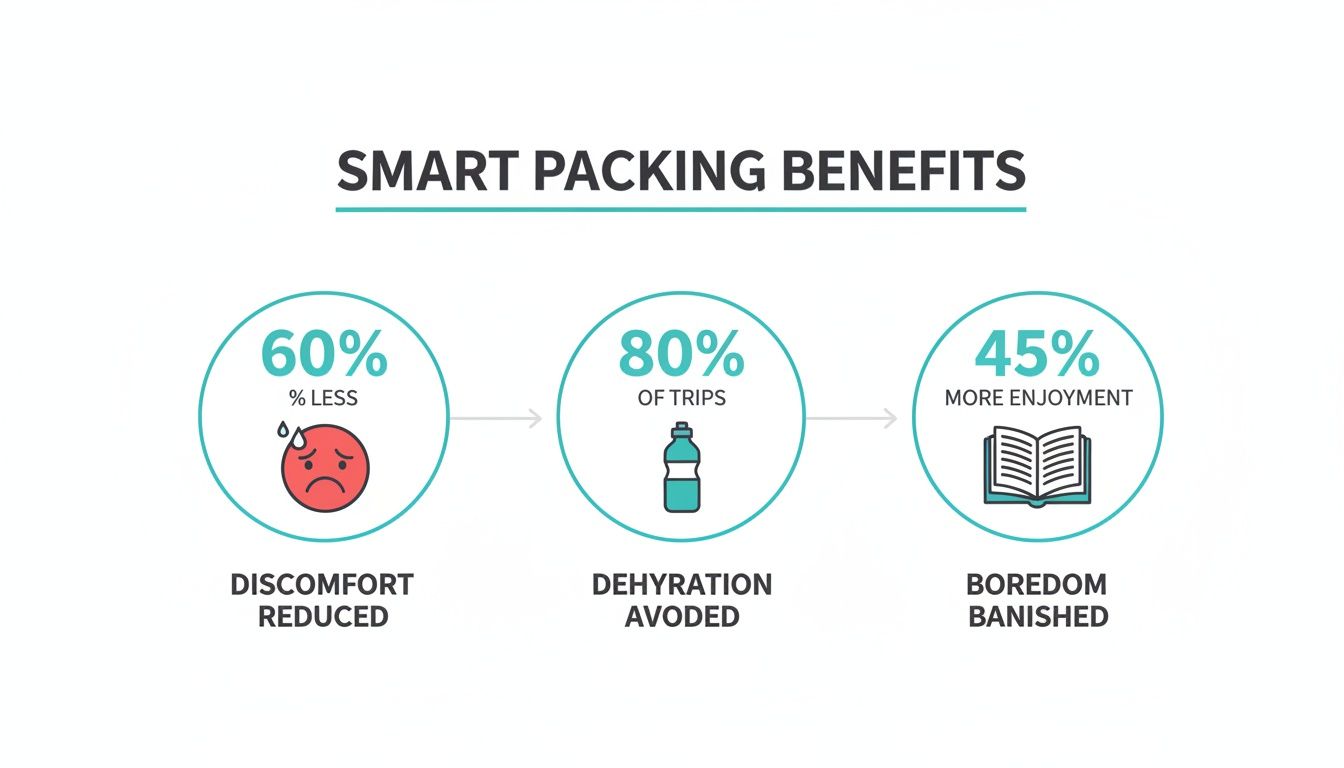
As you can see, tackling issues like dehydration head-on makes for a much more comfortable and enjoyable journey.
The Science Behind In-Flight Dehydration
That parched feeling you get on a plane? It’s not in your head. Dehydration is a serious issue on long-haul flights, where the cabin air sits at a mere 10-20% humidity—drier than the Sahara Desert. In this environment, you can lose up to 1.5 liters of water over a 10-hour flight.
This massive fluid loss is what triggers the headaches, fatigue, and that puffy, jet-lagged feeling when you land. The problem gets even worse if you enjoy a pre-flight cocktail or a glass of wine with your meal. Alcohol is a diuretic, which means it makes you lose fluids even faster, compounding the effects of the already bone-dry cabin air.
Your Simple Hydration and Energy Strategy
Beating this extreme dryness doesn’t require some complicated master plan. It just takes a little prep. Your goal isn't just to replace lost water, but also to restock the essential minerals your body needs to actually use that water and function properly.
Here’s a simple, effective game plan:
-
Bring a Reusable Water Bottle: Pack an empty, reusable bottle and breeze through security. Find a water station near your gate and fill it up. Now you have a serious supply to sip on throughout the flight without bugging the flight attendants for those tiny cups every 30 minutes.
-
Add Electrolytes for a Real Boost: Water is good, but water with electrolytes is way better. Electrolytes are minerals like sodium and potassium that help your body absorb and hold onto fluid more effectively. Tossing an electrolyte powder or tablet into your water bottle can make a world of difference in how you feel. For more on this, check out our guide on drinks that have electrolytes.
-
Be Smart About Your Drink Choices: It's tempting to grab a coffee or a cocktail, but both caffeine and alcohol are dehydrating. If you're going to indulge, just make sure to drink an extra glass of water for every alcoholic or caffeinated beverage you have.
Think of electrolyte supplements as a hydration multiplier. They help ensure the water you're drinking is actually being used by your body to fight off fatigue, instead of just passing right through you.
The Smart Traveler's Secret Weapon
For those of us with busy schedules and social lives, we need solutions that fit our lifestyle—something convenient, effective, and easy to throw in a bag. This is where a multi-purpose supplement becomes an indispensable part of your travel kit.
Upside Hangover Jelly is perfectly designed for the modern traveler. It's not just for preventing hangovers; its formula is loaded with ingredients that support hydration and wellness, making it a dual-purpose powerhouse for long flights.
Here’s why it's such a smart addition to your carry-on:
- TSA-Friendly Format: The single-serving jelly sachets are liquid-free and a breeze to pack. No stressing about security checks.
- Dual-Action Benefits: It helps your body process any vacation drinks more efficiently while also fighting the dehydrating effects of cabin air.
- Natural and Effective: Formulated with proven, natural ingredients, it helps replenish your system so you can land feeling refreshed and ready to go.
By building a simple yet powerful hydration strategy, you can completely transform your in-flight experience. You won’t just feel better during the flight—you'll give yourself a massive head start in the battle against jet lag.
Creating Your Personal In-Flight Comfort Zone
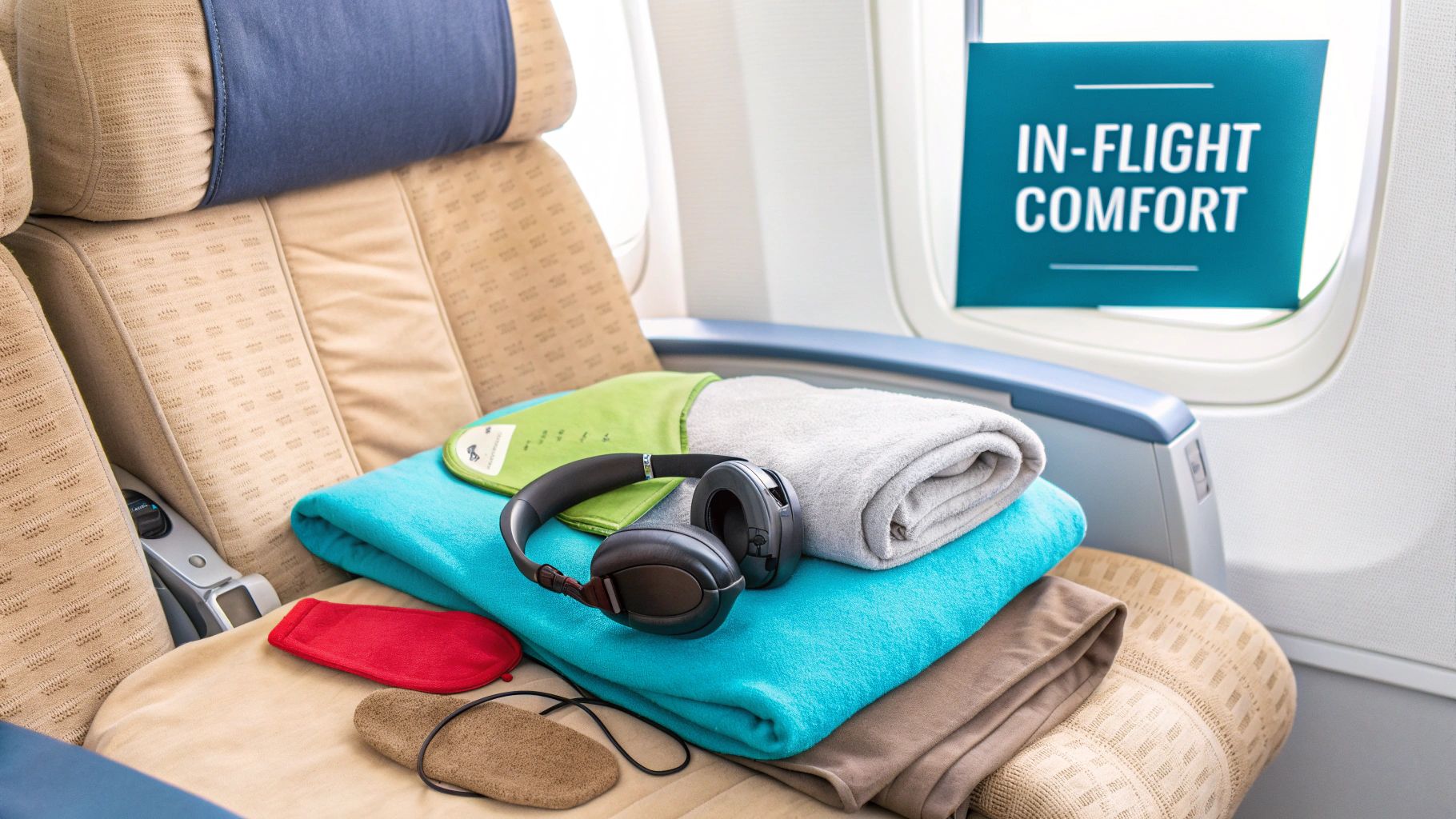
Let’s be honest, turning a cramped economy seat into your own private oasis is the ultimate travel hack for a long-haul flight. It's not about splurging on luxury; it’s about taking back a little control. By cleverly managing the light, sound, and physical support around you, you can create a micro-environment that actually lets you rest. Think of this as your first line of defense against the chaos of a packed cabin.
This little bubble of comfort tells your body it’s okay to switch off and relax—a crucial step if you want to land feeling refreshed and ready to go, not like you've been through a wringer.
The Big Three of In-Flight Comfort
To build this sanctuary in the sky, you need to focus on three core items. These are the non-negotiables, the foundational pillars of any good comfort kit, and they all work together to block out the distractions that make plane sleep so difficult.
-
A Supportive Neck Pillow: We've all been there—a bad pillow is somehow worse than no pillow at all. A good one stops the dreaded head-bob, which is the number one culprit behind neck strain and that awful experience of being jolted awake just as you finally drift off.
-
A High-Quality Eye Mask: Cabin lights dimming and brightening, the glare from your neighbor's movie screen… all of it messes with your body's ability to produce melatonin, the sleep hormone. A solid eye mask creates total darkness, signaling to your brain that it's time for some real, restorative rest.
-
Noise-Canceling Headphones: The constant drone of the engines, the chatter from a few rows back, and the endless dings and announcements create a low-level hum of stress. Noise-canceling headphones are your secret weapon for tuning it all out and creating a peaceful bubble just for you.
Jet lag is a real beast, especially on those eastbound flights over eight hours. You can feel the effects, like insomnia, for days. Combining a good eye mask with earplugs or headphones can drastically cut down on those sleep disruptions, essentially tricking your body into thinking it’s in a quiet, dark bedroom. It’s also a good idea to rethink that second glass of wine; alcohol can mess with melatonin production and make your body's time-zone confusion even worse. You can get more great tips on managing your sleep cycle from the experts at Wit & Whimsy.
Finding the Perfect Fit for You
Of course, not all comfort gear is created equal. What works for your friend might not work for you. The best choice comes down to your personal sleep style and what you find genuinely comfortable.
Neck Pillow Showdown: Inflatable vs. Memory Foam
| Pillow Type | Pros | Cons |
|---|---|---|
| Inflatable | Super compact and lightweight; you can adjust the firmness. | Can feel less supportive and a bit plasticky on the skin. |
| Memory Foam | Unbeatable comfort and support; molds right to your neck. | Tends to be bulky and a hassle to pack. |
The right neck pillow isn’t just about feeling cozy—it’s about proper alignment. Preventing neck strain is the key to avoiding that post-flight stiffness and headache we all know too well.
Beyond the Big Three: Other Comfort Essentials
While those three are the stars of the show, a few other items can take your comfort level from good to great. These are the extras that tackle all the other little in-flight annoyances, from arctic-level cabin temperatures to dry, flaky skin.
Don't underestimate your clothing choices. Seriously, wear loose, breathable layers that you can pile on or peel off as the cabin temp swings from tropical to tundra. Think joggers, a soft tee, and a zip-up hoodie you can use as an extra blanket in a pinch.
A few other small things can make a huge difference:
- Cozy Socks or Slippers: Kicking off your shoes and slipping into a pair of warm, plush socks is a game-changer. It helps with circulation and just makes you feel more relaxed and at home.
- A Large Scarf or Travel Blanket: Those airline blankets can be flimsy and sometimes hard to come by. A big scarf or a packable travel blanket gives you an extra layer of guaranteed warmth and comfort.
- Hydrating Skincare: That recycled cabin air is a moisture vampire for your skin. Pack a travel-sized hydrating facial mist, a good lip balm, and a rich hand cream to fight off the dryness and feel a little more human.
By putting together a thoughtful kit, you can transform your tiny seat into a personal haven. It’s all about empowering yourself to control your environment, so you can actually sleep, relax, and arrive ready for whatever adventure awaits.
Staying Healthy and Mobile at High Altitude
Okay, so you've nailed comfort and hydration. But the real pro-move for long-haul flights is looking after your health and mobility. Being stuck in a tiny seat for hours on end isn't just boring; it can create some genuine health issues that are easy to ignore until they become a problem.
Keeping your circulation going and maintaining some basic hygiene are non-negotiable. These simple steps are the difference between landing rested and ready to go, versus feeling groggy, stiff, and just plain gross.
The Hidden Risk of Sitting Still
One of the biggest concerns on a long flight is something called Deep Vein Thrombosis (DVT). It’s a serious condition where blood clots form in the deep veins of your body, usually in your legs. The main culprit? Sitting still for way too long. When you’re immobile, your blood flow slows down, which can create the perfect environment for a clot.
And this isn't just something that happens to a specific type of person; it can affect anyone on a long journey. Things like your age, lifestyle, and even having a few drinks can increase your risk. On flights longer than four hours, the risk of DVT definitely goes up, especially if you're over 40 or kicking back with some in-flight alcohol. For anyone who flies often, taking steps to prevent this is a must.
This is exactly why getting some movement and using circulation aids are some of the most important travel essentials for long flights.
Your In-Flight Mobility Plan
Fighting off the effects of being stationary is actually pretty simple. All you need to do is keep your blood flowing and your muscles working a bit, even while you’re stuck in your seat. A few easy actions can make a world of difference.
- Wear Compression Socks: Seriously, they aren't just for your grandparents. Compression socks put gentle pressure on your legs, which helps push blood back up toward your heart instead of letting it pool in your feet. They make a huge difference in reducing swelling and that achy feeling.
- Do Some In-Seat Exercises: You don't need a gym. Just do some simple ankle circles, foot pumps (pointing and flexing your toes), and knee lifts every hour or so. It’s enough to get things moving.
- Get Up and Walk Around: Whenever the seatbelt sign is off, take a quick stroll down the aisle. A walk to the bathroom or just stretching near the galley is a great way to wake your legs up.
Think of it as proactive self-care. A couple of minutes of simple movement every hour can save you from hours of discomfort and lower serious health risks. You'll arrive feeling so much better.
Building Your Mini In-Flight Pharmacy
Besides keeping mobile, having a small kit for minor issues is a game-changer for a stress-free flight. You don't need to haul your entire medicine cabinet, just a few key things to tackle common problems.
Here’s a quick checklist for your kit:
- Pain Relievers: Ibuprofen or acetaminophen for that inevitable plane headache.
- Stomach Aids: Antacids or motion sickness meds, just in case.
- Band-Aids: For surprise paper cuts or blisters from your airport shoes.
- Personal Medications: Make sure you have enough for the flight, plus a little extra in case of delays.
Simple Hygiene for a Refreshed Arrival
Finally, nothing boosts your morale like feeling clean. After hours in recycled air, a small toiletry kit can make you feel human again just before you land.
Pack these travel-sized essentials to freshen up:
- Sanitizing Wipes: Wipe down your tray table, armrests, and that TV screen before you touch anything.
- Hand Sanitizer: A must-have for after you’ve touched shared surfaces.
- Toothbrush and Toothpaste: Brushing your teeth is the fastest way to feel instantly refreshed.
- Face Wipes or Mist: A quick wipe or spritz can get rid of that greasy, dry-skin feeling from the cabin air.
These health, mobility, and hygiene habits are the foundation of a good travel experience. They also play a huge role in helping your body adjust to a new time zone. To learn more about that, check out our in-depth guide on how to recover from jet lag.
Packing Your Entertainment and Productivity Kit
Once you've got your personal comfort zone dialed in, the next big challenge on a long flight is the inevitable battle against boredom. Let's be real, staring at the back of a seat for 10 hours is a recipe for going stir-crazy. A solid entertainment and productivity kit isn't just nice to have; it's one of the most critical travel essentials for long flights. It turns that dead time into a chance to either totally zone out or get things done.
The golden rule here? Never, ever rely on the spotty and overpriced in-flight Wi-Fi. Your whole game plan should be built around having everything you need offline. A little prep work before you leave home makes all the difference and saves you from the frustration of a buffering screen.
Pre-Download Everything for Uninterrupted Entertainment
Your phone or tablet is a tiny entertainment beast, but only if you load it up with goodies before you hit the airport. I like to think of it as packing a digital suitcase—you always want to bring more options than you think you’ll actually use.
This little bit of planning means you've got hours of content ready to roll, no matter how bad the connection is.
-
Movies and TV Shows: Most streaming services like Netflix and Amazon Prime Video let you download stuff right to your device. Grab a full season of that show you’ve been meaning to binge or a few movies you missed in theaters.
-
Music and Podcasts: On Spotify or Apple Music, make a few different playlists for whatever mood strikes and hit that "download" button. Do the same with a bunch of podcast episodes—you'll want options, from comedy to true crime.
-
Audiobooks and E-books: A long flight is the perfect excuse to finally crack open that book on your to-read list. Download a couple of choices to your Kindle or e-reader app so you can pick whatever you're feeling mid-flight.
Embrace Screen-Free Time
As great as digital entertainment is, your eyes will definitely thank you for taking a break from the screen. Going analog for a bit is a great way to cut down on eye strain and can feel way more relaxing in that weird, pressurized cabin environment.
Tossing a real-deal physical book or a magazine in your bag gives you something tangible to focus on. Or, don't underestimate the power of a simple notebook and a good pen. You can use it to journal about your trip, brainstorm new ideas, or just doodle to make the time fly by.
A mix of digital and analog entertainment is the secret sauce for a balanced flight. It lets you bounce between watching a movie and quieter stuff like journaling, which helps keep your brain from turning to mush.
The Tech Gear That Powers Your Flight
Of course, all your downloaded shows are pretty useless if your battery dies. A few key pieces of tech will make sure your devices are juiced up and ready to go from takeoff to landing. This tech support system is just as important as the content you packed.
Here’s the absolute essential tech to bring:
-
A Reliable Portable Power Bank: Seriously, this is non-negotiable. Even if your seat has a USB port, half the time they're painfully slow or just plain broken. A fully charged power bank with at least 10,000mAh will get you multiple phone charges and guarantee you land with a full battery.
-
A Universal Travel Adapter: If you're flying internationally, you'll need this for layovers or the second you land. I recommend getting one with multiple USB ports so you can charge a few things at once.
-
A Headphone Splitter: Traveling with a friend or partner? This tiny, cheap gadget is a lifesaver. It lets two people plug in and watch the same movie on one screen. It’s a simple fix for sharing the fun.
Your Go-To Packing List for Long-Haul Flights
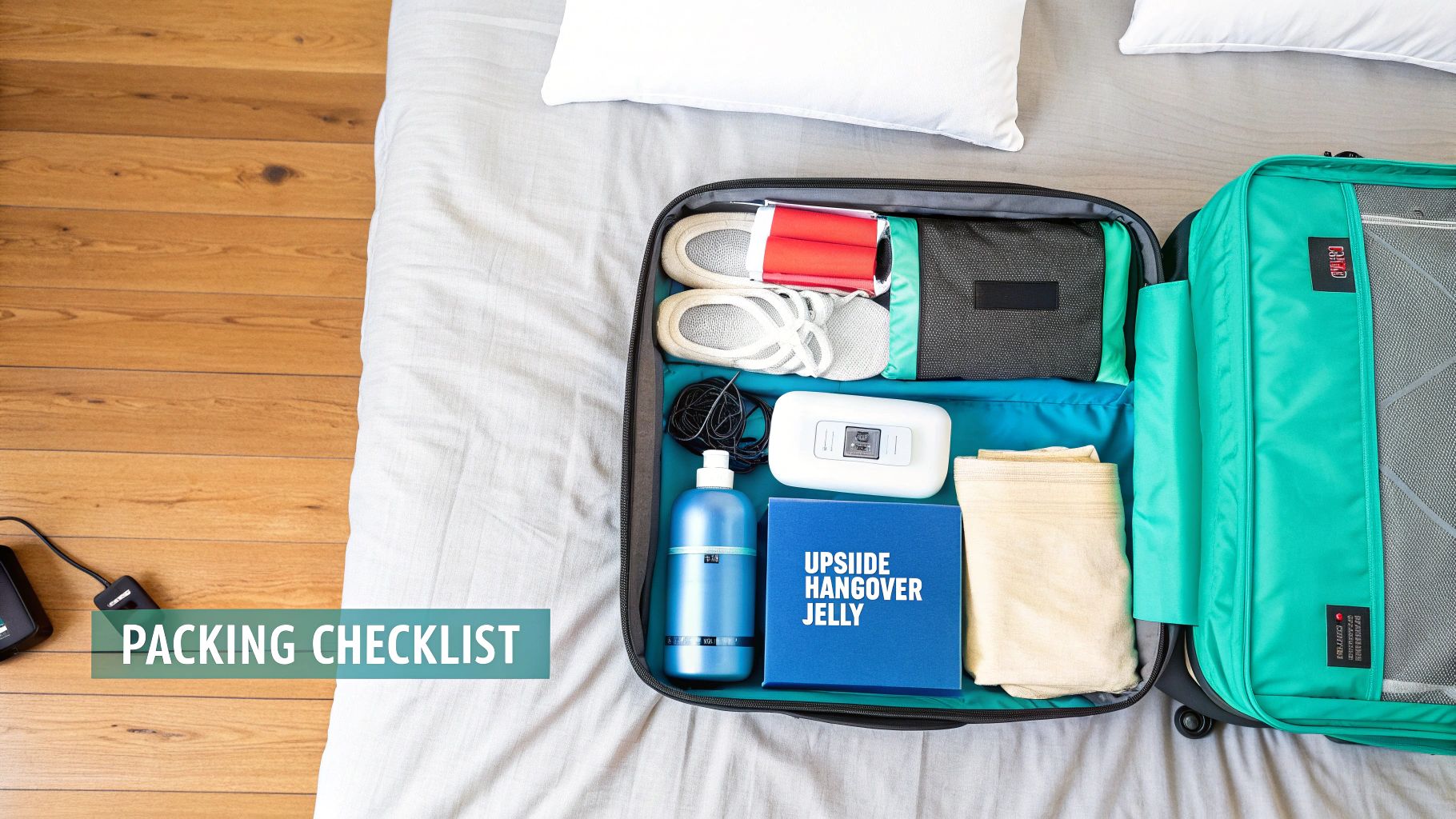
Alright, let's pull everything together. This is your final, no-stress checklist. I've broken down all the must-have travel essentials for long flights into simple categories so you can do a quick final scan before zipping up your bag and heading for the door.
Think of this less like a random list and more like a strategy for a genuinely better flight. Each section tackles a specific challenge of long-haul travel—from staying comfortable to keeping your sanity—ensuring you touch down feeling human.
Comfort and Sleep Essentials
This is all about creating your personal little sanctuary. These items are your best defense against the noise and chaos of the cabin, helping you get some real rest, even in an upright seat.
- Neck Pillow: A good memory foam one offers incredible support, but an inflatable version is a space-saver. Your call.
- Eye Mask: Don't skimp here. A mask that truly blocks out all the light is a game-changer for sleep.
- Noise-Canceling Headphones: Absolutely essential. Tuning out the engine drone alone is worth the investment.
- Large Scarf or Travel Blanket: Airline blankets are notoriously flimsy. Bring your own warmth.
- Comfy Layers and Socks: Dress in breathable fabrics and toss a pair of cozy socks in your bag to change into once you're settled.
Health and Hydration Essentials
Think of this as your toolkit for fighting back against that dry, recycled cabin air. Staying hydrated and healthy is your secret weapon against jet lag.
- Reusable Water Bottle (Empty): The number one rule of long flights. Fill it up after you clear security.
- Lip Balm and Hand Cream: That desert-like air will dry out your skin fast. Be prepared.
- Sanitizing Wipes and Hand Sanitizer: Give your tray table and armrests a quick wipe-down for peace of mind.
- Mini "Pharmacy" Kit: A few painkillers, some stomach settlers, and any personal meds you need.
- Compression Socks: Seriously, don't skip these. They keep the blood flowing and prevent your ankles from swelling up.
The real MVP of your health kit? Upside Hangover Jelly. These TSA-friendly sachets are packed with natural ingredients to boost hydration and wellness. I take one before takeoff to help with dehydration and another when I land to feel sharp and ready to go.
Entertainment and Tech Essentials
And finally, the boredom-busters. The right tech and entertainment setup can make 10 hours feel like five.
- Portable Power Bank: A fully charged power bank is your lifeline. Don't leave home without it.
- Universal Travel Adapter: A must if you have a long layover or are flying internationally.
- Pre-Downloaded Content: Load up your phone or tablet with more movies, podcasts, and shows than you think you'll need.
- A Book or Journal: Give your eyes a break from the screen. It makes a bigger difference than you'd think.
Your Long-Haul Flight Questions, Answered
Even with the perfect game plan, a few last-minute questions always seem to pop up before a big trip. We get it. Here are some quick answers to the most common things people ask, so you can walk onto that plane feeling like a seasoned pro.
What Should I Wear on a Long Flight?
Comfort is king here. The absolute best way to go is dressing in loose, breathable layers. Think joggers or your comfiest pants, a soft t-shirt, and a zip-up hoodie or a cardigan you can easily throw on or off.
Cabin temperatures can be all over the place, and layering means you can adjust without a struggle. And please, do yourself a favor: wear comfortable, slip-on shoes. They make getting through security and kicking back in your seat so much easier.
Can I Bring My Own Food and Drinks on the Plane?
You sure can! Bringing solid food items in your carry-on is totally fine. Packing your own snacks is a fantastic way to dodge the overpriced (and usually pretty unhealthy) airport food.
As for drinks, you'll have to stick to the TSA’s 3-1-1 rule for any liquids you bring through security. The pro move? Bring an empty reusable water bottle. Once you're past security, just fill it up at a water station by your gate. It's the single best way to stay properly hydrated on your flight, hands down.
What's the Best Way to Beat Jet Lag?
The battle against jet lag begins the moment you're on the plane. The most important thing is to stay hydrated, so drink tons of water and try to go easy on the alcohol and caffeine.
A great trick is to adjust to your destination's time zone as soon as you board. If it’s nighttime where you're going, pop on your eye mask, put in your headphones, and try to get some real rest. When you finally land, getting out into natural daylight as soon as possible will do wonders for resetting your body's internal clock.
The most effective strategy is a simple combo: serious hydration, strategic sleep on the plane, and getting on your new time zone's schedule immediately. What you do in the air makes a massive difference to how you feel on the ground.
Are Compression Socks Actually Worth It?
For any flight over four hours, our answer is a big yes. They are highly recommended for a reason. When you're sitting for that long, blood can start to pool in your lower legs, which leads to swelling, aches, and even raises the risk of blood clots.
Compression socks apply gentle, steady pressure to boost your circulation, helping to head off all those problems. It's such a simple thing, but it's an effective health tool that makes a huge difference in how you feel when you step off the plane.
Ready to make your next long-haul flight the most comfortable one you've ever had? Upside is here to help. With Upside Hangover Jelly, you can fight off that in-flight dehydration and arrive feeling fresh and ready to start your adventure.
Discover the traveler's secret weapon and shop now. #upside #enjoyupside #upsidejelly #livemore #hangovercure #hangoverprevention #fighthangovers #preventhangovers #HangoverRelief #MorningAfter #PartySmarter #HydrationStation #WellnessVibes #RecoverFaster #NoMoreHangovers #HealthyParty #HangoverHacks #FeelGoodMorning #NightlifeEssentials #HangoverFree #SupplementGoals #PostPartyPrep #GoodVibesOnly #HealthAndParty #HangoverHelper #UpsideToPartying