

· By Annemarie
What Are Liver Enzymes and Why Do They Matter?
Think of liver enzymes as your body's built-in alarm system. These proteins, like ALT and AST, are supposed to stay inside your liver cells. When they start leaking into your bloodstream, it's a major heads-up that your liver is stressed or damaged.
Your Liver's Built-In Security Team
Imagine your liver is a buzzing factory. The liver enzymes are the specialized workers on the assembly line, speeding up all the critical jobs—processing nutrients, breaking down toxins, and making essential stuff like bile. When everything is running like a well-oiled machine, these workers stay right where they belong.
But what happens when the factory takes a hit? Maybe from a night of heavy drinking, certain medications, or just a consistently poor diet. The factory walls get damaged, and the enzyme "workers" start spilling out into the bloodstream. This is what a standard blood test picks up on, giving your doctor a snapshot of what’s going on inside.
The Main Players on the Team
While your liver has tons of enzymes, a typical liver function test zeros in on a core group. Each one tells a slightly different story about what might be going on.
For a clearer picture, here’s a quick rundown of the key enzymes your doctor is looking for.
Quick Guide to Key Liver Enzymes
| Enzyme | Full Name | Primary Role | Typically Indicates |
|---|---|---|---|
| ALT | Alanine Aminotransferase | Converts proteins into energy for liver cells | The most direct signal of liver cell stress |
| AST | Aspartate Aminotransferase | Helps metabolize amino acids | General marker of stress on the liver, heart, or muscles |
| ALP | Alkaline Phosphatase | Transports phosphate; important for bile flow | Possible issues with bile ducts or bones |
| GGT | Gamma-Glutamyl Transferase | Helps move molecules; plays a role in detoxification | A sensitive marker for liver and bile duct health |
Each of these enzymes gives your doctor a clue, helping them piece together the puzzle of your overall liver health.
Just remember, elevated liver enzymes aren't a diagnosis on their own. They're more like a check engine light—a signal from your body telling you something is putting your liver under pressure.
So, What's a Normal Level?
Liver enzymes like ALT and AST are absolutely essential proteins that help your body process amino acids. They're also that first warning shot, especially after a night of drinking—something most of us have experienced.
Traditionally, doctors considered normal ranges to be around 7-56 U/L for ALT and 10-40 U/L for AST. But a lot of newer research is pushing for tighter, more "optimal" levels, suggesting that keeping both under 20 U/L is a much better goal for long-term health.
Getting a handle on how your body actually processes alcohol is a game-changer for managing your liver health. If you want to dive deeper, you can explore our detailed guide on alcohol metabolism and how your body processes drinks.
Meet the Key Players: ALT, AST, ALP, and GGT
When your doctor flags a liver function test, they aren't looking for a single clue. They’re basically sending in a team of specialized detectives, and each enzyme has a unique story to tell. Getting to know what each one does is the key to decoding your lab results and understanding what's really going on with your liver.
Let's meet the four main players you'll see on that report: ALT, AST, ALP, and GGT.
Alanine Aminotransferase (ALT): The Liver Specialist
Think of Alanine Aminotransferase (ALT) as the ultimate liver insider. It’s found in super high concentrations inside your liver cells, where it works hard helping to convert protein into energy. Because it’s so liver-centric, ALT is considered the most specific sign of liver cell stress.
So, when liver cells get damaged or just plain irritated—whether from a few too many drinks, a certain medication, or an illness—they start leaking ALT into your bloodstream. A sudden jump in ALT is one of the clearest signals that your liver is under some kind of direct pressure. It's often the very first number a doctor zeroes in on.
Aspartate Aminotransferase (AST): The General Responder
Next on the list is Aspartate Aminotransferase (AST). If ALT is a specialist, AST is more like a general first responder. Yes, it’s also found in the liver and helps with amino acid metabolism, but you’ll find significant amounts of it in other places, too—like your heart, muscles, and even your brain.
This means that while a spike in AST can definitely point to liver issues, it could also be signaling something completely different, like muscle strain from a killer workout. That’s exactly why doctors never just look at AST by itself. They always play it off ALT to figure out where the real problem is coming from.
For social drinkers, the AST-to-ALT ratio is a huge clue. When the AST level is way higher than the ALT level—often a 2:1 ratio or more—it’s a strong hint that alcohol is the likely culprit behind the liver stress.
Alkaline Phosphatase (ALP): The Bile Duct Inspector
Unlike ALT and AST, which point to trouble with the liver cells, Alkaline Phosphatase (ALP) shines a light on a different system: the bile ducts. These are the tiny pipelines that carry bile (a liquid essential for digestion) from your liver to your gallbladder and intestines.
ALP hangs out in the cells lining these ducts. If the pipes get clogged or inflamed, ALP levels shoot up. Since you also have ALP in your bones, doctors will often check it alongside another enzyme to make sure the problem is actually coming from the liver.
Gamma-Glutamyl Transferase (GGT): The Sensitive Detector
Last but not least, we have Gamma-Glutamyl Transferase (GGT). This enzyme is hyper-sensitive to any changes in the liver, especially anything related to bile flow or oxidative stress. In fact, GGT is often the very first enzyme to spike after drinking, sometimes even after just one wild night out.
When you see both ALP and GGT on the rise, it’s a powerful confirmation that the issue is tied to the liver’s biliary system. Thanks to its sensitivity, GGT acts as a fantastic early-warning system, flagging potential issues before they get more serious.
How to Read Your Liver Enzyme Test Results
Getting a lab report back can feel like trying to solve a puzzle. It's just a sheet of abbreviations and numbers that don't mean much on their own. But once you know what to look for, you can start to connect the dots and understand what the results are telling you about your liver health.
When you glance at your results, you’ll see your enzyme levels listed next to a “reference range.” Think of this as the average for the general population. It's a good starting point, but it's important to remember there's a difference between a "normal" range and what's "optimal" for your own body.
This chart is a great visual guide to the main players and what they can signal.
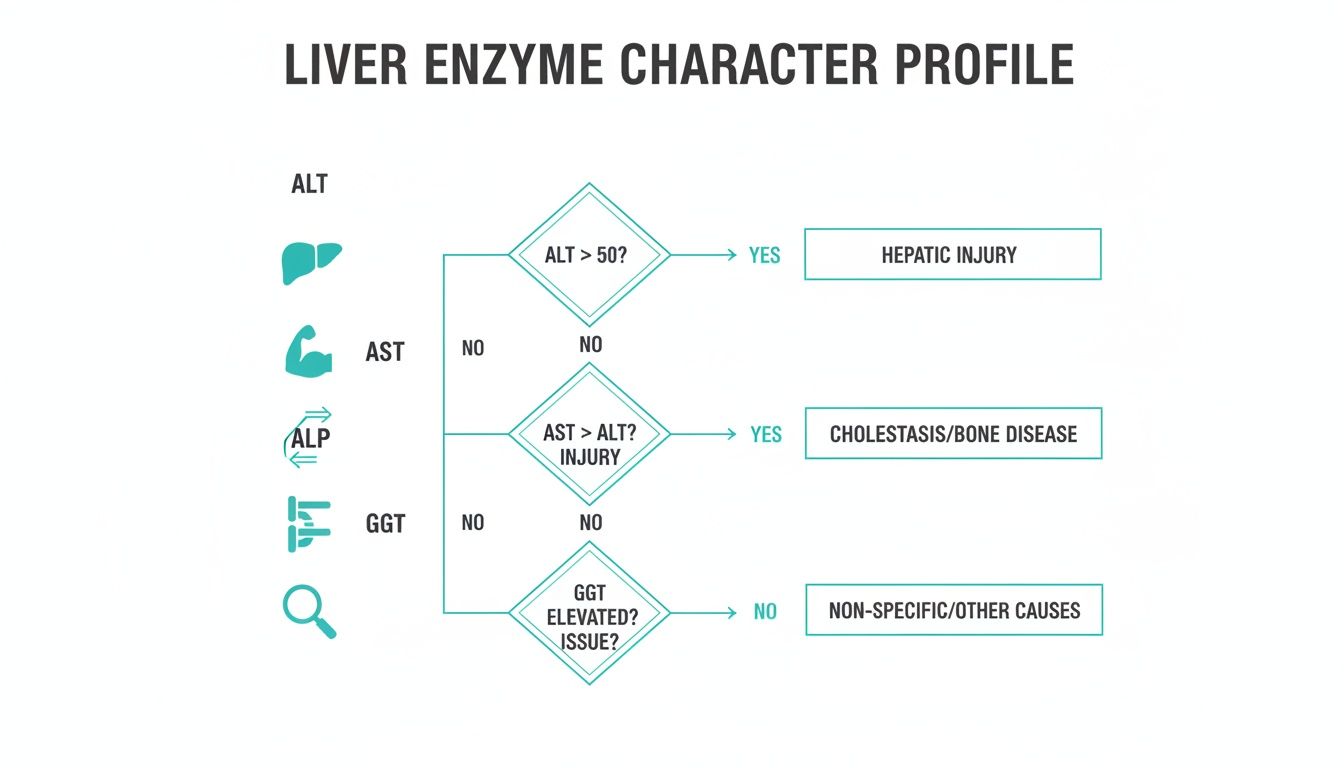
As you can see, each enzyme—ALT, AST, ALP, and GGT—acts like a different kind of clue, pointing toward potential stress in your liver cells, muscles, or even your bile ducts.
Understanding Normal vs. Elevated Levels
If your numbers fall within that standard reference range, it’s generally a good sign. But what does it mean when a result is flagged as high? An elevated level simply means there’s more of that specific enzyme floating around in your blood than expected. This is often a heads-up that your liver (or another part of your body) might be under some strain.
Now, before you panic, it's crucial to know that a single high reading isn't automatically a red flag. All sorts of temporary things can make your liver enzymes spike.
- Intense Exercise: That killer leg day you just had? It can cause temporary muscle breakdown, which can bump up your AST levels for a bit.
- A Big Weekend: A few nights of heavy drinking puts direct stress on your liver, which can lead to a short-term spike in GGT, ALT, and AST.
- Certain Medications: Even common over-the-counter pain relievers or some prescription drugs can cause a temporary jump in your enzyme levels.
It’s all about context.
Decoding Specific Patterns
Doctors aren't just looking at one number in isolation; they’re looking for patterns. For example, if both GGT and ALP are high, it can point to issues with your bile ducts. After a period of heavy drinking, it's not uncommon to see these levels spike up to 10 times the normal amount as those pathways get inflamed.
To put that in perspective, normal ranges are roughly 30-120 IU/L for ALP and 6-50 IU/L for GGT. A major jump in both often suggests a problem with bile flow rather than direct damage to the liver cells themselves. You can learn more about how these patterns indicate specific conditions on ncbi.nlm.nih.gov.
The key takeaway here is that context is everything. An isolated high number could just be a blip on the radar. But a consistent pattern of elevated enzymes is a clear signal that it's time to have a more in-depth conversation with your doctor.
Understanding your test results empowers you to be a more active participant in your own health. It turns what looks like confusing data into insights you can actually use.
The Direct Impact of Alcohol on Your Liver
Whenever you have a drink, you’re basically handing your liver a tough assignment. The moment alcohol hits your system, your liver gets to work, acting as the main processing plant for metabolizing it. This isn't a simple, clean job; it’s a demanding process that kicks up a ton of oxidative stress.
Think of your liver cells as tiny, busy factories. When they process alcohol, they produce nasty byproducts, like free radicals, which act like sparks flying off the machinery. Over time, these sparks can damage the factory walls, causing inflammation and letting enzymes like ALT and AST leak out into your bloodstream.
That cellular stress is a big reason you might feel sluggish or just plain off after a night out. Your body is busy with an internal cleanup, and your liver is putting in overtime to handle the metabolic mess.
Decoding the AST to ALT Ratio
When doctors suspect alcohol is putting a strain on the liver, they don't just look at the individual enzyme numbers. They dig deeper by looking at the relationship between them. The AST/ALT ratio is a particularly revealing clue that helps them figure out if alcohol is the culprit behind the liver stress.
In most liver issues not caused by alcohol, ALT levels are usually higher than AST levels. But when chronic drinking is in the picture, that pattern often flips.
A ratio where AST is significantly higher than ALT—often by a 2:1 margin or more—is a classic signature of alcohol-related inflammation. It’s a specific signal that gives doctors a strong hint about what’s really going on.
Why This Ratio Matters for Social Drinkers
Getting a handle on this ratio is incredibly useful for anyone who drinks socially and wants to keep tabs on their health. The AST/ALT ratio is a powerhouse stat in liver health, used since the 1970s to tell the difference between alcoholic and non-alcoholic liver damage.
Research shows that in cases of alcoholic liver disease, the average ratio is about 1.45, and in 90% of alcoholic hepatitis cases, it jumps above 2.0. This happens partly because heavy drinking can deplete vitamin B6 (which is needed for ALT production) while also causing AST to spill out from the mitochondria inside liver cells. For comparison, non-alcoholic fatty liver disease often shows a ratio closer to 0.9.
Think of the AST/ALT ratio as your liver’s way of sending a specific message. A ratio above 2:1 is like a direct text saying, "The alcohol is putting me under serious pressure."
By connecting the science to your real-life habits, you get a much better sense of what your body is trying to tell you. For a closer look at this whole process, check out our guide on how alcohol affects the liver. This isn’t about scare tactics; it’s about giving you the knowledge to make smart choices for your long-term health.
Lifestyle Strategies for a Healthier Liver
Knowing what your liver enzymes are trying to tell you is a huge first step. The next part? Taking action.
The good news is you don't need a total life overhaul to support your liver. It’s really about making small, consistent choices that lighten its workload and help it do what it does best: heal itself.
These strategies are designed to fit right into a modern, social lifestyle. You don’t have to pick between having fun and staying healthy—simple habits can make a massive difference in keeping those enzyme levels happy and helping you bounce back faster.
Hydration and Movement
Let's start with the basics. One of the easiest and most effective things you can do for your liver is just drink more water. Water is critical for flushing out the very toxins your liver works so hard to process in the first place. When you’re dehydrated—especially after a night of drinking—your liver’s efficiency takes a nosedive, putting it under way more strain.
Getting your body moving is another game-changer. Regular exercise improves blood flow, which means your liver gets a steady stream of oxygen and nutrients. It also helps you manage your weight, cutting your risk for non-alcoholic fatty liver disease (NAFLD), a condition that sends your enzyme levels haywire.
Liver-Friendly Nutrition
What you eat has a direct line to your liver's health. Think of it like giving your body the right tools for the job—in this case, protecting and repairing your liver cells.
- Antioxidant-Rich Foods: Load up on berries, leafy greens like spinach, and all those colorful veggies. They're packed with antioxidants that neutralize the nasty free radicals produced during detox, taking a lot of stress off your cells.
- Cruciferous Vegetables: Broccoli, Brussels sprouts, and cauliflower contain special compounds that boost the liver’s natural detox pathways. Basically, they help it process and kick out toxins more efficiently.
- Healthy Fats: Foods rich in omega-3 fatty acids, like avocados and walnuts, are fantastic for reducing inflammation all over your body, including in the liver.
The goal isn't perfection—it's progress. Think of these foods as a protective shield for your liver, helping it defend against the stress of daily life and a few celebratory drinks.
Targeted Support with Supplements
Beyond a solid diet, certain supplements are well-known for their liver-protective perks. Ingredients like Milk Thistle and TUDCA have been studied for years and are trusted for their ability to support liver function.
Milk Thistle, with its active compound silymarin, is a powerhouse antioxidant that helps stabilize liver cell membranes and even encourages regeneration. It's a go-to for general detox and protection.
TUDCA is a bit different. It’s a bile acid that works by improving bile flow and cutting down on cellular stress inside the liver. By keeping bile moving smoothly, it helps prevent a toxic backup that can cause inflammation.
While they each have their own strengths, combining them can offer some seriously comprehensive support. This is why a well-formulated hangover supplement can be a smart addition to your wellness routine—it’s not just about the morning after, but about giving your liver a helping hand along the way.
When to Talk to Your Doctor About Liver Health
Look, it's one thing for your liver enzymes to spike a bit after a fun weekend or a killer workout session. That can happen. But it's another thing entirely when those numbers stay high or when your body starts sending up some serious red flags.
A single high reading usually isn't cause for a full-blown panic. However, consistently elevated levels or some very specific symptoms are your body's way of saying, "Hey, we need to get this checked out." Paying attention to these signals is the difference between being proactive and letting a small issue snowball into something much bigger.
Key Symptoms to Watch For
If your lab results show elevated liver enzymes and you’re experiencing any of the following, it’s time to book that doctor's appointment. These are classic signs that your liver is under some real strain and needs a professional's attention.
- Persistent Fatigue: We're not talking about being a little tired after a long day. This is a deep, unusual exhaustion that just doesn't go away.
- Abdominal Discomfort: A dull ache or swelling in the upper right part of your belly—right where your liver lives—is a major clue.
- Yellowing Skin or Eyes (Jaundice): This is one of the most well-known signs of liver distress. If your skin or the whites of your eyes take on a yellowish tint, don't wait.
- Unexplained Weight Loss: Dropping pounds without even trying? While it might sound nice, it can be a sign that something is off internally.
Sometimes, these symptoms can be tied to the buildup of nasty toxins like acetaldehyde after drinking. If you want to dive deeper into how your body handles this, check out our guide on acetaldehyde toxicity symptoms.
A doctor's visit isn’t just about getting a diagnosis; it’s about gaining clarity and creating a plan. They can order follow-up tests, review your lifestyle, and help you understand the full picture of your liver health.
Burning Questions About Liver Enzymes
Alright, let's wrap this up by tackling some of the most common questions people have about their liver enzymes. Think of this as the rapid-fire round to clear up any confusion and help you understand what your liver might be trying to tell you.
How Long Does It Take for Liver Enzymes to Go Down?
This one really comes down to why they were high in the first place.
If you had one wild night out, your liver is pretty resilient. With some serious hydration, good food, and rest, you could see those levels start to drop back to normal within a few days to a week.
But if we're talking about elevated levels from long-term, consistent drinking, certain medications, or an underlying health issue, you have to be more patient. It can take several weeks, or even months, of dedicated lifestyle changes and following a doctor's plan to get them back into a healthy range.
Can Stress Spike My Liver Enzymes?
It's complicated, but the short answer is: sort of. While researchers are still connecting all the dots, we know that intense emotional or physical stress can trigger inflammation across your entire body, and the liver isn't immune to that.
Stress also has a sneaky way of making us reach for things that aren't great for our liver, like comfort food, extra cocktails, or skipping workouts.
Your body isn't a collection of separate parts; it's all one interconnected system. While stress probably won't be the only reason your liver enzymes are high, it definitely doesn't help. Think of it as an extra burden on your liver when it's already working hard to keep you healthy.
What’s the Most Sensitive Liver Enzyme to Alcohol?
If you’re looking for the canary in the coal mine when it comes to drinking, it’s Gamma-Glutamyl Transferase (GGT).
This enzyme is known for being incredibly sensitive to alcohol. Its levels can jump even after just one night of heavy drinking, often way before other enzymes like ALT or AST start to sound the alarm. Because of this, doctors often use the GGT test as an early warning sign for alcohol-related liver stress.
When you want to support your body and enjoy your social life without the morning-after regrets, Upside has your back. Our Hangover Jelly is designed to help you bounce back faster, packed with natural ingredients that support your body’s recovery process. Learn more and grab yours at https://enjoyupside.com.
#upside #enjoyupside #upsidejelly #livemore #hangovercure #hangoverprevention #fighthangovers #preventhangovers #HangoverRelief #MorningAfter #PartySmarter #HydrationStation #WellnessVibes #RecoverFaster #NoMoreHangovers #HealthyParty #HangoverHacks #FeelGoodMorning #NightlifeEssentials #HangoverFree #SupplementGoals #PostPartyPrep #GoodVibesOnly #HealthAndParty #HangoverHelper #UpsideToPartying