

· By Annemarie
What Food Absorbs Alcohol for a Smarter Night Out
Let's get one thing straight: when people talk about food "absorbing" alcohol, they're usually picturing a sponge soaking up a spill. It's a nice thought, but that's not how it works.
No food can literally absorb alcohol. Instead, think of the right foods as a savvy bouncer at the door of your stomach, managing the crowd and slowing down how quickly alcohol gets into your bloodstream. It's all about giving your body a fighting chance to process everything.
The Myth of Soaking Up Alcohol with Food
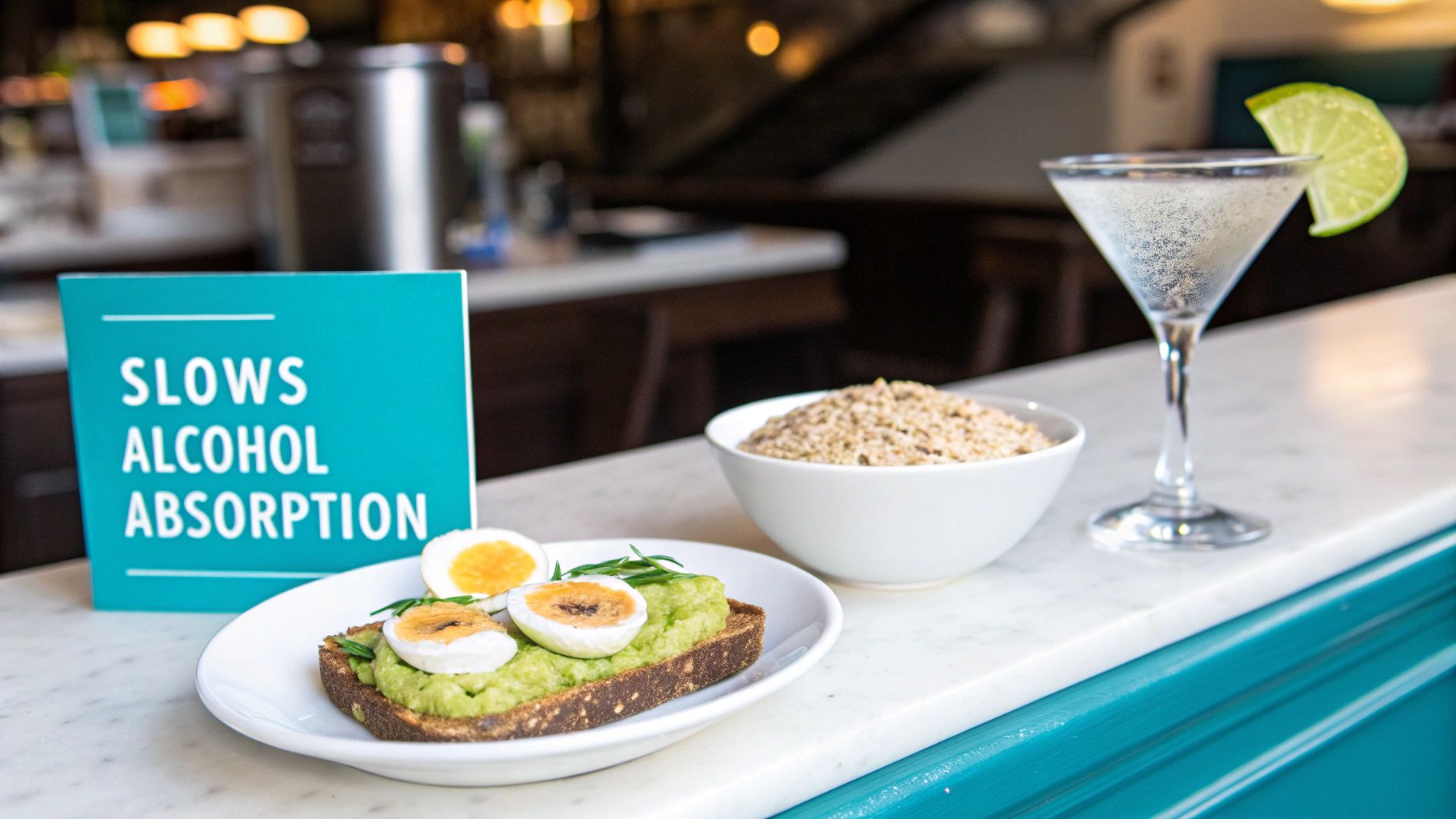
The whole "soaking it up" idea is a super common myth, but it gets the core principle wrong. The real goal isn't to sponge up the booze—it's to delay how fast your body takes it in. And the single best way to do that? Have some food in your stomach.
When you drink on an empty stomach, alcohol zips right through to your small intestine. That's where the party really starts for absorption, sending it straight into your bloodstream. This is what causes that sudden, sharp spike in your Blood Alcohol Concentration (BAC) and makes you feel intoxicated fast.
How Food Creates a Buffer
Eating before you drink literally puts a physical roadblock in your stomach. A solid meal, especially one with a good mix of healthy fats, protein, and complex carbs, takes a while to break down. This whole process slows down what's called gastric emptying—which is just a technical way of saying how fast your stomach empties its contents into the small intestine.
By keeping the alcohol hanging out in your stomach longer, you give your liver more time to do its job and metabolize it at a steady, manageable pace. Picture a dam holding back water instead of a floodgate swinging wide open. The right meal gives you that slow, controlled release instead of a sudden rush.
For instance, foods with healthy fats, like an avocado, are absolute champions at this. Those monounsaturated fats digest much slower than other nutrients, seriously extending the time everything spends in your stomach. In fact, some studies have shown that eating an avocado before drinking can knock your peak BAC down by as much as 15-25%. That's a pretty powerful move for a smarter night. For more great ideas, the nutrition experts at Healthline have a fantastic list of pre-drinking foods worth checking out.
The key takeaway is simple: You're not stopping alcohol absorption, you're managing its speed. This simple shift in mindset is the first step toward a smarter, more enjoyable night out and a much better morning after.
So when it comes down to it, picking the right foods isn't about finding some magic sponge. It's about building a strategic meal that sets your body up for success before the first drink even hits your lips.
Your Pre-Drinking Macronutrient Cheat Sheet
To make this super simple, here's a quick rundown of what you should be putting on your plate before a night out. Think of this as your game plan for a better drinking experience.
| Macronutrient Type | Primary Role in Slowing Absorption | Quick Food Examples |
|---|---|---|
| Healthy Fats | Digest very slowly, significantly delaying stomach emptying and keeping you full. | Avocado, nuts (almonds, walnuts), seeds (chia, flax), olive oil, salmon. |
| Lean Protein | Also slows digestion and provides sustained energy, helping to curb rapid BAC spikes. | Grilled chicken or fish, eggs, Greek yogurt, lentils, tofu. |
| Complex Carbs | High in fiber, these break down slowly and provide a steady release of energy. | Oats, quinoa, brown rice, sweet potatoes, whole-wheat toast. |
Bottom line? A balanced meal that hits these three macros is your best bet. It’s not about overstuffing yourself, but about making smart, strategic choices.
The Journey Alcohol Takes Through Your Body
To really get why eating before drinking is such a non-negotiable, let’s follow the path alcohol takes from the moment it passes your lips. Once you understand this quick biological trip, it becomes crystal clear why a simple meal can completely change your night.
Picture an empty stomach as the VIP express lane straight into your system. When you drink without any food in there, alcohol gets waved right through, passing from the stomach directly into the small intestine. This is where things get serious—roughly 80% of alcohol absorption happens here, shooting it straight into your bloodstream.
This lightning-fast absorption is what causes that sudden, sharp spike in your blood alcohol concentration (BAC). Your body basically gets hit with it all at once, which is why you feel intoxicated much faster and way more intensely.
The Role of Your Stomach and Liver
But when you have food in your stomach? Everything changes. That meal acts like a bouncer, holding the alcohol back in the stomach for a while before letting it move on. A small amount of alcohol, about 20%, actually gets metabolized right there by an enzyme called alcohol dehydrogenase (ADH).
This delay is the whole secret. By slowing down the journey to the small intestine, you’re basically creating a time-release system. It gives your liver—the body's main filtration plant—a steady, manageable flow to deal with instead of a sudden flood. You can learn more about this whole process in our guide on what happens when you drink alcohol.
Your liver is a champ, but it can only process so much at a time, which is about one standard drink per hour. When you drink faster than your liver can keep up, your BAC rises, and you start feeling those not-so-fun effects.
The big idea is simple: slowing down absorption gives your liver the precious time it needs to do its job right. Food doesn’t “soak up” alcohol; it just puts a strategic speed bump on its path through your system.
Ultimately, this managed pace helps keep your BAC from spiking too high, too quickly. The result is a much more controlled and enjoyable experience—not to mention a significantly better morning after. Giving your body this head start is one of the smartest things you can do before a night out. It's not about spoiling the fun; it’s about making sure the fun doesn’t get the best of you.
Your Best Defense: Fats, Proteins, and Fiber
When you're trying to figure out what food "absorbs" alcohol, it's less about a single magic ingredient and more about building a solid defensive line. Your best strategy is to create a meal centered around three key players: fats, proteins, and fiber. Each one has a distinct, yet complementary, role in managing how your body takes on alcohol.
Think of it like building a fortress in your stomach. Not all building materials are created equal, and the same goes for food. A meal loaded with these three components creates a powerful barrier that slows down gastric emptying, which is just a technical way of saying it keeps food—and alcohol—in your stomach longer. This gives your liver a crucial head start to do its job.
This simple visual shows the journey alcohol takes after that first sip, and it really highlights why slowing things down from the get-go is so important.
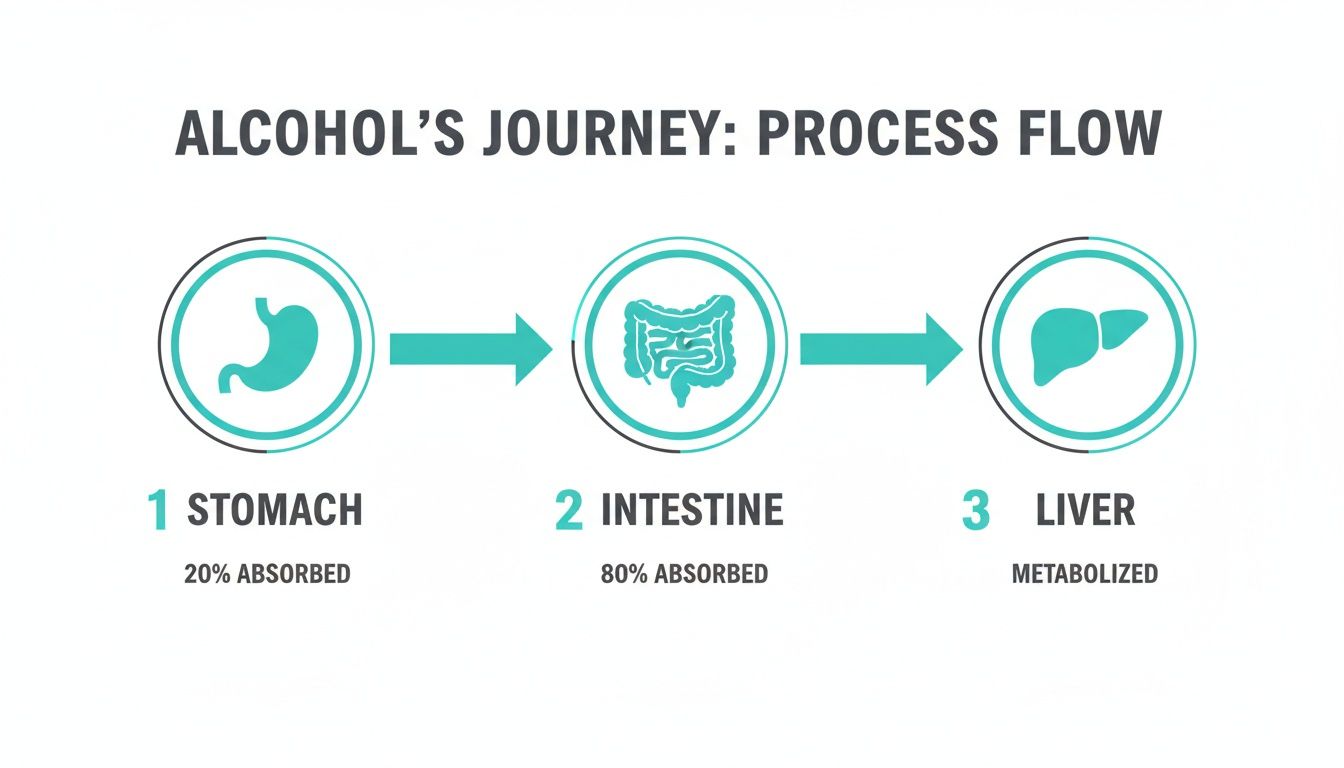
As you can see, most of the action happens in the small intestine. So, any food that can keep alcohol hanging out in the stomach for a while is a major win.
The Power of Healthy Fats
Healthy fats are your pre-drinking MVP, hands down. Foods like avocado, salmon, nuts, and a good olive oil take the longest for your body to break down.
This slow-and-steady digestion means they physically linger in your stomach, acting as a roadblock that stops alcohol from making a quick getaway into the small intestine. This delay can seriously flatten the spike in your blood alcohol concentration (BAC), helping you avoid that sudden, out-of-nowhere feeling of being too drunk, too fast.
Lean Protein: The Sustained Buffer
Next up, we have lean protein. Things like grilled chicken, eggs, Greek yogurt, and lentils are made of complex molecules that take a lot of time and energy for your body to dismantle.
This extra work creates a sustained buffer, slowing down the whole digestive process even more. A protein-rich meal also helps you feel full and satisfied, which can naturally curb the urge to drink too quickly. It’s a double-win that helps you pace yourself from the inside out.
Key Insight: The whole idea is to pick foods that are metabolically demanding. Fats and proteins make your digestive system work harder, creating a natural time-delay that prevents alcohol from rushing into your bloodstream all at once.
This is exactly why a plain green salad isn't going to do much, but a salad topped with grilled salmon, avocado, and a handful of nuts suddenly becomes the perfect pre-party armor.
Fiber: The Unsung Hero
Finally, let's talk about fiber-rich carbs. It’s really important to know the difference between simple carbs (like white bread or sugary snacks) and complex carbs (like oats, sweet potatoes, quinoa, and beans). Simple carbs are digested in a flash and offer almost no help.
Complex carbs, on the other hand, are loaded with fiber, which also puts the brakes on digestion. They give you a slow, steady release of energy that helps keep your blood sugar levels stable. Since alcohol can make your blood sugar dip, having a foundation of complex carbs can help you sidestep those energy crashes and mood swings that sometimes come with drinking.
By teaming up these three power players, you create the ideal meal to get your body ready for a night out. This strategic approach is your best defense for a better time and a much, much smoother morning after.
The Ultimate Pre-Drinking Food Playbook
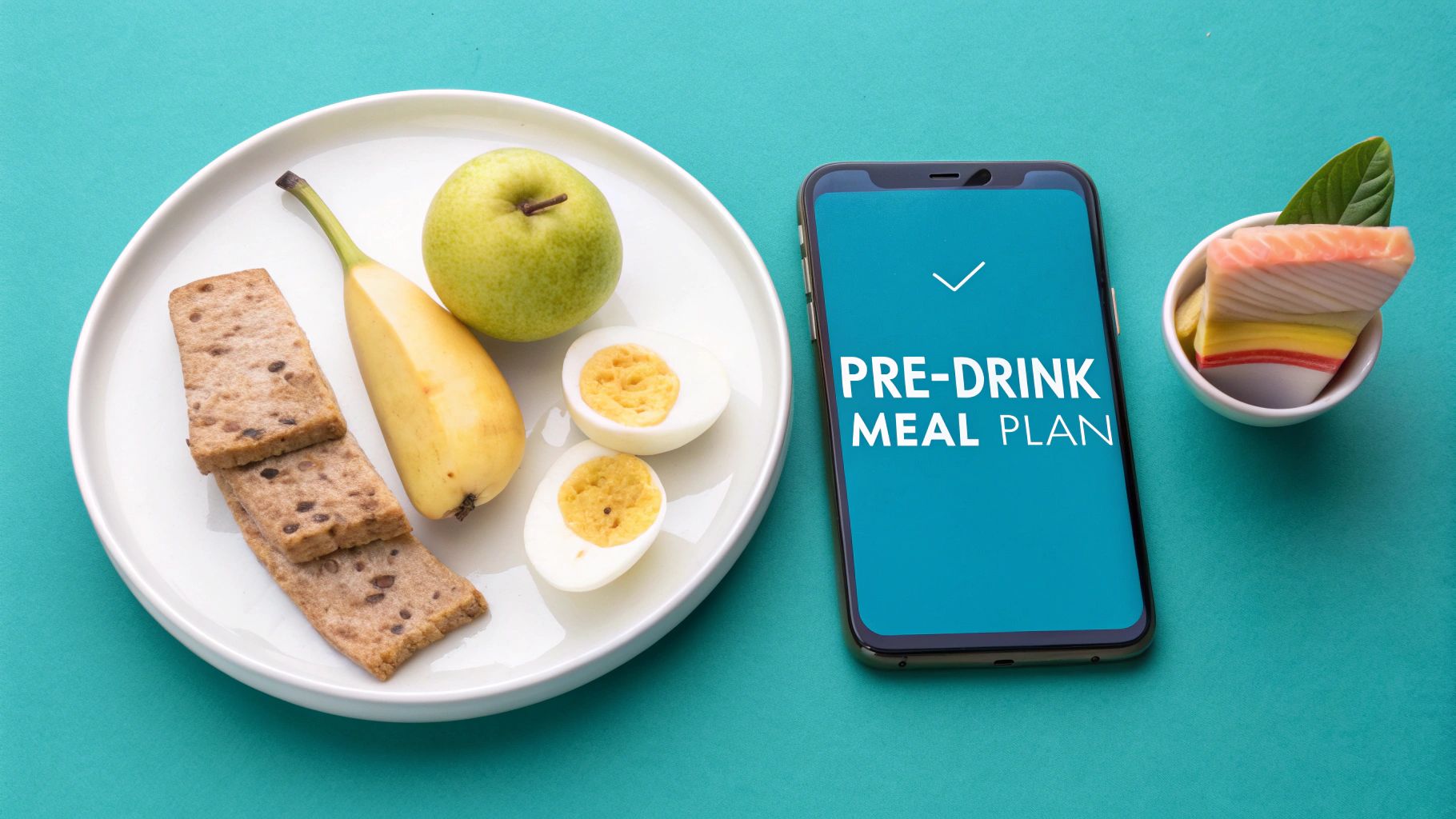
Okay, so we know why we should eat before drinking. But the real game-changer is knowing what to eat. This is your go-to menu for building a smarter night out and a much, much better morning after.
Think of this list as a curated selection of powerhouse foods, all chosen for their scientific chops in prepping your body for alcohol. The goal isn't just to feel full, but to build a meal that's actually functional.
The Powerhouse Players on Your Plate
Let’s get into the specifics of what you should be piling on your plate and exactly why these foods are your best friends before a night of drinking.
-
Eggs: These are a true pre-party champion. Eggs are packed with high-quality protein that seriously slows down digestion. They’re also a fantastic source of an amino acid called cysteine, which helps your body break down acetaldehyde—one of the main toxins that makes hangovers so miserable.
-
Salmon: This fatty fish brings two incredible assets to the table: protein and omega-3 fatty acids. The protein acts as a sustained buffer, while those healthy fats are brilliant at slowing down how quickly your stomach empties. As a bonus, omega-3s have anti-inflammatory properties that can help push back against some of alcohol's inflammatory effects.
-
Avocado: We've mentioned it before, but the healthy monounsaturated fats in avocado are king when it comes to slowing down alcohol absorption. It's also loaded with potassium, a critical electrolyte that alcohol loves to deplete. A little avocado in your meal helps you start the night with your electrolyte tank already topped up.
Fruits and Grains That Go the Extra Mile
It’s not just about the main course. Certain fruits and grains offer some very specific perks that make them smart additions to any pre-drinking meal.
A surprisingly powerful choice is the humble pear. This fruit can actually give your body a major metabolic boost. One study discovered that eating a pear before drinking significantly ramped up the activity of the key enzymes your body uses to break down ethanol. In fact, pear juice was shown to increase the activity of ADH, the primary alcohol-metabolizing enzyme, by an incredible 65%. You can dig into the science yourself by reading the full study on the NIH's PMC database.
A few other great options to round out your meal include:
-
Bananas: Another potassium powerhouse, bananas are perfect for replenishing electrolytes before you even take your first sip. Their high water content also gives your hydration a head start.
-
Oats: A bowl of oatmeal is an excellent move because it’s full of fiber and complex carbohydrates. This combo provides a slow, steady release of energy and keeps you feeling satisfied, which can help stop you from drinking too quickly on an empty stomach.
We've put together a quick-reference table to highlight some of the best food choices and why they work.
Top Foods and Their Hangover-Fighting Benefits
Here’s a more detailed look at specific foods and the science behind how they help you feel better, both tonight and tomorrow morning.
| Food Item | Primary Benefit | Key Nutrient |
|---|---|---|
| Eggs | Helps break down hangover-causing toxins | Cysteine |
| Salmon | Slows gastric emptying, reduces inflammation | Protein, Omega-3s |
| Avocado | Slows alcohol absorption, replenishes electrolytes | Healthy Fats, Potassium |
| Pears | Boosts alcohol-metabolizing enzymes | Flavonoids |
| Bananas | Restores electrolytes lost from drinking | Potassium |
| Oats | Provides sustained energy and fullness | Fiber, Complex Carbs |
This isn't an exhaustive list, of course, but it gives you a solid foundation for building a meal that works for your body, not against it.
Your ideal pre-drinking meal isn’t just about slowing absorption—it's also about arming your body with the nutrients it needs to process alcohol more efficiently and recover faster. For more inspiration, check out our guide on the top 7 best foods to eat before drinking for a better night.
How to Time Your Pre-Drinking Meal
Knowing what foods slow down alcohol absorption is only half the battle. The real secret weapon is knowing when to eat. Timing your pre-drinking meal is a strategic move that can make all the difference in how you feel later that night—and the next morning.
Think of it as laying down a solid foundation before the party even gets started.
The sweet spot for eating that big, balanced meal is one to two hours before your first drink. This isn't just a random number; it gives your digestive system enough time to get going and start breaking down all those fats, proteins, and complex carbs.
This head start ensures that by the time you take your first sip, your stomach is already hard at work, creating that all-important buffer. Eat too close to drinking, and your body hasn't had time to start digestion. Eat too far in advance, and you might as well be starting on an empty stomach again.
Finding the Right Meal Size
Portion size is another huge piece of the puzzle. You don't need to stuff yourself until you're uncomfortable, but a handful of almonds or a lone banana just isn't going to cut it. Your goal is a complete, satisfying meal.
You should be aiming for a portion that feels like a full lunch or dinner. This gives your stomach enough actual substance to put the brakes on gastric emptying. A small snack simply doesn't have the volume or the right mix of nutrients to slow down alcohol absorption for more than a few minutes.
A well-timed, properly portioned meal is your best defense. It sets a steady pace for alcohol absorption, giving your liver a manageable job instead of a sudden, overwhelming flood.
Strategic Snacking for Longer Events
So what happens when you’re out for the long haul? One meal might not be enough to last you through a long evening. If you know it's going to be a marathon, not a sprint, planning for a mid-event snack is a seriously smart move. This helps keep that buffer in your stomach from disappearing.
Keep these tips in your back pocket:
- Plan Ahead: If you're heading somewhere without food, toss a high-protein bar or a bag of trail mix in your bag. Future you will be grateful.
- Choose Wisely: If you're ordering food at the bar, skip the simple stuff like a basket of fries. Go for something with more staying power, like chicken skewers, a hummus platter, or a slider.
A little bit of foresight prevents that common mistake where your first meal wears off, leaving you wide open to getting hit hard by drinks later in the night. Once you master your meal timing and portioning, you're back in control.
Foods to Avoid and Myths to Ignore
Knowing what to eat before you drink is half the battle, but knowing what not to eat is just as important. Plenty of popular "remedies" are floating around that can actually make your night—and the next morning—a whole lot worse. Let's clear the air and bust a few of those common myths.
The biggest one? The idea that you need a huge, greasy meal to "soak up" the alcohol. While it's true that a high-fat meal can slow down how fast your stomach empties, it often comes with a nasty price. Super heavy, greasy foods are a one-way ticket to indigestion, heartburn, and an upset stomach, which is the last thing you want when you're also drinking.
Popular Myths and Smarter Alternatives
Another old wive's tale is "coating your stomach" with a glass of milk before you go out. Sure, milk has some fat and protein, but a single glass isn't going to do much. For a lot of people, it’ll just lead to digestive trouble. Instead of falling for these quick fixes, just stick to a solid, balanced meal.
A greasy burger and fries might sound like the perfect pre-game plan, but the digestive chaos it can cause usually isn't worth it. A meal with salmon, avocado, and quinoa does the exact same job of slowing absorption, but without making you feel awful.
The myths don't just stop at food, either. You’ll often hear activated charcoal being hyped up as a miracle cure for drinking too much, but its effectiveness for a casual night out is pretty debatable. If you're curious, you can dig deeper into the role of activated charcoal for alcohol and decide for yourself.
Finally, pay attention to what you're mixing with your drinks. Sugary sodas and caffeinated energy drinks are a terrible combo. The sugar can actually make you absorb alcohol faster, while the caffeine masks how drunk you really feel, which can lead you to drink way more than you planned. Both will leave you seriously dehydrated, setting you up for a rough morning.
Your Top Questions, Answered
Let's clear up some of the common questions that pop up when talking about food, booze, and the morning after. These quick answers will help you piece it all together for a smarter, better night out.
Does Drinking Water Help Absorb Alcohol?
Water doesn't actually absorb alcohol, but it's your best friend when it comes to fighting off dehydration. Alcohol is a classic diuretic, which is just a fancy way of saying it makes you pee more and lose fluids faster than normal.
A simple glass of water between each alcoholic drink is a game-changer. While it won't slow down how fast alcohol hits your system like a good meal does, staying hydrated is one of the most effective ways to dodge a nasty hangover headache.
What if I Can't Eat a Full Meal Before Drinking?
No time for a proper dinner? No problem. A solid, nutrient-packed snack is the next best thing. You’re looking for a good mix of healthy fats, some protein, and a bit of fiber to keep your stomach busy.
Think a handful of almonds, a small cup of Greek yogurt, or even an apple with a spoonful of peanut butter. Honestly, any small, smart snack is worlds better than heading out on a totally empty stomach.
Any food is better than no food. A small, balanced snack still provides a buffer that can make a noticeable difference in how you feel.
Does Eating After Drinking Help a Hangover?
Eating a big, greasy meal after you're already a few drinks in won't do much to sober you up—that ship has sailed and the alcohol is already in your bloodstream. Where a good meal really shines is the morning after.
A balanced breakfast is your key to recovery. It helps get your blood sugar back on track and replenishes all the nutrients you lost. Your best bet is something with complex carbs, protein, and electrolytes. Think eggs on whole-wheat toast with a banana on the side.
Ready to take your pre-party prep to the next level? Upside offers an innovative, on-the-go jelly stick designed to support your body and help you wake up feeling refreshed. Plan ahead and feel your best by visiting https://enjoyupside.com.
#upside #enjoyupside #upsidejelly #livemore #hangovercure #hangoverprevention #fighthangovers #preventhangovers #HangoverRelief #MorningAfter #PartySmarter #HydrationStation #WellnessVibes #RecoverFaster #NoMoreHangovers #HealthyParty #HangoverHacks #FeelGoodMorning #NightlifeEssentials #HangoverFree #SupplementGoals #PostPartyPrep #GoodVibesOnly #HealthAndParty #HangoverHelper #UpsideToPartying