

· By Annemarie
What Causes Morning Headaches Your Ultimate Guide to Relief
Waking up to a throbbing headache is a rough start to any day, and it often points to something more than just a bad night's sleep. The usual suspects for morning headaches are things like dehydration, sleep disorders like sleep apnea, and the classic hangover from a few too many drinks the night before. Each of these things sets off a specific reaction in your body, turning what should be a restful night into a painful morning.
Unpacking the Mystery of Morning Headaches
That pounding in your head when your alarm goes off isn't just bad luck; it’s your body trying to tell you something. Figuring out what causes morning headaches means looking at what's happening—or not happening—while you're asleep.
Think of your brain as a high-performance engine. It needs the right conditions to run smoothly: quality rest, plenty of hydration, and stable blood sugar. When any of these are out of whack, a headache is often the first warning sign.
This chart can help you trace the path from that morning pain back to its likely source.
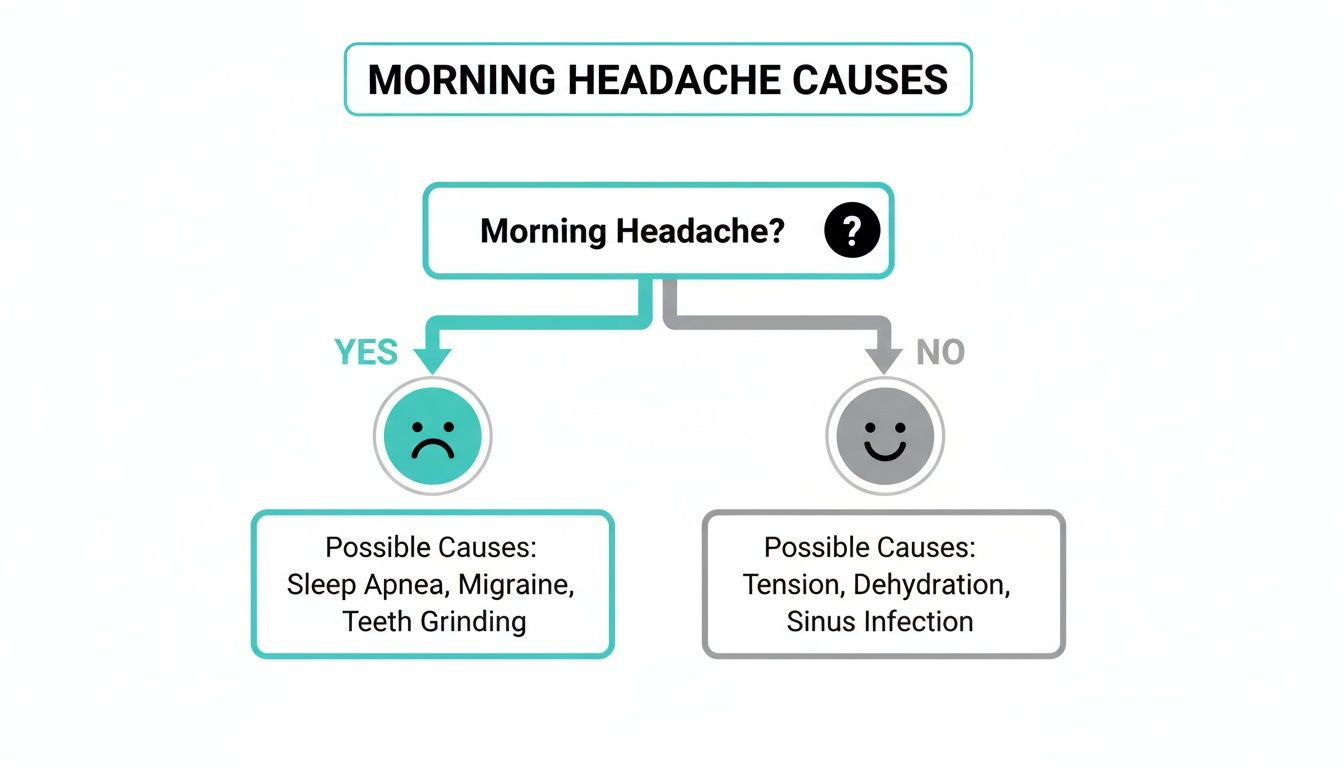
It’s a simple way to start connecting the dots between how you feel and what might be going on with your lifestyle or health.
The Science Behind the Pain
One of the most common culprits is plain old dehydration. Alcohol is a diuretic, which is a fancy way of saying it makes you pee a lot. This can leave you dehydrated, causing your brain tissue to literally shrink a tiny bit and pull away from your skull. That pulling action triggers pain receptors, and voilà: the dreaded hangover headache. You don't even need alcohol for this to happen; simply not drinking enough water can have the same effect.
But poor sleep quality is another huge factor. Your body isn't just powered down when you sleep; it's on a critical repair and reset mission. A few things can really throw a wrench in the works:
- Sleep Apnea: This is a condition where you repeatedly stop breathing for short periods during the night. Your oxygen levels drop and carbon dioxide builds up, which forces the blood vessels in your brain to widen. This increases pressure inside your skull and leads to that dull, pressing headache when you wake up.
- Bruxism (Teeth Grinding): If you're clenching or grinding your teeth all night, you're putting your jaw muscles under a ton of constant strain. That tension doesn't just stay in your jaw; it radiates up to your temples and often shows up as a classic tension headache in the morning.
- Poor Sleep Posture: The wrong pillow or an awkward sleeping position can seriously strain the muscles in your neck and shoulders. This tension often creeps upward, resulting in a headache that feels like a tight band wrapped around your head.
Think of it this way: a morning headache is rarely just about your head. It's a signal that something—be it your hydration, breathing, or muscle tension—was thrown off balance during the night.
Once you can pinpoint the root cause, you can stop just reacting to the pain and start preventing it from happening in the first place.
Quick Guide to Morning Headache Culprits
Not sure where to start? This table breaks down the most common causes, what they feel like, and when they're most likely to strike. It's a quick reference to help you start playing detective with your own symptoms.
| Primary Cause | What It Feels Like | Common Scenario |
|---|---|---|
| Hangover/Dehydration | A throbbing, generalized pain often paired with nausea and fatigue. | The morning after a night of drinking, especially if you forgot to drink water. |
| Sleep Apnea | A dull, pressing headache that's present right upon waking and usually improves after you've been up for a bit. | Often accompanied by loud snoring, daytime sleepiness, and reports of paused breathing during sleep. |
| Bruxism (Teeth Grinding) | A dull ache felt in the temples or jaw, sometimes with a sore jaw or teeth. | Waking up after a stressful day or noticing you clench your jaw when concentrating. |
| Poor Sleep Posture | A tension-type headache that feels like a tight band, often with a stiff or sore neck. | Using a pillow that's too flat or too high, or falling asleep in an odd position on the couch. |
| Caffeine Withdrawal | A classic throbbing headache that feels diffuse and can be accompanied by irritability. | Skipping your usual morning coffee or having it much later than normal. |
Remember, this is just a starting point. If your headaches are persistent, severe, or accompanied by other worrying symptoms, it's always best to chat with a healthcare professional. They can help you get to the bottom of it for good.
The Hidden Link Between Sleep Quality And Headaches
When you're trying to figure out why your head is pounding every morning, it’s easy to get hung up on the number of hours you spent in bed. But the real story is often about the quality of your sleep, not just the quantity.
Think of it this way: your sleep cycle is a finely choreographed performance with different acts, like light sleep, deep sleep, and REM. Each one is vital for healing your body, organizing your memories, and resetting your brain’s chemistry. If that performance gets interrupted all night, your brain never gets the full restoration it needs. The result? A throbbing headache as a painful encore.
The Sleep Apnea Effect
One of the biggest culprits behind terrible sleep quality is sleep apnea. This is a condition where you repeatedly stop breathing throughout the night, sometimes for over a minute at a time. Every time you stop breathing, your body flips into a mini-emergency mode.
Imagine your brain is a city that needs a constant power supply (oxygen). During an apnea episode, that power flickers off. To compensate, your brain’s blood vessels widen in a desperate attempt to pull in more oxygen. This surge in blood flow ratchets up the pressure inside your skull, leading directly to that dull, pressing headache so many people with sleep apnea wake up with.
And it's more common than you might think. Insomnia alone can boost the risk of chronic morning headaches, and it affects 7.6% of the population. Even worse, studies show that at least one in five people with obstructive sleep apnea (OSA)—and as high as 74% in some reports—regularly wake up with headaches.
When Your Body's Clock Is Out Of Sync
Your body runs on an internal 24-hour clock called the circadian rhythm. This is your master clock, governing your sleep-wake cycle, hormone release, and pretty much everything else. When it gets thrown off by things like jet lag, shift work, or even just a chaotic bedtime, your brain’s chemistry gets all out of whack.
This messes with the production of key neurotransmitters like serotonin and melatonin, which don't just regulate sleep—they also manage how you perceive pain. An unstable circadian rhythm can actually lower your pain threshold, making you way more susceptible to headaches, especially in the morning as your body struggles to reboot.
A consistent sleep schedule isn't just about feeling rested; it's about providing the stable, predictable environment your brain needs to manage pain signals effectively. An erratic schedule is like constantly changing the rules on your brain, leading to stress and pain.
Why Alcohol Sabotages Your Sleep
It’s a classic myth that a nightcap helps you sleep. Sure, alcohol is a sedative and can make you feel drowsy at first, but it completely wrecks the most important stages of sleep later in the night.
Specifically, alcohol suppresses REM sleep—the stage where you dream and process memories and emotions. When your brain is robbed of this restorative phase, you wake up feeling mentally exhausted and foggy, even if you were in bed for eight hours straight.
This fragmented sleep, combined with the fact that alcohol is a major dehydrator, creates the perfect storm for a brutal morning headache. Learning how to improve sleep quality naturally can help you find ways to counteract these effects and make sure your nights are actually restful.
How Hangovers, Dehydration, And Diet Trigger Headaches
While a bad night's sleep is a huge reason for waking up with a headache, what you ate and drank the night before can be just as important. The classic hangover headache is probably the most famous example of how your choices one night can wreck your next morning.
It’s easy to just blame dehydration for the misery after a few drinks, but there's a lot more going on under the surface. Alcohol really kicks off a chain reaction in your body that creates the perfect storm for a pounding head.
The Science Behind a Hangover Headache
When you have a drink, your liver kicks into overdrive to process it. One of the main things it produces during this process is a nasty compound called acetaldehyde. This stuff is way more toxic than the alcohol itself, and it's a major cause of inflammation all over your body—including your brain.
This inflammation, mixed with the fact that alcohol makes you pee more (leading to dehydration), causes your brain tissue to shrink just a tiny bit. That shrinkage pulls on the sensitive membranes that connect your brain to your skull, and that physical tension is what causes that all-too-familiar throbbing pain. If you really want to get into the weeds, our guide on what causes hangovers breaks down exactly how your body reacts.
The connection between heavy drinking and morning pain is no secret. One big study across five European countries confirmed that heavy drinking is a major reason for chronic morning headaches. It found that people who had six or more drinks a day were four times more likely to deal with these headaches than people who drank moderately. You can check out the full research on JAMA Internal Medicine.
A hangover headache isn’t just your body screaming for water. It’s a complex mess of toxic byproducts, body-wide inflammation, and scrambled brain chemistry.
More Than Just Alcohol: Your Diet Matters
Alcohol isn't the only thing on the menu that can leave your head hurting in the morning. What you eat, especially late at night, can have a huge say in how you feel when that alarm goes off.
Certain foods can set off a headache in a few different ways:
- High-Sugar Foods: That late-night ice cream or sugary cocktail can make your blood sugar spike, then crash hard while you're asleep. This rollercoaster can mess with your hormones and trigger what's often called a "hypoglycemic headache."
- Salty Snacks: Things like pizza or chips are loaded with sodium, which can make you dehydrated and cause your body to hold onto water. This can raise your blood pressure and lead to a dull, pressing headache.
- Foods with Tyramine: Aged cheeses, cured meats like salami, and some fermented foods contain an amino acid called tyramine. In people who are sensitive to it, tyramine can cause blood vessels to squeeze tight and then expand, which is a classic headache trigger.
Knowing about these triggers helps you make smarter choices on a night out, so you can avoid the painful payback.
The Caffeine Withdrawal Conundrum
For so many of us, that morning cup of coffee is an absolute must. Caffeine actually narrows the blood vessels in your brain (it's a vasoconstrictor). If you drink it every day, your body gets used to this.
So, what happens if you skip your morning cup or have it later than usual? Those blood vessels can suddenly expand. That quick change in blood flow can trigger a classic withdrawal headache, which often feels like a throbbing pain that won't let up until you finally get your caffeine. For daily coffee drinkers, this is one of the most common answers to what causes morning headaches.
Understanding how these lifestyle factors—from your cocktails and late-night snacks to your daily coffee habit—lead to morning pain is the first step. It's not about becoming a hermit, but about knowing what's going on in your body so you can be proactive. You can support your system with smart hydration and the right supplements to help it handle the effects of a fun night out.
When Your Morning Headache Is A Warning Sign
Most of the time, waking up with a headache is just a frustrating side effect of a late night, dehydration, or a bad night's sleep. But every now and then, that nagging pain is your body’s check-engine light trying to tell you something more serious is going on. Knowing the difference between a run-of-the-mill headache and a real red flag is key to staying on top of your health.
While the scary stuff is way less common, it’s still smart to know what to look for. For example, high blood pressure (hypertension) can quietly cause morning head pain. When you’re lying flat for hours, the pressure inside your skull can shift. If your blood pressure is already high, this can show up as a dull, throbbing headache right when you wake up.
Pinpointing Deeper Medical Causes
Beyond blood pressure, a few other issues can make their grand entrance as a morning headache. This isn't about jumping to worst-case scenarios, but about being aware so you can have a smart conversation with your doctor if things don't feel right.
- Musculoskeletal Problems: Sometimes, the culprit is right under your head. An old, unsupportive pillow or a worn-out mattress can crank your neck into a weird position all night. The result? Strained muscles in your neck and shoulders that send pain signals straight to your head.
- Sinus Inflammation (Sinusitis): If your sinuses are blocked up from an infection or inflammation, they can't drain properly. All that gunk builds up overnight while you're lying down, creating pressure that feels like a headache centered right behind your forehead, cheeks, and eyes.
Think of your morning headache like a single puzzle piece. If it’s a one-off after a wild night, it’s probably just that—one piece. But if it’s happening every day and comes with other weird symptoms, you’re starting to see more of the picture. That’s when it’s time to call in a professional.
This way, you can be proactive without freaking yourself out. The goal is just to pay attention and connect the dots between how you feel and what your body might be telling you.
Recognizing Red Flag Symptoms
The real trick is to notice the type of headache you're having and what other symptoms are tagging along. Certain signs are immediate red flags that mean you should get medical advice ASAP, as they can point to more serious neurological problems.
Here are the clear warning signs that mean it's time to talk to a clinician:
- Sudden and Severe Onset: A headache that explodes out of nowhere and feels like the "worst headache of your life" is a medical emergency. Don't wait.
- Accompanied by Neurological Changes: If the headache comes with weakness, numbness anywhere in your body, vision changes (like seeing double), confusion, or trouble speaking, get it checked out immediately.
- Worsens with Coughing or Straining: Headaches that get worse when you cough, sneeze, or bend over can sometimes signal a problem with the pressure inside your skull.
- Associated with Fever or Stiff Neck: A pounding headache paired with a high fever and a stiff neck can be a sign of a serious infection like meningitis.
- New Headaches After Age 50: If you're over 50 and suddenly start getting new, persistent headaches, it’s worth a full check-up to make sure nothing else is going on.
Knowing this stuff isn't about diagnosing yourself—it's about knowing when to call for backup. Most morning headaches are just your body telling you to drink some water or get a new pillow. But being informed about the serious signs means you can act fast when it really counts.
The Impact Of Stress And Mental Health On Your Head
Ever notice how a brutal week at work somehow ends with a pounding weekend headache? That’s no coincidence. Your mental state has a powerful, direct line to your physical well-being, and morning headaches are one of the most common ways it sends out an S.O.S.
Think of your body's stress response as an alarm system that gets stuck blaring. When you're constantly on edge, worried, or anxious, your body stays in a high-alert mode, even when you're supposed to be asleep. This constant tension is the perfect recipe for waking up in pain.
How Stress Creates Physical Pain
When stress runs unchecked through the night, it can make you unconsciously clench your jaw or grind your teeth—a condition called bruxism. All that pressure on your jaw muscles doesn't just stay put. It radiates out, creating a nasty tension in your temples and forehead that’s waiting for you first thing in the morning.
It's the same story for the muscles in your neck and shoulders. Chronic stress keeps them tight and contracted. After hours stuck in that tensed-up state, the strain creeps upward, resulting in that classic headache that feels like a tight band squeezing your head. It's the physical price you pay for carrying your stress with you, even into your dreams.
The link isn't just a hunch; it's well-documented. One study looking at migraine patients found that a whopping 62% named stress as their number one trigger. Across a massive group of over 71,000 sufferers, 58% pointed to stress as the main culprit, sometimes even causing their very first attack. You can dive deeper into the research on the connection between anxiety and headaches in this detailed study from the National Institutes of Health.
Your body doesn't know the difference between a physical threat and a mental one. A looming deadline can trigger the same muscle-tensing, jaw-clenching reaction as a real danger, leaving you with the physical fallout a morning later.
The Role Of Depression And Sleep Architecture
It's not just about general stress and anxiety. Conditions like depression can also be a major player in causing morning headaches. Depression has a sneaky way of messing with your sleep architecture—the natural, nightly cycle of sleep stages your body needs to go through.
It can make it harder to fall asleep, cause you to wake up throughout the night, and rob you of the deep, restorative sleep you desperately need. This poor quality rest throws your brain chemistry out of whack, lowering your pain threshold and making you far more vulnerable to all kinds of aches, including headaches.
Practical Steps To Unwind And Protect Your Mornings
The good news is you can absolutely take action to manage your stress and break the cycle of morning pain. It’s all about creating an evening routine that tells your body and mind that it's officially time to power down. Learning a few solid work stress management techniques can make a world of difference.
Here are a few simple strategies you can try tonight:
- Mindful Breathing: Take five minutes before bed to just focus on slow, deep breaths. It’s a simple trick that activates your body’s relaxation response and helps melt away physical tension.
- Journaling: Spend 10-15 minutes writing down whatever’s on your mind. Getting those worries out of your head and onto paper can stop you from chewing on them all night long.
- Gentle Stretching: Focus on some light stretches for your neck, shoulders, and upper back. This helps release all the tension that’s built up over the day.
- Screen-Free Wind-Down: Ditch the phone, tablet, and laptop at least an hour before you plan to sleep. The blue light messes with your sleep, and the endless scroll of information keeps your brain racing.
By actively taking care of your mental health, you're doing more than just improving your mood. You're treating one of the root causes of morning headaches and setting yourself up for more peaceful, pain-free mornings.
Your Action Plan For Headache-Free Mornings

Knowing what’s causing your morning headaches is half the battle. Now it’s time to take action. This is your game plan for turning that knowledge into real relief, so you can stop the pain before it even thinks about starting. It all boils down to small, consistent habits that give your body the support it needs to recover and recharge overnight.
The absolute cornerstone of a great morning is a great night’s sleep. Your bedroom needs to be a sanctuary for rest, not a satellite office or movie theater. Start by making your room cool, dark, and quiet. This sends a powerful signal to your brain that it's time to shut down.
Beyond the perfect environment, you need a solid wind-down routine. This little pre-sleep ritual is your body’s cue that rest is coming. Try ditching screens an hour before bed, doing some gentle stretching, or just reading a book. It can make a world of difference in helping you sink into that deep, restorative sleep.
Smart Strategies For Social Nights
A fun night out with friends doesn't have to mean a miserable morning after. Having a clear strategy for hydration and nutrition can change everything, helping your body process alcohol and bounce back way more efficiently. The trick is to be proactive, not reactive.
Before you even head out the door, make sure you're well-hydrated and have eaten a solid, balanced meal. This simple step keeps alcohol from hitting your system too fast and gives your body the fuel it needs.
While you're out, just follow a few simple rules:
- Alternate with Water: For every cocktail or beer, drink a full glass of water. It's a ridiculously simple habit that directly fights the dehydrating effects of alcohol.
- Replenish Electrolytes: Alcohol is notorious for flushing out essential minerals like potassium and magnesium. Snacking on a banana or some nuts can help, but a more targeted supplement is even better.
- Be Proactive: Don't wait for the headache to crash the party. Support your body’s recovery process from the very beginning. A product like Upside Hangover Jelly is designed for exactly this. Its blend of natural ingredients helps your body process alcohol’s byproducts and get back in balance, making it a perfect fit for a smart social strategy.
Think of it like giving your body the right tools for the job. You’d prepare for a tough workout, right? Preparing for a night out with good hydration and the right support ensures a much, much smoother recovery.
Simple Morning Rituals And When To Seek Help
Even with the best plans, you might still wake up with a little tension now and then. This is where a few simple morning stretches can work wonders. Just gently tilting your head from side to side and rolling your shoulders can release that tightness in your neck and upper back that so often leads to a morning headache.
While self-care is a powerful tool, you also need to know when it’s time to call in a professional. If your headaches just aren't letting up despite making these changes, it's a good idea to see a clinician.
Not sure if it’s time? Use this quick checklist:
- Frequency: Are you waking up with a headache more than twice a week?
- Severity: Is the pain bad enough that it's messing with your day?
- New Symptoms: Is the headache showing up with new friends, like dizziness, vision changes, or numbness?
- No Improvement: Have you been trying to improve your sleep and hydration for a few weeks with zero relief?
If you answered "yes" to any of these, a professional can help figure out what’s really going on, rule out any more serious conditions, and get you on the path to finally enjoying pain-free mornings.
Got Questions About Morning Headaches? We’ve Got Answers.
Let's tackle some of the most common questions that pop up when we talk about waking up with a pounding head. We've gone deep on the causes, so here are some quick-and-dirty answers to wrap things up.
Can Drinking Water Before Bed Prevent A Hangover Headache?
It’s a classic move, but chugging a huge glass of water right before bed might not be the magic bullet you think it is. Sure, hydration is your friend, but downing all that water at once is a great way to guarantee a few middle-of-the-night trips to the bathroom, which just messes with your sleep quality.
A better strategy? Sip water consistently throughout your evening out. And for those nights when you know you'll be celebrating, water alone often isn't enough to sidestep a hangover. Something that restores lost electrolytes and gives your liver a hand, like Upside Hangover Jelly, is a much more direct way to tackle all the things that make a hangover so miserable.
Is It Normal to Wake Up With a Headache Every Single Day?
Absolutely not. Waking up with a headache every morning is a major red flag that something else is going on. It’s your body’s way of telling you to pay attention. This kind of consistent pain often points to an underlying issue like a sleep disorder (hello, sleep apnea) or chronic teeth grinding you might not even know you're doing.
If this sounds like your reality, it's time to book an appointment with your doctor. They can help you figure out what’s really happening and get you on a treatment plan to finally break that painful cycle.
How Do I Know If My Morning Headache Is a Migraine?
Migraines aren't your average headache—they play by a different, much nastier set of rules. A morning migraine typically feels less like a dull ache and more like a severe, throbbing or pulsing pain, often parked on just one side of your head.
But the pain is only part of the story. Migraines usually bring friends along for the ride:
- Extreme sensitivity to light and sound (you'll want to hide in a dark, quiet room)
- Nausea that can sometimes lead to vomiting
- Weird visual stuff, like seeing spots, zig-zags, or flashing lights
If your headaches check these boxes and are intense enough to derail your day, you could be dealing with migraines. A proper diagnosis from a doctor is the only way to know for sure and get the right kind of help.
Don't let the fear of a brutal morning keep you from living your life. Upside is a smart, easy way to help your body bounce back after a fun night out. Our tasty, on-the-go jelly sticks are packed with natural ingredients to help you wake up feeling human again.
Ready to party smarter? Check out Upside today! #upside #enjoyupside #upsidejelly #livemore #hangovercure #hangoverprevention #fighthangovers #preventhangovers #HangoverRelief #MorningAfter #PartySmarter #HydrationStation #WellnessVibes #RecoverFaster #NoMoreHangovers #HealthyParty #HangoverHacks #FeelGoodMorning #NightlifeEssentials #HangoverFree #SupplementGoals #PostPartyPrep #GoodVibesOnly #HealthAndParty #HangoverHelper #UpsideToPartying