

· By Annemarie
what causes hangover headaches: Triggers & Relief
That pounding in your head after a night out isn’t just your imagination. A hangover headache is what happens when your body has to deal with the fallout from drinking, mostly because of dehydration, inflammation, and messed-up sleep. Think of it as a biological pile-up where one problem makes the next one even worse.
Your Body's Response to a Night Out
When you start drinking, you’re essentially kicking off a complex internal battle. Your body gets to work processing the alcohol, but the side effects of that process are what bring on the infamous hangover headache. It’s not just one thing—it’s a perfect storm of biological reactions happening all at once.
And if you’ve been there, you’re definitely not alone. Alcohol-induced headaches are a worldwide problem, with some studies reporting that up to 72% of people have experienced one in their lifetime. Another study found headaches popped up in 57% of hangover episodes, which shows just how common this specific symptom is.
The Main Triggers Behind the Pain
To really get what’s causing that throbbing, it helps to break down the key culprits. Each one plays a unique role in creating that all-too-familiar pain.
A good way to visualize this is to think about the main triggers working together to cause that pounding sensation. We've put them into a quick-reference table to break it down.
Quick Guide to Hangover Headache Triggers
| Biological Trigger | Its Role in Causing Headaches |
|---|---|
| Dehydration | Alcohol makes you pee more, leading to fluid loss. This can cause your brain to temporarily shrink away from the skull, triggering pain receptors. |
| Inflammation | Your liver produces a toxic byproduct called acetaldehyde when it breaks down alcohol. This compound ramps up inflammation throughout your body. |
| Poor Sleep | Alcohol might knock you out, but it wrecks your REM sleep—the most restorative phase. Waking up exhausted lowers your pain threshold, making any headache feel worse. |
| Acetaldehyde Buildup | This toxin is a major player, directly contributing to the headache and nausea that define a bad hangover. |
These factors don't just happen in isolation; they feed off each other, creating a cycle that leaves you feeling miserable.
Essentially, your body is dealing with a triple threat: it's thirsty, inflamed, and exhausted. The headache is the loudest signal that your system is seriously stressed out.
This is exactly why just chugging water doesn't always cut it. You have to tackle all the underlying issues. For a deeper dive into one of the biggest problems, you can learn more about how alcohol dehydrates you and the domino effect it has on your body.
Understanding this combination of factors is the first step toward dodging the misery and taking back your morning after a night of fun.
The Science Behind the Pounding Pain
That throbbing, relentless ache in your head is more than just a vague feeling of regret—it's the result of a complex biological chain reaction happening inside your body. When you drink alcohol, you kick off a series of processes that lead directly to that dreaded hangover headache. Let's break down the three main culprits—dehydration, inflammation, and blood vessel changes—to see exactly why your head feels like it's in a vise.
This visual map breaks down the key biological triggers—dehydration, inflammation, and sleep disruption—that work together to cause a hangover headache.
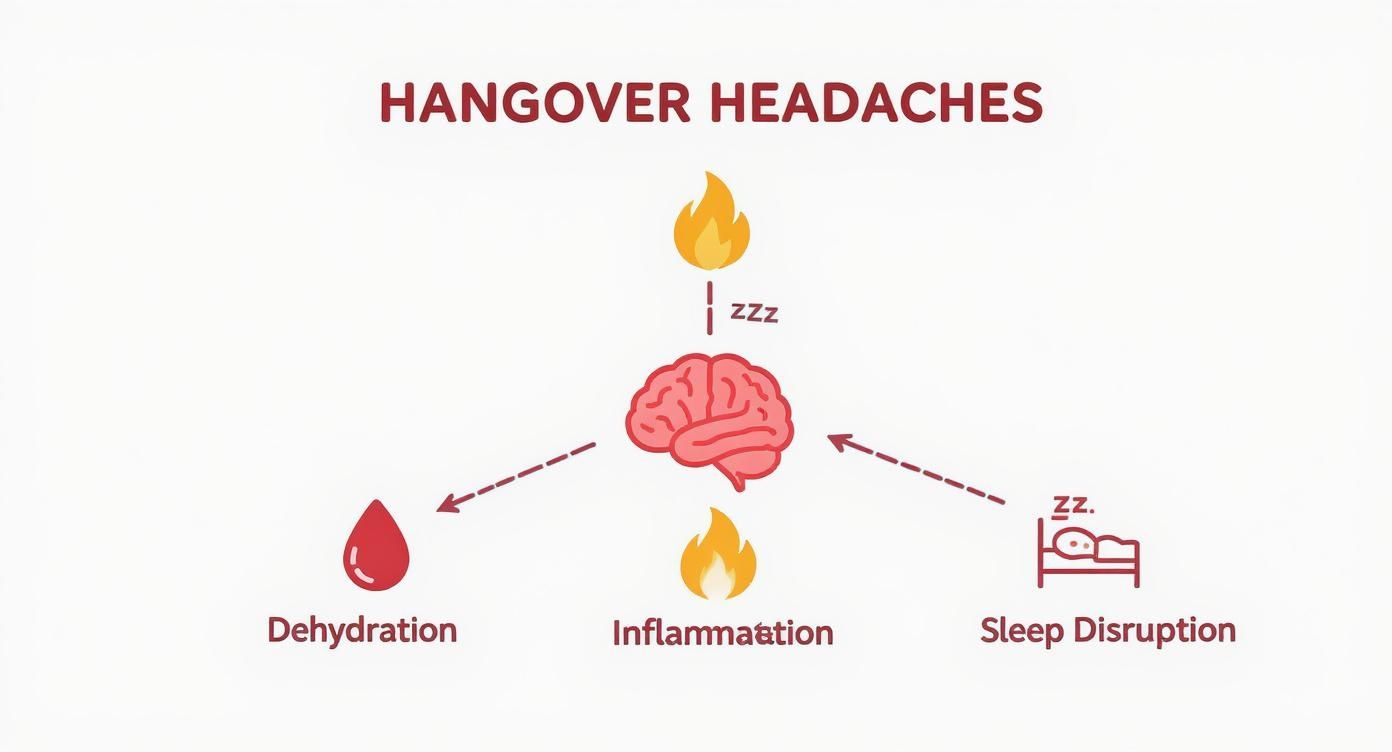
As you can see, it's not just one thing. It's a perfect storm of stressors hitting your system all at once that creates that signature head pain.
Dehydration: The Brain Shrinker
One of the first things alcohol does is act as a diuretic, a fancy term for something that makes you pee a lot. For every standard drink you have, your body can flush out up to four times as much liquid. This rapid fluid loss does more than just make you thirsty; it has a major impact on your entire body, especially your brain.
Your brain is made of about 75% water and is incredibly sensitive to hydration levels. When you get dehydrated, your brain tissue can actually shrink temporarily, pulling away from the inside of your skull.
This slight contraction puts tension on the delicate membranes (the meninges) that connect your brain to your skull. That pulling sensation is a primary source of the dull, aching pain of a hangover headache. On top of losing water, you’re also losing key electrolytes like potassium and sodium that are crucial for nerve and muscle function, which just makes you feel even worse.
Acetaldehyde: The Inflammatory Toxin
While dehydration gets the ball rolling, the real villain in the hangover headache story is a toxic compound called acetaldehyde. When you drink alcohol (ethanol), your liver gets to work breaking it down. The very first byproduct of this process is acetaldehyde, a substance that’s up to 30 times more toxic than alcohol itself.
Think of acetaldehyde as an internal alarm that triggers a massive inflammatory response all over your body. Your immune system basically freaks out and reacts like it's fighting off an infection, releasing inflammatory messengers called cytokines.
This body-wide inflammation affects all your organs, including your brain, which is a huge contributor to the feelings of sickness, fatigue, and the headache itself. Your body is essentially on high alert, and the headache is one of the loudest warning signs of this internal battle.
For a deeper dive into how alcohol affects your whole system, check out our complete guide on what causes hangovers.
Vasodilation: The Blood Vessel Disruptor
Finally, alcohol directly messes with your blood vessels through a process called vasodilation, which just means your blood vessels widen and relax. This might sound harmless, but it's a critical piece of the headache puzzle, especially for anyone prone to migraines.
When the blood vessels in your brain expand, it changes the blood flow, and the body often responds by releasing pain-related compounds to manage the shift. This process is made even worse by that toxic acetaldehyde we talked about, which fuels inflammation and contributes to the vasodilation itself.
This combination of three powerful forces—dehydration, inflammation, and vasodilation—creates a multi-pronged attack on your well-being. It isn't just one thing, but a team effort that leaves you with that all-too-familiar pounding pain the morning after.
How Your Habits Can Worsen Headaches
While your body's internal chemistry plays a huge role in what causes a hangover headache, it's not the only piece of the puzzle. The choices you make before, during, and after you drink can either save you from the worst of it or turn a bad situation into a total nightmare. Your habits are the part of the equation you can actually control.
Think of it this way: your biology sets the stage, but your actions direct the show. Simple decisions—like what you drink, whether you eat, and how fast you're downing your cocktails—can be the difference between a mild morning and a full-blown headache catastrophe. Understanding these factors gives you the power to steer things in a better direction.
The Congener Conundrum
Not all alcoholic drinks are created equal, and the differences go way beyond just taste. The secret is in these tiny chemical byproducts called congeners, which pop up during the fermentation and aging process. These compounds are what give darker liquors their unique flavors and colors, but they’re also notorious for making hangovers a whole lot worse.
Darker drinks are absolutely packed with congeners. We're talking about things like:
- Bourbon and whiskey
- Red wine
- Dark rum
- Brandy
On the flip side, clearer spirits have way fewer congeners, making them a gentler choice for your head. Think vodka, gin, and white rum. While drinking too much of anything will still give you a headache, picking a drink with fewer congeners can seriously dial down how awful you feel the next day.
Congeners are basically impurities that your body has to deal with on top of all the alcohol. This extra work puts more stress on your system, leading to more inflammation and, you guessed it, a much meaner headache.
Drinking on an Empty Stomach
You’ve heard this a million times, but it’s worth repeating because it’s one of the most critical rules of hangover prevention. Drinking alcohol on an empty stomach is like pouring gasoline on a fire—it just makes everything worse, and faster.
When your stomach is empty, there’s nothing to slow down how quickly alcohol zips into your small intestine, which is where most of it gets absorbed into your bloodstream. This causes a massive, rapid spike in your blood alcohol content (BAC), hitting your system like a tidal wave. Your liver, which can only handle about one standard drink per hour, gets completely overwhelmed.
This sudden jolt throws your body into crisis mode, cranking up every negative effect we've talked about.
- Dehydration speeds up.
- The production of toxic acetaldehyde goes through the roof.
- Inflammation kicks into overdrive.
Eating a solid meal with protein, fats, and carbs before you start drinking acts as a buffer. It slows everything down, letting the alcohol absorb more gradually. This gives your body a fighting chance to process it without getting totally slammed.
Pacing and Hydration Are Non-Negotiable
How you drink is just as important as what you drink. Throwing back multiple drinks in a short amount of time is a guaranteed recipe for a painful morning. Your body just can't keep up, which leads to a massive backup of acetaldehyde and other toxins.
The solution is simple but incredibly effective: pacing and hydration. These two habits are your best friends on a night out.
- Set a Pace: Try to stick to no more than one standard drink per hour. This lets your liver do its job at a steady rate, preventing the toxic overload that fuels hangover headaches.
- Alternate with Water: For every alcoholic drink you have, chug a full glass of water. This simple trick fights dehydration, replenishes fluids, and naturally helps you slow down your drinking.
These aren't just minor tips; they're the foundational rules for managing what causes hangover headaches. By paying attention to the type of alcohol you choose, making sure you’ve eaten, and pacing yourself, you can take back control and drastically improve how you feel the next day.
Understanding Your Personal Hangover Risk
Ever wonder why your friend can knock back three cocktails and feel totally fine, while you’re nursing a pounding headache after just one glass of wine? It’s not just about “tolerance.” The real answer is buried deep in your unique biology.
Your personal risk for a hangover headache is shaped by everything from your genetic code to pre-existing health conditions. Getting a handle on your own sensitivity is the first step toward smarter drinking and, frankly, better mornings. Some of us are just more susceptible to the things that cause hangovers, and figuring out where you land on that spectrum is key.
The Migraine Connection
One of the biggest red flags for brutal, alcohol-induced headaches is a personal or family history of migraines. If you suffer from migraines, your brain is often more sensitive to triggers—and for many, alcohol is a major one. The vasodilation, or widening of blood vessels, that alcohol causes can be more than enough to spark a full-blown migraine attack in someone who’s already susceptible.
This isn’t just a coincidence; there’s a real biological link here. For a lot of people, what feels like a monster hangover headache is actually an alcohol-triggered migraine. They can feel similar, with throbbing pain and light sensitivity, but a migraine is often far more severe and, importantly, doesn’t always require a night of heavy drinking to show up.
In fact, research shows that migraine sufferers are especially vulnerable, often getting slammed with headaches after even a modest amount of alcohol. While others might need to go all-out to feel the pain, a migraineur's threshold can be way, way lower. You can learn more about these clinical findings on alcohol as a migraine trigger and see just how common it is.
Is It a Hangover Headache or a Migraine?
Telling the difference isn't just academic—it can help you find the right relief. Here’s a quick way to play detective:
- Timing is everything: A classic hangover headache usually rears its ugly head hours after you’ve stopped drinking, right as your blood alcohol level hits zero. An alcohol-triggered migraine can crash the party much earlier, sometimes within 30 minutes to 3 hours of your first drink.
- The pain feels different: Hangover headaches often feel like a dull, steady ache across both sides of your head. Migraines, on the other hand, usually bring a severe, pulsating or throbbing pain that’s often parked on just one side.
- The company it keeps: Sure, both can make you feel nauseous. But migraines often bring their own entourage of nasty symptoms, like visual disturbances (auras), extreme sensitivity to light and sound, and sometimes even numbness or tingling.
Your Genes Are Calling the Shots
Beyond migraines, your DNA has a huge say in how your body handles alcohol. It all comes down to the speed and efficiency of two key enzymes: alcohol dehydrogenase (ADH) and aldehyde dehydrogenase (ALDH).
Think of it like an assembly line in your body. Your genes determine how fast that line runs. Any hiccups or slowdowns can cause a major backup of toxins, and that’s where the trouble starts.
For example, some people have a genetic variation that gives them a super-fast ADH enzyme. It quickly converts alcohol into a nasty toxin called acetaldehyde. But if their ALDH enzyme is slow on the uptake, that acetaldehyde builds up fast, leading to intense inflammation, that tell-tale facial flushing, and absolutely brutal headaches. This variation is pretty common in people of East Asian descent, but it can pop up in anyone.
At the end of the day, your personal hangover risk is a cocktail of all these factors. By understanding your own body—whether it’s a sensitivity to migraines or a genetic quirk in your enzyme production—you can start building a smarter game plan to protect yourself and save your next morning.
A Practical Game Plan for Headache Prevention
Knowing the science behind a hangover headache is one thing, but putting that knowledge into practice is how you really take control of your morning. Think of these strategies as a three-part game plan to support your body before, during, and after you drink.
This isn't just about damage control; it's a proactive approach to managing everything from dehydration to inflammation. It's your toolkit for actually preventing the headache from starting.
A little prep goes a long way. Setting yourself up for success before you even go to sleep is a crucial part of the plan, ensuring your body has what it needs to bounce back.
Before You Go Out: Laying the Foundation
The best defense against a pounding headache starts hours before your first drink. Prepping your body can make a huge difference in how you feel the next day, and the two most important pillars are food and hydration.
Never, ever drink on an empty stomach. It's non-negotiable. Eating a solid meal with protein, healthy fats, and complex carbs slows down how quickly alcohol hits your bloodstream. This prevents that sudden spike in blood alcohol content that completely overwhelms your liver.
Basically, you're giving your body a fighting chance to process everything at a manageable pace. On top of that, start hydrating early. Guzzle water throughout the day so you walk into the evening with a full tank, creating a buffer against alcohol’s diuretic effect.
During the Night: Smart Drinking Strategies
Once you’re out, the choices you make continue to shape how your morning will go. The goal here is pretty simple: minimize the stress on your body.
-
Pace Yourself: The golden rule is aiming for no more than one standard drink per hour. This gives your liver a fair shot at processing the alcohol without getting backed up with that toxic acetaldehyde.
-
Alternate with Water: For every alcoholic drink, have a full glass of water. This classic move directly fights dehydration, helps you drink less booze overall, and keeps your body from drying out like a sponge.
-
Choose Your Drinks Wisely: As we covered, darker liquors like bourbon and red wine are packed with congeners that can make hangovers so much worse. Sticking to clear spirits like vodka, gin, or white rum can seriously reduce your chances of a massive headache.
By actively managing what you drink and staying hydrated, you’re directly messing with the very processes that cause hangover headaches. It’s all about being mindful, not missing out on the fun.
After the Party: The Recovery Phase
What you do after that last drink is just as important as what you did before your first one. This is your final chance to get ahead of the misery.
Before your head hits the pillow, make rehydration your number one priority. Drink at least one big glass of water to start replacing what you’ve lost. Some people also swear by an electrolyte drink or a light, easy-to-digest snack to help stabilize their blood sugar.
This is also the perfect time for targeted nutritional support. Products like Upside Hangover Jelly are designed to fit right into this recovery window. It’s formulated with ingredients that help your body’s natural metabolic processes, giving your system a convenient boost to recover more efficiently.
Adding a supplement like Upside can fortify your whole game plan, giving you an extra layer of defense against the main culprits behind a hangover headache. It’s the perfect complement to the fundamentals of hydration and nutrition. You can dive deeper into even more strategies in our guide on how to prevent a hangover.
By following this three-stage plan, you’re turning knowledge into action. You’re no longer just waking up and dealing with the pain; you’re proactively stopping it from ever taking hold.
Common Questions About Hangover Headaches
Even after you get the science down, there are always a few nagging questions that pop up. To wrap things up, we've put together some of the most common things people ask, cutting through the myths to give you the straight-up facts.
Think of this as your final checklist to make sure you're fully prepared to handle—and hopefully prevent—that next-day head pain. Let's clear the air on a few things.
Does the Type of Alcohol Really Matter for Headaches?
Absolutely. The kind of booze you choose can make a huge difference in how bad your headache is, and it all comes down to something called congeners. These are the chemical compounds left over from fermentation that give many drinks their color and flavor, but they're also a one-way ticket to a nasty hangover.
Darker drinks are packed with congeners. We’re talking about:
- Bourbon and whiskey
- Dark rum and brandy
- Red wine
These are usually the main offenders when it comes to a killer headache. On the flip side, clear liquors like vodka, gin, and white rum have way fewer congeners, making them a gentler option. Of course, drinking too much of anything will still get you, but sticking to low-congener drinks can often take the edge off the pain.
Can I Get a Hangover Headache from Just One Drink?
It’s not super common, but for some people, it's a definite yes. How your body handles alcohol is incredibly personal, and a few things can make your headache threshold surprisingly low.
If you're someone who gets migraines, you're especially in this camp. For migraine sufferers, even a tiny bit of alcohol can be a direct trigger for a full-blown attack that feels a lot like a severe hangover headache. Other things like being tired, already dehydrated, or drinking on an empty stomach can also make you more sensitive. In those cases, one drink might be all it takes to tip you over the edge. It's a perfect example of why listening to your body is so important.
Is Drinking More Alcohol the Next Day a Real Cure?
Ah, the old "hair of the dog" trick. It’s one of the most stubborn hangover myths out there, and all it really does is delay the pain. Sure, having another drink might make you feel a little better for a moment, but that’s just because you're raising your blood alcohol level again and temporarily hiding the withdrawal.
It doesn’t fix any of the real issues. Your body still has to metabolize all the alcohol from last night, plus the new stuff you just added. You're basically just hitting the snooze button on your hangover and putting more stress on your liver, which can make the crash even worse when it finally comes.
The only real path to recovery is supporting your body, not throwing more of the problem at it. True relief comes from hydration, nutrients, and rest—never more alcohol.
How Long Does a Hangover Headache Usually Last?
A hangover headache doesn't hit you right away. It likes to make a grand entrance hours later, usually right when your blood alcohol content drops back to zero. That’s when the symptoms really peak.
For most of us, the headache and other misery can stick around for a few hours or even a full 24 hours. How long it lasts really depends on a few things:
- How much you drank: More booze means a longer recovery time. Simple as that.
- Hydration levels: How much water you drank before, during, and after.
- Your genetics: Some people just process alcohol differently.
- Recovery steps: What you do to help yourself, like rehydrating and eating.
By using the prevention strategies we talked about, you can seriously shorten that timeline. Taking a few proactive steps gives your body the backup it needs to get back on its feet faster, turning a potential day-wrecker into a much more manageable morning.
Don't let the fear of a hangover headache stop you from enjoying a night out. With a little prep and the right support, you can party smarter and wake up feeling human. For an easy and effective way to help your body recover, try Upside. Our hangover jelly is loaded with proven ingredients to help you fight hangovers and live more.
Ready to take back your mornings? Visit enjoyupside.com to learn more and get started!
#upside #enjoyupside #upsidejelly #livemore #hangovercure #hangoverprevention #fighthangovers #preventhangovers #HangoverRelief #MorningAfter #PartySmarter #HydrationStation #WellnessVibes #RecoverFaster #NoMoreHangovers #HealthyParty #HangoverHacks #FeelGoodMorning #NightlifeEssentials #HangoverFree #SupplementGoals #PostPartyPrep #GoodVibesOnly #HealthAndParty #HangoverHelper #UpsideToPartying