

· By Annemarie
Does Drinking Water Help Digestion? The Surprising Answer
Let's cut right to the chase: does drinking water actually help with digestion? The answer is a resounding yes. It’s not just a nice-to-have; water is the absolute cornerstone of a healthy, functioning digestive system.
Think of it as the unsung hero working behind the scenes. Water is the essential lubricant and solvent that keeps the entire digestive process—from start to finish—running like a well-oiled machine.
Your Digestive System Is Powered by Water
Imagine your digestive system is a complex biological engine. For this engine to break down food, pull out all the good stuff, and get rid of the waste, it needs a constant supply of one thing above all else: water.
Without enough H2O, every single part of this intricate process can slow to a crawl, leaving you feeling sluggish, bloated, and just plain off.
It all starts the moment you take your first bite. Water is the main ingredient in saliva, which does more than just moisten food to help you swallow. It’s packed with enzymes that kickstart the breakdown of carbs before they even leave your mouth. It’s a small step, but a surprisingly critical one.
Water’s Role in Nutrient Absorption
Once food makes its way down to your stomach and intestines, water’s job gets even more important. It acts as the ultimate solvent, dissolving vitamins, minerals, and other key nutrients from your food. This makes them available for your body to actually absorb and use. This is where the real magic happens.
Your body is a remarkable water-processing machine. It handles up to 10 liters of fluid daily across various digestive organs, with about 90% of that water being absorbed in the small intestine to transport nutrients into your bloodstream.
This simple diagram breaks down the core jobs water has throughout your digestive tract.
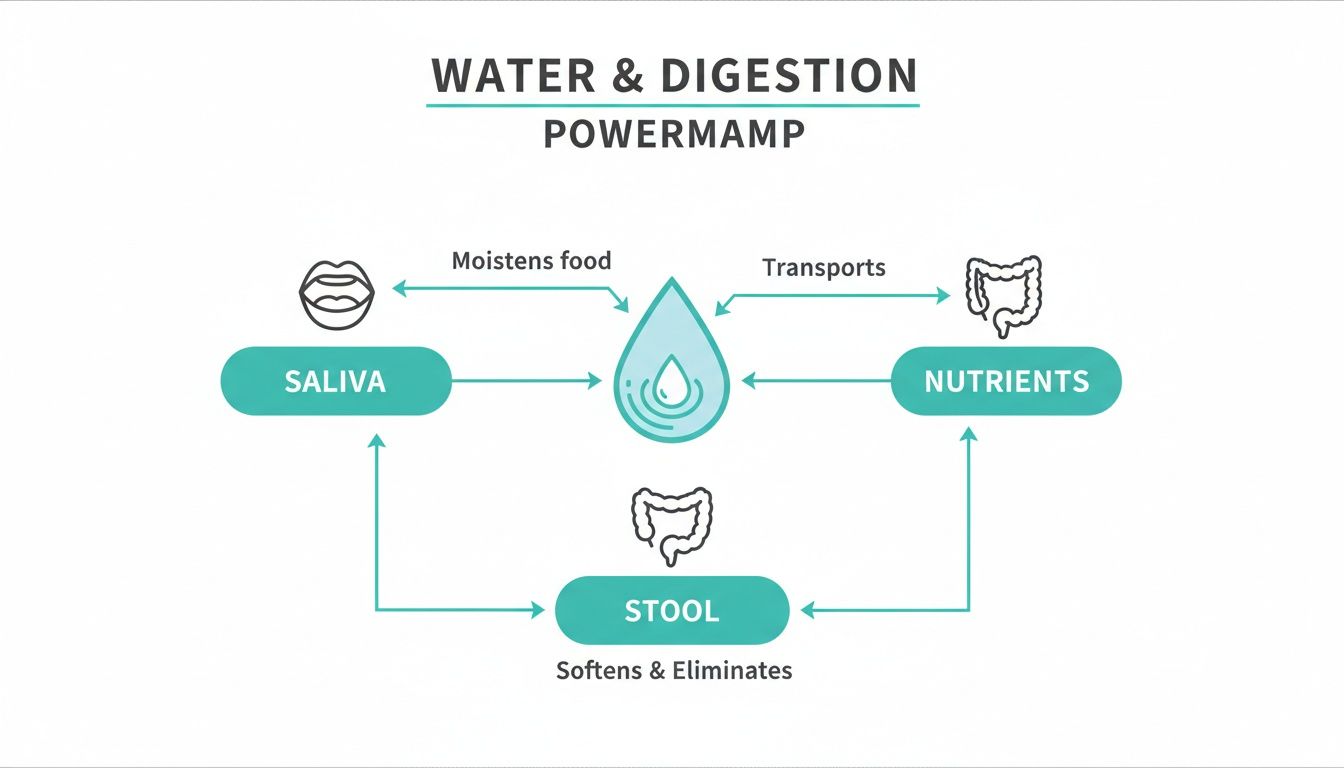
As you can see, water is the common thread that connects saliva, nutrient absorption, and waste elimination. It’s truly indispensable at every stage.
To get a sense of the scale here, your small intestine has a massive surface area—around 250 square meters—all dedicated to pulling in nutrients and water. Staying properly hydrated ensures this system works at its best, helping you get the maximum bang for your buck from every meal.
Curious about how hydration impacts your whole body? A big piece of that puzzle is understanding what electrolytes are and why they matter so much for fluid balance. The way fluids and nutrients move around is a core part of digestion that often gets overlooked. At the end of the day, every sip you take is fueling this powerful, life-sustaining cycle.
How Water Unlocks Nutrients from Your Food
Ever feel like you’re eating all the right things but still not seeing the benefits? The missing piece might just be a glass of water. Think of your digestive system as a complex delivery network, and the vitamins and minerals in your food are valuable packages. Water is the courier—the essential transport system that makes sure those packages get where they need to go.
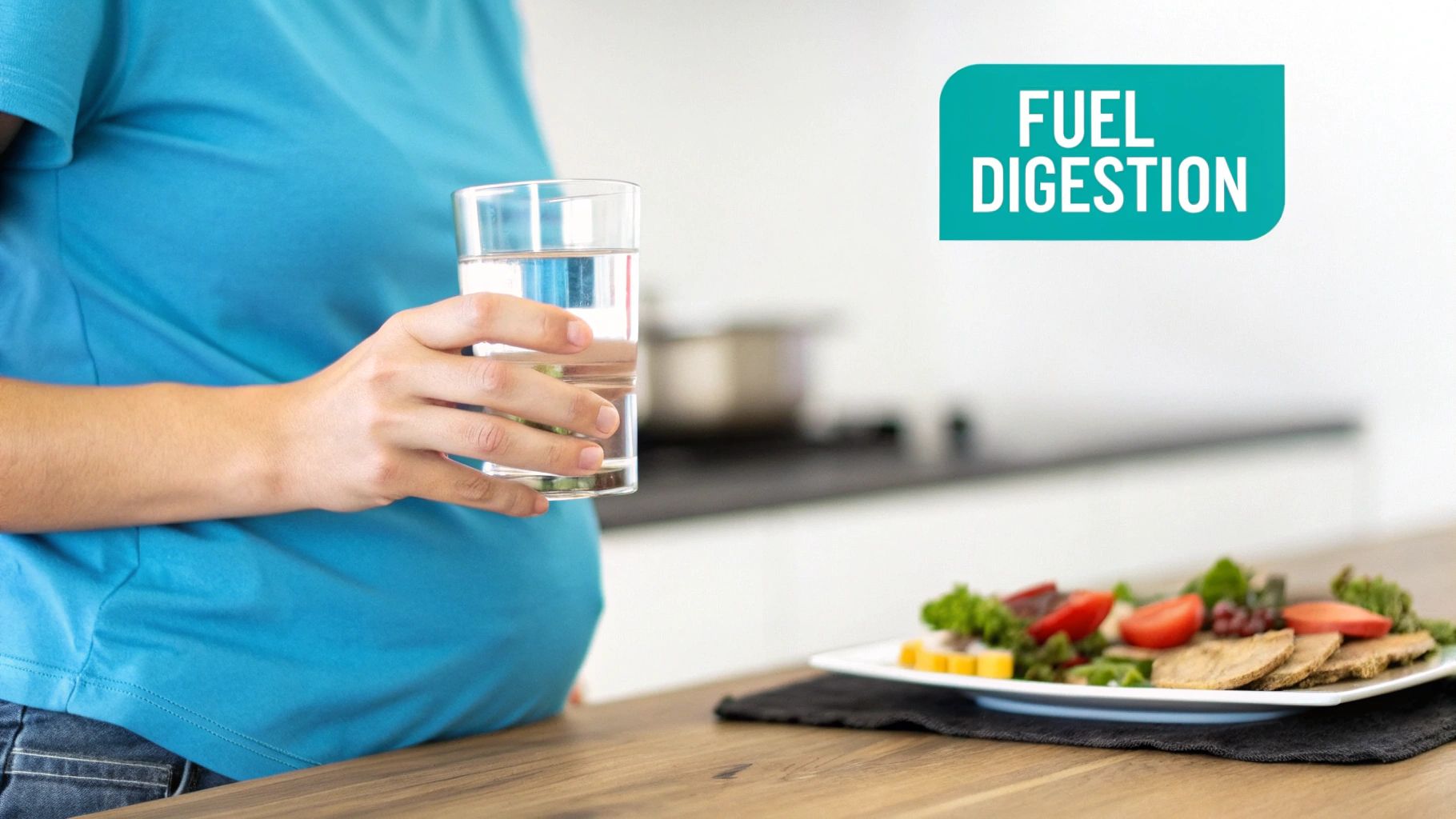
Without enough water, that delivery service grinds to a halt. It’s like the packages are all boxed up but stranded at the warehouse. This is exactly what’s happening in your gut when you're dehydrated. You can have the most nutrient-dense meal in the world, but without water, your body can't actually use most of it.
The Universal Solvent at Work
There's a reason scientists call water the "universal solvent." Its unique structure allows it to break down and dissolve a huge range of substances, including the water-soluble vitamins and minerals packed into your food.
As food makes its way to your small intestine, water jumps into action. It dissolves these nutrients, essentially making them "bioavailable" so your body can absorb them through the intestinal walls. From there, they hitch a ride into the bloodstream—which is about 92% water—and get delivered to every cell in your body.
When you're dehydrated, it creates a "traffic jam" in your digestive system. Nutrients can't be dissolved or transported properly, meaning they might just pass right through you without being used. It’s a huge missed opportunity for your health.
This whole process is fundamental to actually getting energy and vital compounds from your meals. So, to answer the question of does drinking water help digestion—absolutely. It’s what unlocks the nutrition in everything you eat.
Activating Soluble Fiber
Water's job doesn't stop at dissolving vitamins. It plays another critical role, this time with a specific type of fiber: soluble fiber.
You’ll find this stuff in foods like oats, apples, beans, and carrots. It's amazing for your gut health and keeping your blood sugar stable, but it needs water to work its magic. When soluble fiber meets water in your digestive tract, it swells up and forms a gel. This gel is a game-changer:
- It slows things down. This might sound like a bad thing, but it’s not. A slower digestion rate helps you feel fuller for longer and avoids those nasty blood sugar spikes.
- It feeds your good gut bacteria. This gel becomes a feast for the beneficial microbes in your gut, helping them thrive and keep your microbiome healthy.
- It helps you absorb more. By creating this thick, slow-moving gel, it gives your intestines more time to pull out all the good stuff from your food.
If you're not drinking enough water, soluble fiber can't form this gel. Instead of being a digestive hero, it can actually cause bloating, gas, and discomfort. Proper hydration is the key that turns fiber from a potential problem into one of your gut's best friends.
What Happens When Dehydration Slows Digestion
When you're running low on water, your body has to make some tough calls. It essentially goes into conservation mode, deciding which systems get priority access to its limited fluid supply. Regulating body temperature and keeping your blood pressure stable usually win out, which is bad news for your gut.
To compensate, your body starts pulling water from wherever it can, and the colon is one of the first places it raids.
This creates a literal traffic jam in your digestive tract. As water gets reabsorbed from the colon back into the bloodstream, the waste that’s left behind gets harder, drier, and way more difficult to pass. This is the main reason behind dehydration-induced constipation—that uncomfortable, tell-tale sign that your H2O levels are tanking.
The Ripple Effect on Your Gut
But the trouble doesn’t just stop with constipation. A lack of proper hydration sets off a chain reaction of issues that can mess with your whole digestive process, leaving you feeling bloated and just plain off.
For starters, a dehydrated body often produces less saliva and stomach acid. Both are absolutely critical for the first stage of breaking down food. Think of it like trying to scrub a greasy pan with no soap and very little water—it’s a much tougher, less effective job. This initial hiccup can lead to indigestion, where food just hangs out in your stomach for longer than it should.
And this isn't some rare problem. A huge 2015 study found that a staggering 50.5% of adults across eight different countries weren't drinking enough water to meet the European Food Safety Authority's guidelines. This kind of widespread dehydration is directly linked to sluggish digestion and means your intestines are struggling to absorb nutrients and process waste without enough lubrication. You can read more about these hydration findings and see how different countries stack up.
How Dehydration Amplifies Discomfort
On top of slowing everything down, not drinking enough water can directly cause some of the most common digestive complaints. The cause-and-effect relationship is pretty clear:
- Bloating and Gas: When stool is crawling through your colon, it has more time to ferment. This produces extra gas, which is what leads to that uncomfortable bloating and pressure.
- Indigestion and Heartburn: Dehydration can make your stomach acid more concentrated. While your stomach is designed to handle it, this super-potent acid can sometimes splash back up into the esophagus, causing irritation and heartburn.
- Reduced Enzyme Performance: Digestive enzymes are the little workhorses that break down fats, proteins, and carbs. They do their best work in a fluid environment. When you're dehydrated, they slow down, making digestion even less efficient.
It's a simple connection: when your body is dehydrated, your digestive system is one of the first places to feel the strain. Making water a priority is a direct and powerful way to fight these common gut issues and keep your internal engine running like it's supposed to.
Busting the Big Myths About Drinking Water with Meals
Let's clear the air on some of those old wives' tales about water and digestion. We've all heard them before: "Don't drink water with meals, it dilutes your stomach acid!" or the classic, "Cold water will freeze the food in your stomach." These myths just won't die, but they really don't hold up when you look at how your body actually works.
The truth? Your body is a master at managing its own environment. Drinking water with a meal isn’t like throwing a wrench in the gears of a machine. Think of it more like adding a little oil to keep everything running smoothly.
Myth #1: Water Dilutes Your Stomach Acid
This is probably the most common myth out there—the idea that water weakens your digestive juices. But your stomach is way smarter than that. It’s a dynamic, responsive organ that knows exactly what to do.
When you start eating, your stomach gets to work, secreting just the right amount of acid for the meal in front of it. If you add water to the mix, your stomach simply adjusts and produces a bit more acid to keep the pH level right where it needs to be. Besides, water zips through your stomach pretty quickly, while solid food sticks around much longer. Instead of getting in the way, that water actually helps soften everything up, making the acid's job even easier.
Myth #2: Cold Water is Bad for Digestion
Here’s another one you can forget: the idea that ice-cold water solidifies the fats in your food, making them impossible to digest. That’s a huge exaggeration.
Your internal body temperature is a reliable 98.6°F (37°C). Any cold water you drink gets warmed up almost instantly the second it hits your system. It never stays cold long enough to "freeze" anything in your stomach. While some people just prefer room-temperature water, there’s no real evidence that cold water is bad for digestion.
The bottom line is simple: drinking water—whether it’s before, during, or after a meal—is a good thing for your digestion. It helps break down food, gets your saliva flowing, and softens stool to keep you regular.
Even with all the benefits, staying hydrated is a surprisingly big challenge for a lot of people. A 2015 survey of over 16,000 adults found that only 50.5% were getting enough fluids. That’s a huge gap between what we know is good for us and what we actually do. You can discover more insights about water and digestion from Mayo Clinic.
So, now that we've busted these myths, you can feel good about drinking water whenever you're thirsty. Your digestive system will thank you for it.
Practical Hydration Strategies for Better Digestion
We all know drinking water is good for us, but putting that into practice when life gets crazy? That’s a whole different story. The secret isn't just about chugging more water; it’s about drinking smarter. Whether you’re stuck at a desk, hopping on a plane, or just out with friends, building simple, sustainable habits is what really moves the needle.
Making hydration a natural part of your day starts with a few small tweaks. You don't need some complex, color-coded schedule. All you need are a few tricks that actually fit into your real-world routine, so staying hydrated feels less like a chore and more like second nature.
Timing Your Sips for Success
When you drink your water can be just as crucial as how much you're drinking. Nailing the timing helps your digestive system get ready for meals and keeps things running smoothly all day long. Spreading out your water intake stops your system from getting overwhelmed and keeps your gut happy and prepared.
Think of it like watering a plant—a slow, steady drip is always better than a sudden flood.
- Start Your Day Right: Before you do anything else, drink a glass of water. Your body is naturally dehydrated after a long night, and this simple step wakes up your metabolism and gets your digestive system fired up for your first meal.
- A 30-Minute Head Start: Try having a glass of water about half an hour before you eat. This primes your stomach for the food to come and can even help you feel fuller, which is a neat trick to avoid overeating.
- Sip, Don't Gulp, with Meals: It’s totally fine to drink water with your food, just take small sips. This helps soften everything up and move nutrients along without leaving you feeling bloated and uncomfortable.
Smart Hydration for a Busy Lifestyle
Let's be real: a packed schedule is the number one reason we forget to drink water. But with a few simple moves, you can make sure your body gets the fluids it needs to keep your digestion humming, no matter how wild your day gets.
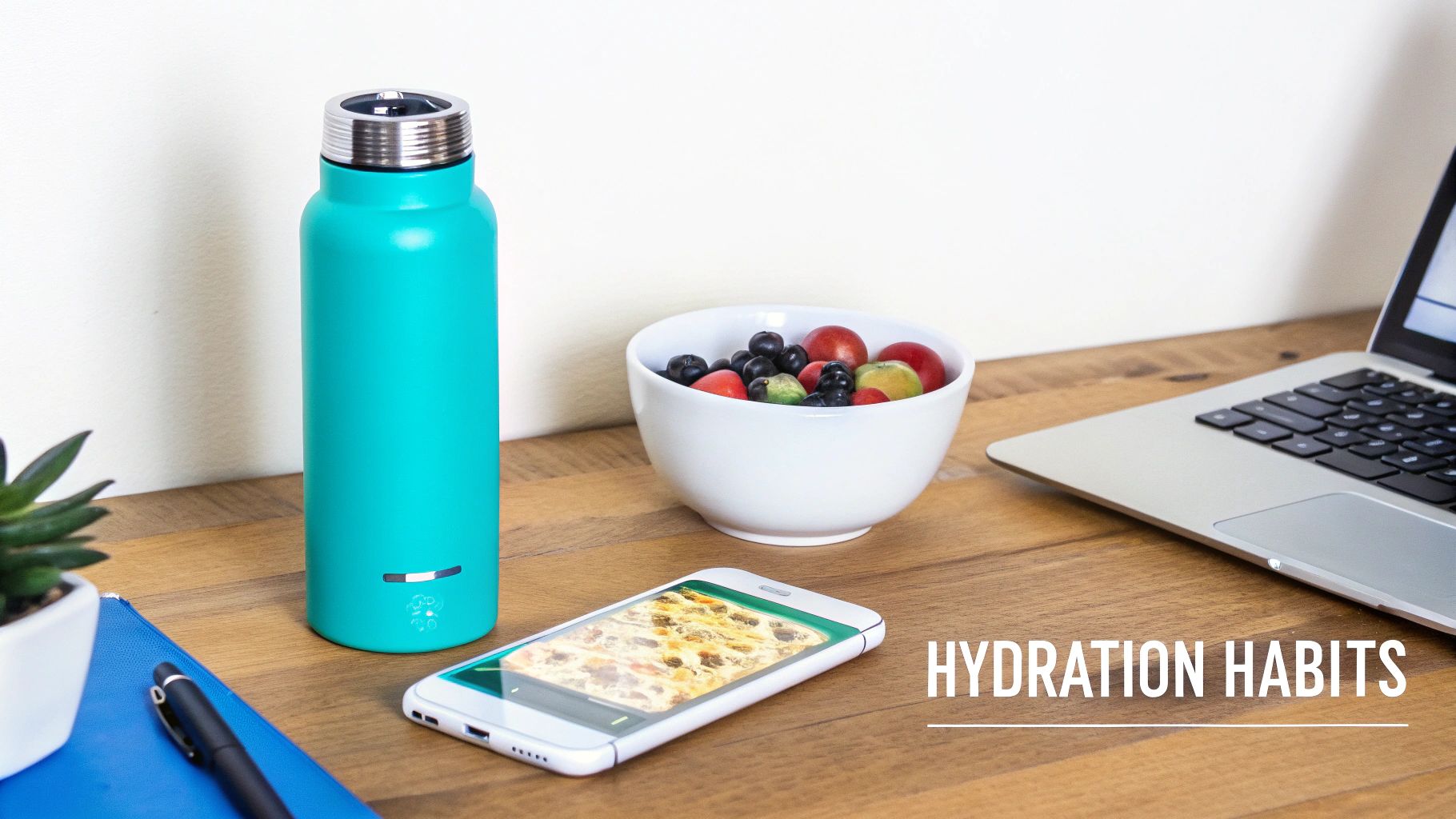
Setting reminders on your phone or smartwatch is a surprisingly effective way to build the habit. An hourly ping to take a few sips can make all the difference. Even better, try "habit stacking"—linking your water intake to something you already do, like drinking a glass every time you check your email. To learn more about making these kinds of routines stick, check out our guide to developing healthy drinking habits that stick.
Here’s a practical table to help you time your hydration perfectly throughout the day.
Smart Hydration Timing for Optimal Digestion
| Time of Day | Hydration Goal | Practical Tip |
|---|---|---|
| Upon Waking | Rehydrate & activate metabolism | Drink a full glass of water before coffee or breakfast. |
| 30 Mins Before Meals | Prep the stomach for digestion | Have a glass of water to get digestive juices flowing. |
| During Meals | Aid food breakdown & nutrient absorption | Take small sips of water to keep things moving smoothly. |
| Between Meals | Maintain consistent hydration levels | Carry a water bottle and sip throughout the day to avoid thirst. |
| Before Bed | Prevent overnight dehydration | Drink a small glass an hour before sleep to avoid waking up. |
Following these simple timing cues can make a huge difference in how your digestive system feels and functions.
The easiest rule of thumb? Just listen to your body. Thirst is the obvious signal, but a dry mouth or dark-colored urine are also signs you need to drink up. Sipping proactively all day is the best defense against dehydration and the key to keeping your gut happy.
And hey, don't forget you can eat your water, too. Plenty of fruits and veggies are packed with H2O and can give your hydration a serious boost. Cucumbers (a whopping 96% water), celery, and watermelon are fantastic choices that also deliver fiber and nutrients—a total win-win for your digestive system.
Hydration and Hangover Recovery from a Digestive View
We’ve all been there. That morning-after feeling when a great night out makes its presence known, loud and clear, in your gut. This is where the connection between a fun social life and your digestive health really comes into focus.
Alcohol is a diuretic, a fancy term meaning it makes you lose fluids way faster than normal. This quickly leads to dehydration, which is public enemy number one for your digestive system and a key culprit behind classic hangover symptoms like nausea and an upset stomach.
When your body is running low on water, your gut motility—basically, the muscular waves that push everything through your digestive tract—hits the brakes. This slowdown is a big reason you might feel queasy or just plain "off." Your system is stuck in traffic, and it's not processing things like it should be.
Rehydrating for Digestive Relief
So, what’s the game plan? Making hydration your top priority is the single best thing you can do to get back on your feet. It's the first and most crucial step to help your digestive system reset and recover.
Drinking water helps get your gut function back to normal and soothes all that irritation.
Proper hydration after drinking does more than just quench your thirst; it kickstarts your digestive recovery process, helping to flush out toxins and soothe an irritated stomach lining. This is fundamental for bouncing back.
But smart hydration is more than just chugging water. You also need to replace lost electrolytes. These are essential minerals like sodium and potassium that are vital for keeping your body’s fluids balanced and supporting muscle function—including the muscles in your gut.
When you rehydrate with water and electrolytes, you're giving your digestive system the full toolkit it needs to recover. Being proactive is even better, and understanding how drinking water can prevent hangovers in the first place is a total game-changer.
Ultimately, this isn't just about finding a quick "hangover cure." It's about shifting to a smarter, more balanced way of approaching social drinking. It’s all part of a wellness-focused lifestyle where having a good time and feeling great the next day can actually go hand in hand.
Common Questions About Water and Digestion
Even with all the science, some practical questions always seem to pop up when we talk about water and digestion. Let's tackle a few of the most common ones I hear, so you can walk away with clear, no-nonsense answers.Think of this as your go-to guide for fine-tuning your daily hydration habits. Sometimes, getting these small details right can make all the difference in how you feel.
How Much Water Should I Drink for Optimal Digestion?
We’ve all heard the classic "eight glasses a day" rule, and while it's a decent starting point, your body’s real needs are a bit more personal. How much you sweat, where you live, and your overall health all play a role.
A much better way to gauge your hydration is to just look at your urine—if it’s a light, pale yellow, you’re in a good spot. For digestion, the real trick is to sip consistently throughout the day instead of chugging huge amounts at once. And don't forget to up your intake when you're working out, spending time in the heat, or having a few alcoholic drinks.
Do Other Drinks Besides Water Help Digestion?
Absolutely. Other fluids can definitely contribute to your overall hydration. Things like herbal teas, clear broths, and even water-heavy foods like cucumbers and melons all count toward your daily fluid goals.
But let’s be real: plain water is still the gold standard. It's free of calories, sugar, and weird additives that can sometimes mess with your gut. So while it’s great to mix it up with other healthy options, make sure pure water is your go-to to give your digestive system the cleanest fuel possible.
The most important factor in digestive health isn't the temperature of your water, but the consistency of your intake. Staying adequately hydrated is what truly keeps your system running smoothly.
Does Water Temperature Make a Difference for Digestion?
This is a hot topic, but honestly, there's very little science to back the idea that water temperature has any real impact on digestion for most of us. Some people swear by warm water because it feels soothing, while others just need that refreshing kick from a cold glass.
At the end of the day, the best temperature is the one that gets you to actually drink the water. Choose whatever you enjoy most. That's what will help you build a solid hydration habit that sticks.
When life’s celebrations slow your system down, give it the support it needs to bounce back. Upside offers a smart, simple way to help your body recover and feel its best, so you can enjoy your night without worrying about the next morning.
Ready to party smarter and recover faster? Check out Upside today! #upside #enjoyupside #upsidejelly #livemore #hangovercure #hangoverprevention #fighthangovers #preventhangovers #HangoverRelief #MorningAfter #PartySmarter #HydrationStation #WellnessVibes #RecoverFaster #NoMoreHangovers #HealthyParty #HangoverHacks #FeelGoodMorning #NightlifeEssentials #HangoverFree #SupplementGoals #PostPartyPrep #GoodVibesOnly #HealthAndParty #HangoverHelper #UpsideToPartying