

· By Annemarie
Antacid for Hangover: The Truth About Morning-After Relief
Here’s the simple truth: an antacid for hangover relief isn't a silver bullet, but it can definitely take the edge off specific symptoms. It’s a temporary fix for that awful alcohol-induced heartburn and indigestion, but it won’t touch the core issues like dehydration or fatigue.
Think of it like this: it's patching a single leaky pipe when the whole plumbing system is shot. It helps, but it’s not the whole solution.
Can an Antacid Really Help a Hangover?
When you wake up with that familiar queasy stomach and a fire in your chest, grabbing an antacid feels like the most logical move. And for good reason—it’s a quick fix that directly targets one of the most common complaints after a night out. But understanding its limits is the key to actually feeling better.
An antacid's job is pretty straightforward. It works by neutralizing the excess stomach acid that alcohol tricks your body into producing. This can quickly calm that burning sensation and settle your churning stomach, making you feel a whole lot more human.
The Scope of Antacid Relief
While antacids are a decent first-aid for your gut, it's crucial to remember what they can't do. A hangover is a full-body assault, and acid reflux is just one part of the problem.
Here’s what antacids won’t fix:
- Dehydration: They do nothing to replace the fluids and electrolytes you lost. Alcohol is a diuretic, after all.
- Headaches: That pounding in your head is usually tied to dehydration and inflammation, two things an antacid can't touch.
- Fatigue: They offer zero help for the junk-quality sleep and total energy drain that alcohol causes.
What the Trends Tell Us
The link between a big night out and a sour stomach is no secret. Alcohol can crank up stomach acid production by as much as 200%, leaving nearly 47% of drinkers dealing with indigestion. It’s no surprise, then, that the U.S. antacids market hit $3.00 billion in 2024.
This market neatly overlaps with the booming global hangover products industry, which is set to jump from $2.34 billion in 2023 to a massive $6.18 billion by 2030. You can get more insights on the antacid market from ResearchAndMarkets.com.
To make it crystal clear, here’s a quick rundown of what you can realistically expect from an antacid the morning after.
Antacid Hangover Relief: Fact vs. Fiction
| Symptom | Can Antacids Help? | Why or Why Not? |
|---|---|---|
| Heartburn & Acid Reflux | Yes | Their main job is to neutralize stomach acid, providing direct relief. |
| Nausea & Upset Stomach | Sometimes | If nausea is caused by excess acid, they can help. If not, they won't do much. |
| Headache | No | Headaches are typically from dehydration and inflammation, which are out of an antacid's league. |
| Dehydration | No | They don't contain fluids or electrolytes needed for rehydration. |
| Fatigue & Brain Fog | No | These symptoms stem from poor sleep and nutrient depletion, not stomach acid. |
So, while an antacid is a solid choice for stomach-specific issues, you can see it leaves a lot of problems unsolved.
Relying solely on an antacid is like bringing a bucket to a house fire. It might put out a small flame in one corner, but it's not equipped to handle the whole blaze.
At the end of the day, using an antacid is a perfectly fine short-term tactic for stomach pain. But for a real recovery, you need a strategy that tackles the full range of issues. This is where a multi-ingredient approach, like our Upside Hangover Sticks, comes in as a much smarter solution. It’s designed to support your entire system—not just the acid in your stomach.
Why Alcohol Turns Your Stomach Into a War Zone
That queasy, churning feeling you get the morning after isn't just in your head—it’s a direct result of alcohol waging war on your digestive system. Think of your stomach as a calm, well-regulated environment. Alcohol is the uninvited guest that crashes the party, turns the music up way too loud, and starts breaking things.
First off, alcohol directly irritates the delicate lining of your stomach and intestines. This irritation kicks off an inflammatory response, almost like a sunburn on your skin. Your stomach lining gets red and sensitive, and it can't do its job properly. The medical term for this is alcoholic gastritis.
This irritation is usually the culprit behind that dull ache or sharp pain you feel. For a deeper dive, check out our guide on why your stomach hurts after drinking.
The Acid Overload Problem
Beyond just simple irritation, alcohol flips a switch that tells your stomach to pump out more acid. This surge in gastric acid is a major player in that classic hangover heartburn and acid reflux. It’s like pouring gasoline on an already smoldering fire, creating a brutally acidic environment your stomach just isn't built to handle.
This whole process is why so many people instinctively reach for an antacid for hangover relief. The chain of events is pretty straightforward.
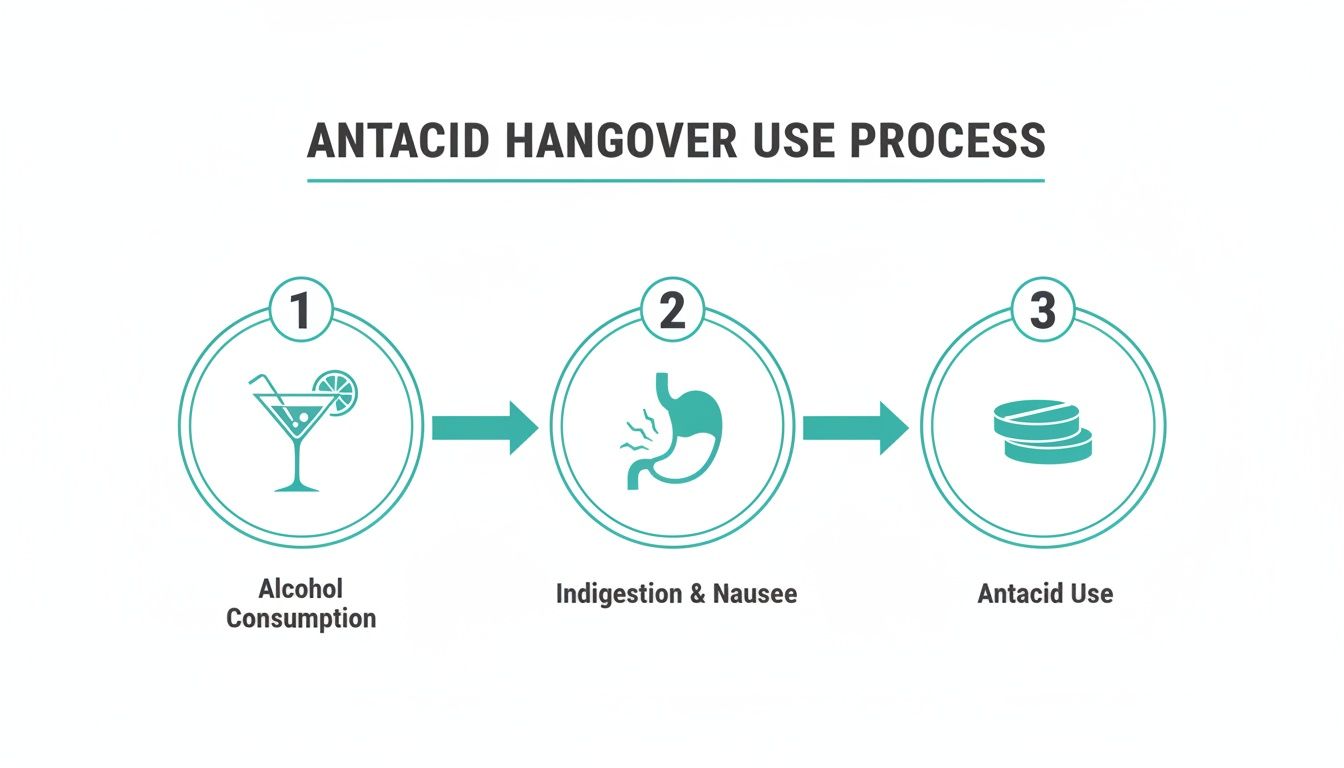
As you can see, that first drink can directly lead to indigestion, which then sends you looking for something to neutralize all that extra acid.
Digestion Grinds to a Halt
As if inflammation and acid weren't enough, alcohol also slows down gastric emptying. In simple terms, this means the food and drink in your stomach stick around for way longer than they should. Your digestive system basically becomes sluggish and backed up.
This delay is a huge reason for hangover nausea and bloating. When your stomach can't empty itself efficiently, the contents just sit there, fermenting and making you feel uncomfortably full and sick.
Put it all together, and these three factors create the perfect storm for morning-after misery:
- Direct Irritation: Alcohol physically inflames your stomach lining.
- Increased Acid Production: Your stomach gets flooded with more acid than it knows what to do with.
- Delayed Digestion: Everything slows to a crawl, leading to nausea and that awful bloated feeling.
Understanding this three-pronged attack is key. It explains why a simple antacid might give you a moment of relief from the acid, but it's not going to fix the underlying irritation or get your digestion moving again. A real recovery plan has to look at the whole battlefield, not just one small part of it.
The Real Pros and Cons of Reaching for Antacids
It can feel like a no-brainer to grab an antacid for hangover relief when your stomach is churning. They’re fast, cheap, and you can find them in any pharmacy or corner store. That accessibility is their biggest selling point, offering a quick patch for that fiery, booze-induced heartburn right when you need it.
But leaning on them too heavily comes with some serious drawbacks. Think of an antacid as a temporary truce with your stomach, not a full-on peace treaty. Overdo it, and they can completely backfire, leading to digestive chaos like constipation or diarrhea as your system struggles to find its balance again.
Unpacking the Downsides
Beyond a simple upset stomach, using antacids too often can mess with your body's delicate electrolyte balance. These minerals are vital for everything from how your nerves fire to staying properly hydrated. Throwing them off-kilter is a recipe for feeling even worse.
Another big problem? Some of the most popular fizzy antacids, like Alka-Seltzer, pack in aspirin. While that might help your headache, aspirin is an NSAID that can irritate a stomach lining that's already inflamed from a night of drinking. For a deeper dive, check out our guide on whether Alka-Seltzer truly helps hangovers.
An antacid's job is just to neutralize the acid that’s already there. It does absolutely nothing to fix the inflammation, dehydration, or nutrient loss that are the real culprits behind your hangover.
The fact that so many people reach for antacids has fueled a global boom in hangover remedies. The market shot up from USD 2.34 billion in 2023 and is on track to hit a staggering USD 6.18 billion by 2030. This isn't a new phenomenon, either. Back in the 80s, when wine coolers were all the rage, Tums sales skyrocketed, with an estimated 30-50% of drinkers using them to fight hangovers. You can read the full research on the hangover cure market to see just how big this trend is.
A Look at the Hidden Risks
Popping an antacid here and there is generally fine. The real danger comes from consistently relying on them, which can cover up more serious underlying health problems like GERD or even an ulcer that needs a doctor's attention. It’s the classic mistake of treating a symptom while letting the real problem get worse.
Ultimately, antacids have their place, but they're a limited, reactive fix. To truly bounce back after a night out, you need a proactive plan that supports your whole body—not just one that silences a single, noisy complaint from your stomach.
Better Hangover Strategies That Actually Work
Relying on an antacid for your hangover is a bit like putting a single band-aid on a full-body injury. It might help with one specific symptom—heartburn—but it does absolutely nothing to fix the bigger picture. A real hangover is a full-body problem caused by dehydration, inflammation, and nutrient loss, and it needs a full-body solution.
To actually feel better, you have to move past these single-symptom fixes. Instead of just reacting to the loudest symptom, a smarter approach is to proactively give your body everything it needs to repair itself from the inside out. It all comes down to focusing on the real pillars of recovery.
The Core Pillars of Real Recovery
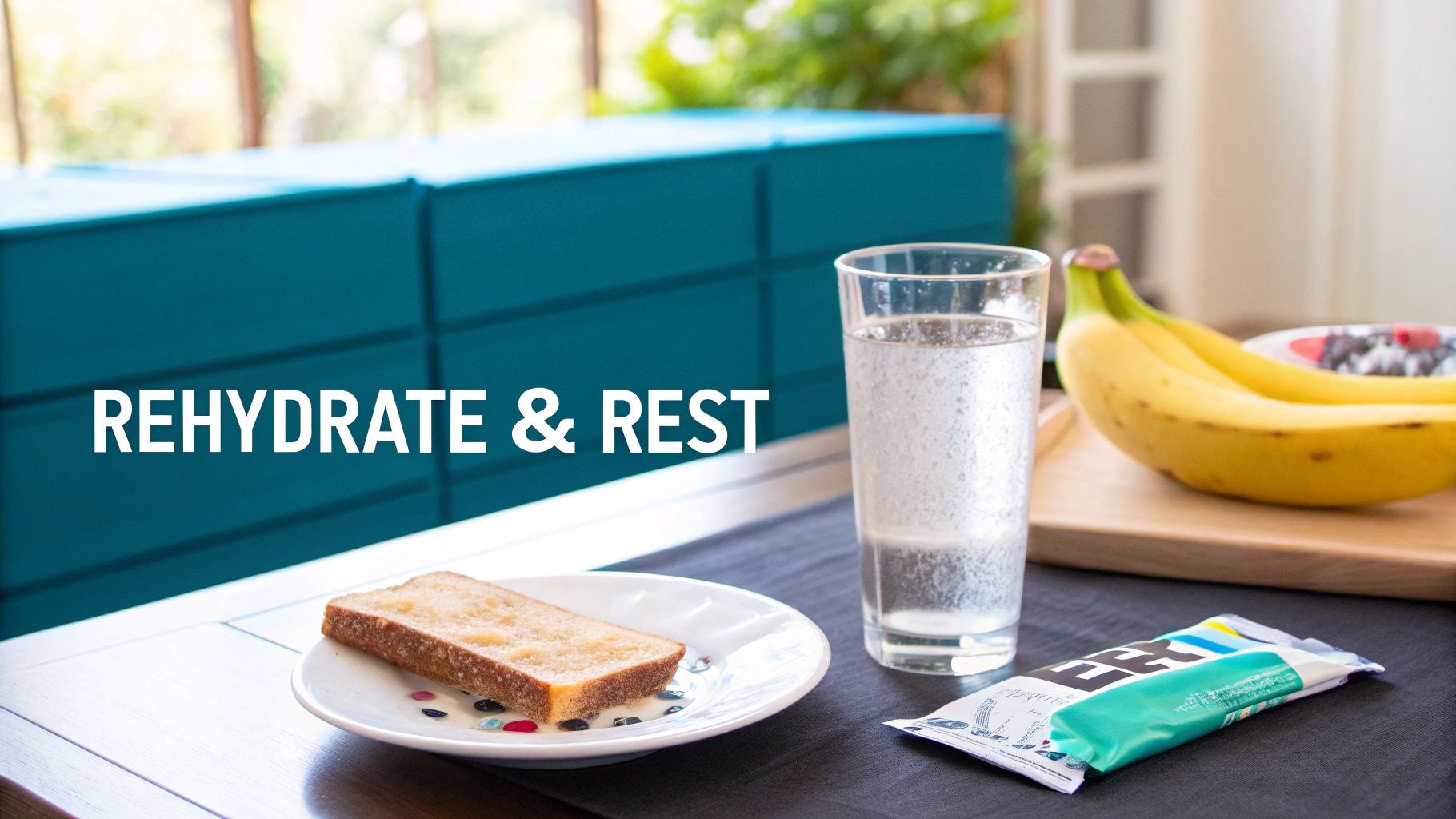
A true hangover game plan has nothing to do with what’s in your medicine cabinet. It’s built on three non-negotiable actions that tackle the root causes of your misery, not just the noisy symptoms like an upset stomach.
-
Aggressively Rehydrate: Alcohol is a diuretic, which means it forces water and essential minerals right out of your system. Just chugging plain water won't cut it; you need to replace electrolytes like potassium, sodium, and magnesium to get your body back in balance. For a deeper dive, check out our guide on hydration for hangover recovery.
-
Gently Refuel: Your blood sugar is probably tanked and your stomach is seriously irritated. A greasy breakfast is the last thing you need—it’ll just make the inflammation worse. Go for gentle, nutrient-rich foods instead, like bananas (for potassium), toast (to bring up blood sugar), or eggs (for cysteine, an amino acid that helps process alcohol byproducts).
-
Prioritize Rest: One of the biggest reasons you feel so wiped out is that alcohol totally wrecks your sleep quality. Your body does its most important repair work while you’re asleep, so giving yourself permission to rest lets your liver finish its detox job and your brain recover.
A truly effective hangover strategy doesn't just silence the alarms your body is sending; it provides the resources your internal "fire department" needs to put out the fire completely.
Supporting Your Body with Targeted Nutrients
While water, food, and sleep are the foundation, you can speed things up by adding some targeted supplements into the mix. A night of drinking depletes vital nutrients, especially B vitamins, which are crucial for energy. Topping those back up can help you fight off the fatigue and brain fog a lot faster.
On top of that, ingredients that support your liver’s natural detox pathways can really ease the burden on your system. Think of it as giving your liver a team of helpers to clean up the mess more efficiently. This shifts your mindset from just masking the pain to actively helping your body’s own systems get you back to 100%.
A Better Way to Bounce Back With Upside
Look, it's time to move past the chalky tablets and fizzy drinks you grab from the pharmacy aisle. While a standard antacid for hangover relief might calm an upset stomach, it’s like putting a single band-aid on a much bigger problem. For anyone who balances a social life with a packed schedule, you need a smarter, more complete solution—one that gets to the root causes, not just the most obvious symptom.
That's where Upside Hangover Sticks come in. We took inspiration from proven Korean remedies to create a multi-ingredient formula that supports your body’s entire recovery process. This isn't just about neutralizing a little acid; it's about helping your body process alcohol byproducts, get rehydrated, and find its balance again.
A Smarter Solution for a Busy Lifestyle
We designed Upside for people on the go. The unique jelly comes in a small, portable stick you can toss in a pocket or purse. No water, no glass, no mess—just tear it open and enjoy. It’s a super discreet and convenient way to prep for a better morning, whether you're traveling, at a wedding, or just out with friends.
This is a huge step up from the old-school remedies. Antacids have been a go-to for ages, but they’re just one tiny piece of what's now a massive global hangover supplements market, projected to hit USD 2.78 billion by 2025. Products like Upside are leading this shift, offering a tasty, effective jelly that helps you avoid the risks of overdoing it on antacids. You can see for yourself how the hangover recovery market is changing and why people are looking for better options.
"I was skeptical, but Upside is a game-changer. It tastes great and I woke up feeling refreshed and clear-headed. No more chalky tablets for me!" - Alex P., Verified Buyer
Clean Ingredients You Can Trust
If you care about what you put in your body, the ingredient list is everything. We formulated Upside to fit right into a health-conscious lifestyle, using ingredients that work for your body, not against it.
- Vegan
- Gluten-Free
- Non-GMO
- Soy-Free
- Dairy-Free
- Nut-Free
This commitment means you can enjoy your night without wrecking your wellness goals. It’s the smarter, cleaner, and more effective way to make sure your mornings are just as good as your nights.
Just see how it compares to the old-school approach.
Traditional Antacids vs Upside Hangover Sticks
When you put them side-by-side, it's easy to see why a comprehensive approach makes more sense for modern recovery. An antacid is a one-trick pony, while Upside is designed to support your whole system.
| Feature | Traditional Antacids | Upside Hangover Sticks |
|---|---|---|
| Primary Function | Neutralizes existing stomach acid | Supports the body's entire recovery process |
| Symptom Coverage | Targets heartburn and indigestion only | Addresses multiple symptoms like fatigue and brain fog |
| Format | Chalky tablets or fizzy liquids | Convenient, tasty, portable jelly stick |
| Formula | Single-action (calcium carbonate, etc.) | Multi-ingredient (vitamins, botanicals, amino acids) |
| Lifestyle Fit | Reactive, single-use fix | Proactive, health-conscious wellness support |
Ultimately, the choice is between a quick fix for one symptom or a proactive tool that helps you feel like yourself again the next day.
Common Questions About Hangovers and Stomach Pain
Even with the best game plan, a few questions about hangovers and that awful morning-after gut rot always seem to pop up. Getting straight, practical answers helps you understand what’s going on with your body so you can make smarter choices when you celebrate. Let's clear up some of the most common ones.
This last part of the guide will tackle those nagging concerns, driving home the key takeaways with advice you can actually use. Once you get the nuances, you'll see why a complete, all-in-one solution is usually your best bet for a genuinely better morning.
Why Does My Stomach Hurt More From Certain Types of Alcohol?
Ever wonder why a night of red wine ties your stomach in knots, but a few clear vodkas leave you feeling fine? You’re not imagining it. The type of booze you drink plays a huge part in how your digestive system feels the next day.
The main culprits here are called congeners, which are basically chemical byproducts from the fermentation process. Darker liquors like whiskey, bourbon, and red wine are loaded with them. These compounds are notorious for ramping up inflammation and can seriously irritate your stomach lining, making your hangover symptoms way worse.
On top of that, fizzy drinks like beer and champagne can make you absorb alcohol faster while also creating pressure in your stomach, which leads to bloating and discomfort. Throw sugary mixers into the mix—which just adds more fuel to the inflammation fire—and you’ve got a perfect recipe for digestive chaos. It's the whole package, not just the proof, that decides how your stomach will fare.
Should I Take an Antacid Before or After Drinking?
This is a classic question, and the answer is pretty clear: it’s best to wait until after you’re done drinking for the night, or even until the next morning. Popping an antacid for hangover prevention before you start isn’t a great move. Some types can actually mess with how your body absorbs alcohol, which could make you feel the effects way faster and harder than you planned.
A much smarter strategy is proactive prevention, not reactive damage control. Instead of just waiting for heartburn to strike, a comprehensive product that helps your body process alcohol can tackle the root causes before they even start.
This is exactly why a solution designed to be taken before you drink is the way to go. It helps your system gear up for what's coming, which is way more effective than just trying to neutralize acid after the fact.
Is Drinking Milk a Good Substitute for an Antacid?
That old wives' tale about chugging milk to soothe an angry stomach is everywhere, but it usually backfires. Sure, milk might give you a fleeting moment of relief by coating your throat, but that feeling doesn't last.
The fat and calcium in milk can actually signal your stomach to produce more acid to digest everything. This often leads to a nasty rebound effect, making your heartburn and indigestion even worse a little while later. For a lot of people, it also brings on uncomfortable bloating and gas. It’s a gamble that can easily make things worse, making a balanced, targeted remedy a much safer bet.
What Are Some Natural Alternatives for an Upset Stomach?
Of course! Nature offers some fantastic, effective ways to soothe a hangover-related upset stomach without having to chew on a chalky tablet.
- Ginger: This root is a total powerhouse for fighting nausea and settling your stomach. Sipping on some ginger tea or taking a ginger supplement can bring serious relief.
- Peppermint: Known for its calming effects, peppermint tea can help relax your stomach muscles, ease indigestion, and curb that queasy feeling.
- Bland Foods: Sticking to simple, easy-to-digest stuff like bananas, rice, applesauce, and toast (the BRAT diet) can help soak up extra stomach acid without causing more irritation.
These natural ingredients are often the foundation of modern, effective hangover solutions because they work with your body to get it back in balance.
Instead of juggling temporary fixes and single-symptom remedies, think about a smarter, all-in-one approach. Upside Hangover Sticks are designed to support your entire system—from rehydration to liver support—so you can enjoy your night and still own your morning.
Discover the smarter way to recover at enjoyupside.com
#upside #enjoyupside #upsidejelly #livemore #hangovercure #hangoverprevention #fighthangovers #preventhangovers #HangoverRelief #MorningAfter #PartySmarter #HydrationStation #WellnessVibes #RecoverFaster #NoMoreHangovers #HealthyParty #HangoverHacks #FeelGoodMorning #NightlifeEssentials #HangoverFree #SupplementGoals #PostPartyPrep #GoodVibesOnly #HealthAndParty #HangoverHelper #UpsideToPartying