

· By Annemarie
Best Hydration After Drinking: A Recovery Plan
You wake up dry-mouthed, heavy-headed, and annoyed at yourself for doing the same thing again. You drank water before bed, maybe even kept a glass on the nightstand, and yet you still feel rough.
That's the frustrating part. Best hydration after drinking isn't just about drinking more water. It's about using the right fluids at the right time, and knowing what hydration can fix versus what it can't.
A lot of people assume dehydration is the whole story. It isn't. A 2024 reanalysis discussed by ZBiotics reported that dehydration is not the primary cause of hangovers and found no direct causal link between water deficit and hangover intensity. That doesn't mean hydration doesn't matter. It means your recovery plan has to be smarter than chugging water and hoping for the best.
More Than Just Thirst Why You Feel So Bad
The morning-after misery usually shows up as a mix of problems. Thirst is one of them, but so are headache, nausea, fatigue, poor sleep, and that washed-out feeling where your body seems off in every direction.
That matters because it changes the goal. If you treat a hangover like a simple water shortage, you'll probably overdo plain water and still feel lousy. Hydration helps, especially when alcohol has left you dry and depleted, but it won't erase the full effect of a night of drinking.
Why water alone often disappoints
Plain water is useful. It just isn't the whole plan.
Alcohol can leave you low on fluids and also less able to feel steady because your overall recovery depends on more than replacing liquid. Your body also has to regain balance, tolerate food again, and clear the byproducts of alcohol metabolism over time. That's why someone can finish a giant bottle of water and still wake up with a pounding head and zero energy.
Bottom line: If your strategy is only “drink water before bed,” your strategy is incomplete.
The practical takeaway is simple. Use hydration as one part of recovery, not as a magic trick. Think in phases. What you drink before sleep matters. What you drink the next morning matters more. And the type of fluid matters if you want your body to retain what you take in.
What hydration can and can't do
Hydration can help with the symptoms that get worse when you're dried out, especially thirst, headache, and fatigue. It can also make the next day more manageable if you start early and stay steady.
What it can't do is instantly remove alcohol's toxic byproducts or replace lost sleep. That's why the best hydration after drinking always includes a trade-off mindset. You're not looking for a cure. You're trying to reduce damage, support recovery, and avoid making things worse.
The Science of Alcohol and Dehydration
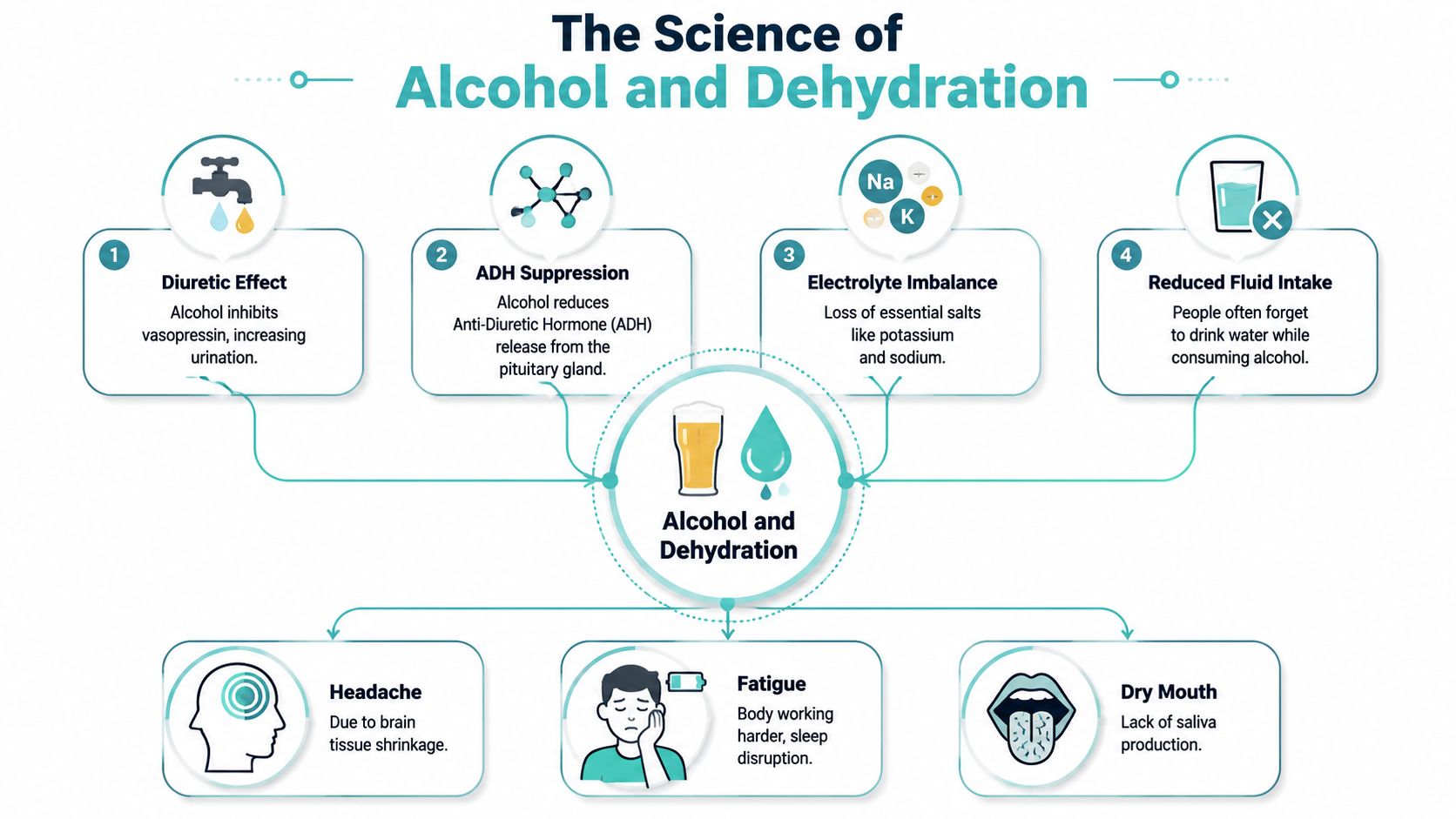
Alcohol changes your fluid balance quickly. A key reason is that it suppresses vasopressin, also called antidiuretic hormone (ADH). According to Nuun's explanation of dehydration and hangovers, alcohol suppresses vasopressin within 20 minutes of the first drink, which increases urine output and contributes to losses of sodium, potassium, and magnesium.
What that means in real life
When ADH drops, your kidneys don't hold on to water the way they normally would. So even if you've had plenty to drink overall, your body starts pushing fluid out faster. That's why a night of drinking often comes with repeated bathroom trips, dry mouth, and that unmistakable next-day thirst.
The electrolyte side matters too. If you're losing fluid along with minerals that help your body retain and use that fluid, then replacing only water can feel strangely ineffective.
Why electrolytes earn their place
Many people usually make the wrong turn. They focus on quantity and ignore composition.
A better way to think about recovery is this:
- Water replaces volume: It helps if you're thirsty and behind on fluids.
- Electrolytes improve retention: Sodium, potassium, and magnesium help your body use that fluid more effectively.
- Steady intake beats flood-and-flush: Big gulps can worsen nausea and may send you straight back to the bathroom.
Your body doesn't just need liquid after drinking. It needs liquid it can hold on to.
That doesn't mean every person needs the same drink. It does mean that if you had a long night, woke up dry, or dealt with vomiting or repeated urination, electrolyte support usually makes more sense than plain water alone.
Your Immediate Post-Drinking Protocol
The best time to start recovery is before your head hits the pillow. Many skip this window, then try to fix everything the next morning. That's backward.
Health authorities recommend about one pint of water, roughly 473 mL, before sleep to help reduce overnight dehydration and next-day symptom severity, as noted by Drinkaware's hangover recovery guidance.
The pre-sleep checklist
Keep this simple enough that you'll do it when you're tired.
- Stop the night with water Aim for that one-pint pre-bed drink. Don't force it all at once if your stomach feels touchy. Sip it over a short stretch while you're winding down.
- Add electrolytes if you can tolerate them This is especially helpful after a long night, a hot venue, dancing, or lots of bathroom trips. An oral rehydration-style drink, electrolyte tablet, or diluted sports drink is usually more useful than plain water by itself.
- Don't chug Fast intake can backfire if you're nauseated. Slower sipping gives you a better shot at keeping fluids down.
- Eat something bland if you haven't Toast, crackers, or broth can be easier to tolerate than a heavy meal. If you can manage something salty, even better.
What to skip before bed
The last thing you need is a fake recovery ritual.
- Skip more alcohol: “Hair of the dog” just delays the problem.
- Skip giant sugar bombs: They can feel appealing late at night but often leave you feeling worse.
- Skip random supplement stacking: If a routine is too complicated to follow consistently, it won't help in practice.
Practical rule: Your bedtime plan should be doable in two minutes, not built like a wellness challenge.
If you know you're prone to rough mornings, set up your recovery before you go out. Put water on the nightstand. Keep an electrolyte option at home. Make the smart choice the easy choice.
The Morning After Rehydration Blueprint
Morning recovery works best when you stop trying to “win” hydration in one sitting. The better move is to restore fluid steadily and pair it with something your body can retain.
According to Transparent Labs' review of electrolyte use for hangovers, a practical target is 16 to 24 ounces of fluid within the first hour of waking, followed by steady rehydration over the next hour or two instead of chugging.
First hour after waking
If your stomach is unsettled, don't start with icy water and don't slam a full bottle. Start with a few sips, pause, then continue.
A useful order looks like this:
- Begin with small, regular sips: This lowers the chance of nausea.
- Choose an electrolyte-containing drink first if you feel depleted: It's often the better opening move than plain water.
- Add bland food once your stomach settles: Toast, crackers, rice, or broth can make the next round of fluids easier.
Choosing your rehydration fluid
| Fluid Type | Pros | Cons | Best For |
|---|---|---|---|
| Plain water | Easy, cheap, widely available | May not be enough on its own when you feel depleted | Mild thirst or light follow-up hydration |
| Coconut water | Easy to drink for some people, includes electrolytes | Not everyone tolerates the taste or sweetness well | People who want a lighter alternative |
| Sports drinks | Convenient, familiar, replaces fluid and electrolytes | Can taste too sweet for some people | General recovery when you need something accessible |
| Dedicated electrolyte solutions | Designed for fluid retention and electrolyte replacement | Some people dislike the flavor profile or want a simpler option | Rough mornings, heavy fluid loss, or sensitive recovery days |
| Broth | Warm, salty, often easier on the stomach | Not as portable and may not appeal first thing | Nausea, low appetite, or when you need both fluid and sodium |
The pacing that works better
The phrase I come back to is sipping beats chugging. Chugging can feel productive, but if your stomach rejects it or you pee it out immediately, it wasn't useful.
Try this instead:
- Drink gradually through the first part of the morning.
- Pause if nausea rises.
- Return to fluids after a few bites of food.
- Keep your drink nearby instead of trying to finish everything at once.
A good morning recovery plan feels boring. That's usually a sign it's working.
What not to expect
Even the best hydration after drinking won't suddenly make you feel fully normal if you slept badly or drank heavily. Hydration helps most when it's part of a bigger recovery picture that includes food, rest, and time.
That's also why overcorrecting can become its own mistake. If you're forcing huge amounts of water because you think more must be better, you're probably missing the point. The goal is effective rehydration, not maximum volume.
Foods and Supplements That Boost Recovery
The best hydration after drinking doesn't stop at your glass. Food changes how well your body handles fluids, and the right add-ons can make rehydration feel more stable instead of temporary.
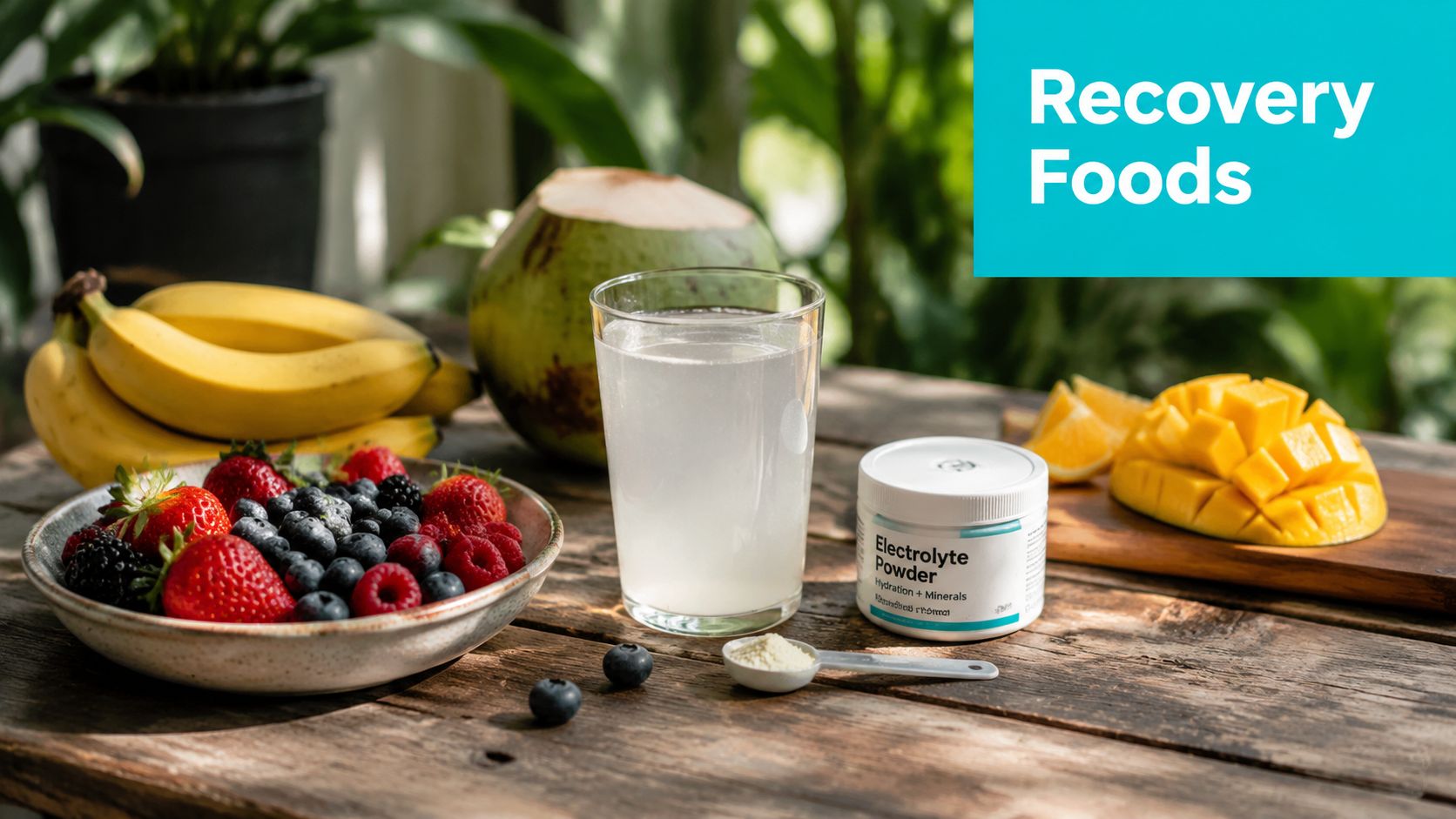
A useful principle from Huel's explanation of post-drinking rehydration is that recovery requires steady replacement and retention of fluids aided by electrolytes. In plain terms, water alone often falls short because your body may not retain it efficiently without mineral support.
Foods that help fluids stick
When appetite is low, keep it basic.
- Broth or soup: Salty, warm, and often easier to tolerate than solid food.
- Toast or crackers: Good when your stomach wants something bland.
- Bananas or other easy fruit: A gentle option if you want something light.
- Simple carb-and-salt combinations: Think rice, toast, or a plain sandwich if you can handle it.
These choices aren't glamorous, but they do the job. They support fluid intake without pushing your stomach too hard.
Supplements and convenience choices
If you already use electrolyte tablets, powders, or ready-to-drink hydration products, the morning after is a sensible time to lean on them. Look for options that focus on electrolytes rather than just flavor.
This quick explainer gives a helpful overview of hydration support and recovery habits:
Keep your supplement approach realistic. If a product is convenient, easy to tolerate, and doesn't require a complicated routine, you're much more likely to use it consistently. That matters more than chasing a perfect stack.
Some of the best recovery choices are the least exciting ones. Warm broth, steady electrolyte intake, and plain food beat heroic hacks almost every time.
What doesn't deserve the hype
A few common fixes get more credit than they should.
- Plain water as the only tool: Better than nothing, but often not enough.
- Sugary “recovery” drinks: They may taste good but can feel heavy when you're already queasy.
- Complicated detox thinking: Your body still needs time. Support it, don't try to outsmart it.
Smarter Hydration for Your Lifestyle
Recovery advice only works if it fits real life. A perfect protocol that falls apart during work travel, late dinners, weddings, or airport mornings isn't useful.
For busy professionals, convenience matters most. Keep a simple setup at home and another in your bag. If you get back late, you want zero friction between you and a glass of water plus an electrolyte option.
For frequent travelers, planning matters more than discipline. Nights out while traveling can hit harder because your routine is off, your meals are irregular, and sleep is usually worse. Pack portable hydration support and don't wait until the hotel morning to think about recovery.
For health-conscious drinkers, ingredient preferences matter. Choose hydration products and recovery tools that fit how you already live so you won't abandon them after one use. If you prefer soy free, gluten-free, non-GMO, vegan, nut-free, or dairy-free options, stick with products that match those standards.
Know when it's more than a rough morning
Most hangovers ease with time, fluids, food, and rest. But severe dehydration or alcohol-related illness is different. If someone can't keep fluids down, seems confused, has worsening symptoms, or you're worried their condition isn't just a typical hangover, get medical help.
The big lesson is simple. Best hydration after drinking is proactive, not desperate. Water helps. Electrolytes often help more. Timing matters. Steady intake beats panic-chugging. And the night goes better when the morning already has a plan.
If you want a portable recovery option that fits a social life instead of complicating it, take a look at Upside Hangover Sticks. Upside's jelly format is easy to stash in a pocket, work bag, or carry-on, and its formula is designed for people who want a cleaner, convenient addition to their post-party routine. #upside #enjoyupside #upsidejelly #livemore #hangovercure #hangoverprevention #fighthangovers #preventhangovers #HangoverRelief #MorningAfter #PartySmarter #HydrationStation #WellnessVibes #RecoverFaster #NoMoreHangovers #HealthyParty #HangoverHacks #FeelGoodMorning #NightlifeEssentials #HangoverFree #SupplementGoals #PostPartyPrep #GoodVibesOnly #HealthAndParty #HangoverHelper #UpsideToPartying