

· By Annemarie
A Practical Guide to Asian Flush Prevention
If you've ever dealt with the dreaded "Asian flush," you know how quickly it can ruin a good night. Preventing it is all about understanding what's happening in your body and being smart about how you approach drinking.
There's no magic pill, but with the right strategies, you can manage the reaction instead of letting it manage you. It really comes down to managing how much you drink, what you drink, and giving your body a little extra support.
So, What's Actually Happening? The Science Behind Asian Flush

Ever wondered why just one beer can make your face turn beet-red, your heart pound, and your stomach churn? It's not a typical allergy or a sign that you have a "low tolerance." It’s a specific genetic trait called the alcohol flush reaction.
When you drink, your liver gets to work. First, it breaks down alcohol into a really nasty, toxic compound called acetaldehyde. For most people, a second enzyme called aldehyde dehydrogenase 2 (ALDH2) swoops in and quickly turns that toxin into harmless acetic acid (the stuff that makes vinegar sour).
But for a huge number of people, especially those with East Asian roots, a genetic quirk means their ALDH2 enzyme is either way less effective or completely inactive. This is what's known as an ALDH2 deficiency.
The Acetaldehyde Pile-Up
Without that ALDH2 enzyme working at full steam, acetaldehyde floods your system way faster than your body can clear it out. Think of it like a traffic jam on the highway—everything just piles up, causing chaos. That's exactly what's happening in your bloodstream.
This toxic buildup is the real culprit behind all those classic "Asian flush" symptoms. Your body freaks out from the high acetaldehyde levels and releases histamines, which kicks off that cascade of uncomfortable effects.
The real problem isn't the alcohol itself; it's the toxic byproduct, acetaldehyde, that accumulates so quickly. Just trying to mask the symptoms without dealing with the buildup can be a risky move.
Common Symptoms and Why It's Genetic
This reaction is way more than just a red face. It can bring on a whole list of symptoms that make social drinking feel more like a chore than a good time.
To help you pinpoint if this is what you're experiencing, here’s a quick rundown of the most common signs.
Common Symptoms of Alcohol Flush Reaction
A quick summary of the common physical reactions associated with Asian flush to help you identify the condition.
| Symptom | What It Feels Like |
|---|---|
| Facial Flushing | Your face, neck, and chest get hot and turn noticeably red. |
| Rapid Heartbeat | You can feel your heart racing or pounding, even after just one drink. |
| Headaches & Dizziness | A throbbing headache or feeling light-headed and dizzy. |
| Nausea | An upset stomach or feeling like you're about to be sick. |
Recognizing these symptoms is the first step. They’re a clear signal from your body that it's struggling.
And this genetic trait is incredibly common. Research shows that about 36% of Japanese, Chinese, and Korean people experience the flush because they carry the ALDH2*2 allele. If you want to take a deeper dive into the science, our guide on what causes alcohol intolerance is a great place to start.
Smarter Drinking Strategies That Actually Work
Alright, so you know the science behind why you turn red. That’s step one. But knowing the why is different from knowing the what to do. Putting smart, practical strategies into action is how you actually take back control of your social life.
When it comes to Asian flush prevention, it’s not about becoming a hermit. It's about being more intentional with your choices before you even take that first sip. These are your first and best lines of defense. The whole idea is to slow down how fast your body absorbs alcohol, giving your limited ALDH2 enzyme a fighting chance to keep up.
Prepare Your Body Before the First Drink
Rule number one, and I can't stress this enough: never, ever drink on an empty stomach. Seriously. Think of food as a necessary buffer, a roadblock that slows down alcohol's race into your bloodstream.
When you drink without eating, the alcohol gets absorbed almost instantly. This completely overwhelms your system and pretty much guarantees a swift, intense flush. A solid meal beforehand is non-negotiable. Aim for a balanced plate with:
- Healthy Fats: Avocado, nuts, or a little olive oil are great for slowing down how quickly your stomach empties.
- Complex Carbs: Think whole grains, potatoes, or pasta. They provide a steady foundation.
- Lean Protein: Chicken, fish, or beans will help you feel full and slow down absorption even more.
For example, grabbing a chicken and avocado sandwich on whole wheat bread an hour before you head out is a world away from just having a sugary snack. This simple act of planning can completely change how your night goes.
Master the Art of Pacing and Hydration
Once the drinking starts, water becomes your best friend. Pacing yourself isn't just about drinking less; it's about giving your body time to process. The golden rule here is to alternate every alcoholic drink with a full glass of water or another non-alcoholic beverage.
This "one-for-one" strategy is a game-changer for two reasons. First, it literally forces you to slow down, preventing you from chugging alcohol faster than your body can handle. Second, it keeps you hydrated, which helps a ton with other fun side effects like headaches and fatigue.
Imagine you're at a wedding reception where the drinks are flowing. Instead of just accepting every top-up, make a point to order a sparkling water with lime between each glass of wine. That small move gives your body a crucial 20-30 minute break to work on the last drink.
Be Mindful of the Social Scene
How you apply these strategies really depends on where you are. A wild night at a bar is totally different from a long, sit-down dinner, and you've got to adapt.
- At a Bar or Club: These places are designed for fast drinking. You need to be the one to set the pace. Hold onto your drink, sip it slowly, and always order your own water so you're not at the mercy of a busy bartender.
- At a Formal Dinner: Those wine pairings can be tricky. You don’t have to drain every glass they pour you. Take a few sips to appreciate the pairing, then focus on your water for the rest of the course. It’s totally fine.
- At a Casual Get-Together: This is a great time to opt for lower-alcohol drinks. A light beer or a wine spritzer lets you hang out with a drink in your hand for longer without overloading your system.
At the end of the day, these tactics are all about giving you the power to manage your body’s reaction. By eating right beforehand and pacing yourself like a pro, you can seriously reduce how bad your flush gets and actually enjoy your night with more comfort and confidence.
Choosing Your Drinks to Minimize Reactions
When it comes to Asian flush, not all drinks are created equal. Far from it. The type of alcohol you choose can be the difference between a great night out and a miserable one spent red-faced, nauseous, and with a pounding heart. Getting smart about what's in your glass is one of the most powerful moves you can make.
So, what's the deal? It often comes down to two main culprits: congeners and histamines. Congeners are chemical byproducts from the fermentation and aging process—they're what give dark liquors like whiskey and rum their characteristic color and flavor. Histamines, on the other hand, are compounds that can trigger allergic-like responses and are naturally found in many fermented drinks, especially red wine.
For someone with an ALDH2 deficiency, both of these can pour fuel on the fire, making an already bad reaction feel a whole lot worse. This is why so many people with Asian flush find they can handle clear spirits much better. Drinks like vodka, gin, and some tequilas are generally lower in these troublemaking compounds, which means your body has less to fight off on top of that nasty acetaldehyde buildup.
What to Drink and What to Ditch
A simple rule of thumb I always follow is this: the darker and more aged the alcohol, the higher the risk of a nasty flush. Think of your drink options on a spectrum from "probably okay" to "definitely asking for trouble."
- Your Safest Bets: High-quality, well-filtered spirits are your friends. Premium vodka, gin, and blanco (or silver) tequila contain very few congeners. My go-to is usually a simple vodka soda with a big squeeze of lime—it’s clean, refreshing, and minimizes the variables.
- The Middle Ground: Light beers and crisp, dry white wines like Sauvignon Blanc or Pinot Grigio are often more tolerable than their darker, heavier counterparts. They still have some compounds that can cause issues, but generally far less than the high-risk stuff.
- The High-Risk List: Red wine is probably the most notorious trigger for many, as it’s packed with both histamines and tannins. And those dark, aged liquors? Whiskey, bourbon, brandy, and dark rum are absolutely loaded with congeners. For most of us, these are best left on the shelf.
I put together this table to make it a bit easier to visualize your options next time you're looking at a drink menu.
Drink Choices From Lower to Higher Flush Risk
This is a quick guide to help you make smarter choices at the bar or liquor store, based on what's most likely to set off your symptoms.
| Drink Category | Why It's a Better/Worse Choice | Examples |
|---|---|---|
| Clear, Distilled Spirits | These are highly filtered, removing most of the congeners and histamines. This is your cleanest option. | Premium Vodka, Gin, Blanco/Silver Tequila |
| Light Beers & Ciders | Lower in congeners than dark beers and some wines, but carbonation can speed up alcohol absorption for some people. | Light Lagers, Pilsners, Dry Ciders |
| Dry White Wines | Generally lower in histamines and tannins than red wines, making them a more moderate choice. | Sauvignon Blanc, Pinot Grigio, Prosecco |
| Dark Beers & Stouts | The darker malts and longer fermentation create more congeners, which can worsen reactions. | Stouts, Porters, Dark Ales |
| Dark, Aged Liquors | Aged in wooden barrels, these are packed with flavor-giving congeners that are tough on your system. | Whiskey, Bourbon, Scotch, Dark Rum, Brandy |
| Red Wine | Often the worst offender. It’s typically high in both histamines and tannins, which are major triggers for flushing. | Cabernet Sauvignon, Merlot, Malbec |
Ultimately, the goal isn't just to dodge a red face—it's about putting less stress on your body. Picking a drink low in these extra compounds can make a huge difference in how you feel, both during the night and the next morning.
This flowchart gives a great visual for planning ahead.
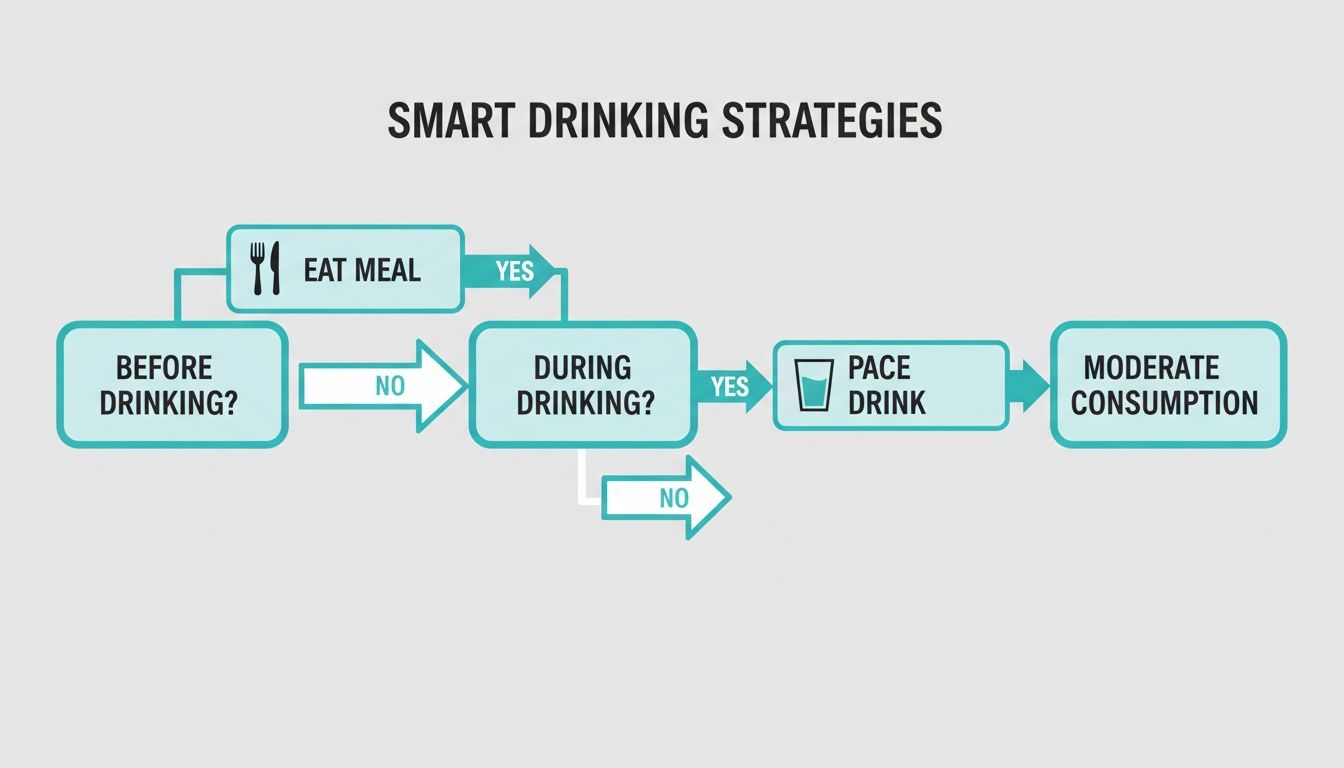
As you can see, what you do before you even take the first sip—like eating a proper meal—is just as important as what's in your cup.
Watch Out for Hidden Triggers in Cocktails
Okay, so you’ve smartly ordered a vodka. But then the bartender mixes it with a sugary cranberry juice blend and a splash of sweet and sour. You've just undone all your hard work.
Mixers can be a huge hidden source of trouble. All that sugar in sodas, juices, and syrups can make your body absorb alcohol faster and add to the overall inflammatory load. If you want to dig deeper into this, our guide on what alcohol causes the least hangover touches on some of these same ideas.
When in doubt, keep it simple. Club soda, sparkling water, and fresh-squeezed citrus are always your best bet. A Vodka Soda or Gin and Soda gives you total control and is one of the safest cocktails you can order.
Supplements And Antihistamines: A Cautious Approach
When you’re desperate for a quick fix for the dreaded flush, it's tempting to dive into the world of over-the-counter solutions. Lots of people turn to antihistamines or supplements, hoping for a magic pill to stop the redness. But let's be real—this approach demands a ton of caution, because these methods often just hide the problem instead of actually solving it.
One of the most common "hacks" you'll see online is popping an H2-blocker antihistamine, like famotidine (the stuff in Pepcid AC), about an hour before you start drinking. These meds work by blocking histamine receptors, and since the flush is basically a massive histamine reaction to acetaldehyde, they can actually work pretty well at keeping the redness at bay.
But here’s the scary part. While you might look and feel completely normal, the antihistamine does absolutely nothing to stop toxic acetaldehyde from building up in your system. Think of it like turning off the check-engine light in your car while the engine is still on fire. You're just silencing the alarm, not fixing the dangerous issue underneath.
The Illusion of a Quick Fix
Relying on this method gives you a false sense of security, which can easily lead to drinking way more than your body can safely process. You’re still flooding your system with a known carcinogen; you just aren't seeing the most obvious warning sign. This is a serious risk, not a solution.
Interestingly, that genetic flush also serves as a natural brake against heavy drinking. While 30-50% of people of Chinese, Japanese, and Korean descent get this reaction, the discomfort that comes with it leads to lower rates of alcoholism compared to those who don't flush. When you mask the symptoms, you're bypassing your body's built-in defense mechanism, and that can have some pretty serious long-term consequences.
So, What About Supplements?
Beyond antihistamines, there's a huge market of supplements that claim to offer a more "natural" way to prevent Asian flush. These usually contain a cocktail of vitamins, antioxidants, and amino acids that are meant to help your liver's detox process.
Some common ingredients you'll run into are:
- N-Acetylcysteine (NAC): An amino acid that helps your body produce glutathione, a powerhouse antioxidant that neutralizes toxins like acetaldehyde.
- B Vitamins: Alcohol can really drain your B vitamins, which are key for energy and metabolism.
- Milk Thistle: An old-school herbal remedy people use to support liver health.
- Quercetin: A plant-based antioxidant that might help calm down the cells that release all that histamine.
Medical Disclaimer: Always, always talk to a doctor or healthcare professional before trying any new medication or supplement, especially if you're mixing it with alcohol. Antihistamines can have side effects and might not play well with other meds or health conditions you have.
These supplements try to arm your body with more tools to fight back, rather than just covering up the red flag. But their effectiveness can be all over the place, and they definitely aren't a green light to drink as much as you want. For a deeper dive on this, you can check out our guide on supplements to take before drinking alcohol.
At the end of the day, these options aren't a replacement for the real strategies: drinking in moderation, pacing yourself, and being smart about what you drink. True prevention is about working with your body, not trying to trick it.
What To Do if the Flush Hits Anyway

Even with the best game plan, sometimes the flush just happens. One minute you're fine, the next you feel that familiar warmth creeping up your neck. Don't panic. The most important thing is to listen to what your body is telling you and act fast.
The second you feel it, your very first move should be to stop drinking alcohol immediately. Seriously. Put the drink down. Pushing through will only make the reaction worse by dumping more acetaldehyde into a system that’s already struggling. Swap that cocktail for a glass of cold water.
Tactics for Immediate Relief
Once you've stopped drinking, the goal is to cool down and get comfortable. That intense feeling of heat is easily one of the worst parts of the flush, but a few quick moves can make a world of difference.
Here are a few things I do to calm the reaction down:
- Sip Cold Water: Hydration is your best friend here. The cool temperature feels great and helps your body process everything.
- Find Some Fresh Air: Stuffy, crowded rooms make everything feel a hundred times worse. Step outside for a few minutes. That cool air on your skin can feel like a lifesaver and help with any dizziness.
- Use a Cool Compress: Pop into the restroom and splash some cold water on your face, neck, and wrists. You can also just run a paper towel under the cold tap and hold it to your skin for a bit.
While these tricks won't magically stop the biological process, they can seriously dial down the discomfort while your body does its thing.
Think of your symptoms as a very clear signal from your body that it’s in distress. Listening to that signal and acting on it is the smartest thing you can do. Putting your well-being first is never an overreaction.
Knowing When to Call It a Night
Let's be real: there is absolutely no shame in heading out early if you feel unwell. Your health is way more important than sticking around for one more round or being the last to leave.
If your symptoms are getting more intense—maybe your heart is starting to race, you're feeling dizzy, or an ugly wave of nausea hits—it's time to make a graceful exit. You don't need some elaborate story. A simple, "Hey, I'm not feeling great, so I'm gonna head home," is all anyone needs to hear.
Just make sure you let a friend know you're leaving, especially if you've been drinking. Get a safe ride home, whether that's with a designated driver or a rideshare. The main goal here is to take care of yourself and give your body the time and space it needs to recover.
Your Questions About Asian Flush, Answered
Navigating social drinking when you have an alcohol flush reaction can feel like a minefield. Even with the best game plan, it's normal to have a few lingering questions. Let's clear up some of the most common ones.
Can I Permanently Cure My Asian Flush?
The short answer is no. Because Asian flush is a genetic condition, there’s no permanent cure. It all comes down to a deficiency in an enzyme called ALDH2, which is hardwired right into your DNA.
So, any effective Asian flush prevention plan isn't about changing your genetics—that's impossible. It's about working with your body. The most successful approach is learning your unique limits and using smart drinking habits, like the ones we've covered, to manage the reaction and minimize the long-term health risks from acetaldehyde exposure.
Does Taking An Antihistamine Before Drinking Really Work?
You've probably heard this tip before. Yes, an H2-blocker antihistamine like famotidine (the active ingredient in Pepcid) can reduce facial redness. It works by blocking histamine, the compound that makes your skin flush. But this is a seriously dangerous shortcut.
While an antihistamine might hide the redness, it does absolutely nothing to stop the buildup of toxic acetaldehyde in your body. It's like silencing a fire alarm while the building is still burning.
This can give you a false sense of security, encouraging you to drink more than your system can safely handle and significantly increasing your exposure to a known carcinogen. Always talk to a doctor before even thinking about using medication for this purpose.
Are There Specific Foods That Help Prevent The Flush?
While no single food is a magic bullet, what you eat—and when—is one of the most powerful tools you have. The best strategy? Eat a substantial, balanced meal before your first drink. No exceptions.
Focus on foods that slow down how quickly your body absorbs alcohol, giving your system more time to process it. Good choices include:
- Healthy Fats: Think avocado, nuts, and olive oil. They help slow down how fast your stomach empties.
- Lean Proteins: Chicken, fish, or beans will keep you full and provide a steady buffer.
- Complex Carbohydrates: Whole grains and starchy veggies are your friends here.
If you remember one thing, make it this: never drink on an empty stomach. That's a surefire way to get hit with a fast, severe reaction.
Why Does My Heart Race When I Get Asian Flush?
That racing heartbeat, medically known as tachycardia, is a super common—and unsettling—symptom of the flush. It's a direct result of high levels of acetaldehyde circulating in your bloodstream.
Your body recognizes this toxic compound as a poison and kicks into a stress response. It releases hormones that cause your heart rate and blood pressure to spike. Think of it as a clear, urgent signal that your body is overwhelmed. When you feel it, it's time to stop drinking and give your system a chance to recover.
Don't let the fear of a flush or a rough morning hold you back from living your life. With Upside, you can enjoy your night and wake up feeling great. Our convenient, great-tasting jelly is packed with natural ingredients designed to support your body's recovery process, so you can celebrate without compromise.
Ready to make your next night out a better one? Check out Upside Hangover Sticks.
#upside #enjoyupside #upsidejelly #livemore #hangovercure #hangoverprevention #fighthangovers #preventhangovers #HangoverRelief #MorningAfter #PartySmarter #HydrationStation #WellnessVibes #RecoverFaster #NoMoreHangovers #HealthyParty #HangoverHacks #FeelGoodMorning #NightlifeEssentials #HangoverFree #SupplementGoals #PostPartyPrep #GoodVibesOnly #HealthAndParty #HangoverHelper #UpsideToPartying