

· By Annemarie
Understanding why do i feel anxious after drinking: expert tips
That feeling of dread, a racing heart, and a wave of worry that washes over you the morning after drinking? It has a name: hangxiety.
This isn't just you being "in your head." It’s a very real, physical response to what alcohol does to your body. Think of it as an emotional and physiological echo of the night before, driven by a rebound in your brain chemistry, terrible sleep, and good old-fashioned dehydration.
The Science Behind Post-Drinking Anxiety
If you’ve ever woken up asking yourself, "Why do I feel so anxious after drinking?" you’re not alone. The temporary calm or "buzz" from alcohol is borrowed happiness, and your brain is a stickler for balancing its books.
To counteract the sedative effects of alcohol, your brain works overtime to stay alert. Once the alcohol wears off, it doesn't just switch off this heightened state. Instead, it leaves your nervous system in overdrive.
That overcorrection is the main reason you feel jittery, on edge, and full of unease. It's like your internal alarm system is stuck on high alert, even when there’s no danger.
The Perfect Storm: What Triggers Hangxiety?
Several factors conspire to create this perfect storm of anxiety. Getting a handle on them is the first step to feeling better.
- The Brain Chemistry Rebound: Alcohol initially enhances the calming chemicals in your brain. To balance this out, your brain pumps up the volume on its stimulating chemicals. When the alcohol is gone, you’re left with all that "go-go-go" stimulation and none of the calm. Hello, anxiety.
- Wrecked Sleep: Sure, a drink might make you nod off faster, but the quality of that sleep is terrible. Alcohol messes with your REM cycle—the deep, restorative stage you need to feel mentally refreshed. Waking up from poor sleep is a surefire way to feel emotionally fragile and anxious.
- Dehydration and Depletion: Alcohol is a diuretic, which is a fancy way of saying it makes you pee a lot. This drains your body of fluids and essential electrolytes, putting it under significant physical stress. That stress can show up as anxiety symptoms like a racing heart, dizziness, and confusion. For a deeper dive, check out our guide on how alcohol affects your body.
The core issue is your body's attempt to recalibrate. The anxiety you feel is a direct result of your brain and body scrambling to return to their natural equilibrium after the significant disruption caused by alcohol consumption.
This triple-threat of a scrambled brain, poor rest, and physical depletion creates an environment where anxiety can thrive. It’s a physiological response, not a personal failing. Understanding this is key to managing it.
Let's break down these primary factors in a quick-reference table.
Quick Guide to Hangxiety Triggers
This table summarizes the main culprits behind that feeling of post-drinking unease.
| Trigger | How It Contributes to Anxiety |
|---|---|
| Neurological Rebound | Your brain overcompensates for alcohol's sedative effects, leaving your nervous system in a hyper-aroused, "on-edge" state. |
| Poor Sleep Quality | Alcohol disrupts deep REM sleep, which is crucial for emotional regulation, leading to heightened irritability and anxiety. |
| Dehydration | The loss of fluids and electrolytes from alcohol puts your body under physical stress, mimicking anxiety symptoms like a rapid heartbeat. |
| Blood Sugar Crash | Alcohol can cause your blood sugar to spike and then plummet, leading to shakiness, mood swings, and a feeling of unease. |
Recognizing these triggers in your own experience is the first step. By understanding the science, you can start to address the root causes and find ways to feel more like yourself again.
Navigating the Neurochemical Rollercoaster
To get to the bottom of why you feel anxious after drinking, it helps to think of your brain's chemistry as a finely balanced seesaw. This seesaw is in a constant, delicate dance to keep you feeling stable. On either end, you've got two key players: GABA and glutamate.
First, there's GABA (gamma-aminobutyric acid). GABA is basically your brain's natural brake pedal. As an inhibitory neurotransmitter, its job is to slow things down, quiet the noise, and bring on a sense of calm.
On the other side of the seesaw sits glutamate. If GABA is the brake, glutamate is the accelerator. It’s an excitatory neurotransmitter that gets your brain firing, keeping you alert, focused, and ready to go. When everything is working as it should, these two are in perfect harmony, managing your mood and energy from one moment to the next.
How Alcohol Hijacks Your Brain's Seesaw
When you introduce alcohol into the mix, it's like dropping a heavy weight on the GABA side of the seesaw. Alcohol mimics and amplifies GABA’s effects, slamming that side down hard. This is precisely why that first drink or two feels so good—you're getting an artificial boost to your brain's primary calming system, making you feel relaxed and less inhibited.
At the very same time, alcohol is over on the other side, blocking your glutamate receptors. It’s essentially taking its foot off the accelerator. So you get a powerful double-whammy: more braking from the supercharged GABA and less gas from the blocked glutamate.
Of course, your brain is incredibly smart and immediately senses that something is way off. It doesn't like being in this forced, artificial state of calm. So, it starts to fight back. To counteract the sedative effects of alcohol, your brain starts pumping out extra glutamate and dials down its sensitivity to GABA. It's desperately trying to rebalance the seesaw while you're still drinking.
This infographic breaks down how this intense neurochemical scramble, plus a few other key factors, sets the stage for that morning-after dread.
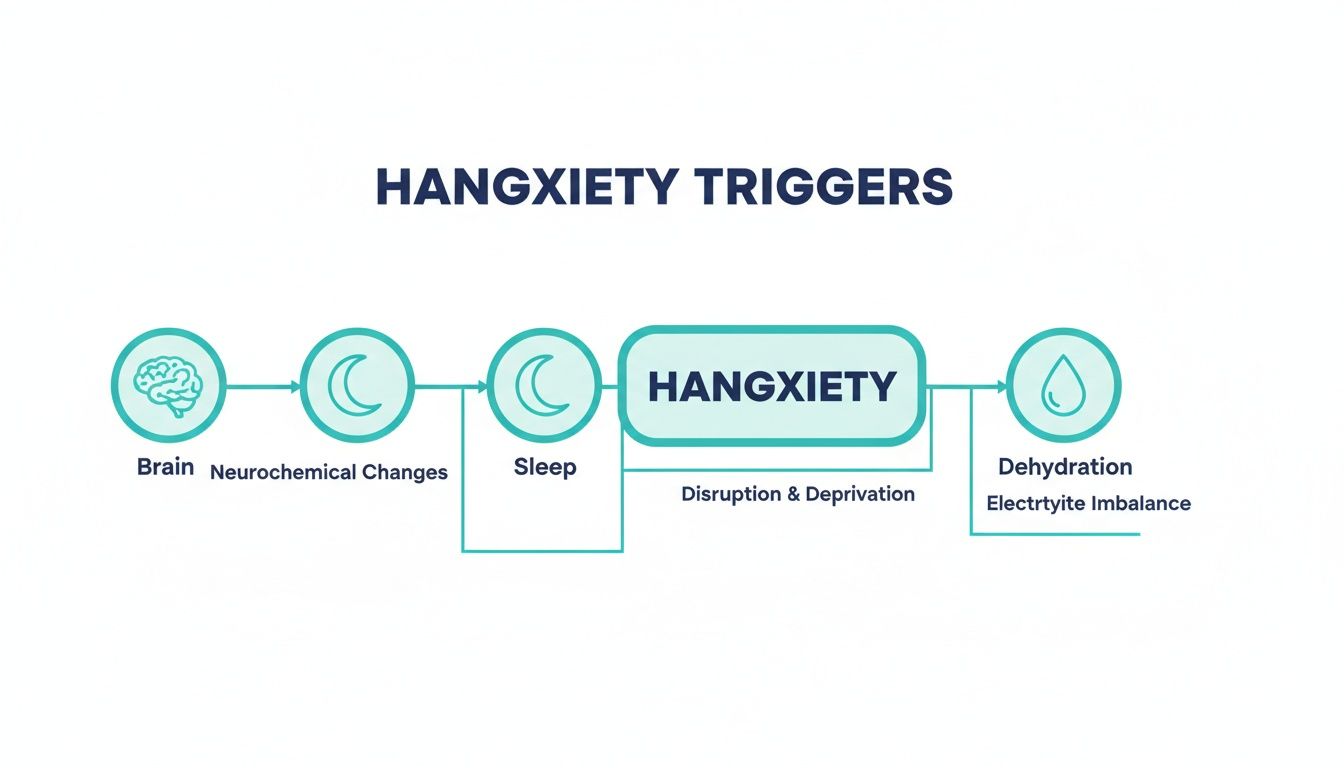
As you can see, it all starts in the brain. That initial response triggers a domino effect, messing with your sleep and hydration, which only makes the anxiety worse.
The Inevitable Rebound Effect
The real trouble starts when the alcohol begins to wear off. As your body processes it, that heavy weight is suddenly lifted from the GABA side of the seesaw. But what about all that extra glutamate your brain produced to fight back? It’s still there, flooding your system.
Now, your nervous system is left in a state of wild overcorrection. You’re dealing with:
- Less GABA activity: Your brain has made itself less sensitive to its own calming signals.
- A surge of glutamate: The accelerator is now floored, with no brakes to keep it in check.
This abrupt swing from sedation to overstimulation is known as the rebound effect. The seesaw doesn't just level out—it swings violently in the opposite direction. Your brain goes from an artificial chill to a state of high-alert, hyper-excitation.
This neurochemical whiplash is the very heart of hangxiety. Your brain is getting flooded with "go" signals while the "stop" signals are offline, creating a state of high alert that your mind registers as anxiety, panic, and dread.
It's this jarring shift that explains the awful mental and physical symptoms. In fact, clinical research confirms that as your blood alcohol level drops back to zero, this rebound in excitatory brain activity is what can trigger intense anxiety, nervousness, heart palpitations, and even full-blown panic attacks.
What This Feels Like in Your Body
This internal chemical storm isn't just a thought or a feeling—it shows up in very real, very physical ways that only amplify the mental anguish.
- Racing Heart: That glutamate surge kicks your "fight-or-flight" response into high gear, causing your heart to pound in your chest.
- Jitteriness and Tremors: Your muscles are getting way too many "fire" signals from the brain, leading to that shaky, restless feeling in your hands and limbs.
- Heightened Senses: Ever notice how lights seem painfully bright and normal sounds feel jarringly loud? Your brain is on high alert, processing every single stimulus as a potential threat.
- Racing and Intrusive Thoughts: With the accelerator pedal stuck to the floor, your thoughts can spin out of control, replaying conversations from the night before or inventing new things to worry about.
At the end of the day, hangxiety isn't a character flaw or a sign of weakness. It's a physiological event—your body's loud-and-clear signal that it's trying to manage an extreme internal imbalance. Understanding this seesaw effect makes it obvious why things like pacing yourself, staying hydrated, and supporting your body’s recovery are so critical for keeping your brain chemistry on a more even keel.
What Puts You at Higher Risk for Hangxiety?
We’ve all been there: one person feels totally fine after a night out, while another is riddled with a sense of dread. The intensity of post-drinking anxiety is incredibly personal. While the basic brain chemistry of alcohol affects everyone, a few key factors can turn a mild case of the Sunday Scaries into a full-blown anxiety attack.
Think of your resilience to stress as a bucket. Everyday life—work deadlines, poor sleep, skipping meals—slowly adds water to it. Alcohol is like dumping a gallon in all at once. If your bucket is already half-full before you even take that first sip, it’s going to overflow much faster, spilling out as hangxiety.
Your Mental Health Baseline
This is probably the single biggest factor. If you already live with an anxiety disorder (like GAD), panic attacks, or depression, your brain's chemistry is already working on a different set of rules. It’s often in a more delicate state of balance to begin with.
When you introduce alcohol, you're rocking a boat that was already trying hard to stay steady. The brain's natural rebound from alcohol's sedative effects—that glutamate surge we talked about—feels much more jarring. The aftershocks are simply more intense when the ground beneath you is already a bit shaky.
For someone with a pre-existing anxiety condition, the brain's scramble to rebalance after drinking is like trying to find stability during an earthquake. The ground is already unsteady, making the aftershocks feel far more intense and destabilizing.
This doesn’t mean you’re destined for terrible hangxiety, but it does mean your vulnerability is higher. Your brain’s starting line is just different, so the race back to feeling normal is often a much bumpier ride.
The Way You Drink Matters—A Lot
How you drink can be just as important as how much you drink. The speed and volume of your alcohol consumption have a direct line to the severity of that neurochemical whiplash you feel the next day. This is where binge drinking really becomes a problem.
When you down several drinks in a short amount of time, you're essentially sending your brain's emergency response system into overdrive. It has to slam on the chemical brakes to counteract the intense sedative effect. This forces a much more aggressive and chaotic rebound of glutamate once the alcohol starts to wear off.
- Moderate Drinking: Think of this as gently pushing down one side of a seesaw. The return swing is predictable and easy to manage.
- Binge Drinking: This is like dropping a huge weight on one side of the seesaw from ten feet up. It slams down hard, and the rebound on the other side is violent and totally out of control.
This is exactly why a couple of glasses of wine spread over a long dinner might leave you feeling fine, but the same amount of alcohol taken as shots in an hour can trigger that all-too-familiar morning-after dread. Research consistently shows that heavy or binge drinking patterns cause far more significant neurochemical chaos than moderate consumption. The more you drink in one sitting, the higher the odds of waking up to anxiety. If you want to dive deeper, you can read the full research about this phenomenon and its effects.
How Everyday Stress Lowers Your Defenses
Your body doesn't handle the stress of alcohol in a vacuum. Your daily habits and general well-being set the stage, either building up your defenses or tearing them down.
1. Poor Sleep: Going into a night of drinking already sleep-deprived is like starting a race with a sprained ankle. A well-rested brain is far better at managing emotions and stress. An exhausted one is already on edge, and the fragmented, low-quality "sleep" you get after drinking will only make things worse.
2. Nutritional Gaps: Your brain is a machine that needs fuel. Specifically, it relies on nutrients like B vitamins and magnesium to produce the very neurotransmitters that keep you calm and balanced. If you haven't eaten a solid meal or your diet is lacking, your body simply won't have the raw materials it needs to recover efficiently.
3. High Daily Stress: Juggling a demanding job, family life, or money worries? Your body is likely swimming in cortisol (the main stress hormone) on a good day. Adding alcohol to an already stressed-out system is like pouring gasoline on a fire. Your nervous system is already on high alert, so the glutamate rebound feels less like a jolt and more like an explosion.
By taking an honest look at your mental health, drinking habits, and daily stressors, you can start connecting the dots. Hangxiety rarely comes out of nowhere. It's a predictable storm brewing at the intersection of alcohol and your own unique biology and lifestyle. Pinpointing these risk factors is the first real step toward taking back control.
Practical Strategies to Prevent Hangxiety
Knowing the why behind hangxiety is the first step, but the real goal is stopping it before it starts. The good news is, you have a lot of control here. Fortifying your mind and body against that post-drinking dread is entirely possible, and the best defense begins long before your last sip.
Think of these strategies less as restrictions and more as preparation. By being mindful and proactive, you can soften that harsh neurochemical rebound and physical stress that fuels anxiety. It's about letting yourself enjoy a social evening without paying for it with your peace of mind the next day.
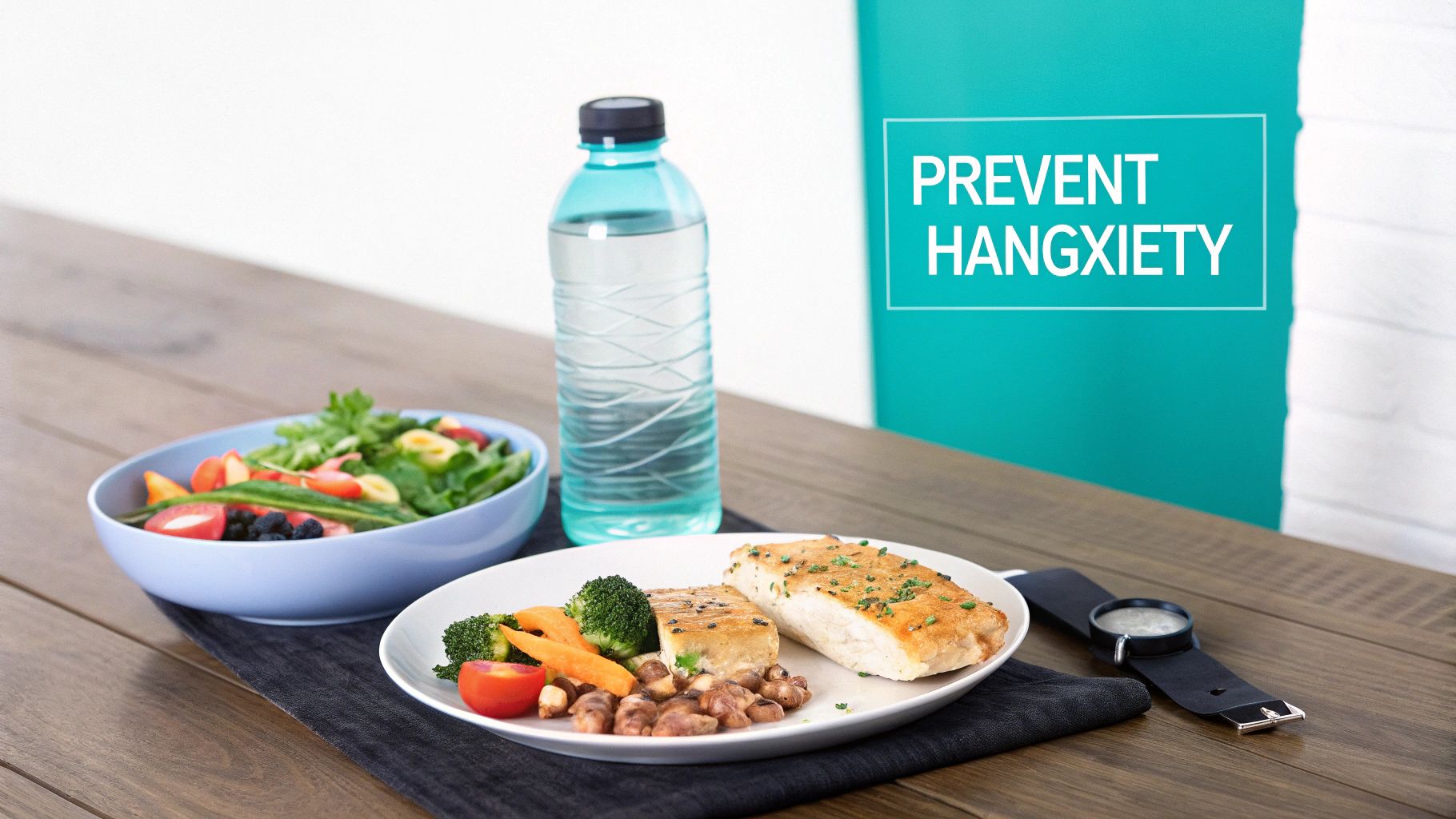
Fuel Your Body to Stabilize Your Mind
One of the most powerful tools against hangxiety is also one of the simplest: eat a good meal. Drinking on an empty stomach is like going into battle without armor—it leaves you completely exposed. A solid, balanced meal is your secret weapon.
Eating before you drink does two crucial things. First, it physically slows down how quickly alcohol hits your bloodstream, which gives your liver and brain a better chance to process it. This helps you avoid the sharp spike in blood alcohol that guarantees a more aggressive rebound later.
Second, the right foods help keep your blood sugar from going on a rollercoaster. Alcohol can cause your glucose levels to tank, and that crash often feels exactly like a panic attack—shakiness, heart palpitations, and a sense of dread.
Aim for a meal that includes:
- Lean Protein: Think chicken, fish, or tofu to provide steady, lasting energy.
- Healthy Fats: Avocado, nuts, or olive oil are great for slowing alcohol absorption.
- Complex Carbs: Sweet potatoes, brown rice, or quinoa will help prevent that nasty blood sugar crash.
Think of your pre-drinking meal as laying a protective foundation. You're not just filling your stomach; you're giving your body the raw materials it needs to manage the stress of alcohol and stay balanced.
Pacing and Hydration Are Non-Negotiable
How fast you drink is a massive piece of the puzzle in why you feel anxious after drinking. Your body can realistically only process about one standard drink per hour. Go faster than that, and you're simply overwhelming the system, setting yourself up for a much rougher morning.
The classic "one water for every drink" rule is popular for a reason—it really works. Chasing each alcoholic beverage with a big glass of water does more than just combat dehydration; it forces you to slow down. It’s a simple habit that tackles two of the biggest hangxiety triggers at once.
- Pace yourself: Stick to one drink an hour. This gives your body a fighting chance to keep up.
- Hydrate constantly: Don't just chug water at the end of the night. Sip it all evening long.
- Choose your drinks wisely: Sugary cocktails and mixers can make the blood sugar situation even worse. Opt for clear spirits with soda or a light beer.
For a deeper dive into hydration and other key tactics, check out our guide on how to prevent a hangover at https://enjoyupside.com/blogs/blog/how-to-prevent-hangover. It’s packed with more strategies that directly help you sidestep that next-day anxiety.
Be Mindful of Your State of Mind
Finally, do a quick mental check-in before you even pour that first drink. Your baseline emotional state is a huge risk factor. If you're heading into the evening already stressed out, exhausted, or worried about something, alcohol isn't a solution—it's an amplifier.
Using alcohol to "take the edge off" when you're already in a low spot is a recipe for a bad time. Sure, it might provide a temporary lift by boosting GABA, but the rebound will hit that much harder, leaving you feeling ten times more anxious than you were to begin with.
Being proactive means knowing when your "stress bucket" is already full. On those days, maybe a mocktail is the better call. Or maybe you limit yourself to just one drink. The smartest move is sometimes choosing a different way to unwind altogether. Prevention is all about making mindful choices that protect your mental well-being.
How to Calm Your Mind and Body the Morning After
Waking up with a racing heart and a mind full of dread is an awful feeling, but you don't have to just white-knuckle your way through it. When you're in the thick of hangxiety, a few simple, deliberate actions can make a massive difference. The goal isn't to magically erase the feeling, but to soothe your overstimulated nervous system and help your body find its way back to equilibrium.
The key is to start with the basics. Your body is under some serious physiological stress from dehydration, nutrient depletion, and that brutal neurochemical rebound we talked about. Tending to these physical needs is often the quickest path to quieting the mental chaos.
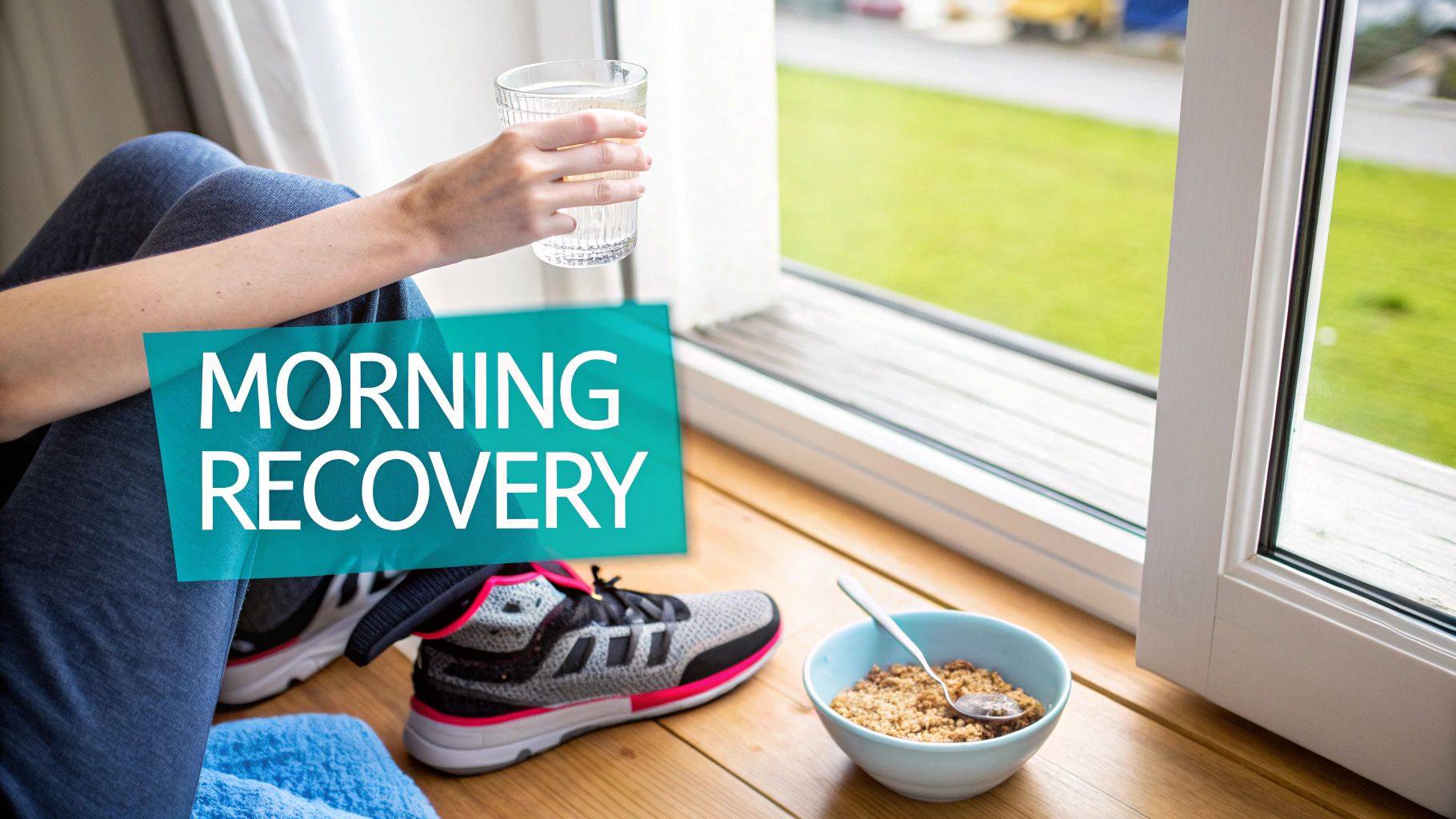
Start with Gentle Rehydration and Nutrition
Before you even think about anything else, get a glass of water. Dehydration is a huge part of why you feel anxious after drinking; it can trigger physical symptoms like heart palpitations and dizziness that your brain easily mistakes for a panic attack. Sipping water slowly is your first line of defense.
To give yourself an extra leg up, consider adding an electrolyte powder or sipping some coconut water. Alcohol acts like a diuretic, flushing out crucial minerals like potassium and sodium that your nerves and muscles need to function correctly. Topping them back up helps stabilize your entire system way more effectively than plain water can.
Once you’ve started rehydrating, it's time to think about food—even if you have zero appetite. That blood sugar crash from a night of drinking is a major source of shakiness, irritability, and dread. A gentle, nutrient-dense meal can work wonders.
- Eggs: They're loaded with protein and cysteine, an amino acid that helps your body break down acetaldehyde (that nasty, toxic byproduct of alcohol metabolism).
- Banana: A fantastic, easy-to-digest source of potassium to replace what you've lost.
- Whole-wheat toast with avocado: This combo gives you complex carbs for steady energy and healthy fats to help you feel more grounded.
Try to steer clear of sugary cereals or a greasy fry-up. They'll just send your blood sugar on another rollercoaster, which will likely make your anxiety even worse.
Calm Your Nervous System with Grounding Techniques
When your mind is spinning out, telling it to "just stop" is like trying to stop a hurricane by yelling at it. It's pointless. A much better approach is to gently pull your focus away from the internal storm and anchor it to the present moment. This is exactly what grounding and breathing exercises are for.
One of the most effective and simplest techniques is box breathing. It's a surprisingly powerful way to manually slow your heart rate and send a clear signal to your brain that you're safe.
- Inhale Slowly: Breathe in through your nose for a count of four.
- Hold Your Breath: Gently hold it for a count of four.
- Exhale Slowly: Breathe out through your mouth for a count of four.
- Hold Again: Pause at the end of the exhale for a count of four.
- Repeat: Keep this cycle going for a few minutes. You should literally feel your heart rate start to slow down.
Box breathing is so effective because it directly activates your parasympathetic nervous system—the body's "rest and digest" switch. By taking control of your breath, you're sending a direct message to your brain to turn off the fight-or-flight response that's fueling the anxiety.
Introduce Light, Mindful Movement
Look, an intense HIIT session is probably the last thing on your mind (and a terrible idea right now). But a little bit of light physical activity can be incredibly helpful. Gentle movement helps your body process stress hormones like cortisol and releases endorphins, which are your body's own natural mood-lifters.
You really don't have to do much. A slow, 15-minute walk around the block is perfect. The blend of fresh air, light movement, and a change of scenery can be just what you need to break the cycle of anxious, looping thoughts. While you walk, try to focus on your surroundings—the feeling of the sun on your skin, the sound of birds, the details on the buildings you pass. This simple act pulls you out of your head and back into the physical world.
By taking these small, kind steps, you can actively dial down the awful symptoms of hangxiety. It’s all about being good to your body, giving it the resources it needs to recover, and gently guiding your mind back to a calmer state.
Using Smart Supplementation to Support Recovery
While being smart about how much you drink is always the best defense, targeted nutrition can give your body a real advantage in the recovery process. Alcohol does more than just dehydrate you—it’s a bit of a nutrient thief, robbing your system of the essential vitamins and minerals your brain needs to stay balanced.
For instance, alcohol rapidly depletes B vitamins, which are the essential building blocks for mood-regulating neurotransmitters like serotonin and dopamine. It also drains the antioxidants that shield your brain from stress. When these resources run low, your ability to fend off that anxious rebound effect takes a nosedive. Giving your body a hand by replenishing these nutrients can make a big difference in how quickly you bounce back.
How Key Ingredients Bolster Your Defenses
Certain natural compounds have shown real promise in helping the body process alcohol and handle the aftermath more smoothly. One of the most studied is Dihydromyricetin (DHM), an extract from the Japanese raisin tree. Research indicates that DHM can support healthy liver function and help calm that harsh glutamate rebound in the brain—the same rebound that directly fuels those feelings of anxiety.
Another great ally is milk thistle, which is famous for its antioxidant power and ability to help protect liver cells from the stress alcohol causes. When you support the main organ responsible for breaking down alcohol, you’re helping your entire system recover more efficiently. For a deeper dive, check out our guide to the best supplements for hangovers.
Think of smart supplementation as giving your body the right tools for the job. It's not a magic eraser for a rough night, but a way to reinforce your body's natural recovery systems when they're under serious pressure.
This is where a product like Upside Hangover Sticks can seamlessly fit into your self-care routine. It’s intentionally formulated with ingredients like DHM, B vitamins, and milk thistle to help put back what a night out takes away. This isn't a free pass to overdo it, but it’s a smart support system—a key part of a bigger plan that includes hydration, good food, and mindful pacing to help you wake up feeling your best.
Answering Your Top Questions About Hangxiety
Even after you get the science behind it, you might still have some specific questions about what's happening in your own body. Let's tackle some of the most common ones and connect the dots.
Does Hangxiety Really Get Worse with Age?
Yes, for many people, it does. Think of it this way: as we get older, our body's internal machinery just doesn't work as efficiently as it used to. The production of enzymes that break down alcohol can slow down, meaning alcohol and its toxic byproducts hang around in your system longer, extending their disruptive effects.
On top of that, life gets more complicated. The cumulative stress of work, family, and other responsibilities can make our brains more sensitive to chemical shifts. That's why the two or three drinks that were no big deal in your twenties might now be enough to throw your system into a state of anxiety in your thirties or forties. Your body's ability to bounce back simply isn't what it once was.
Can Just One Drink Trigger Anxiety the Next Day?
Absolutely. It might seem strange, but for some people, even a single drink is enough to rock the boat. If you're already stressed out, running on poor sleep, or have a history of anxiety, your brain's chemistry is already on a tightrope.
In that case, even the small neurochemical rebound from one drink can be enough to push you off balance and into that familiar state of nervousness and unease the next morning. It all comes down to your individual sensitivity.
When Should I Actually Worry About My Post-Drinking Anxiety?
A mild case of the Sunday scaries after a fun Saturday night is pretty common. But it's time to pay closer attention if that anxiety becomes severe, happens almost every time you drink, or starts getting in the way of your life—whether that's at work, at home, or in your relationships.
The biggest red flag? Finding yourself reaching for a "hair of the dog"—another drink—just to make the anxiety go away. This is a slippery slope, creating a dangerous cycle where the very thing causing the problem becomes your go-to (and very temporary) solution.
If your anxiety is lasting for more than 24 hours after you stop drinking or it feels completely overwhelming, that’s your cue. It’s a good time to talk to a healthcare professional who can help you look at your mental health and your relationship with alcohol in a safe, non-judgmental space.
Ready to get ahead of hangxiety? Upside Hangover Sticks are made to support your body's natural recovery with essential ingredients like DHM, B vitamins, and electrolytes. Making them part of your routine can help you wake up feeling clear and ready for the day. Try Upside today and enjoy your nights without sacrificing your mornings.
#upside #enjoyupside #upsidejelly #livemore #hangovercure #hangoverprevention #fighthangovers #preventhangovers #HangoverRelief #MorningAfter #PartySmarter #HydrationStation #WellnessVibes #RecoverFaster #NoMoreHangovers #HealthyParty #HangoverHacks #FeelGoodMorning #NightlifeEssentials #HangoverFree #SupplementGoals #PostPartyPrep #GoodVibesOnly #HealthAndParty #HangoverHelper #UpsideToPartying