

· By Annemarie
What Is the Best Drink for Dehydration
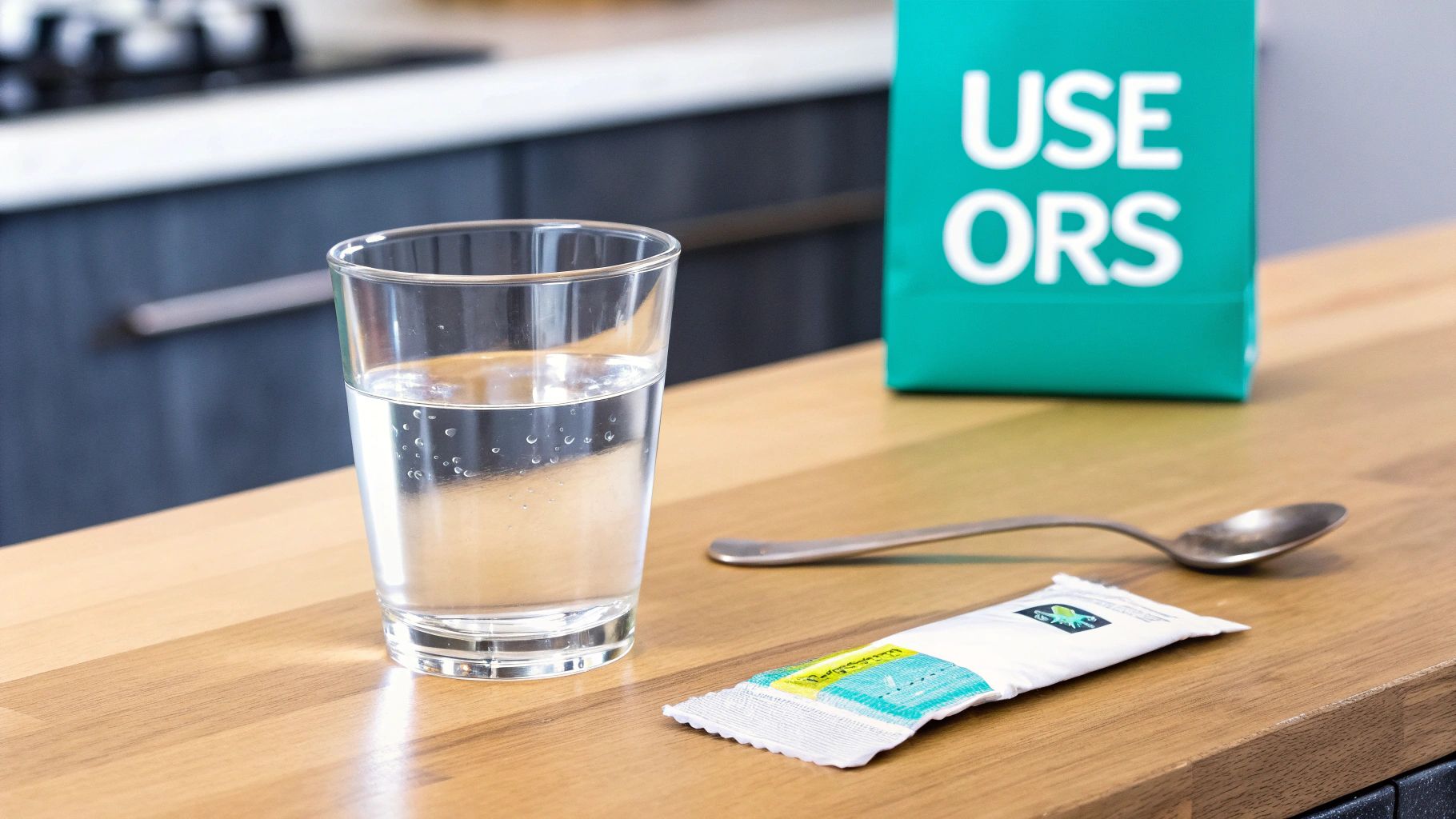
When you're feeling dehydrated, what's the first thing you reach for? Most of us would say a glass of water, and that’s not a bad instinct. But when you're truly dehydrated, the best drink is actually something called an Oral Rehydration Solution (ORS).
It's a scientifically-backed mix of water, electrolytes, and just a little bit of sugar. This combo helps your body absorb fluids way more efficiently than water can on its own, especially when you've lost a lot from a tough workout, a stomach bug, or a big night out.
Understanding Your Best Rehydration Options
Dehydration is more than just feeling thirsty. It’s a sign that your body doesn't have the fluids and minerals it needs to work properly. Think of it like a car engine: water is the coolant, but electrolytes like sodium and potassium are the oil. You need both. Without them, the whole system starts to break down. When you lose fluids from sweating or being sick, you’re losing those critical electrolytes, too.
And this isn't a small problem. In the U.S. alone, dehydration is responsible for over 500,000 hospital visits every year. Globally, the numbers are massive, with billions of cases of fluid loss from common illnesses. In these situations, just chugging water won’t cut it to get your body back in balance. This is exactly why knowing your options is so important. For a deeper dive, check out this comprehensive overview of dehydration causes and treatments.
Top Rehydration Drinks at a Glance
To make the right choice when you need it most, it helps to see how different drinks compare. Each one has its place, from what you sip on throughout the day to what you need for serious fluid replacement.
Here’s a quick rundown to help you pick the best option for your situation.
| Drink Type | Key Components | Best For |
|---|---|---|
| Oral Rehydration Solution (ORS) | Precise balance of water, electrolytes (sodium, potassium), and glucose | Mild to moderate dehydration from illness, heat, or intense exercise. |
| Plain Water | H₂O | Everyday hydration and preventing mild dehydration. |
| Sports Drinks | Water, carbohydrates (sugar), and some electrolytes | Replenishing fluids and energy during or after moderate to intense exercise. |
| Coconut Water | Water, potassium, and natural sugars | Light rehydration, post-workout recovery when fluid loss is minimal. |
At the end of the day, picking the right drink is about matching the solution to the problem. Plain water is fantastic for keeping you hydrated daily, but an ORS is the gold standard when you need to get back lost fluids and electrolytes—fast.
Why Your Body Needs More Than Just Water
Ever felt totally wiped out, chugged a massive bottle of water, and still felt… off? It’s a classic story, and it points to a big secret about hydration: sometimes, your body is screaming for more than just plain H₂O.
When you’re seriously dehydrated—whether from a killer workout, a nasty stomach bug, or a few too many cocktails—you’re losing way more than just water.
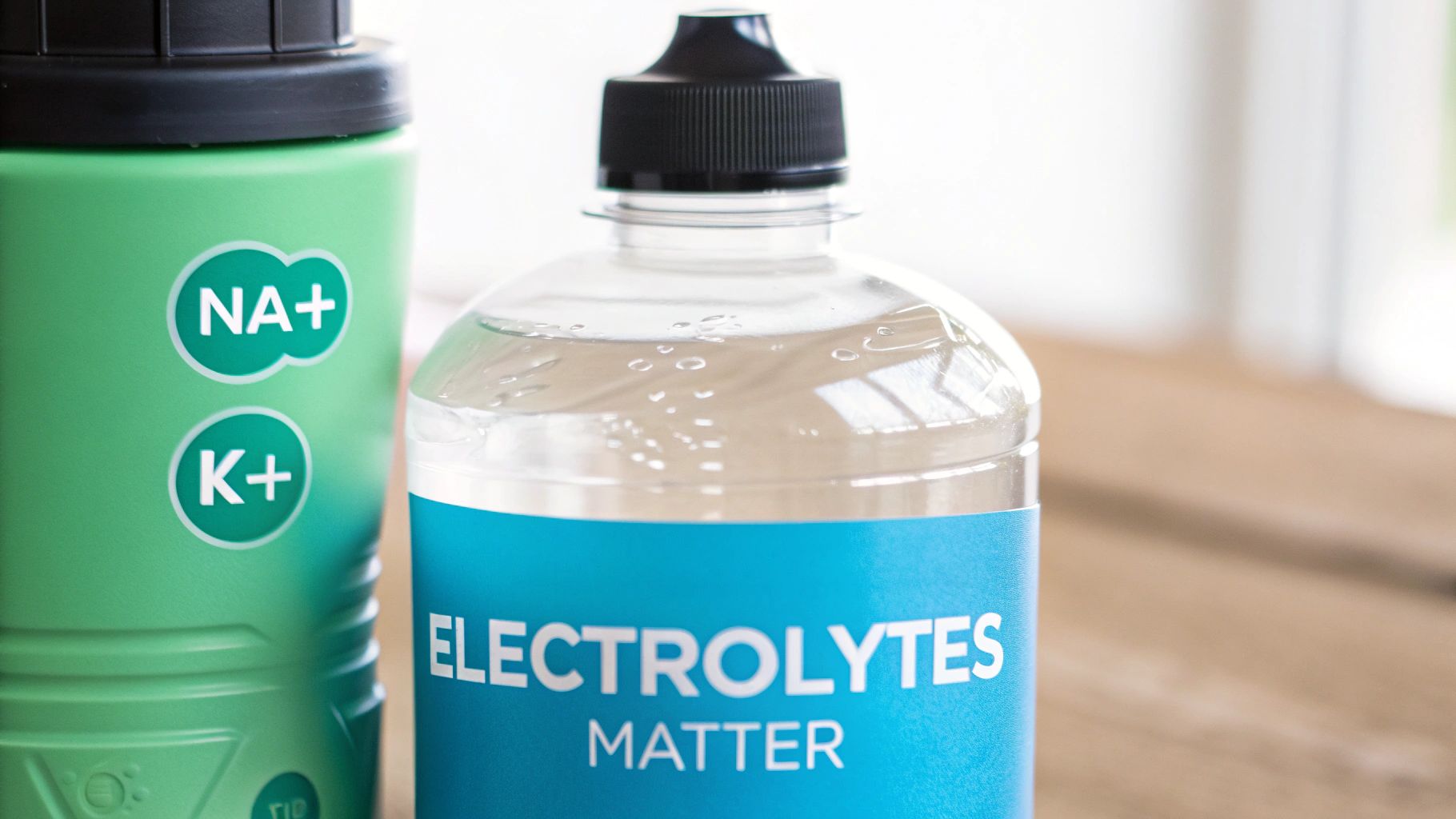
You’re also flushing out critical minerals called electrolytes. Picture your body's cells as tiny, rechargeable batteries. Electrolytes like sodium and potassium are literally the electrical charge that keeps them running. Without them, basic stuff like sending nerve signals, contracting your muscles, and just keeping your fluids in balance goes haywire.
The Role of Electrolytes in Hydration
When you sweat buckets, you’re not just losing water; you’re losing a ton of sodium. If you try to fix that by only drinking plain water, you can actually make things worse by diluting the electrolytes you have left. It’s like trying to recharge a dead battery by filling it with distilled water—it doesn’t bring back the power.
This is where a little high school science, osmosis, comes back to haunt us. For water to get from your gut into your bloodstream and then into your cells (where you actually need it), you need the right mix of electrolytes—especially sodium—and a little bit of sugar.
This specific combo creates what’s called an osmotic gradient. Think of it as creating a "pull" that yanks water into your cells way faster and more efficiently. This is exactly why a properly balanced solution is often the best drink for dehydration—it has all the right ingredients to unlock real, cellular-level hydration.
Why Water Alone Is Not Always Enough
Relying only on water when you're losing a lot of fluid can lead to a pretty scary condition called hyponatremia. That’s when the sodium levels in your blood drop dangerously low. It’s the reason why marathon runners who sweat like crazy or people recovering from severe diarrhea can't just chug water to feel better.
The right drink is a three-part tag team:
- Water: To replace the fluid you’ve lost.
- Electrolytes (Sodium and Potassium): To bring back the minerals your muscles and nerves need and, crucially, to help your body actually hold onto the water you’re drinking.
- A small amount of sugar (glucose): This is the key that unlocks the door. It activates a special transport system in your gut that pulls sodium and water into your cells together.
Getting this trio right is the whole game when it comes to rehydrating effectively. You can dig deeper into specific drinks that have electrolytes and how they work in our other guide. Without that balance, you’re not refueling—you’re just flushing your system out.
Understanding the Gold Standard of Rehydration
When it comes to the best drink for dehydration, one solution stands head and shoulders above the rest, even though most of us don't think about it day-to-day. Let’s talk about the unsung hero of hydration: the Oral Rehydration Solution (ORS). This isn't your average sports drink; it's a medical-grade formula built for one job—reversing dehydration as fast as humanly possible.
The story behind ORS is pretty powerful. When doctors were dealing with severe fluid loss from illnesses like cholera, they realized plain water just wasn't cutting it. Patients couldn't absorb it fast enough. So, scientists developed a precise, simple mixture of water, glucose (sugar), and salts (electrolytes) that completely changed the game, pulling millions back from the brink of severe dehydration.
This discovery, known as Oral Rehydration Therapy (ORT), was a massive leap forward in global health. Think about this: back in the late 1970s, this simple mix became the go-to for fighting dehydration, especially from diarrhea. Since then, ORT has saved an estimated 70 million lives. Researchers even figured out that between 1982 and 2007, it saved over 50 million children alone—that’s nearly 2 million kids every single year. You can dig into these life-saving dehydration statistics to see just how incredible its impact has been.
The Science Behind Its Success
So, what’s the secret sauce? It all comes down to a biological shortcut called the sodium-glucose co-transport system. Imagine the walls of your intestines are like a locked gate. Water, on its own, has a tough time getting through quickly.
The glucose and sodium in an ORS act like a special key. When they show up at the gate together, they unlock a channel that actively pulls them—and a whole lot of water along with them—straight into your bloodstream. This is way more effective than just relying on the passive process of osmosis you get from drinking plain water.
This is exactly why an ORS is the undisputed champ for moderate dehydration. It doesn’t just replace fluid; it hands your body the exact tools it needs to absorb that fluid right away.
Choosing and Using an ORS
These days, you can grab commercial ORS products at any pharmacy, either as pre-mixed drinks or handy powder packets. If you're picking one up, look for a formula that follows the World Health Organization (WHO) standards for electrolyte and glucose levels. Just a heads-up, they’re designed for function, not flavor, so don't expect a sugary sports drink taste.
And if you’re ever in a real emergency without access to a store, the WHO has a simple recipe for a homemade ORS:
- One liter of clean water
- Six level teaspoons of sugar
- Half a level teaspoon of salt
This bare-bones mixture can be a legitimate lifesaver, and it really shows the powerful science behind this gold-standard solution. To learn more about getting fluids back in your system effectively, check out our guide on finding a great rapid rehydration drink.
Choosing The Right Drink For Any Situation
Not all dehydration is created equal, so why would your recovery drink be a one-size-fits-all solution? The truth is, the best drink to get you back on your feet depends entirely on the situation. What your body needs after a decent gym session is worlds away from what it craves when you're sick or recovering from a big night out.
Think of your body like a high-performance car. For a normal drive around town (your daily life), regular fuel (plain water) is perfectly fine. But after a grueling race—like intense exercise, a bout of illness, or a few too many cocktails—you need a specialized fuel blend with the right additives (electrolytes) to get back up to speed.
For Post-Workout Recovery
After you’ve crushed a tough workout, you’ve lost more than just water. You've also sweat out crucial electrolytes, especially sodium. Grabbing plain water is a good first step, but it won't replace those lost minerals.
This is where sports drinks find their sweet spot. They’re literally designed to deliver a one-two punch of carbohydrates for energy and electrolytes to replenish what you’ve lost. But let’s be real—for most workouts under an hour, plain water and a balanced snack afterwards will do the trick just fine.
When You Are Sick
Nothing drains you faster than being sick. Vomiting and diarrhea lead to a rapid loss of fluids and electrolytes, putting you on the fast track to serious dehydration. In this scenario, reaching for a sugary sports drink can actually make things worse, especially diarrhea.
This is where a medical-grade Oral Rehydration Solution (ORS) is the undisputed champion. It's not just a drink; it's science in a packet. An ORS contains a precise, clinically-proven ratio of sodium, potassium, and glucose that your body can absorb incredibly fast, even when your digestive system is in revolt.
During Intense Heat Exposure
Spending a long day working or playing in the sweltering heat means you’re sweating buckets and losing a ton of sodium. If you try to rehydrate with only plain water, you risk diluting the sodium levels in your blood, which can lead to a dangerous condition called hyponatremia.
An electrolyte drink or a proper ORS isn't just a good idea here—it's crucial. The added sodium helps your body actually hold onto the water you’re drinking, effectively restoring balance and helping you avoid the nasty side effects of heat-related illness.
After a Night of Drinking
We all know alcohol is a diuretic. It makes you visit the bathroom more often, flushing out fluids and key nutrients along the way. That electrolyte imbalance is a major reason you feel so rough the next morning.
Chugging water before bed is a classic move, but it only solves half the problem. For alcohol-induced dehydration, you need something that both rehydrates and replenishes. This is where a good hydration drink powder can be a game-changer. You can learn more about how to pick the best one in our complete guide to hydration drink powders.
Specialized products like our Upside Hangover Jelly are designed specifically for this situation. Think of it as a complementary tool in your recovery kit. While you focus on rehydrating, it gets to work with a blend of natural ingredients aimed at helping your body process alcohol byproducts and restore balance, making the morning after feel a whole lot more human.
The infographic below breaks down how the key players in an ORS—salt and sugar—work together to pull water into your system super efficiently.
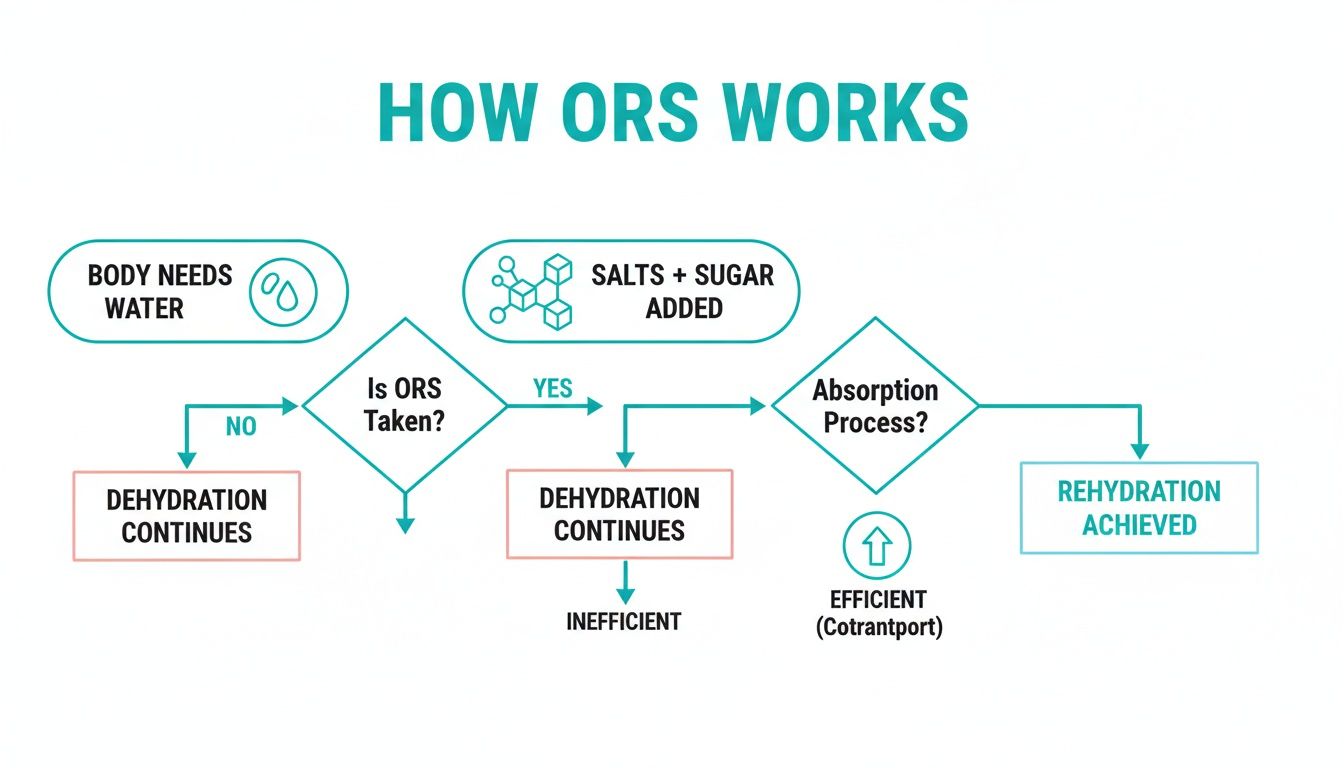
This simple biological shortcut, combining salts and sugar in just the right amounts, is an incredibly powerful tool for rapid rehydration.
Drink Showdown: Water vs. Sports Drinks vs. ORS
With so many options, it can be tough to know what to grab. Here’s a quick breakdown to help you decide.
| Feature | Plain Water | Sports Drinks | Oral Rehydration Solution (ORS) |
|---|---|---|---|
| Primary Purpose | Daily hydration | Energy & electrolyte replacement during exercise | Rapid rehydration during illness or severe fluid loss |
| Electrolyte Content | Minimal to none | Moderate (sodium, potassium) | High & medically formulated (sodium, potassium, chloride) |
| Sugar Content | Zero | High (often for energy) | Low to moderate (for absorption, not energy) |
| Ideal For | Everyday sipping, light exercise | Intense or prolonged exercise (>60 mins) | Sickness (vomiting/diarrhea), extreme heat, severe dehydration |
| When to Avoid | During heavy sweat loss or illness alone | Casual sipping, illness (can worsen diarrhea) | Casual sipping (too many electrolytes) |
Ultimately, the right choice comes down to what your body is going through. Water is your daily driver, sports drinks are for the race track, and ORS is the ambulance you call in an emergency.
The Smart Way to Rehydrate Safely
Picking the right drink is half the battle, but how you drink it is just as important for getting back on your feet. Think of your body like a really thirsty houseplant. If you dump a whole watering can on it at once, most of the water just spills out the bottom. You have to water it slowly, letting the dry soil actually soak it all in.

It’s the exact same idea with your body. Guzzling a liter of water or an ORS when you're dehydrated is a recipe for disaster. It can overwhelm your system, leading to nausea, stomach cramps, or even vomiting—which, of course, just makes you more dehydrated. Sipping slowly is the key. It gives your gut the time it needs to absorb the fluids and electrolytes properly.
How Much Is Enough
There’s no magic number here; the right amount really depends on your specific situation. The best advice is to just listen to your body.
Start with small, frequent sips. Aim for a few ounces every 15-20 minutes instead of trying to down a huge glass all at once. As you get back into balance, you’ll start to notice some really positive changes. These are the tell-tale signs that you’re on the right track.
Signs of Successful Rehydration:
- Urine Color: Your pee will go from dark yellow or amber to a much lighter, pale straw color.
- Increased Energy: That sluggish, wiped-out feeling will start to fade.
- Reduced Thirst: The desperate, can’t-get-enough-water feeling will go away.
- Improved Skin Elasticity: Pinch the skin on the back of your hand. If it snaps back quickly, you're doing great.
Keep in mind that for most people, you'll start feeling noticeably better within 20 to 60 minutes of rehydrating the right way. The rest of the recovery, especially after being sick or a long night out, will happen over the next several hours.
When to Seek Medical Help
For mild to moderate dehydration, you can usually handle things at home. But some situations are more serious and need a doctor’s attention right away. Dehydration can become a true medical emergency if you’re not careful.
Don't wait to get medical help if you or someone else is experiencing any of these symptoms:
- Extreme tiredness, confusion, or being unusually irritable
- Dizziness or lightheadedness that just won’t go away
- Not being able to keep any fluids down because of constant vomiting
- Not peeing for more than eight hours
- A rapid heartbeat or fast breathing
- Passing out or losing consciousness
These are major red flags that your body needs more help than a rehydration drink can offer.
Wrapping It Up: Your Hydration Game Plan
So, what's the bottom line here? The best way to rehydrate really isn't a one-size-fits-all answer. It all comes down to what your body is going through at that exact moment.
Plain old water is fantastic for keeping you topped up day-to-day. But when you're dealing with moderate dehydration from a nasty bug or a seriously tough workout, an Oral Rehydration Solution (ORS) is your absolute best friend. Remembering that electrolytes are a huge part of the equation is key to feeling good and bouncing back fast.
Ultimately, knowing how to hydrate properly is the difference between just getting by and actually feeling your best. It’s about giving your body the right tools when it needs them most.
For those of us who love a good night out, making smart choices means you can enjoy yourself without paying for it the next day. This is where something like an Upside Hangover Jelly can fit right into your routine. It's not about replacing water or electrolytes, but about giving your body some extra support with natural ingredients to help you feel human again after a few drinks. It's just another tool in the toolkit to help you 'live more' and stay on top of your game.
#upside #enjoyupside #upsidejelly #livemore #hangovercure #hangoverprevention #fighthangovers #preventhangovers #HangoverRelief #MorningAfter #PartySmarter #HydrationStation #WellnessVibes #RecoverFaster #NoMoreHangovers #HealthyParty #HangoverHacks #FeelGoodMorning #NightlifeEssentials #HangoverFree #SupplementGoals #PostPartyPrep #GoodVibesOnly #HealthAndParty #HangoverHelper #UpsideToPartying
Common Dehydration Questions Answered
We get it—the world of hydration can feel a bit murky. Let's clear things up by tackling some of the most common questions we hear. Think of this as your practical guide to making smarter hydration choices.
Can You Drink Too Much Water While Rehydrating?
Believe it or not, yes. It's a condition called hyponatremia, or water intoxication, and it happens when you chug massive amounts of plain water in a short time. This dilutes the sodium in your blood to dangerously low levels.
Think about it this way: when you're super dehydrated from a hard workout or being sick, you’ve lost both water and essential minerals (electrolytes). If you only pour plain water back in, you can throw that delicate balance even further out of whack. This is exactly why sipping a balanced electrolyte solution is often a safer and more effective bet than chugging water.
Are Coconut Water and Fruit Juice Good for Dehydration?
Coconut water and some fruit juices, like orange juice, do contain electrolytes, especially potassium. But when it comes to serious rehydration, they often miss the mark.
The real problem lies in their nutritional profile when you compare them to a scientifically designed Oral Rehydration Solution (ORS).
- Coconut Water: It’s loaded with potassium, but it’s pretty low in sodium—the single most important electrolyte for helping your body absorb fluids.
- Fruit Juice: Most juices are packed with sugar, which can actually make things like diarrhea worse. They're also typically low in sodium.
While they might be okay for a very mild case of dehydration, neither has the precise sodium-to-glucose ratio that makes an ORS the undisputed champ for fixing moderate dehydration fast.
How Do I Know if I Am Dehydrated or Just Thirsty?
Thirst is your body’s built-in alarm system, but it’s not always the first one to go off. By the time you actually feel thirsty, you might already be mildly dehydrated. The real trick is learning to spot the other warning signs before they get worse.
Beyond just a dry mouth, keep an eye out for these other classic clues:
- Dark-colored urine: This is one of the most reliable signs you can check yourself. If you're well-hydrated, your urine will be a pale, straw-like yellow. Dark yellow or amber means it’s time to drink up.
- Fatigue or lethargy: That feeling of being totally wiped out or sluggish for no reason? A classic symptom.
- Headache: Even a little bit of dehydration can be enough to trigger a nasty headache or even a migraine for some people.
- Dizziness: If you feel lightheaded, especially right after you stand up, that could be your body telling you it's low on fluids.
Catching these signs early helps you know the difference between just being a bit thirsty and sliding into the first stages of dehydration, so you can get ahead of the problem.
Staying on top of your hydration game, especially when you’re out with friends, means you can enjoy the good times without paying for it later. For those moments, Upside offers targeted support to help you feel amazing the next day. Find out how our Hangover Jelly can be the perfect addition to your night-out toolkit.