

· By Annemarie
A Practical Guide on How to Prevent Asian Flush
That tell-tale redness after just a few sips isn't about being a "lightweight." Not at all. It’s actually a very specific genetic response.
Trying to power through the discomfort won't help. The only real way to manage the Asian flush is to understand what's happening inside your body and prepare for it. The whole issue boils down to one thing: a buildup of a nasty toxic compound called acetaldehyde.
So, What's Really Happening When You Flush?
If you’ve ever had a face that feels like it's on fire, a racing heart, or a sudden headache after a drink, you know the feeling. This reaction, widely known as Asian flush or alcohol flush reaction, is your body sending you a very clear signal that it's struggling to process alcohol.
And no, it's not an allergy. It's a genetic condition, written right into your DNA.
The science is all about how your body breaks down alcohol. It’s a two-step job handled by a couple of key enzymes:
-
First, an enzyme called alcohol dehydrogenase (ADH) gets to work, turning the alcohol you just drank into a highly toxic compound called acetaldehyde. This stuff is a known carcinogen and is the real villain behind most of those awful hangover feelings.
-
Next, another enzyme, aldehyde dehydrogenase 2 (ALDH2), is supposed to swoop in and break down that toxic acetaldehyde into a harmless substance called acetate—basically vinegar—which your body can then easily get rid of.
The problem starts when that second enzyme, ALDH2, isn't pulling its weight. This is a super common genetic trait, especially for people of East Asian descent.
When you have this ALDH2 deficiency, your body can't break down the toxic acetaldehyde fast enough. It starts to pile up in your bloodstream, triggering an inflammatory response that causes all those classic flush symptoms.
That buildup is exactly what's causing the trouble. Your blood vessels expand, making your skin flush. Your heart rate skyrockets to try and pump blood faster. And you might feel nauseous or dizzy as your body freaks out over the toxicity.
Why Your Genes Are a Big Deal Here
This enzyme issue isn't something you can change—it's passed down through your family. A specific genetic variant, known as ALDH2*2, is the main culprit.
It’s more common than you might think. Globally, this variant affects roughly 8% of the world's population. That’s about 560 million people.
The numbers are even more striking in certain groups. Research shows that while alcohol flushing hits about 40.56% of the general population, it affects a massive 36-50% of Chinese, Japanese, and Korean individuals.
This genetic lottery explains why some people can knock back a few drinks with no problem, while others feel sick after just half a beer. It’s so important to see the flush for what it is: a warning sign from your body, not just some social inconvenience.
To really get the full picture, it's worth understanding the entire journey of alcohol metabolism and how your body processes drinks. Once you know the "why" behind the flush, you're in a much better position to figure out the "how" of managing it safely.
Your Pre-Drinking Game Plan to Minimize Flushing
Let’s be honest, the best way to manage alcohol flush starts hours before you even think about your first drink. Prepping your body correctly can be a total game-changer, turning what could be a really uncomfortable night into a genuinely good time. Think of it as setting yourself up for success.
A solid pre-drinking plan really comes down to two things: what you eat and how much water you drink. It sounds simple, but these two steps act as a powerful buffer, slowing down how quickly alcohol floods your system and giving your body a fighting chance to keep up.
Fuel Up with the Right Foods
We’ve all heard it a million times: never drink on an empty stomach. There’s a good reason that advice sticks around. When you drink without any food in your system, alcohol absorbs right through your stomach lining into your bloodstream. This causes a massive, rapid spike in your blood alcohol level, completely overwhelming your body's ability to process it.
Eating a real meal—especially one with plenty of protein and healthy fats—creates a physical roadblock that slows that whole process down. This buys your ALDH2 enzyme precious time to break down that nasty, flush-causing toxin, acetaldehyde.
- Protein-Packed Choices: Go for chicken, fish, tofu, or lentils. Protein digests slowly, which keeps food in your stomach longer and slows alcohol's fast track into your system.
- Healthy Fats are Your Friend: Think avocado, nuts, or a drizzle of olive oil. Fats are even slower to digest than protein, giving you a really sustained buffer against a quick spike.
- Complex Carbs for Stability: Things like quinoa, brown rice, or whole-wheat bread help keep your blood sugar steady and provide lasting energy for the night.
A perfect pre-game meal could be something like grilled salmon with a side of quinoa and some sliced avocado. It checks all the boxes and really arms your body for what's ahead.
Master the Art of Smart Hydration
Hydration is way more than just chugging a glass of water right before you head out the door. Real preparation means sipping on water consistently throughout the day. When your body is properly hydrated, it’s just plain better at processing and flushing out toxins, including acetaldehyde.
Good hydration supports your liver and helps move all those metabolic byproducts out of your system. Just try to drink water steadily in the hours leading up to an event. This makes sure all your internal systems are running smoothly before alcohol even enters the picture.
When you think ahead with food and water, you’re doing more than just trying to prevent a red face. You're actually supporting your body's entire metabolic process. That foresight is easily the most powerful tool you have.
This diagram breaks it down pretty clearly: alcohol turns into toxic acetaldehyde, and when that stuff builds up, you get the flush.
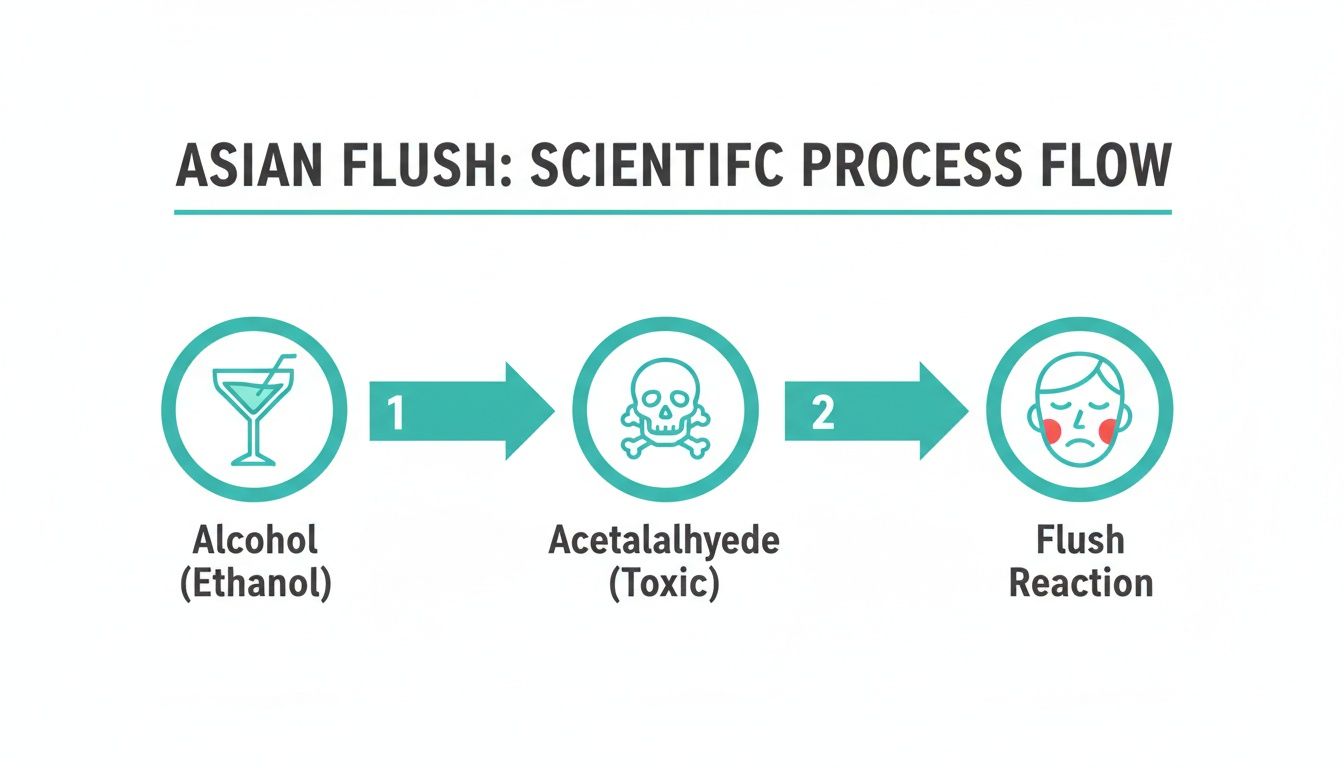
The main takeaway here is that slowing down that first step—the alcohol absorption—is your best defense against the next steps spiraling out of control.
To make it even easier, here’s a quick checklist to run through before you go out.
Your Pre-Drinking Flush Prevention Checklist
| Action Item | When to Do It | Why It Helps |
|---|---|---|
| Eat a Balanced Meal | 1-2 hours before drinking | Slows alcohol absorption with protein, fats, and complex carbs. |
| Hydrate Consistently | Throughout the day | Supports liver function and helps your body flush out toxins efficiently. |
| Consider H2 Blockers | 30-60 minutes before drinking | Can reduce visible redness by blocking histamine, but doesn't stop toxin buildup. |
| Take Supportive Supplements | As directed, usually 30-60 mins prior | Aims to boost enzyme function to help metabolize alcohol byproducts. |
Following these steps gives your body the foundation it needs to handle the night better.
Consider Supportive Supplements and OTC Options
Beyond food and water, a lot of people look to over-the-counter options or specific supplements for a little extra help. One of the most common tricks is using an H2 blocker, like famotidine (the active ingredient in Pepcid), before having a drink. These medications work by blocking histamine, which is a key player in the redness and inflammation of the flush.
But it's super important to know what they don't do. H2 blockers are just masking a symptom. They do absolutely nothing to stop the toxic acetaldehyde from building up inside your body. So while you might look less red, that harmful compound is still circulating.
Some CDC-aligned advice notes that H2 blockers can cut the visible flush by 50-70% in small studies by tamping down that histamine release. They aren't FDA-approved for this use, but it's a common workaround.
There are also specialized enzyme supplements hitting the market that claim to support your body's natural ADH and ALDH function. While some user studies report 40-60% symptom relief, a lot of this is still anecdotal. At the end of the day, solid prevention through food and hydration—which can slow alcohol absorption by around 30%—is still your most reliable move.
For anyone curious about more targeted support, exploring different supplements to take before drinking alcohol can open up new options. Many of these products come in convenient, on-the-go formats designed to give your body a helping hand right from the start.
Navigating a Night Out with Smart Drinking Tactics
So, you’ve done your prep work, but the night is young. How you handle yourself once the drinks start flowing is what really separates a good night from a blotchy, uncomfortable one. Think of it as a strategic game—making smart, conscious choices in the moment is everything.
Even if you’ve followed every pre-drinking tip to the letter, what you do while drinking is just as critical. The whole idea is to keep that acetaldehyde buildup from getting out of control, giving your body a fighting chance to keep up.

Choose Your Drinks Wisely
Listen, not all booze is created equal, especially if you're prone to flushing. Some drinks are practically designed to make your reaction worse, packed with compounds that pour gasoline on the inflammatory fire.
The two biggest offenders you need to watch out for are histamines and congeners.
- Histamines: These are the same chemicals your body releases during an allergic reaction, and they're a major reason your face gets red and splotchy. Unfortunately, aged and fermented drinks like red wine and many beers come pre-loaded with them, making your flush symptoms that much more intense.
- Congeners: These are byproducts from fermentation and aging that give dark liquors their signature color and taste. Think whiskey, dark rum, and brandy. Your body has a tough time processing congeners, which can lead to a more severe flush and a nastier hangover.
This is why so many people with Asian flush stick to clear spirits like vodka, gin, or white rum. They contain far fewer congeners and are less likely to be high in histamines. Pro tip: pair them with a simple, non-carbonated mixer like juice or plain water to avoid aggravating your flush.
Master the Art of Pacing
If there’s one thing you can control during a night out, it’s how fast you drink. Slamming a drink floods your system with alcohol, creating an acetaldehyde traffic jam that your body just can’t clear in time.
The secret is to sip slowly. Give your enzymes a break.
A ridiculously simple and effective trick is the "one-for-one" rule: for every alcoholic drink, have a full glass of water. It's a game-changer. This habit not only keeps you hydrated but also naturally slows you down. For a deeper dive, check out our guide on how to pace yourself while drinking.
Picture this: you're at a work happy hour. You just finished your first beer. Instead of immediately grabbing another, you order a sparkling water with lime. You still have a drink in your hand, you're staying hydrated, and you're giving your body a breather. No one will even notice.
Real-World Scenarios and Smart Swaps
Knowing the theory is one thing, but applying it in the wild is what counts. Let's walk through a classic scenario.
You’re at a wedding. The champagne is flowing freely, and waiters are circling with red wine for dinner. Here’s your game plan:
- Join the toast with champagne, but make your next drink a vodka soda with a splash of cranberry. You'll cut down on both histamines and carbonation, which can speed up how fast your body absorbs alcohol.
- When dinner rolls around, politely skip the red wine and stick with water. If you really want a sip, just have a little and focus on hydrating.
- Make the water station your friend. Throughout the night, make a point to grab a glass of water between trips to the bar. It helps dilute the alcohol and gives your liver some much-needed support.
These small, strategic moves make a huge difference. They let you stay in the moment and enjoy yourself without letting the flush take over your night. You stay in control, feel better, and probably wake up feeling a lot better, too.
The Long-Term Health Risks You Cannot Ignore
That tell-tale red face might feel like just a social annoyance, but it's crucial to see it for what it really is: your body's bright red warning signal. It's a clear sign that you’re struggling to process alcohol, and ignoring it can lead to some serious health problems down the road.
The root of the issue is an ALDH2 deficiency. Every time you drink, a toxic carcinogen called acetaldehyde hangs around in your system for way too long. This isn't just about feeling a little off; it's about repeatedly exposing your body to a substance that literally damages your DNA.
The Undeniable Link to Increased Cancer Risk
This isn't just a theory—the connection between the alcohol flush and major health risks is a well-documented scientific fact. The biggest concern? A dramatically increased risk of esophageal cancer, specifically esophageal squamous cell carcinoma.
When acetaldehyde builds up, it causes cellular damage wherever it goes, and the tissues lining your esophagus are especially vulnerable. For someone with an ALDH2 deficiency who drinks regularly, this repeated assault significantly cranks up their cancer risk compared to people without the deficiency.
Studies show that moderate to heavy drinkers with an inactive ALDH2 enzyme face a risk of esophageal cancer that is many times higher than the general population. The flush isn't just a side effect; it's a direct indicator of this heightened vulnerability.
This conversation is less about social comfort and more about long-term health preservation. The moment you start seeing your flush as a biological warning instead of a social nuisance is the moment you can start making safer choices.
The evidence is so strong that simply recognizing the flush is now considered a key public health tool. Doctors can even use simple questionnaires to accurately identify people with ALDH2 deficiency, empowering them with critical knowledge about their personal risk.
And these aren't just far-off statistics. In East Asian populations, where the deficiency affects about 36% of people and drinking can be a big part of the culture, the risk becomes impossible to ignore. In Japan, daily drinkers with the deficiency face a 12-fold increased risk of esophageal cancer. But here’s the good news: for those who know they have the deficiency and choose not to drink, their cancer odds can plummet by over 90%. You can dig into the data yourself in this comprehensive 2009 NIH review on the alcohol flush response.
Shifting Your Mindset to Mindful Drinking
Knowing these risks really calls for a shift in perspective. The goal isn't just about figuring out how to stop turning red on a night out; it's about putting your long-term wellness ahead of short-term social pressures. This is where mindful drinking comes in.
Mindful drinking isn't necessarily about quitting entirely (unless that's the right move for you). It's more about being intentional with your choices.
- Ask Yourself Why: Before you grab a drink, take a second to think about your motivation. Are you genuinely looking to enjoy the taste, or are you just caving to social pressure? A little honesty goes a long way.
- Explore the Alternatives: The non-alcoholic drink scene has absolutely exploded. You can find incredible mocktails, craft sodas, and alcohol-free beers just about anywhere. You can still hold a drink and socialize without putting your health on the line.
- Set Your Boundaries: Decide on your limit before the night begins and stick to it. If you know one drink is your sweet spot, honor that decision. Don't let anyone convince you to have "just one more."
Making informed choices is about taking back control. It’s about valuing your health enough to say "no" when you need to, or to find an alternative you can truly enjoy without the worry. This approach ensures a fun night out doesn't come with a hidden long-term price tag.
When It's Time to Talk to a Doctor About Your Flush
Let's be real, a mild blush after a drink is one thing. But sometimes, your body sends up a flare that something more serious is going on. Learning to tell the difference between a typical flush and a genuine red flag is crucial for your long-term health.
If your reaction feels more intense than just a red face, it's a clear signal to chat with your doctor. These aren't the kind of symptoms you just "push through."

Recognizing Red Flag Symptoms
A standard flush usually means some redness, warmth, and maybe your heart beating a bit faster. But if you’re experiencing more severe symptoms, it’s time to get a professional opinion.
Keep an eye out for these warning signs:
- Severe dizziness or lightheadedness that makes you feel like you might actually pass out.
- Intense heart palpitations or a heartbeat that feels chaotic and uncomfortably fast.
- Trouble breathing, wheezing, or a sudden flare-up of asthma symptoms.
- A significant drop in blood pressure, which can make you feel faint.
- Hives or welts popping up on your skin—a sign of a major histamine reaction.
- Nausea and vomiting after just a tiny amount of alcohol.
These symptoms could mean your body is having an extreme reaction to the acetaldehyde buildup. A doctor can help figure out what's going on, rule out other underlying issues, and give you solid advice for managing these more intense responses.
How to Bring It Up with Your Doctor
Walking into an appointment to talk about your face turning red after a beer might feel a little awkward, but trust me, it’s an important conversation to have. To get the most out of your visit, come prepared. Your doctor needs the whole story.
Start by describing exactly what happens when you drink. Don't just say, "I get a red face." Get specific. Talk about all your symptoms, how quickly they start, and if certain types of alcohol seem to trigger a worse reaction.
Frame the conversation around your concern for long-term health. Mentioning that you've read about the link between ALDH2 deficiency and increased health risks shows you're taking this seriously and looking for proactive guidance.
Here are a few questions you could ask to get the ball rolling:
- "Given my reaction, what are the potential long-term health implications I should be aware of?"
- "Are there any tests we can do to confirm an enzyme deficiency?"
- "Could this reaction interact with any of my other medications or health conditions?"
- "Based on these symptoms, is it just safer for me to avoid alcohol altogether?"
Having an open dialogue like this helps your doctor give you personalized advice that goes beyond the usual tips. They can help you make informed choices that protect your well-being, which is the ultimate goal when learning how to prevent Asian flush from impacting your health.
Common Questions About Managing Asian Flush
When it comes to alcohol flush, there's a lot of conflicting advice and half-truths floating around. Let's cut through the noise and get straight to the facts. We've tackled some of the most common questions people have about managing that dreaded red glow, so you can feel confident and in control.
Can You Build a Tolerance to Asian Flush?
This is a big one, and the answer is a hard no. You absolutely cannot build a tolerance to Asian flush or "cure" it.
Why? It all comes down to your DNA. The flush is a genetic condition caused by an enzyme deficiency. Trying to "power through it" doesn't teach your body anything. All you're doing is letting a toxic compound called acetaldehyde build up, which is what causes the nasty symptoms and, more importantly, long-term health risks. The goal should always be smart management, not trying to force a fix that just isn't possible.
Are Some Alcoholic Drinks Better or Worse for Flushing?
Absolutely. The drink in your hand can make a huge difference in how intense your reaction is.
Some drinks are loaded with compounds like histamines and congeners, which are basically guaranteed to kick your body's inflammatory response into high gear.
- Often Worse: Red wine, dark liquors like whiskey and rum, and even some craft beers are notorious for being packed with histamines and congeners from their aging and fermentation processes.
- Often Better: A lot of people find they do better with clear spirits like vodka, gin, or light rum. Pro tip: mixing them with a non-carbonated drink like water or juice can also help dial things down.
Do Antihistamines Like Zyrtec or Benadryl Help?
It seems logical to pop an allergy pill, but most of the common ones won't do much for alcohol flush.
Medications like Zyrtec or Benadryl are H1 blockers. They're designed to work on completely different histamine receptors than the ones involved in the flush reaction.
Some people turn to H2 blockers like Pepcid (famotidine) to reduce the redness, but this comes with a huge catch. You're essentially just silencing your body's built-in alarm system. While your face might look less red, the toxic acetaldehyde is still building up inside. This can trick you into drinking more than is safe for your body.
It’s critical to remember that hiding the redness doesn’t eliminate the risk. The underlying metabolic issue remains, and the toxic compound is still circulating in your system, even if you look fine on the outside.
Are Anti-Flush Pills and Patches Safe and Effective?
You've probably seen them online—pills, patches, and supplements all claiming to be the magic bullet for preventing Asian flush. While some of these might contain supportive ingredients like antioxidants, their effectiveness is mostly anecdotal. There's just no solid scientific proof behind them.
These products aren't regulated medical treatments, and they can't change your genetics. No pill is going to fix the enzyme deficiency that causes the flush. The most reliable ways to manage your symptoms are still the simplest ones:
- Drinking less alcohol overall
- Eating a solid meal before you start
- Staying hydrated
- Choosing your drinks wisely
At the end of the day, making mindful choices is your best bet. Listening to your body and respecting its limits is the safest and most effective way to handle the flush while protecting your health for the long haul.
Ready to enjoy your night out without the next-day regrets? Upside offers a simple, on-the-go jelly stick packed with natural ingredients to support your body's recovery. Just take one before you start drinking to help you party smarter and wake up feeling your best. Try Upside tonight and experience the difference.
Learn more and get yours at https://enjoyupside.com.
#upside #enjoyupside #upsidejelly #livemore #hangovercure #hangoverprevention #fighthangovers #preventhangovers #HangoverRelief #MorningAfter #PartySmarter #HydrationStation #WellnessVibes #RecoverFaster #NoMoreHangovers #HealthyParty #HangoverHacks #FeelGoodMorning #NightlifeEssentials #HangoverFree #SupplementGoals #PostPartyPrep #GoodVibesOnly #HealthAndParty #HangoverHelper #UpsideToPartying