

· By Annemarie
How to Prevent a Hangover After Drinking A Practical Guide
Let’s be honest, the fear of a crippling hangover can put a real damper on a great night out. But you don't have to leave your next-day well-being up to fate.
Forget the old myths and wishful thinking. We’re going to walk through a real, science-backed blueprint for how to actually prevent a hangover. This isn't about some magical cure; it’s about strategically supporting your body so it can handle alcohol more efficiently.
Think of this as your game plan. We'll cover the essential moves for before, during, and after you drink, helping you enjoy your social life without wrecking your productivity the next day. It all comes down to a few key tactics:
- Smart Nutrition: Eating the right stuff to slow down alcohol absorption.
- Strategic Hydration: Using water and electrolytes to stay ahead of the game.
- Mindful Pacing: Making conscious choices about what and how you drink.
- Targeted Recovery: Giving your body the tools it needs to bounce back fast.
This simple, three-phase approach is your ticket to a much happier morning.
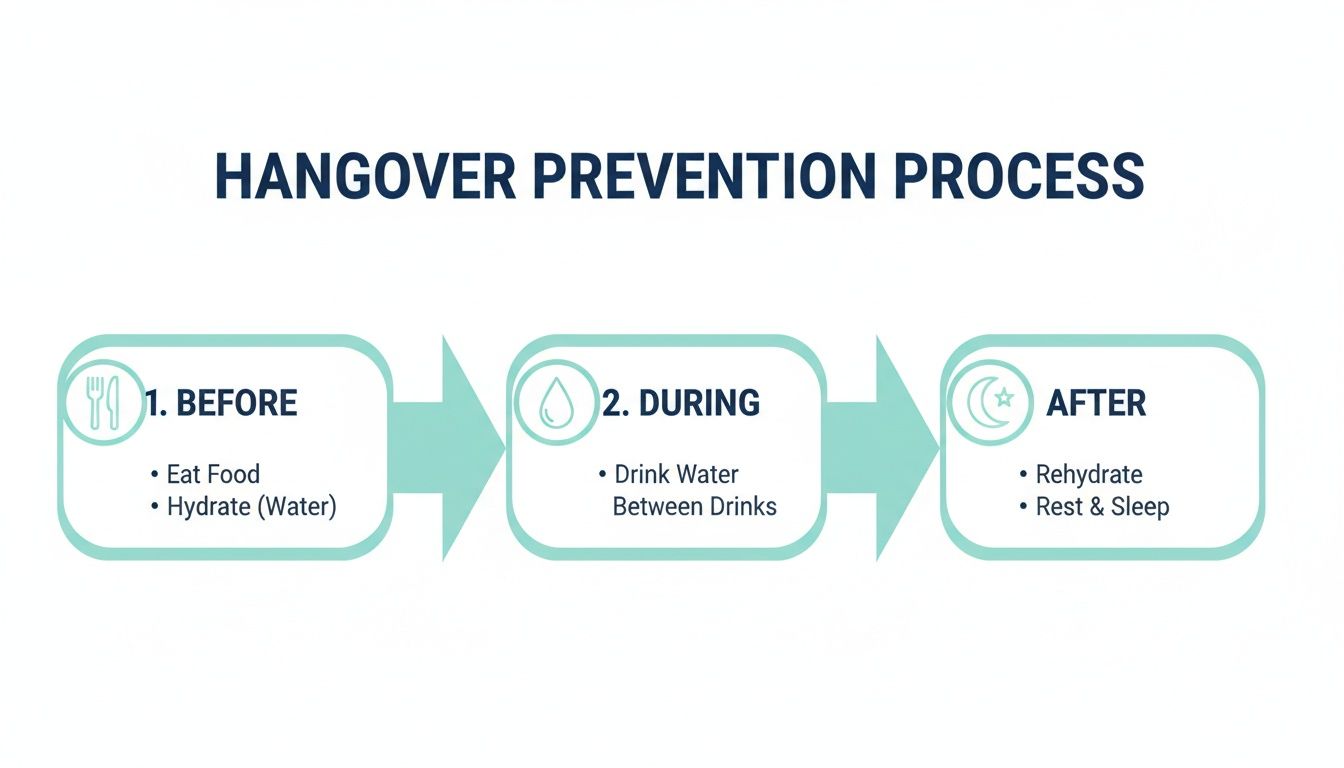
As you can see, dodging a hangover isn't about one single action. It’s a process.
You're Not the Only One Looking for a Better Way
If you're tired of sacrificing your mornings, you're in good company. People are actively searching for smarter ways to balance their social lives with their well-being, and the numbers prove it.
The global market for hangover relief products was valued at a whopping USD 2.34 billion in 2023 and is expected to skyrocket to USD 6.18 billion by 2030. That’s a huge jump. It shows a massive shift toward proactive, health-focused recovery.
Even more telling? The prevention segment is growing the fastest. We’re all getting smarter about stopping hangovers before they even have a chance to start. You can dive deeper into these trends and market insights from Grand View Research.
For a quick reference, here’s a simple table breaking down the core strategies.
Hangover Prevention At-a-Glance
| Phase | Key Action | Why It Works |
|---|---|---|
| Before Drinking | Eat a balanced meal and hydrate with water. | Food slows alcohol absorption, while water pre-hydrates your body to counteract alcohol's diuretic effect. |
| During Drinking | Pace yourself (1 drink/hour), alternate with water, and choose lighter-colored drinks. | This gives your liver time to process alcohol, maintains hydration, and reduces intake of hangover-inducing congeners. |
| After Drinking | Rehydrate with electrolytes and have a light snack before bed. | Electrolytes restore what you've lost, and a small snack can help stabilize blood sugar overnight. |
Keep this table in mind—it's the foundation for everything we're about to cover. Now, let's get into the specifics of each phase.
The Pre-Drinking Prep That Changes Everything
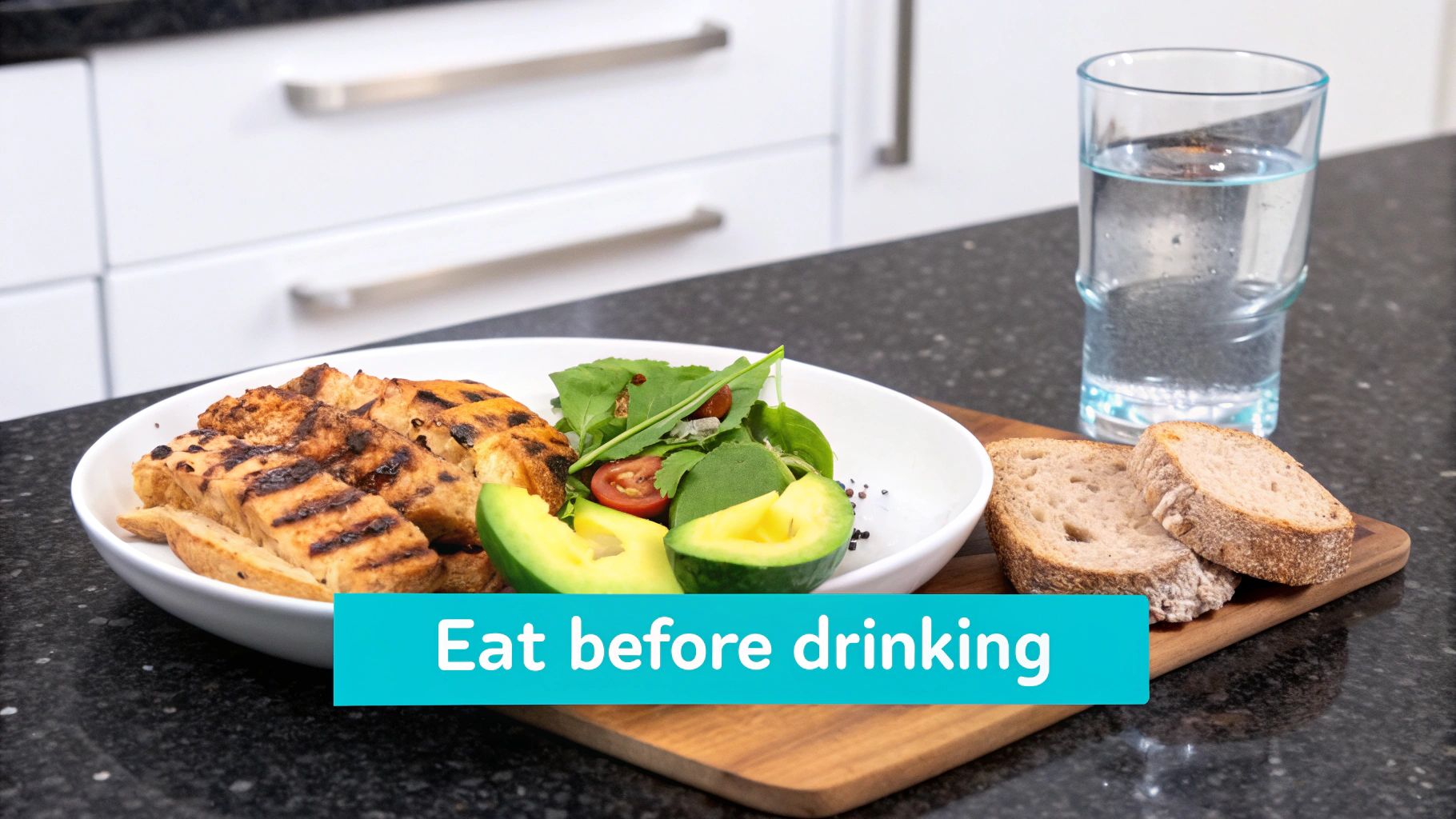
Let’s be real: the secret to a better morning often starts hours before your first drink. If you're wondering how to prevent a hangover after drinking, you're already behind. The real game-changer is what you do beforehand to set your body up for success.
One of the smartest moves you can make is eating a solid, balanced meal about one to two hours before heading out. We’ve all been there—going out on an empty stomach is a surefire way to feel alcohol’s effects way too fast and way too hard. Food in your stomach slows down how quickly alcohol hits your bloodstream, which gives your liver a crucial head start.
Build Your Pre-Event Meal
Not just any meal will do, though. Forget the greasy pizza (for now). Your goal is to combine specific macronutrients that give you sustained energy and act as a buffer against the booze.
Focus on these three heavy hitters:
- Healthy Fats: Think avocado, salmon, nuts, or a drizzle of olive oil. Fats take a while to digest, creating a sort of lining in your stomach that seriously slows down alcohol absorption.
- Lean Proteins: Chicken, fish, tofu, or beans are perfect. They provide amino acids that support your liver and help you feel full, which can naturally help you pace yourself later.
- Complex Carbohydrates: Sweet potatoes, brown rice, or whole-wheat bread are your friends here. They provide a steady release of energy and help you avoid the gnarly blood sugar crashes alcohol can trigger.
A pre-drinking meal isn't just a nice-to-have; it's a non-negotiable for anyone who’s serious about waking up feeling human. For some more killer ideas, check out our guide on what to eat before drinking alcohol.
Hydrate Before You Dehydrate
If you wait until you're thirsty to drink water, you're already playing catch-up. Alcohol is a diuretic—a fancy way of saying it makes you pee more, leading to dehydration. The trick is to get ahead of it by hydrating throughout the day.
A pro move is to sip on an electrolyte-rich beverage a few hours before your first cocktail. Electrolytes—minerals like sodium, potassium, and magnesium—are absolute heroes for keeping your fluid balance in check.
By front-loading with electrolytes, you're essentially creating a hydration reserve for your body to pull from later. This buffer helps dial down the severity of dehydration, which is a primary culprit behind those pounding headaches and next-day fatigue.
The Final Step: Proactive Supplementation
Alright, you’ve had a solid meal and you're well-hydrated. There's one more ace up your sleeve that can make a huge difference: targeted supplementation. This is where you give your body an extra layer of support right from the get-go.
Taking something like Upside Hangover Jelly before you start your night is a game-changer. It loads your system with specific nutrients and herbal extracts, like milk thistle and Japanese raisin tree extract, designed to support your liver's natural detox processes.
Think of it as giving your body the right tools for the job before the work even begins. This preemptive strike ensures your system is primed and ready, setting you up for a much, much smoother experience from the very first sip.
Navigating the Night: How to Drink Smarter
Alright, your pre-drinking prep is your first line of defense, but what you do during the night is just as critical. Drinking smarter isn't about cutting yourself off; it's about being mindful so you can actually enjoy the moment without paying for it tomorrow. This is where you put your game plan into action, sip by sip.
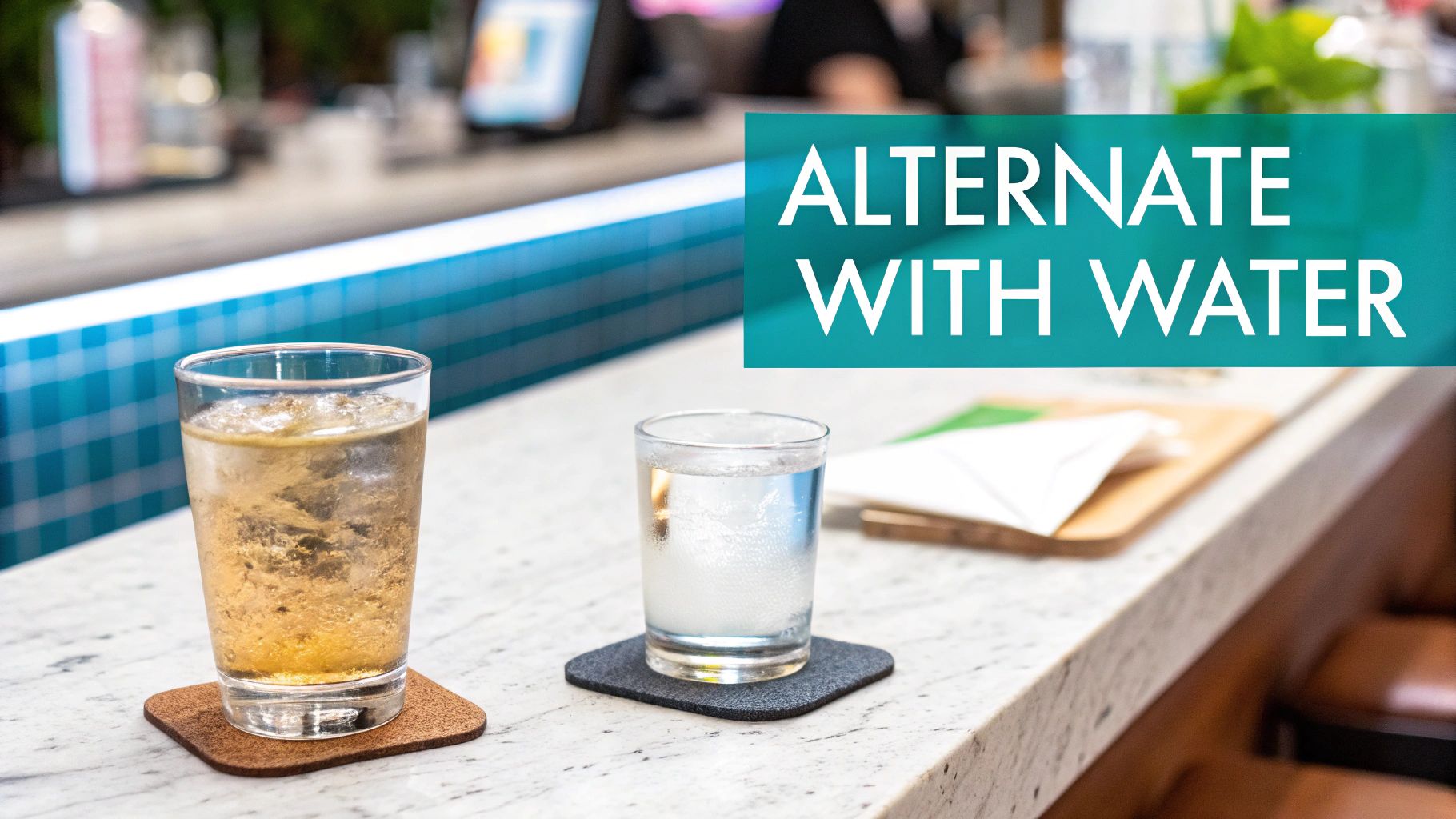
The single most powerful habit you can build is pacing yourself. An easy rule to live by is the one-to-one rule: for every alcoholic drink you have, follow it up with a full glass of water.
This simple trick pulls double duty. First, it directly fights the dehydrating effects of alcohol. Second, it naturally slows you down, giving your liver a fighting chance to process what you’re drinking.
The Art of Pacing and Hydration
Slowing down is the name of the game. Here's why: your liver can only handle about one standard drink per hour. When you start drinking faster than that, your blood alcohol level spikes, putting a ton of stress on your body and basically rolling out the red carpet for a nasty hangover.
Alternating with water is your secret weapon. It keeps you hydrated and helps you stay in control of your night. For an extra boost, try making that "in-between" drink an electrolyte beverage to start replenishing the minerals you're losing.
If you really want to master this, our article on how to pace yourself while drinking breaks down even more practical tips.
Be Selective About Your Sips
Let’s be real: not all drinks are created equal. Some are practically guaranteed to give you a vicious hangover, and the main culprits are chemical byproducts called congeners.
These compounds are found in much higher concentrations in darker liquors and red wine, and they're notorious for making hangover symptoms a whole lot worse. When you have a choice, go for drinks that are lower in congeners. Think clear spirits like vodka, gin, and white rum. Lighter beers and white wines are also generally safer bets than their darker cousins.
Choosing a vodka soda over a bourbon on the rocks isn't just about taste—it's a strategic move to slash your congener intake. This one simple swap can make a huge difference in how bad that next-day headache and fatigue will be.
To make it even easier, here’s a quick guide to which drinks are more likely to leave you hurting.
High vs Low Congener Alcoholic Drinks
| Drink Type | Congener Level | Hangover Potential |
|---|---|---|
| Red Wine | High | High |
| Whiskey/Bourbon | High | High |
| Brandy | High | High |
| Dark Rum | High | High |
| White Wine | Low | Low |
| Gin | Low | Low |
| Vodka | Very Low | Very Low |
| Light Beer | Low | Low |
Keep this in mind when you're ordering your next round. A little bit of planning goes a long way.
Smart Mixers Make a Difference
What you mix with your alcohol can be just as important as the alcohol itself. Sugary mixers—think sodas and energy drinks—can send your blood sugar on a rollercoaster, which only makes you feel worse the next day. They also tend to mask the taste of alcohol, making it dangerously easy to drink too much, too fast.
Instead, stick with hydrating, low-sugar options:
- Soda Water or Club Soda: These are your best friends. They're hydrating and have zero calories.
- Fresh Juice: A splash of real juice (like cranberry or orange) is way better than sugary, concentrated mixes.
- Water with Lemon/Lime: Simple, refreshing, and it helps keep you hydrated.
Making these small adjustments throughout the night really adds up. By being mindful of your pace, your drink choice, and your mixers, you’re actively working to prevent a hangover after drinking, ensuring your night ends on a high note and your morning starts off right.
The Post-Drinking Routine for a Better Tomorrow
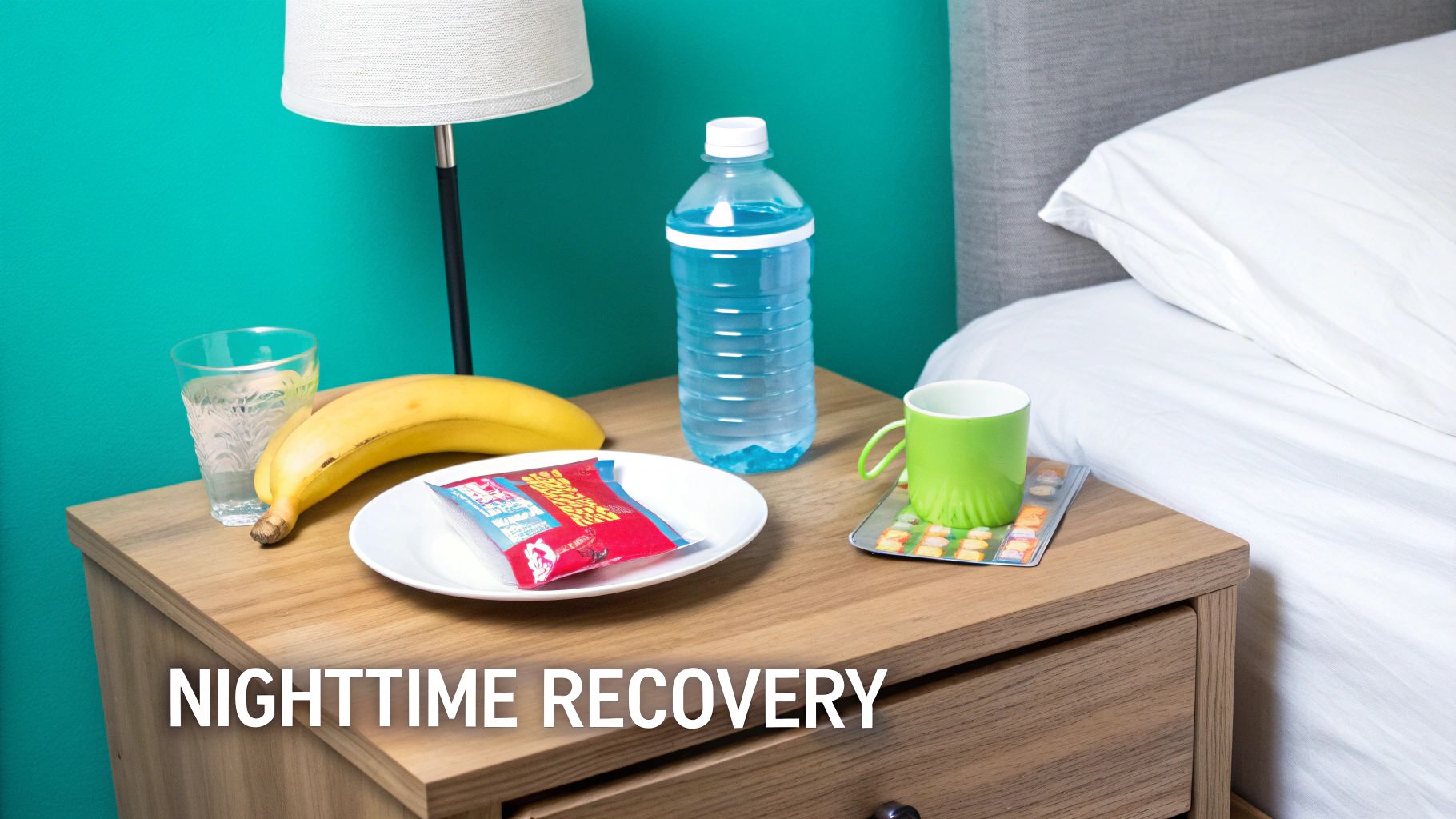
You’ve navigated the night like a pro, but don’t crash just yet. What you do in the hour before your head hits the pillow can be the final play that secures a better morning.
Think of it as your last line of defense—a simple but powerful routine to help your body recover while you sleep. Trust us, don't skip this step. It's a critical part of the whole "how to prevent a hangover" game plan.
First up, and most importantly, is a final round of hydration. Alcohol is a diuretic, which is just a fancy way of saying it makes you pee out fluids and essential minerals. A big glass of plain water is good, but an electrolyte-rich drink is even better.
Those electrolytes—minerals like sodium and potassium—are exactly what your body is screaming for to restore its fluid balance. Getting them back in your system before bed is a direct shot at counteracting the dehydration that brings on those pounding headaches and next-day fatigue.
Fuel Your Recovery Overnight
Your next move? Tackle your blood sugar. A night of drinking can cause your blood sugar levels to tank, contributing to that weak, shaky, and all-around awful feeling the next morning.
A light, easily digestible snack can help stabilize things while you sleep. And no, this isn't the time for a greasy slice of pizza; that can just give your system more to complain about. Instead, think simple and smart.
- A piece of whole-wheat toast: Gives you complex carbs for a slow, steady release of energy.
- A banana: The classic go-to for potassium, an electrolyte you’ve definitely lost.
- A handful of almonds: Offers healthy fats to keep you feeling stable.
This little snack gives your body the fuel it needs to process the last of the alcohol. If you're looking for more ideas on post-drinking care, our guide on what to do after drinking has a ton of other helpful strategies.
The Final Boost for a Better Morning
For those of us who want to give our bodies maximum support, this is the perfect time for one last targeted boost. Your system is about to go into full-on recovery mode for the next 8 hours, so why not give it the best tools for the job?
Taking a specialized supplement right before bed works with your body’s natural overnight repair cycle. It’s a chance to put back the key vitamins and antioxidants you’ve lost, directly supporting your liver as it works overtime to clear everything out.
This is where a product like Upside Hangover Jelly really shines. Taking another sachet after your last drink delivers a concentrated dose of these restorative ingredients. While you're sleeping, its blend of nutrients gets to work combating oxidative stress and replenishing what was lost.
It’s the final step to setting yourself up for a much smoother, brighter, and more productive tomorrow.
Global Perspectives on Hangover Prevention
The search for a better morning after is a global mission, but how people try to dodge a hangover looks wildly different depending on where you are in the world. From ancient herbal traditions to modern, lab-formulated shots, culture and local wellness trends have shaped how societies deal with the aftermath of a good time.
Digging into these different approaches shows just how much we all want the same thing: an effective, health-conscious way to feel good the next day. This is especially true when you compare regional markets. North America and Europe might reach for a convenient, science-backed fix, but other parts of the world put their trust in wisdom that’s been passed down for generations.
The Power of Traditional and Herbal Remedies
In many cultures, especially across the Asia Pacific region, the best remedies are found in nature. A strong social drinking culture there has created a huge demand for products that help the body’s natural detox process using ingredients that have stood the test of time.
This has made the area an absolute powerhouse in the hangover relief market. In fact, Asia Pacific has become the dominant global market for hangover cure products, holding the biggest market share thanks to its widespread drinking culture and a growing focus on alcohol detoxification. What really makes these consumers different is their strong preference for herbal and natural ingredients. We’re talking extracts like milk thistle, ginger, turmeric, and green tea. You can dive deeper into these global market trends on GlobeNewswire.
This isn't just about old habits. It’s a deep cultural belief in holistic wellness. Ingredients like Japanese raisin tree extract (Hovenia dulcis), for instance, have been a staple in Korean and Chinese medicine for centuries specifically to help with the effects of alcohol.
The Western Approach: Science and Convenience
Switch gears to North America and Europe, and you’ll find that people tend to lean towards products that scream scientific evidence and convenience. Here, the focus is on formulas that target the specific biological chaos a hangover creates—think replenishing vitamins, restoring electrolytes, and loading up on antioxidants.
This demand has kicked off a wave of products like ready-to-drink shots, capsules, and easy-to-mix powders. The marketing usually points to clinically studied ingredients and measurable results, which clicks with people who want efficiency and proof.
But things are starting to change. As global trends collide, we're seeing a really interesting mashup of tradition and science.
A New Generation of Global Solutions
The best modern solutions, like Upside Hangover Jelly, are really a perfect blend of both worlds. They take the ancient wisdom of traditional herbs and combine it with the precision of modern science.
This hybrid approach gets it right: those botanicals have worked for centuries for a reason, but we can make them even better by adding scientifically-proven nutrients for a more complete formula. By mixing ingredients like milk thistle and Japanese raisin tree extract with essential vitamins and amino acids, these next-gen products offer a powerful, synergistic way to prevent a hangover. It's this global fusion that's really setting a new standard for how to handle your drinking, no matter where you are.
Common Questions About Preventing Hangovers
When it comes to hangovers, it feels like everyone has their own "foolproof" cure. From late-night food runs to questionable family remedies, there are a lot of myths out there. Let's cut through the noise and get straight to what actually works, based on real science.
So, does that greasy, late-night burger actually do anything? Well, yes and no. It’s all about timing. Eating fatty foods before you start drinking can help slow down how quickly your body absorbs alcohol. But if you wait until after you’ve had a few too many, you’re mostly just asking for trouble with an already-upset stomach.
Does the Type of Alcohol Matter?
It absolutely does. Remember how we talked about congeners? These are the chemical byproducts found in alcohol, and they're notorious for making the morning after so much worse.
Darker liquors, like whiskey, and red wine are loaded with them. If you’re trying to have a better morning, sticking to clear spirits like vodka or gin is a much smarter move. No alcohol is completely free of consequences, but cutting down on congeners can make a huge difference.
Why Do I Feel So Awful During a Hangover?
That miserable, can't-get-out-of-bed feeling isn't just one thing—it’s your body staging a full-on protest. A hangover is a perfect storm of several different issues hitting you all at once.
- Dehydration: Alcohol makes you pee more, which is why you wake up with a pounding headache and dizziness. You're losing fluids and vital electrolytes.
- Inflammation: Your immune system can actually react to alcohol, triggering an inflammatory response that leaves you feeling generally sick and rundown.
- Stomach Irritation: That nauseous feeling comes from alcohol ramping up your stomach acid production.
- Poor Sleep: Sure, a drink might make you feel sleepy, but it wrecks the quality of your rest, leaving you completely exhausted even after a full night in bed.
A hangover isn't just a headache. It's a full-body assault. To really prevent one, you have to tackle all these problems, not just chug a glass of water and hope for the best.
When Is the Best Time to Take a Supplement?
When you’re using something designed to help, timing is everything. For a preventative product like Upside Hangover Jelly to do its job, you’ve got to be proactive. We recommend a simple two-step approach for the best results.
Take one sachet before your first drink. This gives your body a head start, loading up your system with the nutrients it needs to support your liver from the get-go.
Then, take a second sachet after your last drink. This helps replenish what you’ve lost and supports your body’s recovery while you sleep. Think of it as providing support from start to finish.
This forward-thinking approach is becoming more common everywhere. The market for hangover products in North America is taking off, thanks to a greater awareness of how to drink smarter. Over in Europe, people are also looking for natural, effective formulas and are happy to invest in products that are transparent about what's inside. You can dive deeper into these market dynamics from Fortune Business Insights.
Ready to enjoy your nights without giving up your mornings? Upside offers the science-backed support you need to live more and worry less. Try our convenient, great-tasting jelly and see what a better tomorrow feels like.
Visit us at https://enjoyupside.com to get started!
#upside #enjoyupside #upsidejelly #livemore #hangovercure #hangoverprevention #fighthangovers #preventhangovers #HangoverRelief #MorningAfter #PartySmarter #HydrationStation #WellnessVibes #RecoverFaster #NoMoreHangovers #HealthyParty #HangoverHacks #FeelGoodMorning #NightlifeEssentials #HangoverFree #SupplementGoals #PostPartyPrep #GoodVibesOnly #HealthAndParty #HangoverHelper #UpsideToPartying